
Enteritis in dogs
Enteritis in dogs is an extremely dangerous disease, typically characterized by severe inflammatory processes in the intestines. Digestive problems are reported in dogs of all breeds and ages. The inflammatory process can affect any part of the digestive tract, and the symptoms that owners should notice will depend on this. Today, we'll discuss the key signs, symptoms, and home treatment options for enteritis in dogs.
Content
Types of enteritis in dogs
There are several classifications of enteritis in dogs, depending on the pathogen or the affected area. Let's examine both cases in detail.
- Primary.
- Secondary.
Primary enteritis is when only the intestines are inflamed, and this is the primary disease. Secondary enteritis in dogs is one of the symptoms of another disease (infectious). Secondary enteritis is much more common. Even if the animal developed inflammation due to poor nutrition, bacteria will not miss the opportunity to infect the intestines, worsening the disease.
If we talk about the types of enteritis in dogs depending on the pathogen, then the most frequently recorded ones are:
- Parvovirus enteritis in dogs;
- Coronavirus;
- Bacterial (staphylococcal, streptococcal) and many others.
.jpg)
Symptoms of enteritis in dogs
Next, we will take a detailed look at the signs and symptoms of enteritis in dogs.
Symptoms of parvovirus enteritis in dogs
It's crucial to recognize the symptoms of parvovirus enteritis in dogs quickly, almost immediately. Even a missed hour can cost your dog his life. Parvovirus can "kill" a puppy within a few days! Therefore, if a dog with parvovirus enteritis is not treated within the first 24 hours, the animal will most likely die.
A unique feature of parvovirus is that the animal will not develop a fever. Body temperature remains almost always within normal limits! Therefore, owners often don't realize their pet has a viral disease. All the symptoms of parvovirus enteritis in dogs are attributed to poisoning, and veterinary care is not sought, which leads to the pet's rapid death.
The insidiousness of this disease lies not only in the absence of fever, which is usually the first symptom dog owners notice, but also in the fact that pets often remain active, happy, and eating. Therefore, parvovirus enteritis in dogs is often unsuspected by owners.
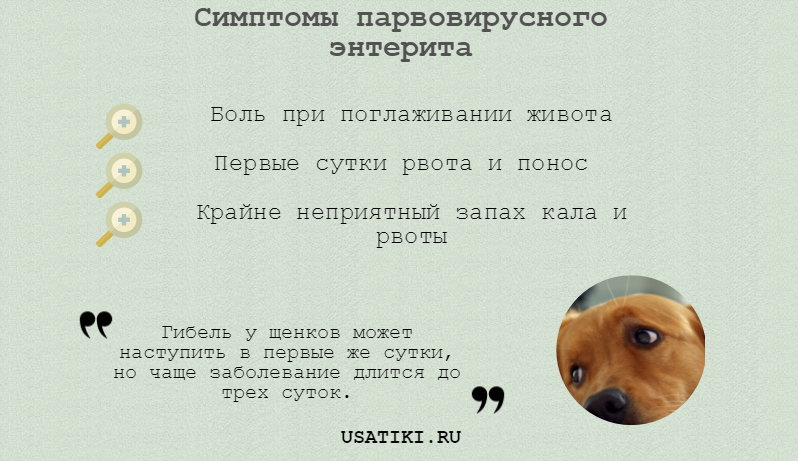
- Pain in the abdominal area. Pay attention to any changes in your pet's behavior when you stroke its sides and belly. Your pet will arch its back, tuck its tail, and may whine. It's clear your touch is causing pain.
- Vomiting and diarrhea. During the first 24 hours, vomiting and diarrhea are still watery and clear, with bubbles (foam) and mucus visible on their surface. However, the disease quickly worsens, and the symptoms of parvovirus enteritis in dogs become increasingly noticeable and frightening.
- Unpleasant smell. Because the intestines literally die—become necrotic—food is not only unable to be digested, it also rots. The dog develops diarrhea, with blood. The smell isn't just disgusting; it's putrid, reeking of carrion. Pieces of dead mucus may even come out. Vomiting is similar: bloody and foul. The diarrhea and vomiting are almost constant, and the animal doesn't eat or drink anything, and doesn't sleep properly. Dehydration and wasting away are visibly worse. The dog is very weak, unsteady, and may even experience seizures.
Death in puppies can occur within the first 24 hours, but the illness most often lasts up to three days. Although parvovirus enteritis is often diagnosed in puppies, adult animals can easily become ill if preventative vaccinations are not administered.
Symptoms of coronavirus enteritis in dogs
The symptoms of coronavirus enteritis in dogs are similar to those of parvovirus, but somewhat milder. Diarrhea and vomit are non-bloody, light-colored, and may even be clear. Puppies are significantly more susceptible to the disease, while adults, thanks to their stronger immune systems, cope more easily. However, this doesn't mean you should leave your pet untreated. Although immunomodulators and antiviral medications are needed to treat a dog with coronavirus enteritis, your veterinarian will also prescribe antibiotics, as a secondary infection (usually pathogenic bacteria, such as staphylococci) almost always occurs on top of the coronavirus. To prevent further complications, your veterinarian will prescribe antibiotics as a preventative measure, but they won't combat viruses.
Coronavirus occurs in both acute and mild forms. Symptoms of acute coronavirus enteritis in dogs become noticeable between two and five days after infection (the incubation period for enteritis in dogs can last from two days to a week). However, with a mild form, the infection can go unnoticed, virtually asymptomatic. An animal (keep in mind that it must be an adult with a strong immune system) can even overcome the disease on its own; it only requires diet and adequate fluid intake (to prevent dehydration). However, don't expect it to resolve on its own.
If you notice your dog has diarrhea, vomiting, refuses to eat or drink, or is depressed (even if their temperature is normal or slightly elevated), rush to the vet. Even one missed day could cost your little one their life!
Symptoms of non-viral enteritis in dogs
The symptoms of non-viral enteritis in dogs are almost impossible to miss. Due to digestive problems (the inflamed mucous membranes can no longer absorb food properly), food is not digested properly. This can lead to diarrhea. At first, it's simply mucus-laden, with foam on the surface. Then blood appears. The feces have a foul odor. This is due to the food rotting inside the long intestine. This leads to severe intoxication.
Again, due to intoxication, the animal attempts to expel any contents from the digestive tract. This causes vomiting. Initially, the vomiting is light-colored, foamy, and contains mucus (viscous). Over time, bile and blood may appear.
Diarrhea and vomiting cause dehydration. The animal loses its appetite, becomes weak, and loses weight. However, it tries to drink more to somehow alleviate its condition. The stomach hurts. The blood thickens (due to dehydration).
Enteritis in puppies
Enteritis is most often diagnosed in puppies. In adult dogs, intestinal inflammation often occurs due to improper feeding or the accumulation of pathogenic microflora (bacteria) due to a weakened immune system. Young dogs are at high risk of developing viral enteritis, particularly parvovirus or coronavirus.
Enteritis in puppies with parvovirus or coronavirus is just a symptom. However, this sign is probably one of the first to be noticed. Therefore, it's crucial to mention it. Knowing the main clinical signs of enteritis in dogs (whether adult or puppy, viral etiology or "simple inflammation") will help owners quickly notice that something is wrong with their pet. This will help them seek prompt veterinary attention, which can save their pet's life.
But if we're talking about age-related predisposition, enteritis in puppies most often develops during weaning, when the mother stops nursing. Just like in humans, antibodies (also known as immunoglobulins) are found in milk. If the mother has been vaccinated, she will provide her puppies with immunity—resistance to many diseases. If the mother hasn't been vaccinated, her milk will not contain immunoglobulins, and the puppies will be unprotected.
Therefore, veterinarians recommend first deworming (as this also weakens the immune system) and then vaccinating the puppy with special combination vaccines. However, many owners forget that this vaccination must be updated annually to protect their pet. After all, adult dogs can also contract viral enteritis.
Causes of enteritis in dogs
.png)
The causes of enteritis in dogs can be very diverse:
| Cause | Peculiarities |
| Lack of vaccinations | If a puppy is born and nursed by an unvaccinated female dog, it has a very high risk of becoming infected during a routine walk. Even if the female dog was vaccinated, the immunity it receives from her weakens quite quickly. This is why it's so important to vaccinate a puppy as soon as it's weaned. It's enough for a puppy to sniff the feces of a sick animal or the ground, floor, or grass that came into contact with it. Or it could play outside with another animal, even one that appears healthy. Even after recovery, a dog can still infect others for a long time. |
| Poor nutrition (unbalanced, not according to the regimen, or feeding prohibited foods) |
This irritates the intestinal lining, leading to inflammation. Some owners feed their pets from their own table, forgetting that spices and certain foods are simply not suitable for a pet's gastrointestinal tract. Gastritis develops very quickly in dogs on this type of diet, and then the intestines react. The doctor then diagnoses the pet with gastroenteritis. Moreover, food temperature can be a dangerous factor. Food that's too cold or too hot can lead to gastritis and enteritis. It's crucial to check what you're feeding your pet first. Don't forget to check the bottom of the bowl for any food. Don't feed food straight from the refrigerator or straight from the stove. |
| A sudden change in diet | Even if you've decided to switch from natural to dry food or vice versa, it's too abrupt and unexpected for the digestive tract. You can't suddenly introduce certain foods, or give them forbidden foods (fatty, fried, smoked). |
| Weakened immunity | It doesn't matter the reason. When it's strong, pathogenic microorganisms don't multiply. But when the immune system weakens, microorganisms take advantage. Staphylococci are most often "activated." |
| Infectious diseases | In this case, enteritis in a dog is a symptom in itself. A large number of viruses and bacteria cause intestinal inflammation. Without laboratory testing, it's impossible to accurately identify the pathogen. |
| Parasites | Intestinal worms cause a lot of trouble, including gastritis. Giving your dog an anthelmintic medication that the worm is sensitive to will clear up all signs of enteritis. |
Treatment of enteritis in dogs
Many owners are interested in how to treat a dog with parvovirus or coronavirus enteritis at home, especially using folk remedies. However, I'd like to warn you right away that Viral enteritis cannot be eliminated without the use of specific serum with immunoglobulins! In order to select the right drug, it is necessary to know the “name” (classification) of the pathogen.
- When treating a dog for enteritis, antibiotics are also prescribed to prevent the development of a secondary bacterial infection. This will help reduce the risk of complications.
- Saline solutions are given to restore the water-salt balance disrupted by constant vomiting and diarrhea. They are given little by little, but very frequently (every 10 minutes). They can be purchased at any pharmacy (in powder form), and then prepared as a solution at home.
- IVs can also help, especially in cases of dehydration. However, this is a symptomatic treatment. Enteritis itself won't go away in an adult dog or puppy, but it will significantly improve the dog's condition.
- Enterosorbents are also given to adsorb toxins formed during the decomposition of undigested food on their surface. Activated charcoal, white clay, and other substances are most often used as such a "sponge."
- Vitamins (in particular, ascorbic acid) will not be superfluous.
- An enema helps clear the intestines of rotting matter. However, it must be used with extreme caution and the animal's condition must be monitored closely.
Diet for a dog with enteritis
Treating a dog with enteritis requires a proper diet. The diet should be designed so that the dog doesn't eat anything "heavy." Grains with a coating effect (oatmeal with water, for example) are best. Most importantly, don't force anything! It's best to let the dog drink. Appetite will return as soon as the animal feels better. After all, an inflamed intestine hurts, and a mustache can be unpleasant for a whiskered dog, as it's associated with pain, diarrhea, or vomiting. It's a good idea to give herbal teas with coating or astringent properties. However, it's best to keep the pet on a fasting diet for the first 24 hours (with only water).
Prevention of enteritis in dogs
Preventing enteritis in dogs comes down to just a few simple and basic rules:
- Feed properly.
- Vaccinate and deworm your pets on time.
- Avoid contact with sick or suspicious animals. If your animal becomes unwell after such contact (even if it's lethargic or has lost its appetite), rush to the veterinarian.
Consequences of enteritis in dogs
The complications and consequences of enteritis in dogs vary. Digestion is poor for a long time, affecting both the liver and pancreas. The inflammation spreads very quickly. Without a diet, the animal will become very ill. No raw foods (including vegetables) should be fed. Only light and easily digestible foods (porridge, broth, low-fat cottage cheese) should be given. Protein foods should definitely be avoided for the first week.
If a dog with enteritis is left untreated, adhesions, obstruction, and even rupture of the intestinal walls (their layers become very loose) may develop. This will lead to peritonitis.
In female dogs, enteritis can cause complications with the reproductive system. Females can become infertile. That's how it works. It seems like an intestinal inflammation, but the ovaries and uterus are also affected.
Puppies with viral enteritis die almost 100% of the time without treatment. Even after treatment, complications can develop: heart damage (myocarditis), and intestinal/liver/pancreas/stomach dysfunction, leading to lifelong dietary restrictions. Hind limb paralysis may occur, resolving after several months. It's important to remember that there are intestinal form of canine distemper, which also leads to enteritis.
Any questions? You can ask our website's staff veterinarian in the comments below, who will answer them as quickly as possible.
Read also:


87 comments
Anastasia
Hello. My dog had enteritis in December 2021 at four months old. So, it's been 1.6 years. She was saved, just barely. She lived at the veterinary clinic for almost two weeks. Thanks to the vets.
We're looking to get a puppy. Is there a risk that our dog could catch the disease? Does she carry the virus?
Tatyana Shmonina - veterinarian
Hello! Both animals need to be vaccinated and kept in separate rooms for the 30-day quarantine period.
Lyudmila
Hello, Dasha! My puppy is 2 months and 10 days old and lives in a private house. He hasn't been vaccinated yet. 10 days ago, I put IN-AP Complex drops for dogs on his scruff (for worms, fleas, and ticks). He had tapeworms and fleas. The day before yesterday, around lunchtime, he started vomiting, and yesterday he developed diarrhea with worms (long white ones). I don't know if they were alive or dead. He's very weak. Today I took him to the vet. Without any tests, they suspected enteritis (they didn't specify which one). They gave him an antibiotic injection, vitamin C, Kabactan, Hemobalance, and a Ringer's solution drip. Towards nightfall, he developed bloody diarrhea with a terrible smell.
The vomiting continues, but it's not profuse, as we haven't given the puppy any food or water yet. Could you please tell me if I give him Hescan-5 serum now during treatment, will it help or is there no point? And when the puppy recovers, which I really hope he will, when can he be vaccinated?
P.S. Is it possible to partially wash the puppy, it smells very bad or should I not do this yet?
Daria is a veterinarian
Hello! Yes, you can wash the puppy, but not all over. Just wash him, wrap him in a dry, warm towel, and dry him completely to prevent further drafts and further damage. The clinic should have given him a serum injection right away. The antibiotic prescribed won't combat the virus; it will only prevent secondary bacterial growth and damage to the puppy's immune system. If he has diarrhea and vomiting, he should have had daily IVs. He should be given fluids, but little by little, literally a teaspoon at a time (you can use Normhydron, Regidron, or similar solutions to restore his fluid and electrolyte balance).
Most likely, the unvaccinated puppy wasn't quarantined and was taken outside for a walk or had his shoes left in the open. This could have caused the infection. Vaccinations should be given no sooner than a month or a month and a half after complete recovery!
Anna
Hello, please tell me, the vet diagnosed me with enteritis and prescribed Combikel, Catazal, a glucose enema, and metaclapranide. My husky puppy is just two months old and unvaccinated. A couple of hours after administering the medication, he recovered somewhat, but then stopped drinking again and just lays there and won't get up. Any advice on what else I can do?
Daria is a veterinarian
Hello! Oh, the enema thing is just hilarious. Some people believe that rectal administration is better for diarrhea. I'd rather use an IV; I find it more effective and easier (especially when inserting a catheter). If infectious enteritis is suspected, why hasn't they prescribed an antiviral serum? It contains pre-made antibodies, and it's an emergency boost for the immune system before it starts producing its own. You should give the puppy frequent, small amounts of water (literally a teaspoon every 10-15 minutes, as large amounts will trigger vomiting), and instead of just plain water, it's better to use rehydration solutions (there are plenty of them in human pharmacies: Regidron, Normhydron, and others).
Albina
Hello! My German Shepherd puppy isn't eating today. She's burped several times (with thick drool), diarrhea twice, and is lying down exhausted. We've started her on ceftriaxone, cycloferon, and vitamins. Please tell me what else I can do. She's 4 months old and hasn't been vaccinated (we didn't have time, there weren't any).
Daria is a veterinarian
Hello! Before prescribing treatment, it would be necessary to determine the possible causes of your pet's digestive upset. What was your pet fed previously? Could someone have fed it from the table? Could it have grabbed something from the ground outside? Has their body temperature been measured? Thick saliva in the vomit could also be due to hunger (especially if the vomit contains bile). Have you tried sorbents (charcoal, Polysorb, etc.) first? Who prescribed these medications? If you suspected infectious enteritis, you should have administered a specific serum first to deliver ready-made antibodies (this would have helped to more quickly overcome the infectious disease). Does your pet have diarrhea (more than 5 loose stools per day that are uncontrollable) or just loose stools?
The color of the stool is also important for diagnosis. But it's also important to understand how the animal is responding to the treatment. If vomiting and diarrhea (loose stools) continue, intravenous fluids are essential to prevent dehydration. Or at least give the animal small, frequent sips of special saline solutions (a teaspoon every 10-15 minutes), as large amounts can trigger further vomiting (available at human pharmacies: Normhydron, Regidron, and others).
Natalia
Hello, Daria! I have three female dachshunds: one is 3 years old (the mother) and two are 18 months old (the daughters, unfortunately, not vaccinated). The mother was previously vaccinated, but not yet this year. One of the girls was diagnosed with enteritis five days ago. The doctor prescribed treatment (at home), but there has been no improvement so far, vomiting and bloody diarrhea. The second girl has initial symptoms: refusal to eat and lethargy. My question is, what is the likelihood that the mother is infected? And should the second dog receive the GISCAN-5 injection yet?
Daria is a veterinarian
Hello! The longer it's been since the mother's vaccination, the higher the risk of infection. It's also important to ensure you've followed the vaccination schedule closely, whether there were any irregularities, whether the vaccinations were given regularly, and whether the same vaccine was administered (otherwise, there will be differences in the strains). If the diagnosis is confirmed in one animal, ALL animals should be given the serum because there's an incubation period when symptoms aren't noticeable. The serum also contains ready-made antibodies, meaning the animal will recover more quickly, before the disease has a chance to take hold.
Olga
Where were you all this time?! Half a year ago
I've already buried four puppies: an Alabai and three Toy Terriers. I treated them as the doctor ordered! To no avail! We got another big one, and more Toy Terrier puppies.
One of my 3.5-month-old Labrador puppies is very sick, vomiting foam and having bloody diarrhea. We've been sick for two days (it started very suddenly). Today we gave him serum and all the injections according to the schedule. I also have some Toy puppies; they've always lived together, eaten, and slept together. They seem to be active so far! I also gave them 0.5 cc of serum.
Now I'll hope that I'll get lucky!
Daria is a veterinarian
Hello! Prevention should always be timely and correct, then you won't have to treat or bury anyone. Have you tried vaccinating all new animals on time? Quarantining new animals? Quarantining dogs vaccinated for the first time and even again until the required 14-21 days have passed (quarantine periods vary depending on the vaccine)?
No matter how short a time passed after the death of the previous animals before new ones arrived in the house, it's unlikely that all areas where the deceased animals lived and the care items were properly disinfected.
And all of this is "inherited" by the new pets. This creates a new risk of infection. Anything that sick or recovered animals have come into contact with is a factor in the transmission of the pathogen to new healthy animals, especially to unvaccinated ones.
Alena
Hello, can you tell me what I should use to give my puppy an IV? We took him to the vet today, they diagnosed him with enteritis, gave him an IV, and didn't tell me what drops to use. They ripped me off and that's it. What should I use next? Is there a catheter?
Maria
Good evening. My 9-year-old Yorkie has been having tummy troubles today. He's stooled three times in six hours, a slightly greenish mess. He's drinking, playing, but a little sad. Should I take him to the vet immediately, or can I wait until tomorrow to see him? His diaper stool is expired; the last time he was given diaper stool was almost three years ago.
Daria is a veterinarian
Hello! Observe your pet for 24 hours. If you notice any deterioration in their condition, take them to the vet immediately. It's possible there's something wrong with their diet, causing the change in stool. Improvement is usually observed within 24 hours. It's important to check their temperature to rule out a fever (high temperature) due to an infectious disease. Consider what your pet has been eating. Was there a sudden change in diet (perhaps new foods)? Could your dog have eaten something spoiled (grabbed from the trash can at home or from the ground outside)? Is there vomiting? Have you given them any medications?
Maria
Good afternoon. Today is the third day. He's feeling well, no vomiting, and his tummy pain has stopped. But when he eats, his stool is still loose. He's eating and drinking. He doesn't have a fever. Three days ago, we took him to the dacha, and the day before, he was treated for ticks. He might have been poisoned. I have a question: what can I give him to normalize his stool?
Daria is a veterinarian
Hello again! To restore intestinal microflora, administer probiotics/prebiotics. If there are no veterinary pharmacies nearby, then at least Linex, Bifidumbacterin, or similar products from a human pharmacy can be used. If there are veterinary pharmacies and they have a good selection, then FortiFlora (a special food supplement) can be used. And review your pet's diet.
Hope
Hello, we have a 1.5-year-old dachshund who started vomiting bile and no blood, no diarrhea, and hasn't eaten or drunk for three days. We don't have a veterinary clinic, only a veterinary station. They don't do any tests, and we've only given him saline and Gamavit. Right now, I can't get out of here to take him to the clinic. Can you tell me what treatment is best?
Daria is a veterinarian
Hello! Without a definitive diagnosis, prescribing therapy is extremely difficult and risky. I can only recommend IV fluids for the dog. Saline solution (but Ringer's-Locke's solution is better) + Vitosal/Katosal/Phosphosal/Huberin (and other similar medications for liver support, improved metabolism, and appetite stimulation) + Tonocard (used for toxicosis, poisoning, allergic reactions, and to support heart function) + Superamino/Aminoplex (to replenish vitamins and minerals) – you can also add other medications to the IV, much depends on the clinic's selection. Gamavit is essentially just a generic homeopathy.
For vomiting, try serotonin. If it's unavailable in your local pharmacy, try metoclopramide (available in human pharmacies). If you can't get an IV, at least the solutions listed above can be given subcutaneously to relieve dehydration due to vomiting and help restore strength. Antitox (intramuscular) can also be used to relieve intoxication. But again, this is only MAINTENANCE therapy and won't completely cure the animal, but will only help it survive UNTIL A DIAGNOSIS IS MADE.
Maria
Hello, my dog seems to have come down with enteritis, she's lethargic, hasn't eaten anything, and has been lying down all day. I gave her a B6 shot and then an antibiotic shot. Now she seems fine, she's started playing and asking for food. I gave her 2 spoons of broth and chicken meat. Should I feed her too much or should I not feed her?
Daria is a veterinarian
Hello! Do you suspect the enteritis is infectious or non-infectious (due to improper feeding, for example)? Is the dog vaccinated? What other symptoms are present? If the dog isn't vomiting or having diarrhea, you can feed it small amounts of easily digestible, low-fat foods. If vomiting occurs, avoid feeding it, as this could lead to aspiration of vomit. Vomiting can be stopped with cerucal and metoclopramide. You can also look for serenia at veterinary pharmacies (which, unlike cerucal, can also be injected for diarrhea). Antibiotics should be given over a 5-day course, not just for one day. Vitamins should be given intramuscularly; IVs may be necessary. If the dog isn't vaccinated, it's best to also administer a specific serum.
Anastasia
Hello, this is what happened: at 33 days old, one puppy developed diarrhea. Out of fear, I gave everyone Giskan5 injections and went to another city for the weekend. I took the puppy with me and took him to the clinic. They did an express test - it was not enteritis. They concluded that he had overeaten something fatty, and the puppy recovered very quickly...
I come back 4 days later and see that the other puppy is not well, I also thought that he ate too much fat... but the condition worsened... The next day I took him to the vet, they said that it looked like enteritis... We treated him... but the condition worsened, in general, on the 6th day (I count from the first sign of weakness) the puppy finally died... I gave the others another injection of Giskan (at the age of 42 days) and I give them cycloferon, now I feed only rice porridge in light chicken broth, and the bitch is still nursing... but there is almost no milk left... So far they are all alive and well... very happy, with a brutal appetite...
What's the chance the others will get sick? If the incubation period is up to 10 days... then it turns out that if they don't get sick after 3 days (it's already been 7 days since the first one), then they won't get sick? Or won't get sick while the serum is active? And then, can they get sick again after the serum wears off? Should I vaccinate according to the schedule? I read about disinfecting... and bleach and alcohol won't do any good? I don't know where to look for what you recommended... And what was that anyway, Giskan =punched=, as they say... And why was the puppy sick for 6 days... I thought such small ones are killed very quickly in a day or two, the illness is acute... And in general, it was not typical for enteritis (according to all the descriptions)... there was no vomiting at all.
The blood only appeared on the 5th day and there wasn't much of it... there wasn't a terrible smell, no fever... the last two days it's even been low... I consulted with a breeder friend and a veterinarian by training... she insisted it wasn't enteritis, and I read a bunch of articles... it didn't look like it... So, what should I do? Should I sit and wait for the other puppies to get sick and die a little later? What's the prognosis?
Daria is a veterinarian
Hello! They definitely couldn't have died from the serum. The serum is a set of pre-prepared antibodies that help the immune system "understand" which antibodies to produce on its own. However, in the first few days, it's precisely the serum that can save a sick animal, as the pre-prepared antibodies "neutralize" the pathogen. With parvovirus enteritis, the temperature doesn't rise, often being below normal. Don't forget that there are cases where things don't go according to plan. However, if this were an infection, all your puppies would have already become ill and would have died following the same pattern. Everything in the house should be thoroughly cleaned every day. If the puppies show no clinical signs of illness, we first deworm them, then vaccinate according to the schedule (this builds active immunity). Keep an eye on the puppies. And be careful what you feed them to avoid digestive problems.
Anastasia
Thank you... I dewormed them again yesterday... so far the others have no signs of enteritis... it's been 9 days since the first one got sick... Please advise what to feed them... when the problems started, I switched them to rice in chicken broth, and a little chicken breast and I also give a little cottage cheese... fish oil and phytocalcevit a little... I think this is not enough... but I'm afraid to give anything else, so as not to provoke any intestinal problems
Daria is a veterinarian
Hello again! Was the diagnosis made by eye, or was the deceased puppy autopsied and tested in a lab? Perhaps the puppy died from a non-contagious form of enteritis or intoxication, and due to a weakened immune system and ongoing inflammation, pathogenic bacterial flora (abundant in the air, on things, and on your hands) joined in, causing the death. The puppy died as the weakest. The others were stronger. Moreover, they were treated with serum. But vaccinating while antibodies from the serum are in the blood doesn't make much sense, as the antibodies from the serum will neutralize the virus from the vaccine, and as a result, the puppy's own immune system won't provide strong immunity. You need to wait about a month for the antibodies in the blood to drop slightly. And the virus won't last long in the external environment (provided that thorough cleaning and disinfection are performed).
Andrey
Hello, we have two 3-month-old puppies. Both mom and dad are vaccinated, as are the puppies. One puppy hasn't eaten for two days, only drank water, and was vomiting bile. We gave him activated charcoal. He regained his appetite. A day later, the other one got sick, vomiting white foam, and has dirty pink diarrhea. He doesn't eat or drink, has become suddenly pinched, makes hoarse groans, and lies down all the time. I can't take him to the vet. Please tell me what I can do to help before it's too late.
Daria is a veterinarian
Hello! What vaccine have the puppies been vaccinated with, and how long has it been since their booster vaccination? Do they have access to the outdoors? What's their body temperature? They should have been immediately given serum, IVs, additional antibiotics (to prevent pathogenic bacterial growth), supportive medications, antiemetics, and antidiarrheal medications. If there's an infection, then 2-3 days maximum! Always consult a veterinarian in emergency situations, rather than attempting self-medication, hoping for the best.
Marina
Hello! My 10-month-old dog had parvovirus enteritis. The test confirmed it. We treated him at the clinic. He started eating after 6 days. We're giving him Vetom Quamatel and pancreatin. On the 5th day, after improvement, he started vomiting after eating. He has loose bowel movements. How can I treat him? I added Sinulox.
Daria is a veterinarian
Hello! Since the puppy is already a teenager, the chances of a successful recovery with proper treatment are extremely high. Use Serenia for diarrhea (and vomiting, if it starts). Antibiotics include ceftriaxone and metronidazole. Keep the Quamatel. You can also add Antitox and Hepatoject. Smecta can also be given. Monitor feeding. Easily digestible food is needed now to avoid further irritating the inflamed gastrointestinal tract. Give small, frequent doses of special saline solutions (Vetom 1.1, Regidron, and similar solutions). If there is no improvement, be sure to take your puppy to the vet.
Alla
Hello. Our husky puppy died from enteritis. How soon can we get a puppy, and at what age is it best? We live in a private house. How should we treat the yard and the room where the puppy was kept?
Daria is a veterinarian
Hello! It's best to wait at least a year before getting a new pet. It's best to get a puppy that's already been vaccinated (remember, immunity develops 14 days after the booster dose!). This means the puppy should be fully vaccinated when you get it (if you start vaccinating at 2 months, then by 3.5 months the puppy will already have developed immunity). Regarding disinfectants, I've listed the active ingredients and required concentrations in the comments below several times (much depends on the selection at veterinary pharmacies/clinics in your region). Sometimes there's nothing at all. People even use bleach to clean the doghouse and toys. But you still need to wait, as the virus is very resistant to the environment.
Elena
Hello. Our female Pied Bull will be one year old on April 22nd. At 3.5 months old, after all her vaccinations and while still in foster care, she contracted parvovirus enteritis. Thank goodness, our girl was saved. We'd like to know where we can get tested to see if she's still a carrier of the enteritis virus. We'd like to know if we can have puppies in the future. We don't want to take responsibility for the lives of unborn puppies; we've seen enough pain ourselves.
Daria is a veterinarian
Hello! Contact a veterinary clinic with its own laboratory. They'll perform a blood test (there are special test strips, then a blood sample for antibodies, or they can test for the pathogen using special tests, such as PCR or ELISA). However, parvovirus enteritis carrier status can persist for more than a month. It can last up to a year and a half, depending on the animal's immune system and the virulence and pathogenicity of the pathogen. It's good that you understand that your pet can infect others and take responsibility for that.
Catherine
Hello, my three-month-old dog started vomiting white foam and producing very smelly poop. He's not eating or drinking. We've been to the vets for IVs and injections—two IVs and three injections in two days. He's been taking rehydron, rice water, and bifidum bacterin. But he's still feeling the same way, has lost a lot of weight, and started vomiting again. He hasn't had any vaccinations or tests. What should we do? Help!
Daria is a veterinarian
Hello! The puppy should be injected with a serum (Giskan-5) to help with an infectious disease (since the puppy hasn't been vaccinated yet). Apparently, they haven't dewormed it yet. Antiviral medications (at least interferon) should be given for 5 days. Antibiotics should be given to suppress secondary microflora. Serenia should be given for diarrhea and vomiting. Feeding should only be done after the vomiting and diarrhea have stopped, in small portions, as in this state, food will only trigger another bout of vomiting and diarrhea. Could the puppy have been poisoned? Perhaps he picked up something outside? And did you feed him something he shouldn't have at home?
Angelica
Good afternoon! My dog was diagnosed with viral enteritis. He was given IVs, vitamins, and antibiotics for two days. Today is the third day and he's been resisting syringe feedings and has difficulty swallowing, trying to crawl away and hide from everyone. He's 10 months old. He's also started having foul breath. Is this normal or a sign of trouble?
Daria is a veterinarian
Hello! If your animal is vomiting and has diarrhea, you should not feed it! Especially not by force! The animal is fed parenterally, meaning not through the gastrointestinal tract (usually through intravenous drips). Have you started specific serum therapy? Are you giving antibiotics?
Alla
The second dog feels fine and has no diarrhea.
Daria is a veterinarian
Keep a close eye on the second dog now. If the second dog exhibits similar symptoms or shows any changes in its condition, take it to a veterinarian as well. If the younger shepherd is diagnosed with an infectious or parasitic infection, the older dog should receive the same preventative treatment (remember the incubation period, when clinical signs have not yet appeared, but the pathogen has already "infiltrated" the animal's body and begun to multiply).
Alla
Hello. We have two German Shepherds. The younger one suddenly developed bloody diarrhea today. She's not vomiting, she's sad, and drinking a little. We're going to the hospital tomorrow. What else can we do today? She's three years old. Her next vaccination is due at the end of March.
Daria is a veterinarian
Hello! Was there a sudden change in diet? Could the dog have eaten something spoiled or poisoned? Has their temperature been taken? What vaccinations are you giving? Have you already dewormed them (especially since vaccinations were scheduled)? Have you had a checkup at the clinic? For future reference, remember that diarrhea can be stopped with smecta (dilute according to the instructions; since the dog is large, you can use a packet twice a day). It's essential to rehydrate to prevent dehydration. While plain water is fine, it's better to give your dog special solutions (Rehydron and similar) to replace the salts lost through diarrhea (or vomiting, if applicable). Give them in small doses, but frequently. It's not recommended to self-administer medications before testing, as this can distort the overall picture (the symptoms will be blurred), which will make diagnosis more difficult.
Alexander
I held a puppy with enteritis. Is there a risk of infecting healthy puppies through me? The puppies were strays, from different litters, and were located about 500 meters away.
Daria is a veterinarian
Hello! The risk of infection is enormous. 500 meters isn't a long distance. Moreover, puppies or other animals can cover that distance very quickly. You didn't disinfect your hands, clothes, and shoes after handling sick puppies, did you? Unlikely. The pathogens that cause enteritis, distemper, and other viral (and bacterial) infections enter the environment through all natural secretions (saliva, urine, feces, milk). It's easy to step on these secretions and not notice. Furthermore, the virus is very stable in the environment. Therefore, you can treat healthy puppies with a specific serum.
Dima
Hello, my 1.6-month-old puppy was vaccinated against worms. Five days later, he developed enteritis, a familiar disease. I'm giving him IVs with glucose and sodium chloride, ceftriaxone, and another antibiotic (I forgot the name), Vitasal, and vitamins C and B12. He's been alive for seven days now. I don't know what to do next. There are no vets nearby. I've given him rehydron, enterosgel, and chamomile tea. He's refusing. Now he only goes to the bathroom to pee, and he's still lethargic. Please advise me on what to do next. Thank you in advance.
Daria is a veterinarian
Hello! Did you give her the serum injection? She should have received Giskan-5. If there's no vomiting or diarrhea, she can slowly start feeding easily digestible foods (light broths, porridge). Continue the IV. Antibiotics for up to 10 days. Liver medications can be added. Be careful with glucose (it's not recommended if she has liver damage, and she's dealing with both viruses and antibiotics, so just use saline solutions for now). Serenia should be given to improve appetite and peristalsis. Interferons should have been started from day one.
Volodya
How to treat dog enclosures after interitis?
Daria is a veterinarian
Hello! A complete mechanical cleaning is a priority. Clean the floor thoroughly. Wooden objects, fabrics, and bedding should be burned or buried deep in a safe place using effective disinfectants. Suitable disinfectants include washing soda (diluted 1:30), 1-2% formalin, 3% sodium hypochlorite, 8% formaldehyde, and 5% sodium hydroxide. Highly concentrated solutions will be ineffective because they won't kill the pathogen. Allow the solution to remain on the area for one hour. If you can't disinfect it yourself, contact your local animal disease station. They should be able to dispatch a disinfectant; they definitely have these solutions, as... The causative agent of parvovirus enteritis is from the same family as the causative agent of porcine parvovirus (and they closely monitor farm animals and acquire the necessary equipment for disinfecting premises)
Kate
We got a new dog and it turned out to be sick with enteritis, and she died within a few days. She was with our two unvaccinated puppies. What should we do to prevent them from getting sick too? Thank God, they're healthy now, but I'd like to know what the first steps should be if we've had contact with a sick animal.
Daria is a veterinarian
Hello! Urgent, no, not even that. VERY URGENTLY, go to the clinic and get a specific serum (Giskan-5) for animals, plus immunostimulants, antibiotics to prevent the attachment and active proliferation of pathogenic microflora, and vitamins! Specific treatment is urgently needed before the virus reaches its incubation period and hasn't yet killed the animals. The serum contains READY-MADE antibodies to several infectious disease pathogens. These antibodies will "tell" the animal's immune system how to react to foreign agents—in this case, the enteritis virus. The sooner you begin administering the serum according to the schedule and using other immune-boosting agents, the better your little ones' chances of survival.
And it is imperative to THOROUGHLY DISINFECT THE ENTIRE ROOM AND ALL CARE ITEMS/TOYS with which the sick animal came into contact.
Marina
Our Pekingese, Grinch, is 12 years old and hasn't eaten for two months. On December 2nd, everything was as usual: we took him for a walk, washed him, dried him with a hairdryer, and... That's it, he vomited all night and the next day, his fur started falling out, and he started losing weight rapidly. We went to the vet, they examined him, his temperature was normal, weighed him, prescribed medication (Forti Flora, the antibiotic Tylosin, and Smecta). We also gave him Cerucal, No-Spa, and Mezim. The dog still wouldn't eat, only drinking once a day. We force-fed him with a syringe, oatmeal cooked in water with veal (baby food), and then blended everything.
Our Grinch wouldn't eat on his own... But there was no vomiting or diarrhea. Gulyatt walked and went to the bathroom, but he wasn't as alert as before. We went to another vet, who said to euthanize him or try Enterofuril. We continued treating and feeding him, carrying him outside. Just the day before yesterday, he completely refused to open his mouth to take medication or eat (from a syringe). We quickly packed up and went to yet another vet. The doctor examined him, his temperature was normal, the dog became bolder and looked at everything with curiosity. They prescribed us treatment: vitamins B6, B12, Ringer's solution, Almagel A. Today he vomited a dark green, terrible-smelling liquid all night and in the morning, he still hasn't started eating, he's lying on the bathroom floor and dying, and I really regret that I didn't give him vodka with salt right away at the first sign of symptoms. From a cheerful, beautiful dog weighing 10 kg, he turned into a skeleton with a protruding spine.
Daria is a veterinarian
Hello! Judging by your story, neither an ultrasound nor a blood chemistry panel have ever been performed. Dark green vomit most likely indicates liver problems. Has anyone been putting you on IVs all this time? Vitamin B12 "stimulates" appetite (Katosal, Vitosal, Fosfosal, and other B12 and butophosphan supplements). Why didn't you recommend feeding a special commercial diet, the kind given to emaciated animals and pets after surgery for recovery and rapid weight gain? They would have fed you with a feeding tube at the clinic.
Marina
Our dog is still alive. Thank goodness! We live in a small town, and there are no veterinary clinics as such. When I asked for an ultrasound and some tests, they said, "What's the point? He's getting old. If he has cancer, we won't see everything." No one offered an IV, and no one mentioned nutrition (for recovery or to combat exhaustion). If possible, what kind of commercial food is it for weakened animals (name). Two days ago, the dog ate on his own (from his bowl). A little in the morning and a little in the evening, and is already drinking more water than before. This morning, when we were having breakfast, he came into the kitchen and asked for food (he ate a little). We carry him in and out of the house in our arms; his legs are weak (but he still barks and chases other dogs away). We don't know who to turn to, because there are no decent veterinarians in town (sorry). Regarding his nutrition: he's such a good friend, he won't eat everything. He mostly eats boiled chicken; we've tried all kinds of food, but he won't eat it. He's still alive, so we'll see what happens next...
Daria is a veterinarian
Hello! Let's say there's no X-ray and they're not very good at ultrasound. But a simple complete blood count would tell us whether there's cancer or not. A complete white blood cell count and platelet and red blood cell counts would suggest tumors. Biochemistry would provide an even more detailed picture of what's going on in the body. Regarding food, Hill's A/D is suitable for maintaining the health of pets with serious illnesses, injuries, and after surgeries. Don't force-feed them too much food. It's better to give them fluids (water-salt solutions that contain a little glucose) to relieve symptoms of dehydration and thin the blood a little, making it easier for the heart to pump. You can administer isotonic/physiological saline solutions subcutaneously (don't overdo it with glucose, as it's unknown what's going on with the liver). If the biochemistry doesn't reveal any liver problems, you can give them glucose to give the animal energy to maintain its own strength.
Marina
Thank you so much! Our Grinch seems to be coming back to life. He asks for food every day, drinks more often, and has started sleeping for longer periods (he used to sleep almost entirely, just lying there with his eyes wide open). He asks to go for walks; before, we'd just take him outside. We think he'll recover.
Daria is a veterinarian
You're welcome. I hope your pet gets better. Try to monitor their condition. Hope is good, but you need to be prepared for anything (age, prolonged serious illness). Walks are also good, fresh air and moderate exercise are a good physiotherapy treatment; the heart starts beating better, the blood gets pumping faster, and the internal organs start functioning better. Have you tried food for weakened pets? What is they eating now?
Marina
Boiled chicken, little by little. He won't eat store-bought food (and never has, no matter what we've tried). Time will tell what happens next.
Daria is a veterinarian
Have you tried baby meat food?
Alina
Hello, my puppy is a month old and isn't eating or drinking, has diarrhea and is vomiting. We took him to the vet and he doesn't know what it is. He gave him an injection and some Vaseline. We don't know what to do. Please help.
Daria is a veterinarian
Hello! My puppy has diarrhea, and they're pouring Vaseline oil over him??? Do they give him laxatives for diarrhea? How are the other puppies in the litter doing? Was the mother vaccinated? Was she introduced to solids, or is she still nursing? Or was the puppy weaned at such a young age? Serenia should have been given to stop the diarrhea and vomiting. IVs for dehydration and to replenish the body's nutrients. Immunostimulants, too. And what's the cause? Poisoning, worms, infection?
Vasily
My Labrador puppy is 7 months old. He stopped eating and drinking (one day ago). He developed diarrhea with a small amount of blood. He is active, but his overall appearance is deteriorating; he is sad and his coat has lost its shine. What could this be? Can you tell me how to help him?
Daria is a veterinarian
Hello! I stopped drinking – it's bad. Regidron, Normhydron, and other similar medications should be given in small doses but frequently, even if only through force, to restore the water-salt balance after diarrhea. Have you been treated for parasites? Has he been vaccinated against viral diseases? Has his body temperature been taken? We need to find the cause. Antibiotics and symptomatic therapy may be sufficient. Specific therapy (serums and antivirals) may be needed. Antiparasitic medications may be needed. Possibly poisoning. Without knowing the patient's medical history, it's difficult to prescribe treatment. Smecta, charcoal, Normhydron/Rehydron, and Serenia are a minimum. Further therapy is expanded based on the diagnosis.
Ali
Hello. My dog has contracted enteritis. I'm in the city, but there's no vet here. They advised me to take ceftriaxone, an antibiotic, vitamins, and inject the dog with quinsy. I'm still holding it. I don't know if I'm holding it correctly or not. I'm holding it under the skin for quinsy on the neck. Dogs don't have apnea at all. It's so hard to find a vet here, even if I'm sick myself, there's no doctor here. Please advise what I should do. The dog is 8 months old.
Dasha is a veterinarian
Hello! If you don't have a veterinarian, who diagnosed the enteritis? Is the enteritis infectious, caused by parasites, or improper feeding? What are you feeding? Vaccinations? Deworming? Are there any symptoms other than loss of appetite? Vomiting? Diarrhea? Fever?
Daria
Hello. I had two puppies. They were mongrels, both male. They were dewormed, and they got worse. The next day, we took one of them to the vet because he wasn't eating or drinking. We gave him an IV of glucose. He died a couple of hours later (the second puppy also received an IV of glucose). He survived the night. We tried to feed him, but he won't eat on his own. He's only been given liquids through a syringe, and very little of that. He responds to sounds, but only slightly. Is there a chance of survival?
Dasha is a veterinarian
Hello! Are the puppies vaccinated? Is the mother vaccinated? Or were the puppies adopted? The puppies' ages are also not specified. What are you feeding them? Have you dewormed them with anything? Have you exceeded the recommended dosage? What other symptoms are there? Diarrhea, vomiting, fever? I suspect the puppies have an infectious disease. Without a diagnosis and timely specific treatment, the chances of saving the puppy are extremely slim.
Lucia
A week has passed since my dog took antibiotics and gastro tablets for five days. A bowel inflammatory disease was diagnosed because she was vomiting food and there was blood in her stool. She's been eating for a week, and her bowel movements have gradually improved. But today she's vomiting clear mucus again, drinking, and doesn't complain when her belly is stroked, although she has squeaked a couple of times. She weighs 7.5 kg. There was no blood in her stool today, and she hasn't had diarrhea. This condition has recurred three times. Can I give her a chamomile and calendula infusion, and what concentration is it?
Dasha is a veterinarian
Hello! What else did you give your pet? What medications? Are you seeing a vet? Why didn't you seek help from your vet? Give her chamomile or calendula tea for good health. It won't hurt. The concentration is simple: a teaspoon of flowers per 1 liter of water (this is a weak tea, it won't have a strong floral scent, and the animal won't frown as much). However, if dehydration is present, it's better to give Vetom 1:1, Regidron, and similar products to restore the dog's water and salt balance. Give her a little at a time (a tablespoon for a large dog, a teaspoon for a small dog), but every 15 minutes.
Eugene
The German Shepherd puppy was 2.5 months old. We couldn't save him. He had enteritis. We'd like to try getting another one. Could you tell me how long it takes and at what age, and what disinfection should be done in the kennel, the doghouse, and the yard?
Lily
Hello, my dog (10 months old) has had diarrhea for 10 days after 5 days of IV drips at the vet, we are constantly giving him Polysorb, Phosphalugel, we injected him with Cefazolin, but everything
It's useless! Please tell me what to do!
Dasha is a veterinarian
Hello! What was the diagnosis? Has the animal been vaccinated? Has it been dewormed? What is it eating (before the illness)? Does it have a fever? Is there vomiting or just diarrhea? Have you had a complete blood count and biochemistry done? What is the diarrhea like: color, odor, frequency, etc.? Are they giving any probiotics or just antibiotics? What is the IV being administered? Did you seek help on the fifth day after the diarrhea started, or had the IV not been administered before? Immunostimulants may be necessary to speed up the animal's recovery (but their effect will not begin to manifest within the first day after administration, but within 3-4 days, and sometimes even later, especially if the immune system is severely weakened). Treatment cannot be prescribed without a diagnosis and a complete picture of the situation.
Maria
Today is the 5th day of the IV, the puppy's catheter was removed, but by the evening he got worse, what should I do? I have medicine at home, but what should I do WITHOUT a catheter? I've been sitting and crying over him for 4 hours!! Will he die?
Dasha is a veterinarian
Unfortunately, it's impossible to say with 100% certainty whether an animal will survive, even with in-person observation. Enteritis is an insidious disease; some animals survive, while others die with the same treatment. Sometimes, animals die during treatment, but there are also quite favorable outcomes observed at home (but under veterinary supervision). Most importantly, don't panic. If there are 24-hour clinics in your city, contact them for help. You can consult with another veterinarian with the prescribed treatment regimen; the therapy may not be comprehensive enough, or they may prescribe something else for more effective treatment. It's difficult to say whether you can be injected with something without knowing what you currently have.
Maria
Good evening! Today we had a 5th IV and the catheter removed, but in the evening the puppy got worse, there is no drooling or snot, what should I do? How can I do everything they prescribed without a catheter? I've been sitting and crying on it for 4 hours, please help.
Dasha is a veterinarian
Hello! The catheter should not be left in place for longer than 5 days; it must be removed and replaced if necessary. What exactly was prescribed? Has the animal shown no improvement within 5 days? If the veterinarian hasn't given any recommendations for home care, then you shouldn't risk administering medications yourself (that's self-medication). The veterinarian may have advised administering something yourself (for example, subcutaneous glucose or saline, intramuscular antibiotics, serum injections, or something else). If no such advice was given, then either rush to the clinic or call a veterinarian to your home (you may even need to go to another clinic for emergency care).
Tatiana
Hello. Our pet is two months old. The vet diagnosed her with parvovirus enteritis. Yesterday, she received intramuscular injections and injections. Today, she's worsened. She's been on an IV for four and a half hours... We've spent a ton of money. We're happy for everything, as long as our little one gets better! We'll definitely be going to the clinic, but we'd like to know how else we can help her at home. Please advise.
Dasha is a veterinarian
Hello! What does intramuscular injection mean? Maybe intravenous, or, in extreme cases, subcutaneous (in the withers)? Did you inject your pet with a serum (perhaps Geskan-5 or similar)? At home, you can help your pet with just your care. You can also give special solutions for dehydration (Regidron or similar), which help restore water and electrolyte balance. You can also give glucose with a spoon or syringe without a needle. You shouldn't inject anything yourself (unless your doctor has given you specific instructions).
Vetch
Hello, could you please tell me how to treat enteritis in a puppy at home? What medications should I give?
Dasha is a veterinarian
Hello! Was your doctor diagnosing enteritis, or did you diagnose it yourself based on articles you've read and similar symptoms? Secondly, what type of enteritis is it? Is it non-infectious (caused by improper feeding) or contagious (due to a developing infection or the active activity of parasites, including protozoa)? The treatment plan will vary depending on the cause and progression of the disease. Have you had deworming? Vaccinations? Have you ever seen a doctor?
Lol
Hello, please tell me @kavk. Shepherd dog after a deworming injection started to stagger, his eyes are bulging and he periodically vomits a yellow mass, this has been going on for a day now (((what is this and what should we do?
Dasha is a veterinarian
Hello! How old is your pet? What exactly was injected? What was the dosage? What is your pet's weight? Was the anthelmintic prescribed by a veterinarian or did you do it yourself? How quickly did symptoms appear after the injection? Were parasites found in the feces the day after the injection? Check the mucous membranes (mouth, conjunctiva) for any yellowing. How is your dog's appetite?
Galina
I want to share my treatment method. There was no clinic in our town. A military veterinarian advised giving the puppy a 1:1 mixture of vodka and aloe, so that he would be half-drunk until he started drinking water. I gave him that for three days, and gave him an enema three times a day with a light solution of potassium permanganate... the treatment worked...
Dasha is a veterinarian
What barbaric methods. A small, weak, and hungry animal, and they're giving it vodka and an enema to boot. It's a miracle the puppy didn't die from poisoning and dehydration. What if this self-medication had burned the animal's mucous membranes (both stomach and intestines)? Would you also give a small child vodka for three days and potassium permanganate enemas, or would you have found a way to take them to a clinic where they could receive qualified medical care, IVs, and supportive care? Okay, they decided to try it for one day while the clinic was closed, but couldn't they have sought help the next day? Oh, these folk remedies... they help some, they start recommending them, and in the end, 10 die...
Anna
Three different dogs were treated by three different doctors. And not a single one was saved!!! Four puppies were treated with vodka and egg whites. On the fourth day, the puppy got up and ate on her own, plus we force-fed and watered her, and she also showed an interest in playing with the cat. Force-feed and water with diet food, water, nettle (to prevent bleeding), and chamomile, alternating every 1-1.5 hours. I feed 3-4 times a day, 10 cubes with bread! Vodka is made like this: one cap from a plastic bottle of vodka, two caps of water, and one egg white. Stir. This is for two meals. No more than three times a day for two days. Then once a day. Let's force everything until the dog wants it on its own.
Vladimir
Vodka is the right thing to do. We also cured a puppy without medication.
Alena
Veterinarians' useless advice and treatment methods breed similar treatments. These days, veterinary clinics often focus on extracting as much money as possible from consumers, not providing proper treatment. All your advice boils down to one thing: take your dog to the vet, and not just one about treatment. We once took our dog to a reputable clinic, where they charged us 8,000 rubles for a viral test and several antibiotic IVs, but there was no treatment. Just don't spout this nonsense about how a dog should overcome the disease on its own and how it all depends on its immune system. Just like humans, dogs need antiviral medication, immune support, and so on, not just a starvation diet. But for some reason, you don't explain the specific treatment and the specific type of enteritis.
Valera
In our country, children die in hospitals and clinics from doctors, inaction, and negligence.
Zina1234
You can give your pet the feed supplement Fitodok Enterospas to normalize digestion. It's not a medicine, but a supplement, so it's more of a complement to treatment.
Add a comment