
Enroxil for dogs
Enroxil is an antibacterial medication used in dogs for conditions caused by bacteria. The medication is produced by the renowned Slovenian company KRKA in several different forms. These differ not only in dosage form but also in the concentration of the active ingredient. This makes it easy to choose the right medication for both small and large breeds.
Content
General description
Enroxil is available in the following forms:
- pills;
- injection solution;
- powder;
- solution for internal use.
It's worth noting that only Enroxil tablets and injections are used for dogs, so we'll examine them in more detail. Other dosage forms are used to treat poultry, pigs, and other farm animals. The active ingredient in all forms of the drug is enrofloxacin.
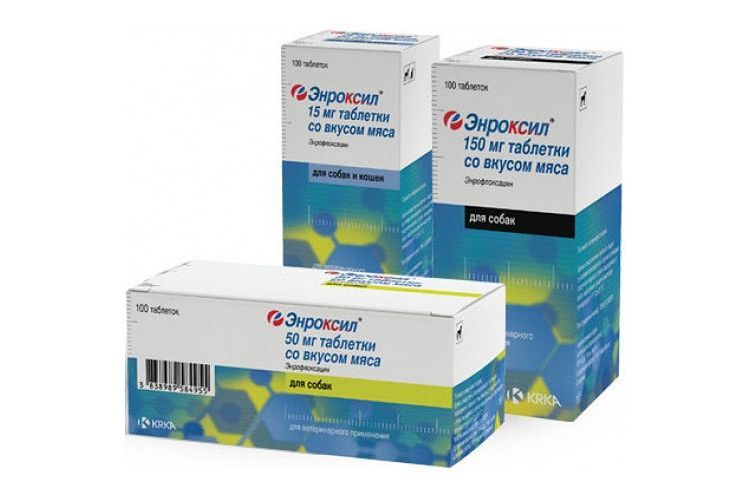
The tablets are available in three strengths. Each tablet may contain 15, 50, or 150 mg of the active ingredient. When purchasing the medication, pay attention to the concentration of the active ingredient.
The slightly convex tablets are round in shape. There is a scoring line on one side. They are packaged in blisters of 10. In addition to enrofloxacin, they also contain the following ingredients:
- magnesium stearate;
- cornstarch;
- sodium lauryl sulfate;
- methacrylic acid copolymer;
- meat flavoring, etc.
The injection solution is a clear liquid with a slightly yellowish tint. The active ingredient concentration can be 50 or 100 mg per 1 ml of medication. It is packaged in glass vials with a capacity of 50 or 100 ml. The solution contains butanol, purified water, and potassium hydroxide.
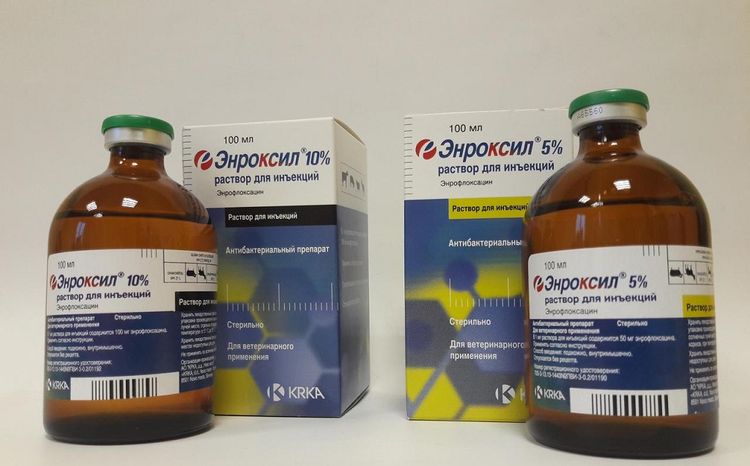
Because the vials are large, they are sealed with rubber stoppers for ease of use. When using the medication, there's no need to completely open the package; the solution can be drawn up with a syringe through the puncture in the stopper. This method helps maintain the hermetic seal and sterility of the medicinal liquid for a long time. The only requirement is that sterile syringes and needles be used for drawing up the medication. Disposable syringes are best for this purpose.
Price
The average price of Enroxil for dogs in online pharmacies is as follows:
- tablets, 15 mg – from 260 rubles;
- tablets, 50 mg – from 320 rubles;
- tablets, 150 mg – from 400 rubles;
- 5% solution, 100 ml – from 380 rubles.
How it works
Enroxil has a pronounced antibacterial effect against both gram-positive and gram-negative microorganisms. It destroys the following bacteria:
- streptococci;
- staphylococci;
- mycoplasma;
- salmonella;
- proteins;
- listeria, etc.
The drug's unique action is that its active ingredient causes pathological changes in the bacteria's DNA. As a result, the bacteria stop reproducing and die.
The antibiotic begins to work quickly. If the animal is given tablets, enrofloxacin concentrations reach their maximum within 1.5-2 hours. If an injectable solution is used, the antibiotic begins to work even faster. Regardless of the dosage form, the antibiotic's effect lasts for 24 hours. It spreads throughout the body via the bloodstream, making it successfully used to treat various inflammatory conditions.
When is it applied?
The instructions for use detail Enroxil's use in dogs. It is prescribed for the treatment of the following conditions:
- pneumonia;
- salmonellosis;
- streptococcosis;
- bacterial inflammation of the digestive system;
- infectious pathologies of the respiratory organs;
- atrophic rhinitis;
- colibacillosis;
- diseases of the urinary system of bacterial origin.
The medication is used only if the condition is caused by bacteria sensitive to fluoroquinolone antibiotics. Therefore, it is not used for self-medication and is prescribed only after a full clinical examination.
How to apply
Enroxil tablets are typically used for dogs. The daily dose is calculated based on weight. 5 mg of the active ingredient is required for every kilogram of body weight. For example, a tablet containing 15 mg of enrofloxacin is sufficient for a 3 kg weight.
Although the medication contains meat flavoring, many animals refuse to voluntarily take the pills. In such cases, owners often resort to a trick and mix the medication with their food. The tablets should be crushed first. If this doesn't work, the medication will have to be applied to the back of the tongue.
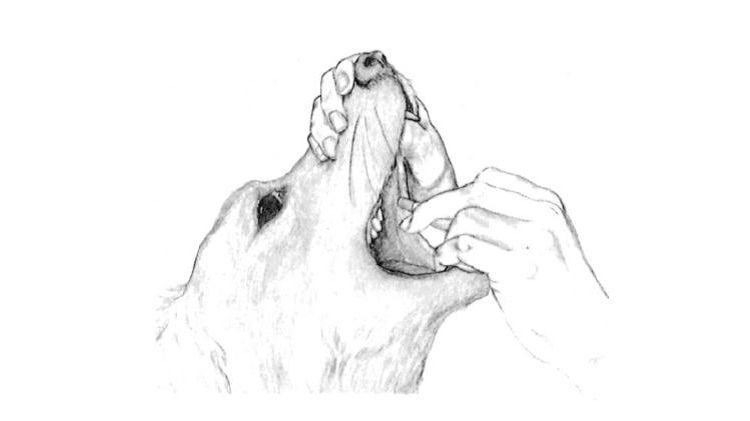
The medication is usually administered once daily, but the daily dose can be divided into two doses. Treatment should last at least 5 days. Do not stop taking the antibiotic after 1-2 days if symptoms have resolved. This may allow bacteria to survive, but they may develop resistance to the medication.
Please note! The antibiotic course may be extended to 10 days, but only by a veterinarian.
If injections are used, the Enroxil dosage for dogs, as per the instructions, is calculated using a similar formula: 5 mg of active ingredient per 1 kg of body weight. If a 5% solution is used, 0.1 ml of the medication per 1 kg of body weight is required.
Please note! A 10% solution is rarely used for dogs due to the difficulty of calculating the exact dosage.
Injections are administered subcutaneously. For large doses, it is recommended to administer the medication in multiple sites, as the injections are quite painful. A course of treatment typically lasts 5 days; for severe cases, the duration of treatment is extended to 10 days.
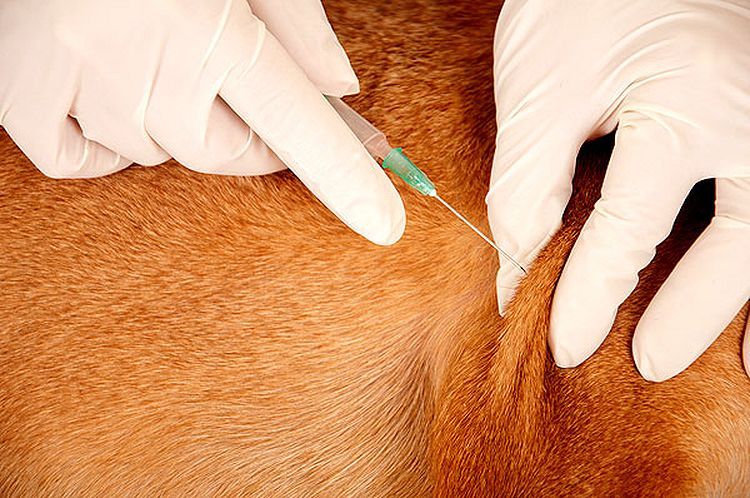
Symptomatic medications may also be used in conjunction with antibiotic treatment. A veterinarian should determine the appropriate combination of treatments.
What are the restrictions?
Enroxil is an effective antibacterial agent used for various conditions, but it also has a number of contraindications. Its use should be avoided in the following cases:
- in severe liver diseases (cirrhosis, liver failure, hepatitis etc.);
- in case of kidney pathologies occurring in severe forms;
- in case of intolerance to the active substance;
- in case of damage to the nervous system;
- for convulsions;
- for diseases of cartilage tissue and developmental disorders.
It is not recommended to use this antibiotic on puppies under one year of age, or on large breeds under 18 weeks of age, as it may cause problems with cartilage and bone tissue formation. Enroxil is also not recommended during pregnancy and lactation. However, a doctor should assess the risks to the offspring and the mother.
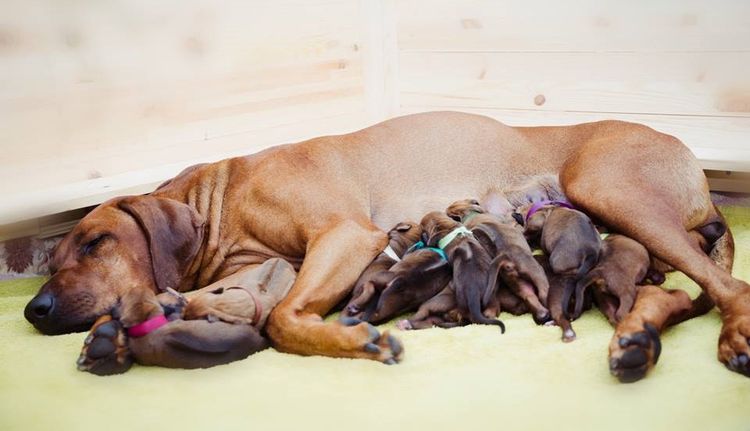
Please note! Do not combine Enroxil with other antibiotics, including tetracyclines, macrolides, and nonsteroidal anti-inflammatory drugs. It is also recommended not to combine the tablets with medications containing aluminum, iron, magnesium, and calcium cations, as they impair the absorption of the active substance in the digestive system.
Side effects
The medication is generally well tolerated by animals. Occasionally, increased bowel movements and softening of the stool may occur. This usually resolves spontaneously and does not require discontinuing the medication. Minor vomiting is also not a reason to discontinue the antibiotic.
In case of intolerance, allergic reactions may occur. In this case, it is best to choose a different antibacterial agent. If necessary, the animal is prescribed symptomatic therapy and an antiallergic medication is always administered.

Owner reviews
Anna, the pug's owner:
"Our dog was prescribed Enroxil for urinary tract problems. We were unable to evaluate the drug's effectiveness because severe diarrhea developed. Symptomatic treatment was ineffective until we discontinued the antibiotic. We then asked the veterinarian to recommend an alternative treatment."
Lida, owner of a toy terrier:
“There was severe inflammation of the lymph nodes. At first they injected BaytrilThere were no results. Another doctor prescribed Enroxil. The animal developed a high fever and terrible diarrhea. The drug was discontinued, but it took another 10 days for the stool to return to normal. I do not recommend it for treatment to anyone."
Veterinarian Reviews
Mikhail, a veterinarian with 7 years of experience:
"Although Enroxil is manufactured by a well-known company, it can't be considered one of the best antibiotics. It very often causes diarrhea and vomiting. I don't use it in my practice. There are safer veterinary antibiotics."
Olga, a veterinarian with 12 years of experience:
"Like any antibiotic, Enroxil can cause digestive problems. This is because antibacterial agents destroy not only pathogenic microorganisms but also beneficial intestinal microflora. I usually prescribe additional medications to support bowel function. In terms of effectiveness, the medication is good. It also has a broad spectrum of action."
Read also:


6 comments
Hope
I'm treating my 16-year-old dog with 150 tablets. The diagnosis is chronic bronchitis. She tolerates it well; I felt an improvement immediately after starting treatment, and her stool is normal, but I need to maintain the medication for the full duration, even longer than 10 days. I don't recommend injections. Afterward, severe hardening forms at the injection site and inflammation sets in.
Nina
We were prescribed Enroxil for our 39 kg German Shepherd. We were prescribed 150 mg three times a day. The instructions say 150 mg per 30 kg. I'm wondering if three tablets a day is a bit much, which works out to 450 mg per day.
Daria is a veterinarian
Hello! Why was this dosage prescribed? What is the diagnosis? Enroxil is typically prescribed at a dose of 2.5 mg/kg body weight, divided every 12 hours (roughly 100 mg in the morning and the same in the evening) or 5 mg/kg once daily, divided every 24 hours (approximately 200 mg per day). Perhaps the doctor intended 150 mg to be divided into three doses? Check with the person who prescribed the therapy.
Elena
What other intestinal support medications can be given to a dog while being treated with Enroxil? We administer it subcutaneously.
Daria is a veterinarian
Hello! FortiFlora is effective; you can also find medications for preventing dysbiosis during antibiotic therapy in human pharmacies. However, while antibiotics are being used, bacteria from probiotics/prebiotics will also be killed. It's best to administer them after the course of treatment has been completed. Also, review the diet to ensure it's easily digestible. Avoid heavy foods or foods that cause fermentation. This will only make the situation worse.
Natalia
I have an 11-year-old Labrador. She has bladder problems (sand and inflammation). Our doctor prescribed Enroxil 150 mg. It's been 10 days since we started taking it, and I see an improvement in her health. She can handle it until her next walk, and there's no diarrhea.
But I also want to say... there is no bad breath at all!!!! 🙂
Add a comment