
Exotic Shorthair (Exotic)
Hybrid cats have become famous worldwide for their atypical appearance and are attracting the attention of an increasing number of pet lovers. Unusual shapes and body parts, as well as unique coloring, are a magnet for cat lovers, increasing demand for unusual breeds.
The Exotic Shorthair cat has also joined the list of such coveted breeds. Also known as the "shorthaired exotic," these little creatures leave virtually no one indifferent to their appearance.
Exotic Shorthair cat The Persian is almost identical in appearance. However, their main difference is the length of their coat. While Persians have long, thick fur, Exotics have short fur. This is undoubtedly a huge advantage.
Firstly, grooming is easier (you have to brush the cat less often, and there are no mats). Secondly, Exotics shed virtually nothing. Persian Cats leave hair everywhere (on furniture, clothes).
Content
History of the breed
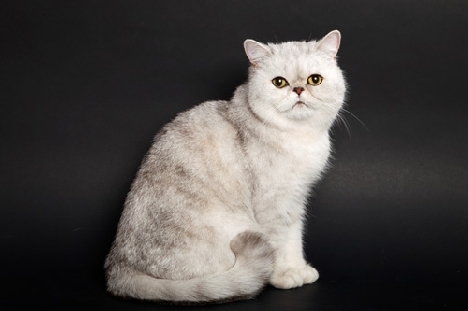
The first litter of Exotic Shorthair kittens appeared in the 1950s. Breeder Carolyn Bussey decided to produce a litter of brown cats. To do this, she crossed a Persian cat with a Burmese Brown. She wanted to produce the world's first litter of brown Persians. However, the result exceeded all her expectations. The resulting kittens had short, thick fur, but their coloring was black.
Carolyn wasn't upset at all and continued crossing Persians and Browns. So much effort had gone into registering the breed. There were cases where some unscrupulous breeders didn't track family relationships. There was no consistency, and these breeders weren't concerned about the purity of the breed. Yet, it's crucial to track all family history (over several generations) to rule out genomic abnormalities.
Some breeders falsified documents, claiming that all exterior changes occurred solely through evolution and were in no way related to the use of "rejected" individuals as parents. As a result of this persistent deception, cat fanciers' associations were forced to take extreme measures: refusing to register Exotic Shorthairs.
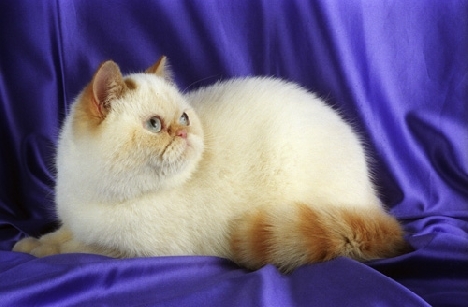
The first generation of kittens produced by Carolyn's experiment is considered the standard. Her notes and descriptions of the kittens were used, and breed standards were established based on them. Only after the Exotic genome had become strong was crossbreeding permitted between individuals of the same breed. This only happened in 1975.
Appearance
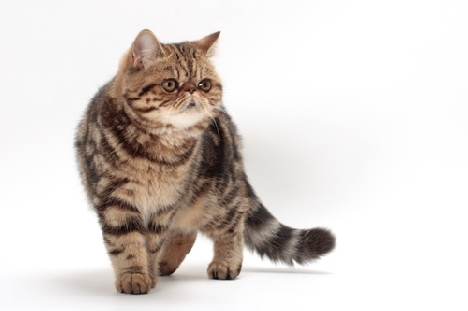
In their overall appearance, representatives of this breed are very similar to Persian cats. They have the same muzzle, the same huge eyes. They have the same naive, childish face—or rather, muzzle. The only difference is that these exotic cats are called "shoulder-headed." This amusing name comes from the fact that the cat's head seems to "grow" directly from its shoulders, due to its very short neck (despite having seven vertebrae, like all mammals) and wide.
The Exotic Shorthair has a fairly strong bone structure, with a rather rounded body shape. The cat is not fat, just fluffy (despite its short fur), stocky, and one might say compact and "knit." These cats can weigh up to 7 kilograms.
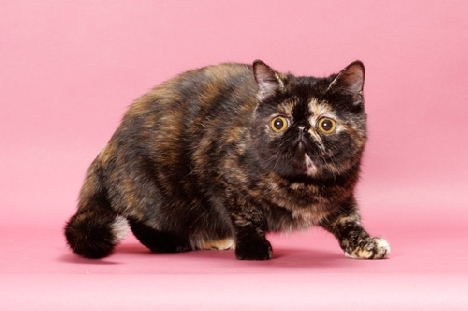
These cats are very cute. They're ideal for families with children. They almost always serve as a decorative addition to any home, adding warmth and comfort. Exotic cats come in a wide variety of colors, including tabby, tortoiseshell, and point (like Siamese).
Character
These cats are very friendly and peaceful. They get along well with both children and other pets. They have a very gentle nature and are practically non-confrontational. However, compared to Persians, Exotics are more cheerful, happy, and playful.
The Exotic Shorthair loves affection and attention. If you're away from home for long periods of time, this cat isn't for you. He'll miss you terribly. However, if you're already home, he won't be pushy. He'll sense when he can approach you.
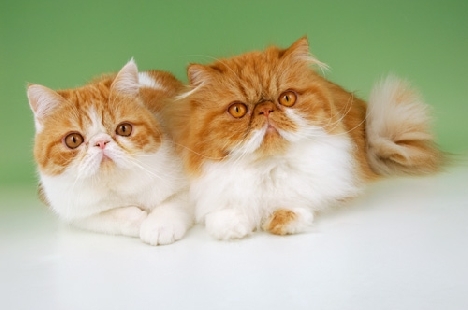
However, an exotic cat won't just climb into anyone's arms. It will first peer at you, trying to look you in the eyes. Only when it "gets the hang of it" will it approach and allow itself to be petted. Not just anyone will be picked up by an exotic cat.
Loyal to their master. Willing to follow them to a new home, to the mountains, or into the fire. Will remain loyal to their beloved master until the very end. Doesn't forgive betrayal, though isn't vengeful.
Exotic Shorthairs are ideal companions for solitary people. They are the best, most attentive, and most compassionate listeners of all domestic felines. When their owner speaks up, the cat remains attentive and doesn't move.
Cats also respond readily to human invitations to play and engage in mischief, no matter how old they are, whether they're weeks, months, or years old. Some members of this breed become excellent ratters, perhaps because at an early age they enjoyed chasing a rustling piece of paper steered by their owner with a string.
Exotics are incredibly loyal and obedient pets. They pick up basic commands instantly. For their intelligence and obedience to their owners, they're even compared to dogs.
Content Features
There are no strict "rules." Feed your pet a complete and nutritious diet to ensure it gets enough vitamins and minerals.
Regarding feeding, breeders recommend a 50/50 diet for exotic pets: half of the daily ration should be natural products, the other half should be prepared food. Make sure your pets don't overeat. If they quickly gain excess weight, they lose their former mobility and prefer long naps to active play.
Unlike Persian cats, Exotics don't require daily brushing. Their fur is short, so brushing is only done when necessary.
Exotics don't require daily walks outside. However, they enjoy running around on the lawn. So, in the summer, try to take your cat for walks outdoors as often as possible.
Typical diseases
Exotic Shorthairs don't have any particular predisposition to illness. Their genetics aren't particularly strong. A big thank you goes to the original breeders who carefully selected their parents.
However, as with Persian cats, minor problems with the nose and eyes are common. They often water, so they require careful care. Wipe with a clean cotton pad (from the outer corner to the inner corner). If you notice crusting or the eyelids sticking together, do not self-medicate. Consult a veterinarian, as the cause could be anything from simple conjunctivitis to more serious illnesses or even injuries (corneal abrasions, infections).
In addition, exotic cats are often bothered by:
- dental problems, the formation of tartar, periodontitis and gingivitis;
- hypertrophic cardiomyopathy – a common heart disease in cats, sometimes causing premature death in young cats;
- Polycystic kidney disease is a hereditary disease in which cysts appear on both kidneys.
Unfortunately, the jaws are too short, which can lead to dental problems. The bite may be abnormal, or the teeth may even fuse together.
Avoid overheating your pet, as breathing through shortened nasal passages is extremely difficult. And since the cat's fur is thick and dense, it makes things even worse. Heatstroke is easily avoided. Also, try to keep your pet out of drafts.
Choosing an exotic
Of course, choosing a cat should be instinctive, as the most important thing is that you "love" it. This applies, of course, unless you're buying an animal for shows or commercial breeding. In that case, you'll need a show-quality exotic, which will cost a considerable amount, so you need to approach the selection process more carefully.
When considering purchasing an Exotic cat, consider their genetic characteristics. A combination of certain external traits can indicate defects in the breed. For example, an animal with white fur and blue eyes is often deaf.
Video about the Exotic breed
Read also:


Add a comment