
Ectoparasites in dogs and treatment against them
Canine ectoparasites (from the Greek "ἔκτος") are living organisms that use the body surface of warm-blooded animals as a habitat and food source. Pet owners should know how to protect their pets from these harmful "tenants," as they carry many infections.

Content
How can a dog become infected?
Ectoparasites can get on a dog's body:
- through direct contact with an animal that has these parasites;
- when using items shared with other animals: dishes, toilet, bedding;
- while walking, coming into contact with plants or soil where some parasites may temporarily live;
- Puppies can become infected from their nursing mother.
Pet owners can bring parasites into their homes on their shoes or clothing. Therefore, ectoparasites can be detected in dogs even if they never leave the house.. Parasites spread especially quickly in places where animals are kept in large numbers.

Types of ectoparasites and what diseases they carry
Based on their lifestyle, external parasites are divided into permanent (they live, feed, and reproduce on the body of one “host”) and temporary (for them, the dog’s skin is only a source of food).
Ticks
Ticks are arthropods of the arachnid class, of which there are over 54,000 species. They are the most dangerous ectoparasites in dogs, carrying pathogens that cause many diseases:
- Otodectosis (ear mite) is caused by the mite Otodectes cynotis. These mites live in the external auditory canal, feeding on the epidermis. Lymph secreted from the damaged areas forms itchy scabs. If pathogenic microflora develops, inflammation of the middle and inner ear can develop.
- Demodicosis. In dogs, the disease is caused by mites of the genus Demodex canis, which infest the skin follicles, causing extensive skin lesions. This condition most often affects young dogs under one year of age.
- Sarcoptic mange (scabies) is an invasive dermatitis caused by mites of the genus Sarcoptes. Sarcoptic mites live, feed, and reproduce in the epidermis. Outside the host animal, they remain viable for no more than 3-4 weeks.
- Notoedrosis is a highly contagious disease that causes skin inflammation and hair loss (usually on the scalp). It is caused by the scabies mite Notoedres cati, which lives and reproduces in the deep layers of the skin, burrowing through the skin.
- Ixodid and argasid ticks are the primary hosts of two dangerous diseases (in which intracellular parasites reproduce). These are piroplasmosis (caused by protozoan eukaryotes of the genus Babesia) and haemobartenellosis (caused by the gram-negative bacterium Mycoplasma haemofelis). When entering a dog's bloodstream through a tick bite, the microorganisms destroy red blood cells, leading to acute anemia, and affect the kidneys and other organs.
- EhrlichiosisThe disease is caused by the intracellular bacterium Ehrlichia Canis. It is transmitted by the brown tick Rhipicephalus sanguineus. When the tick bites, the bacteria are carried through the bloodstream throughout the body, affecting several systems simultaneously, primarily the liver, spleen, and lymph nodes.
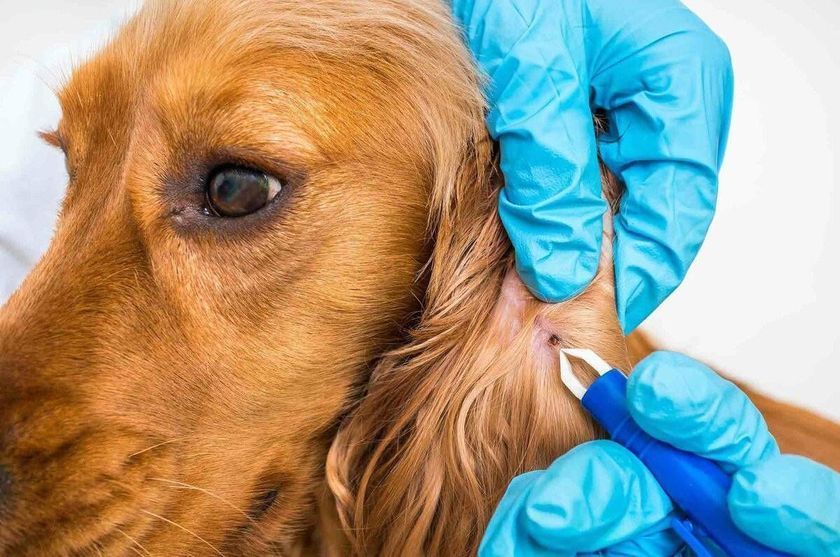
Ticks most often jump onto dogs during walks: from the soil, grass, and plants no higher than 1 meter; the arthropods cannot climb trees. Despite the relative "specificity" of the parasite, a single tick can harbor various pathogenic microorganisms, potentially infecting a dog with several diseases at once. Therefore, treating dogs for these ectoparasites is essential.
Fleas (Ctenocephalides)
These are small insects, a group comprising approximately 200 genera. Fleas of the genus Ctenocephalides canis inhabit dogs. The flea's body is wingless, laterally compressed, and equipped with three pairs of legs with spiny bristles, which it uses to attach itself to the skin or fur of its host. Fleas feed on blood, move primarily by jumping, and the female lays her eggs anywhere.
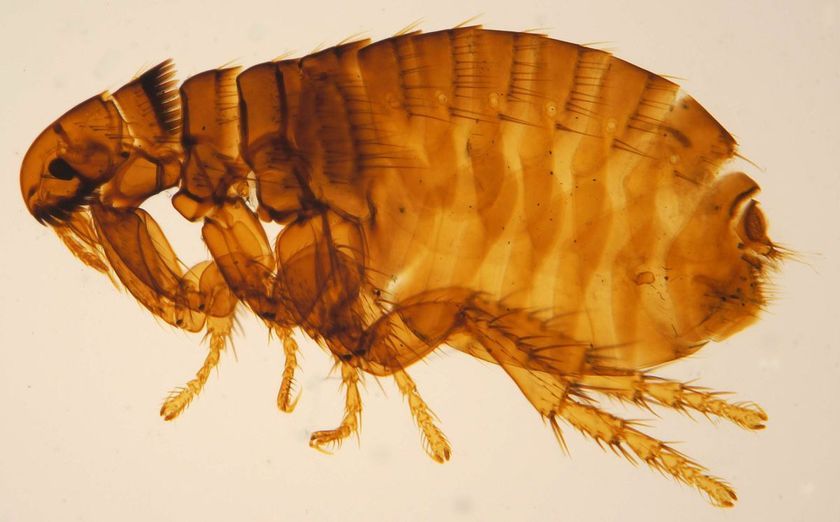
Fleas cause severe itching, dermatitis, scratching, and patchy hair loss (alopecia) in dogs. These insects can infect dogs with helminthiasis (dipylidiasis). Fleas are most often detected by the presence of small, black droppings.
Lice (Pediculus)
These ectoparasites spend their entire lives on the body of a single "host." Sucking, or true, lice feed on blood, lymph, and epidermal particles. They reproduce very quickly. Treating dogs for lice-eating ectoparasites will prevent the animal from developing a special type of dermatitis called siphunculatosis. This disease is characterized by symptoms such as itching, inflammation at the bite site, dullness of the coat, and patchy baldness. The presence of these parasites weakens the animal's immune system and increases susceptibility to infections.

Lice (Trichodectidae)
Tiny, 1-2 mm in size, these parasitic insects belong to the order Pseudomonas. Females lay up to a hundred eggs during their lifetime, gluing them to the scalp. After 3-4 weeks, the eggs (nits) hatch into young insects that feed on epidermal cells, hair keratin, and sebum (a product of the sebaceous glands).
Bites from biting lice (lice eaters) cause a skin disease called trichodectosis in dogs, which is accompanied by itching and zonular alopecia (hair loss).
Symptoms and diagnosis
One of the main signs of ectoparasites in dogs is severe itching and scratch marks. The dog becomes restless, scratches constantly, and sleeps poorly. Its coat becomes unkempt, loses its shine, and develops bald patches.
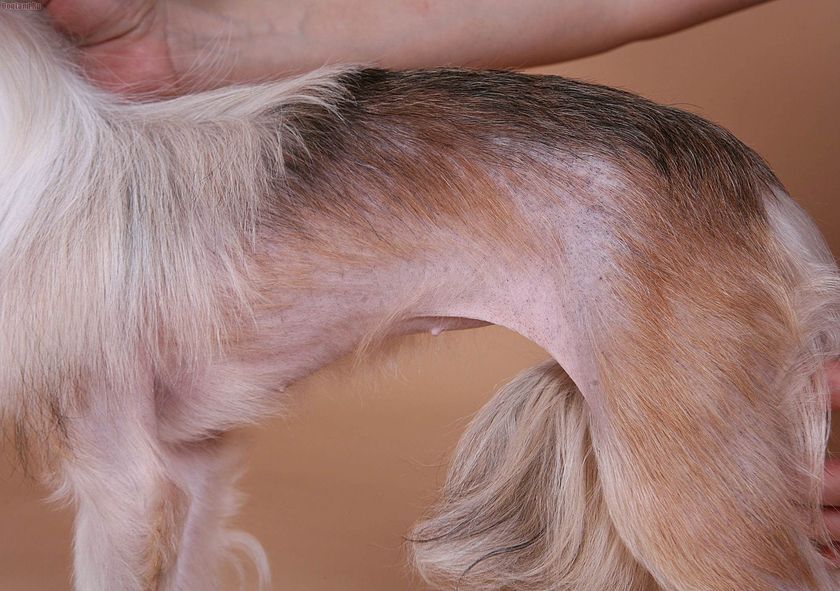
With a severe ectoparasite infestation, a dog becomes lethargic, loses its appetite, refuses to play, and occasionally displays unprovoked aggression. A thorough examination of the pet's fur or skin may reveal the cause of this behavior—a parasitic insect.
A veterinarian makes a diagnosis based on the owner's medical history and a microscopic examination of the insect found on the dog's body. The parasite can also be identified by taking a scraping from the affected area. The scraping is placed in a drop of oil and examined under a microscope to determine the presence and number of parasites, their eggs, and larvae.
Methods of protecting dogs from ectoparasites
It's important to treat dogs regularly with products designed to kill external parasites, especially in the spring and summer. It's also important to rid your apartment, pet grooming items, and the surrounding area if your dog is only walked there.

Insectoacaricidal agents contain one or more substances with antiparasitic action. The most common are:
- Imidacloprid is an insecticide from the neonicotinoid class;
- Pyriproxyfen is a pesticide effective against most insects;
- Permethrin is an ester of dimethylcyclopropanecarboxylic acid, an insecticide, an acaricide;
- Pyrethrin is a natural insecticide found in plants;
- Methoprene is an insecticide that inhibits the growth and development of insects,
- Fipronil is a broad-spectrum antiparasitic drug;
- Amitraz is an acaricide that causes paralysis and death of arthropods;
- Selamectin has nematocidal, insecticidal and acaricidal effects.
Some topical antiparasitic medications can cause allergic reactions in dogs, including skin rashes, tearing, and salivation. In this case, the medication should be thoroughly rinsed with water and discontinued.

Protective equipment
When choosing insecticidal acaricidal agents, consider their duration of action and the purpose of the treatment—treatment or prevention. Antiparasitic drugs are available in various forms.
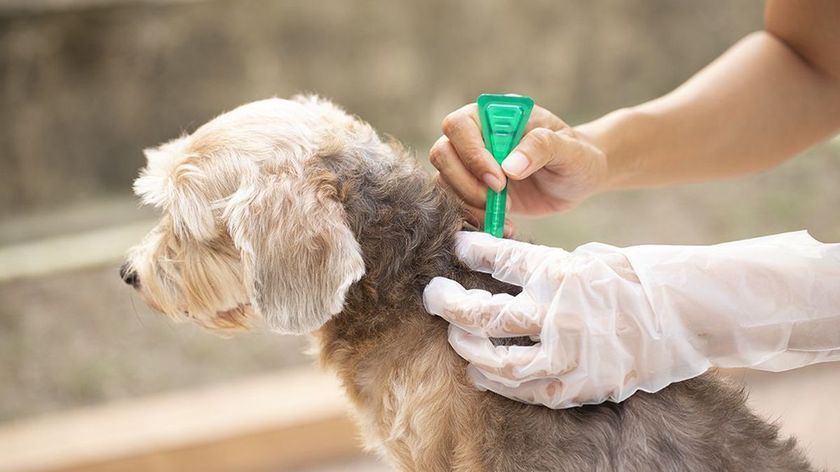
Drops on the withers
Spot-on is the simplest and most effective treatment for ectoparasites. When applied to the base of the dog's head or back (where the dog can't lick the product), the product quickly spreads over the animal's body. Bathe the dog after treatment. drops It should not be left for 1-2 days; for reliable protection against ectoparasites, such treatment is usually sufficient for 2-3 months.
The following drugs are popular in this category:
- FrontlineDesigned to kill fleas, lice, and ticks. The active ingredient is fipronil, manufactured in France.
- Flevox. Protects against insect and tick attacks. Active ingredient: fipronil, manufactured by Vetoquinol, France.
- AnimAll VetLine. A combination insecticidal acaricide. Contains permethrin, imidacloprid, and 2% pyriproxyfen. Made in Germany.
- Prazicide complexIngredients: praziquantel, ivermectin, levamisole, thiamethoxam. Manufacturer: Apicenna, Russia.
- Advokat. Combination antiparasitic drug. Ingredients: imidacloprid, moxidectin. Manufacturer: Bayer, Germany.
- BlokhNetDesigned to kill fleas, lice, and ticks. Contains fipronil, benzyl benzoate, diethyltoluamide, and juvemon. Manufacturer: Astrapharm, Ukraine.
- Leopard, a synthetic insecticide based on fipronil. Manufactured by Agrovetzashita, Russia.
Sprays
Sprays are solutions packaged in spray bottles. Most antiparasitic medications in aerosol cans have a prolonged action. They are applied to all parts of the dog's body, ensuring the product wets both the fur and skin, but avoids contact with mucous membranes. It is also recommended to spray the dog's living area, its resting area, and its litter box.
Preparations for protecting dogs from ectoparasites in the form of sprays:
- ProVet Insektostop. Effective against fleas, lice, chewing lice, and ticks. The active ingredient is fipronil. Manufactured by Priroda Pharmaceuticals, Ukraine.
- Bars. A synthetic insecticide against insects and ticks based on fipronil. Manufactured by Agrovetzashchita, Russia.
- SUPERIUM. A comprehensive product that protects against most types of ectoparasites. Active ingredients: fipronil and pyriproxyfen. Product of Priroda, Ukraine.
- Hartz. Active ingredient - Tetrachlorphenphos, an organophosphate derivative. Country of origin: USA.
- Vitomax Platinum. A combination drug based on fipronil and ivermectin. Manufactured by Astrapharm, Ukraine.
- BolfoAerosol for killing fleas, lice, and ticks. Active ingredient: proposcur, manufactured by Bayer, Germany.
- Sentry PRO. A complex product containing pyrethrin, pyroproxifen, and piperonyl butoxide. Made in the USA.
- Frontline. A universal French insecticidal aerosol product based on fipronil.
- Vet's Best. A natural remedy for protecting dogs from ectoparasites. Ingredients: eugenol (phenol), peppermint oil.

Solutions
These are ampoules containing insecticidal acaricidal agents in a concentrated solution. To treat dogs for ectoparasites, the ampoule's contents are diluted in water and used for spraying, bathing, or treating the ears.
Popular products in this group:
- AkaroKILL. Active ingredients: fipronil, cyfluthrin, and pyriproxyfen. Country of origin: Ukraine.
- Deltox. Active ingredient: deltamethrin. Manufactured in Ukraine.
- Barrier Super. Active ingredient: fipronil. Manufactured by Product, Ukraine.
- Ectosan. Ingredients: alphamethrin, piperonyl butoxide. Country of origin: Ukraine.
- Neostomazan, contains Transmix, Tetramethrin. Manufactured by CEVA Sante Animale, France.
- Decta Forte. Active ingredients: fipronil, chloramphenicol, lidocaine hydrochloride. Manufactured by Apicenna, Russia.

Pills
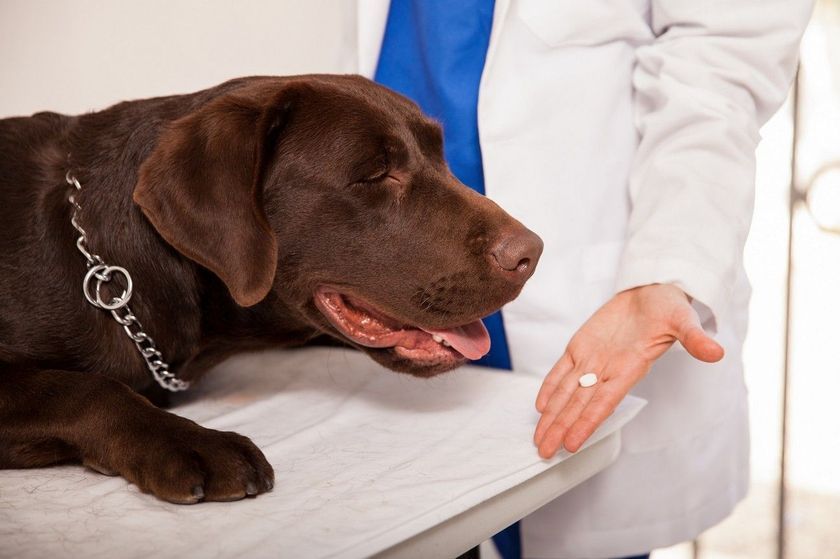
Despite being somewhat more expensive than topical medications, tablets are one of the most popular methods of controlling ectoparasites. The advantages of this dosage form include effectiveness, prolonged action, and ease of use.
Representatives of this group:
- Collar Superium (COLLAR Company, Ukraine);
- Inspector Quadro Tabs (Ecoprom, Russia);
- Zoetis 'Simparica' (Germany, USA);
- Neoterica Protecto (Germany).
Collars
Such pest-killing or repelling agents are used alone or in combination with other protective measures. Fabric collar impregnated with insecticidal acaricidal or repellent substances that are constantly released in small doses onto the dog's skin and provide protection from ticks and insects for three to six months.
Veterinarians recommend collars:
- Beaphar (Holland);
- Ceva Adaptil (France);
- Delix (Bionix, Russia);
- Dana Ultra (Api-San, Russia);
- Bruno – (Russia).

Shampoos
These are disposable products that are usually used to kill parasites on a dog's body if it has been out for a walk without protection.
Popular brands include:
- Nature "Lux";
- BioVax;
- The barrier is super;
- Phytoelite;
- Aristocrat;
- Delix;
- Olcar.
Read also:
- Why are ticks dangerous for dogs?
- Flea Dermatitis in Dogs: Symptoms and Treatment
- How to protect your dog from ticks


Add a comment