
Tar soap for fleas in cats
When insecticides are contraindicated, cat owners often use tar soap. Many choose it for its natural ingredients, but its effectiveness in combating parasites that plague pets is a matter of ongoing debate.
Content
Composition and properties
Tar soap is used not only to combat fleas in cats and dogs, but also to treat various dermatological conditions. And although there are a large number of antiparasitic medications on the market today, folk remedy is in demand. It contains the following components:
- Birch tar is a natural ingredient with antiseptic and wound-healing properties. It contains benzoyl, which has a detrimental effect on the receptors of parasitic insects.
- Sodium salts help maintain the water-salt balance of the epidermis and prevent excessive peeling.
- Alkali and phenol cause burns in parasites and are capable of destroying fungi and pathogenic microorganisms.
- Citric acid is a repellent and can kill fleas and bedbugs.
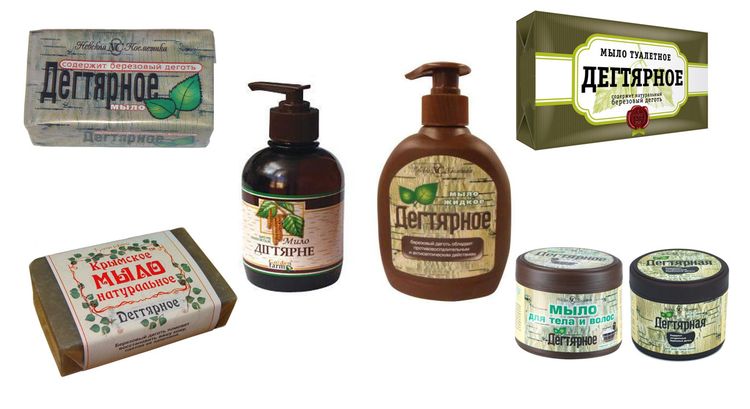
The auxiliary components include water, thickeners, stabilizers, and other substances. Birch tar, which is included in the composition, imparts a distinctive odor and a dark brown color.
The product does not contain insecticides and cannot kill insects, although it does have a negative effect on them. It is effective against adult insects, but does not eliminate eggs and larvae, as the specific odor simply repels parasites from the animal. For effective results, soap alone is not enough.
Which soap is better – liquid or solid?
These days, you can find liquid tar soap in bars on store shelves. Each form has its own advantages and disadvantages, so it's difficult to say which is better. Solid bars are more common. They contain only natural ingredients, but the downside is that they're difficult to use. They don't lather well, so they need to be soaked and prepared in advance.
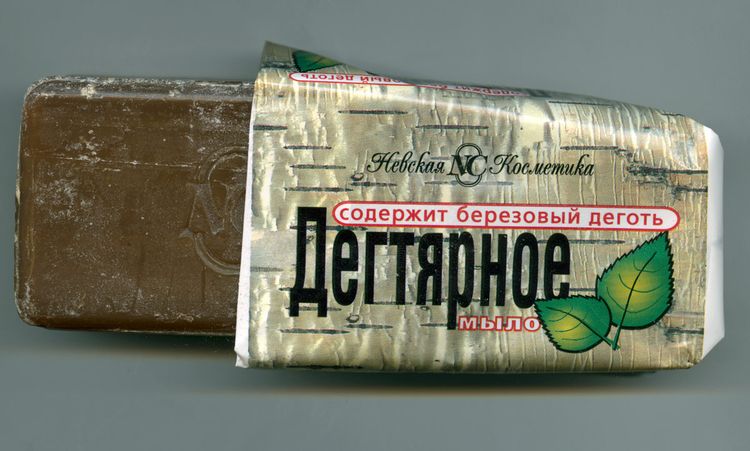
Tar-based soaps have similar properties and effects. They're easy to use (just press the pump once or a few times), but often contain surfactants (surface active agents). These can be extremely drying to the skin, which is especially noticeable with frequent use.
How to apply?
If you decide to use tar soap for cats, follow these steps in the following order:
- Lather the soap first (you can soak a bar in water). If you're using liquid soap, you won't need to do this.
- Wet the animal's fur thoroughly.
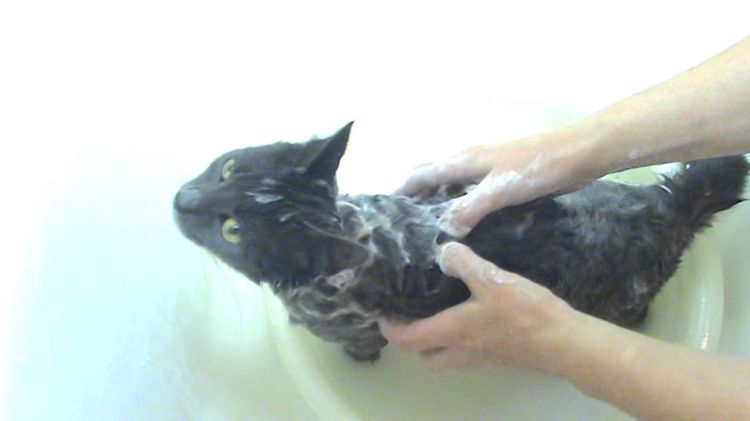
- Lather your cat, avoiding getting foam in the ears, mouth, and eyes to avoid irritation of delicate areas.
- Without rinsing off the foam, wrap it in an old towel and hold it for 5-7 minutes.
- After this, rinse the wool thoroughly with water and dry it.
- Carefully comb the animal, removing parasites and their eggs.
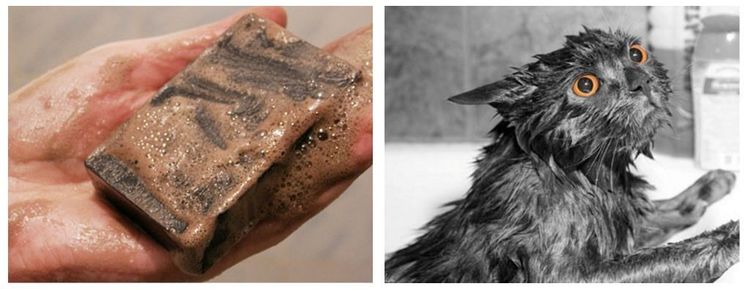
If the infestation is severe, rinse off the foam after the first wash, taking with it most of the parasites. Apply soap again and leave for 5-7 minutes. Repeat this procedure every 2-3 days until the insects are completely gone. It's best to have two people do this, as cats often dislike being bathed and may try to escape.
It's equally important to treat the premises and prevent re-infestation. To do this, change or wash the bedding, and steam-treat the dishes, house, and other pet items. Use specialized insecticides throughout the house, paying particular attention to areas near baseboards, under the bathtub, and behind cabinets.
To eliminate the possibility of re-infection, it is advisable to use before going outside collar, if there are no contraindications.
Contraindications
Tar soap has no contraindications. It can be used on kittens from 5 weeks of age, as well as on pregnant and nursing cats. Bathing is also permitted on wounds, cuts, or other skin injuries. Birch tar has an antiseptic effect and stimulates regeneration processes, accelerating wound healing.
The soap does not have a toxic effect on the body, so it is well suited for controlling fleas in weakened and old animals, as well as those that have undergone surgery or serious illnesses.
The only contraindication is individual intolerance to the ingredients. If irritation, redness, or itching occurs, discontinue use and seek an alternative.
Advantages and disadvantages
The advantages include:
- availability and low price (about 50-60 rubles);
- high efficiency;
- natural composition;
- absence of harmful substances;
- Suitable for use with small kittens.
The disadvantages are as follows:
- a sharp unpleasant odor;
- the need for reprocessing;
- the complexity of the procedure (animals usually do not want to bathe).
In addition, the product is not effective against flea eggs, so additional measures must be taken.
Owner reviews
Alexandra, the kitten's owner:
"My daughter brought home a cute kitten from the street. He was constantly scratching himself, and we discovered fleas. We were afraid to use special drops because he was so young (about a month old). We bathed him with tar soap. When we soaped him, the fleas jumped right out of his fur. After repeat treatment four days later, Murzik stopped scratching. It's an affordable and effective solution, although it's very smelly."
Anna, owner of a 2-year-old cat:
"Our cat started scratching constantly. In some places, he even scratched his skin. We went to the clinic, and the doctor recommended German antiparasitic drops, but they didn't help. The cat continued to scratch. On the advice of a friend, I bought some tar soap. After just the first bath, he stopped scratching, and the wounds began to heal."
Veterinarian Reviews
Lyudmila, veterinarian:
"There are so many effective and safe products on the market for killing fleas and other parasites, so I don't see the point in resorting to old-fashioned methods. Tar soap is so last century. Why torture an animal when you can just apply a few drops?"
Lida, a veterinarian with 15 years of experience:
"Sometimes I recommend owners use tar soap to kill fleas. It's the best option for kittens and pregnant cats, as it's non-toxic and doesn't have any negative effects on the body. Allergies can occur, but in my experience, I've only encountered this once."
Read also:


1 comment
Yaya me
I tried everything. Drops, sprays from different manufacturers—nothing helped. Tar soap, then I rinsed with wormwood infusion—they were gone. The best remedy. They recently appeared again (we live in a private house, and the cats roam outside). This time, I added pure tar. The effect was immediate. The itching stopped the next day. The bedding where he lay was black with dead fleas. The smell doesn't bother me, but I think it's worth it for the effect.
Add a comment