
Drahthaar (German Wirehaired Pointer) is a dog breed
The German Wirehaired Pointer (Drahthaar) is a versatile hunting dog breed. Drahthaars have earned the respect of hunters for their exceptional intelligence, excellent working skills, docility, and friendly nature. These dogs are tireless assistants in the field, and at home, they are affectionate companions and reliable guardians.
Content
History of origin
By the early 18th century, several breeds of bristle-coated hunting dogs existed in Europe. In France, there were Griffons, and in what is now Poland, there were wire-coated bird dogs, which originated from crossing smooth-coated pointers and Barbets. Germany also had native bristle-coated dogs, but they were not widely distributed at the time, as German hunters were fascinated by short-coated English pointers. Only several decades later, the Germans noticed that their native wire-coated dogs were appearing in unacceptably small numbers at shows and decided to rectify the situation.
A society called the "Deutsch-Drahthaar" (DD) was formed, with the goal of uniting all existing wire-haired breeds and developing a versatile working dog suitable for hunting birds and game, well-built, and with a practical coat. The existing wire-haired pointing breeds of German, French, and Belgian origin were used as a basis: the Korthals Griffon, the Stichelhaar, the Poodle-Pointer, and the short-haired German Shorthaired PointerThe breed standard was approved already in 1924.
The name of the breed emphasizes the main distinguishing feature of the dogs and is formed from two German words: Draht – “wire” and Haar – “hair”.
Drahthaars began appearing in Russia before the October Revolution, but they only became widespread in the post-war years, when various breeds of wirehaired pointers were imported from Germany. Subsequent breeding focused on improving hunting skills: enhancing scent, strengthening the dog's stance, and accelerating its retrieval speed. The German Drahthaar was taken as the standard and essentially re-bred, following the path of German breeders, but better adapted to harsh climates.
Video review of the German Drahthaar dog breed:
Appearance and standards
German Wirehaired Pointers are distinguished by their noble appearance; they are robust, energetic, and strong. Their height is equal to or a maximum of 3 cm longer than their body length. Sexual dimorphism is very pronounced. Males stand 60-68 cm tall, while females are 10 cm shorter. There is no strict weight limit; it is important that the dog be harmoniously built.
There are two standards for the Drahthaar breed in Russia: the standard adopted by the All-Union Cynological Council of the USSR Ministry of Agriculture in 1979 (valid only in the “territory” of the communities - MOOiR and LOOiR), and the FCI (International Cynological Federation) standard - No. 98/29.11.2000/D, developed by German cynologists (adhered to by all other organizations involved in breeding Drahthaars).
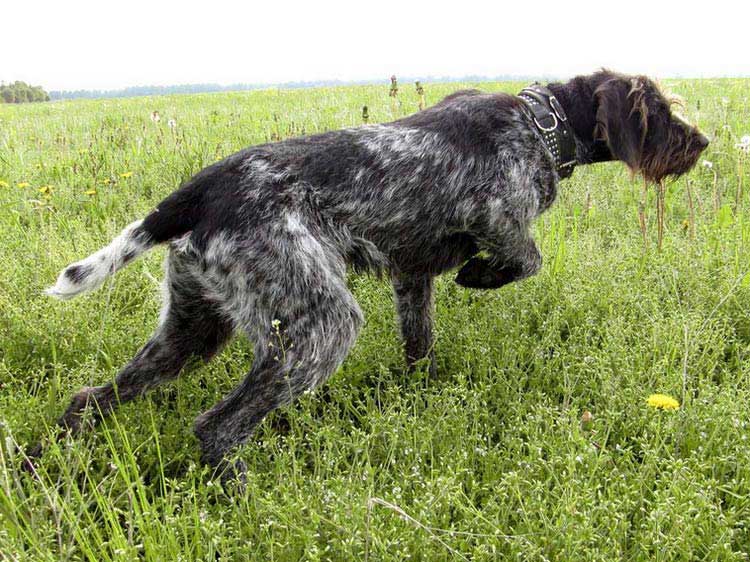
The head is proportionate to the body. The forehead is flat, and the stop is clearly defined. The nose is fairly large with wide-open nostrils and is pigmented. The lips are tightly fitting. The jaws are strong, with a scissor bite. The eyes are small and dark. The ears are medium in size, set high, and wide at the base.
The neck is fairly mobile, dry, and of medium length. The topline is straight but moderately sloping backward. The chest is broad and deep, with a pronounced sternum and well-sprung ribs. The underline is tucked in an elegant arch. The tail follows the line of the back. In countries where it is not prohibited by law, it may be docked. The legs are strong, straight, and sinewy.
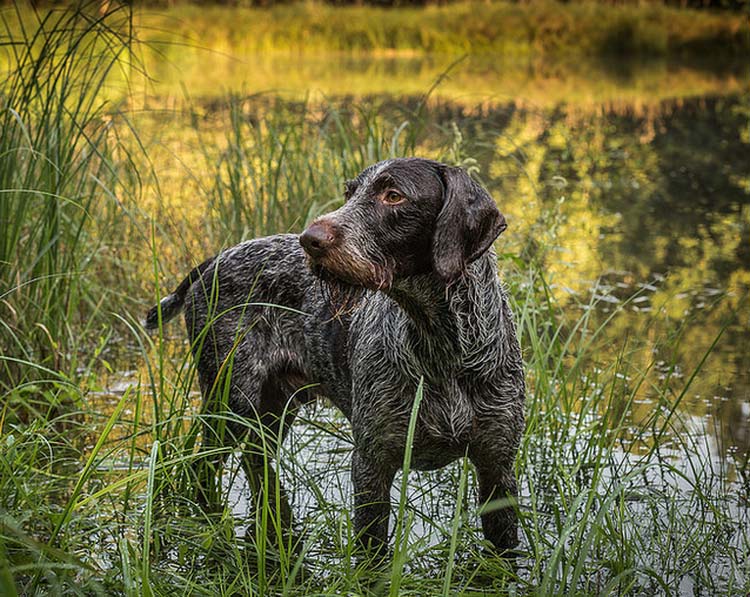
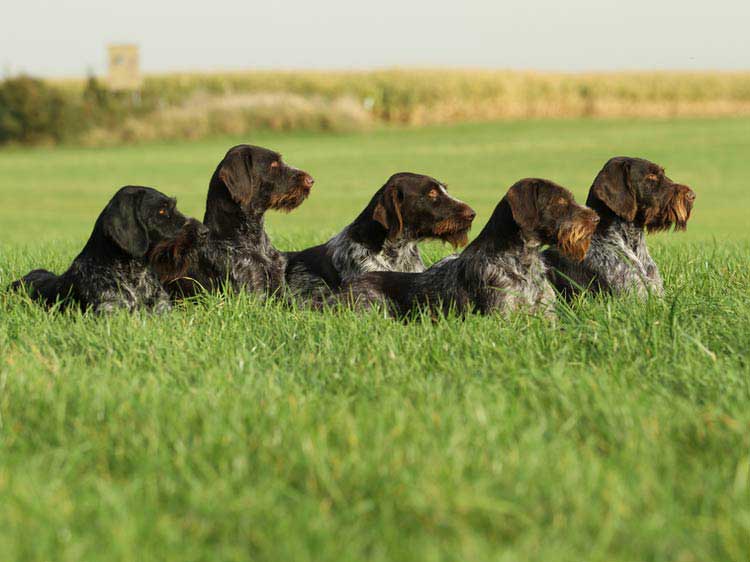
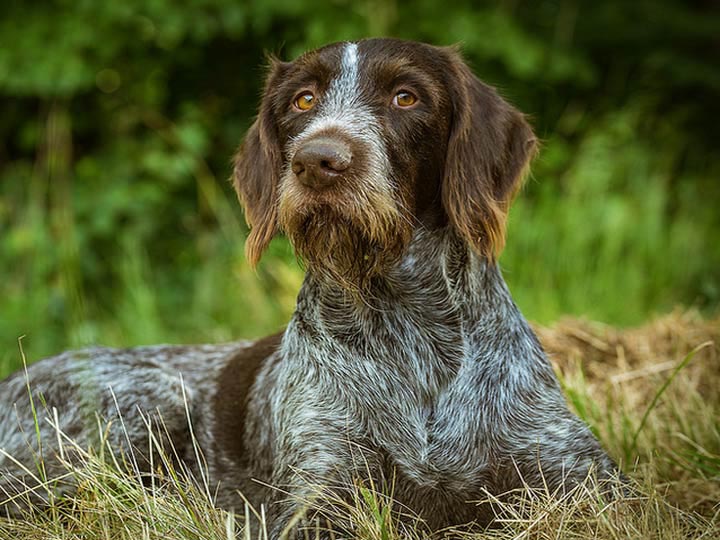
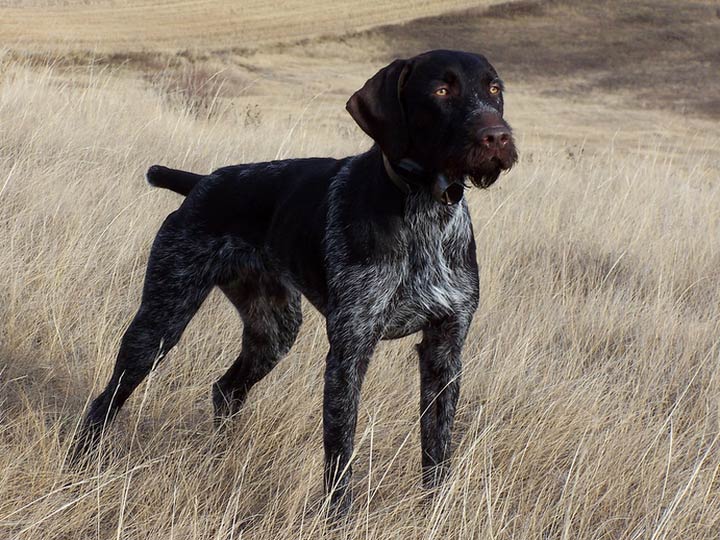
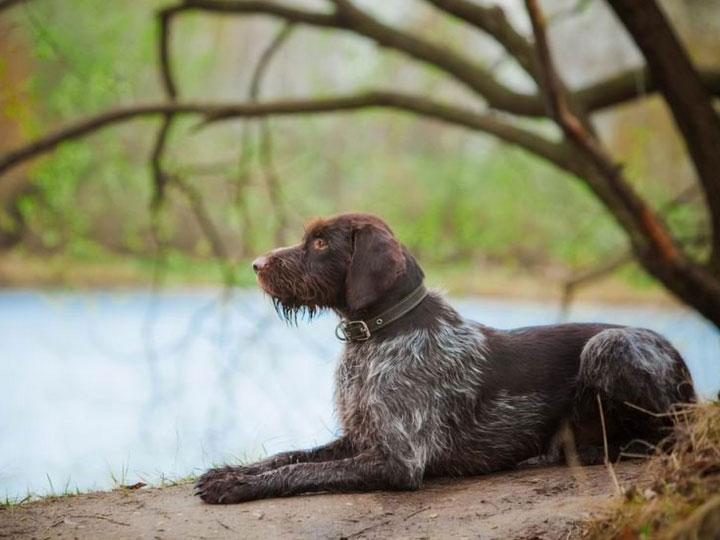
The coat is thick, with an undercoat, and lies close to the body. It's up to 4 cm long and feels very hard and dense to the touch. It provides the dog with good protection from injury and adverse weather conditions. The muzzle is adorned with a stiff beard and eyebrows.
There are four colours allowed:
- Black and white;
- Piebald;
- Brown piebald;
- Brown or brown with a "tie" (white patch on chest).
Character
The standard describes the character of the Drahthaar rather dryly, but accurately: serious, authoritative, balanced, not timid and not aggressive.
Drahthaars are active, intelligent, and loyal dogs that need to be kept busy. As puppies, they can be overly active and somewhat irritable. They mature late, only at 2-3 years of age. Drahthaars are often prone to excessive barking. They do not tolerate separation from their owner well, and they can be jealous and stubborn, especially if they don't receive enough attention.
The German Wirehaired Pointer usually gets along well with other animals, is not hostile to cats (this does not apply to neighboring cats) and peacefully shares territory with dogs, but will still strive for dominance.
German pointers are very wary of strangers and can sometimes be vicious when serving as guard dogs. It's worth noting that this isn't a good quality for a pointer, and it shouldn't be overly cultivated, as the dog will encounter many strangers while hunting. It should be calm and not invest its soul in guarding its owner's gun and backpack.
Passionate and aggressive on the hunt, the German Wirehaired Pointer is usually calm and good-natured at home, making an excellent companion who will patiently tolerate children's antics. German Wirehaired Pointers bond with all family members, but only one can emerge as the leader.
The German Wirehaired Pointer is a natural hunter. It shouldn't be kept solely as a companion or a child's nanny. This breed will be unhappy if it can't thrive in the field, and finding a suitable alternative to hunting in the city is very difficult.
Education and training
The first year of a dog's life is the most crucial. This is the period during which the dog's development begins, and this development is completed by around eighteen months of age. Any gaps in training will be difficult to compensate for or correct. The period up to 10 months is especially important. Owners should focus not only on proper mental but also physical development. Training should begin no earlier than 7 months, but only after the dog has mastered the general training course and can follow commands from a distance. By the third year of life, the dog has become a fully formed individual, and all working skills are consolidated.
The Drahthaar has a very willful character, but with proper training the dog will understand its owner at a glance, and will become docile and easy to control.
It's best to practice commands in a game format. Lessons should be short and varied. Any material covered should be repeated and reinforced. All commands are usually taught at home and reinforced outside. Ten-minute sessions several times a day are better than an hour straight. The German Wirehaired Pointer is considered a highly intelligent dog, and punishing it in any way other than a reproachful tone is undesirable.
Hunting with a Drahthaar
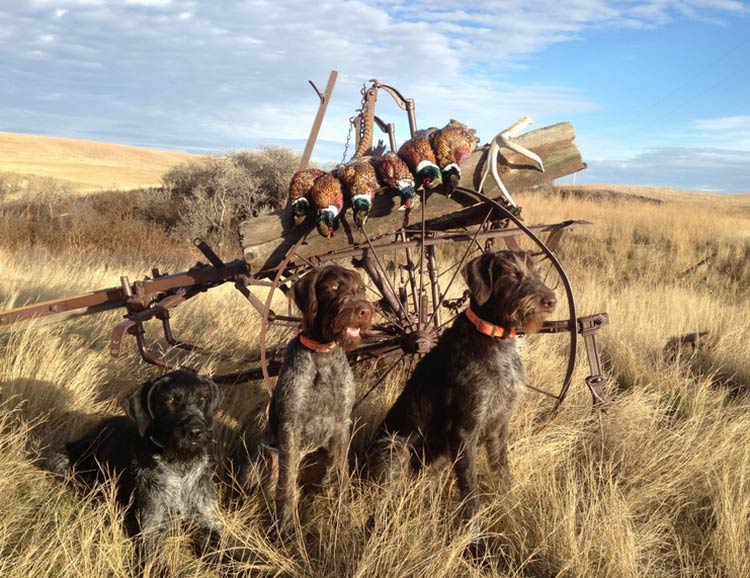
German Wirehaired Pointers, as originally conceived, have become versatile working dogs, working both on birds (marsh, field, meadow, and forest birds) and game (foxes, hares, wild boar, and roe deer). These dogs track, retrieve, point, and bark at game. The German Wirehaired Pointer works equally well before and after the shot, although in the field, it is significantly inferior to English pointers.
Hunters value Drahthaars for their versatility in work, intelligence and docile nature.
The Drahthaar's search range in the field is up to 70 meters. The dog works in any terrain, in any weather, galloping or trotting, holding its head level with its back, only occasionally lowering its nose to check its progress. The breed is characterized by good tracking on birds and hares. The Drahthaar is capable of pursuing wild boar and tracking wounded game.
Content
The German Wirehaired Pointer is suitable for both apartment and kennel living. If the dog will be kept outside year-round, the kennel should be insulated, with a vestibule, and the kennel should be spacious enough (approximately 4 square meters per dog). In an apartment, German Wirehaired Pointers are calm, clean, and obedient, provided, of course, that the owner provides the dog with active exercise. German Wirehaired Pointers quickly adapt to changes in environment and travel well. However, some dogs (especially young ones) can experience car sickness.
Physical activity
The German Wirehaired Pointer requires a great deal of exercise. At any age, free running, with acceleration and deceleration, over various terrain, as well as swimming, are essential. Starting at 1.5 years of age, you can add weighted running or sledding, and from 2 years of age, introduce strength training and carrying objects in its mouth that imitate the appearance and weight of a hare, fox, or bird. If a German Wirehaired Pointer doesn't get enough exercise, it can become restless and clingy.
Care
Grooming a German Wirehaired Pointer is moderately difficult, as the dog's wire-haired coat requires trimming twice a year. The wire-haired hair does not shed easily, even during the shedding season. The dog needs help renewing its coat by plucking out overgrown hairs. Between these grooming sessions, brushing the German Wirehaired Pointer once or twice a week is sufficient, preferably with a thick, natural-bristled brush. Bathe the dog as needed, usually more frequently in the summer than in colder months.
Many people neglect the need to trim the German Wirehaired Pointer, which interferes with the formation of a new, hard coat and significantly reduces the protective qualities of the coat.
Your dog's ears should be regularly inspected and cleaned as needed, and the condition of its paw pads should also be monitored. Nails wear down on their own with regular exercise and don't require trimming. Eye condition should also be monitored; eyebrows should not interfere with the cornea and irritate it. To prevent plaque buildup, it's recommended to brush your dog's teeth at least once or twice a week, especially if your dog eats a natural diet.
Diet
Whether to feed a dog natural foods or prepared food is entirely up to the owner. While dry food is much more convenient because it saves the time of preparing a complete meal, many breeders recommend natural foods. Raw beef is best, while well-cooked organ meats are recommended. Porridge should be semi-liquid. Kefir and yogurt are good dairy options. Hard cheese can also be grated into the porridge and used as a treat during training. Bread with bran is fine, but not the pulp, but the slightly dried crusts. Vegetables, fruits, and greens should be included in the diet. Eggs and fish should be fed once or twice a week.
It's important for the owner to maintain a feeding schedule and keep portion sizes roughly equal. German Wirehaired Pointers are not prone to overeating and can be picky eaters. During colder months and hunting season, the diet should be more caloric.
Health and life expectancy
Drahthaars are very well built physically and genetically, they have robust health and a small list of diseases to which they are most predisposed:
- Hip dysplasia;
- Diabetes;
- Hypothyroidism;
- Otitis;
- Interdigital dermatitis;
- Bloating and intestinal bloating;
- Eye diseases (entropion, cataract, progressive retinal atrophy);
- Cranial cruciate ligament rupture;
- Melanoma;
- Aortic stenosis;
- Mast cell cancer.
German Wirehaired Pointers are very hardy and adapt quickly to a variety of conditions. However, preventative care is just as important for them as for any other breed. Annual vaccinations are essential, and the dog should be regularly treated for external and internal parasites. In the spring and fall, attention should be paid to protecting against ticks and parasite vectors. piroplasmosisThe average lifespan of a Drahthaar is 12-13 years.
Choosing a puppy and price
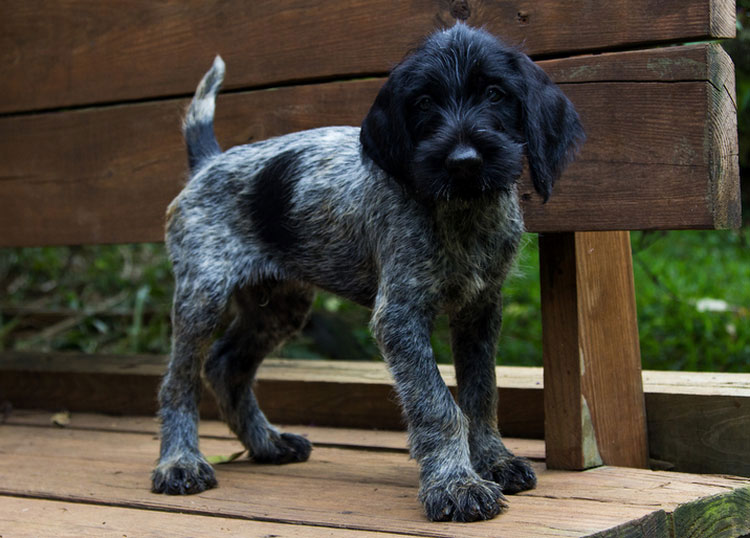
German Wirehaired Pointers are a very popular and widespread breed among Russian hunters. This is clearly demonstrated by the number of dogs at shows and trials. Unfortunately, this only complicates the process of choosing a good puppy. In recent years, dogs from European countries have become increasingly common in Russia, with many believing that a German pedigree will automatically open the door to breeding. However, alongside dogs from reputable kennels, they also import utterly defective ones.
If you're buying a dog abroad, you should choose a kennel that has been involved with the breed for decades, and whose breeders participate in and earn high scores in the Hegewald, a complex testing system developed by the Germans for pointers. They are also assessed based on their conformation. The entire process is quite complex, time-consuming, and laborious. Dogs purchased abroad are most often purchased by people who intend to breed.
If you need a dog as a companion and hunting assistant, you can limit yourself to finding and purchasing a good puppy in your home country. The puppy's parents must have a conformation rating of at least "Excellent" and at least two diplomas: one for field game and one for marsh game. Additional diplomas for blood tracking and duck tracking are highly desirable. The higher the competition rank, the better the chances of the offspring inheriting their talents. Abroad, puppies are typically sold no earlier than 3.5 months; at this age, the most promising puppies can already be identified. In our country, this is rare; puppies are sold at 1.5-2 months, and even breed experts are not always able to select the best.
Don't buy puppies at a bird market or from online ads with photos, even if the price seems very attractive. Puppies from good litters are usually sold by reservation, but it's better to get in line than to suffer later with a dog of dubious origin.
The price of a German Wirehaired Pointer puppy varies widely, influenced by many factors: the parents' achievements, the breeder's/kennel's status, and its location. On average, a good puppy costs 20,000-25,000 rubles. Mature, well-proven dogs sometimes sell for significantly more. Online ads can sell for 10,000-15,000 rubles.
Photos
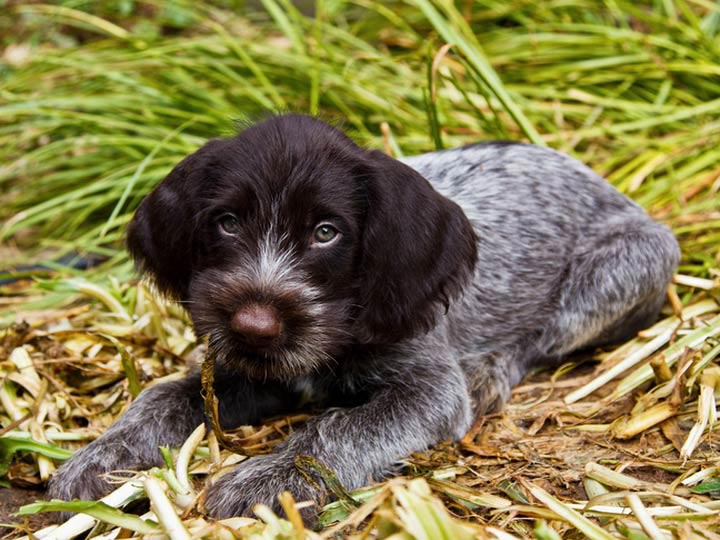
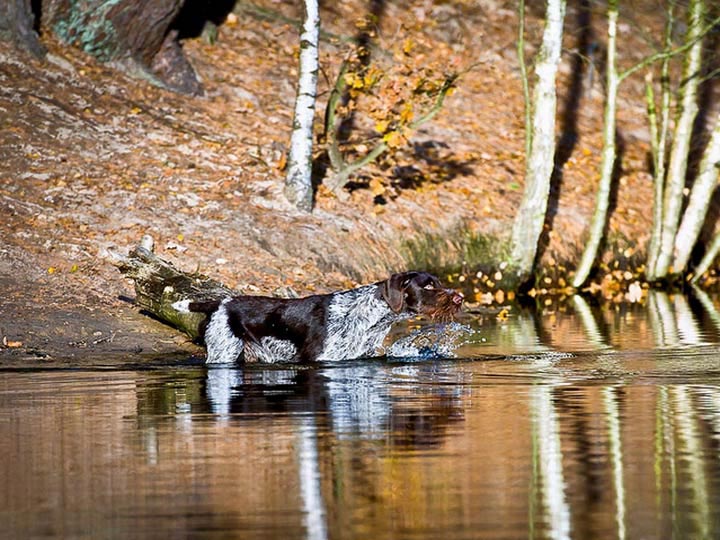
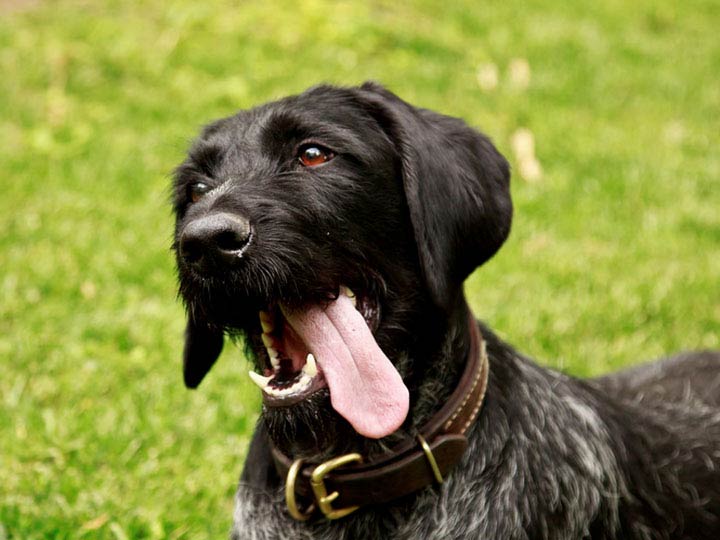
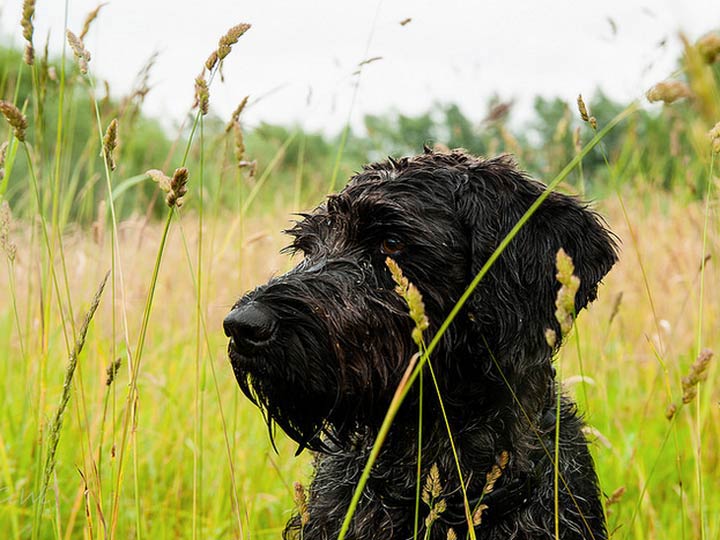
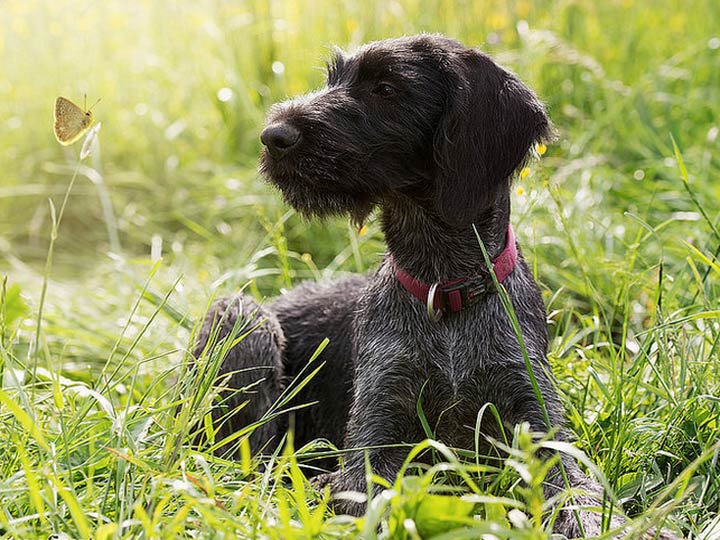
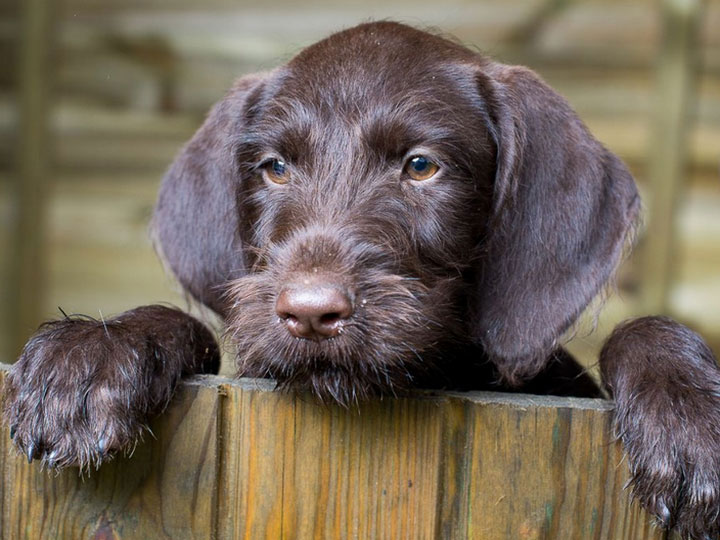
A selection of photos of German Drahthaar dogs:
Read also:



Add a comment