
Don Sphynx: male and female cats
Don Sphinx The Don Sphynx is a cat breed that emerged through a spontaneous mutation. It's relatively new, but already popular and beloved among hairless cat enthusiasts, which is hardly surprising. Don Sphynx cats are warm and soft to the touch, peaceful and affectionate in nature, and shed no hair at all. Today, we'll tell you all about the Don Sphynx, preparing a detailed description of the breed with photos and videos, including care and maintenance tips, owner reviews, kitten prices, and much more useful information.
Content
History of the breed's origin
In short, one fine evening, a young woman, returning home from work, saw a lost, lonely kitten on the road. She picked it up, and in her arms, the fluffy bundle began to tremble violently. A girl named Elena took pity on it and decided to take it home.
Days, weeks, and months passed, and suddenly the woman noticed that her cat, whom she named Varvara, had begun to lose a lot of hair. The decision was made to consult a veterinarian.
Elena began to doubt that the cat was sick and needed immediate, appropriate treatment. But, to her owner's surprise, the cat was perfectly healthy, active, and cheerful, and the doctor diagnosed no health issues. The hairlessness proved resistant to all treatments and began to be inherited. It was later determined that the gene causing the mutation was dominant.
As a result of her first mating, the cat gave birth to a litter, one of which was given to Irina Nemykina. A lengthy process of breeding followed, and only with the birth of Chita, the daughter of Varvara and the local beauty Vasily, did the origin story of the Don Sphynx begin. Until 1990, they hadn't made any impression on felinological organizations, and Irina Nemykina had to work hard to have the breed registered with the WCF, which only happened in 1996. The associations have adopted the following abbreviations for the Don Sphynx: DSP (FIFe classification) and DSX (WCF classification).
The Don Sphynx is a relatively young breed of cat, but it has already been used to develop another breed of cat – the St. Petersburg Sphynx or Peterbald.
Video review of the Don Sphynx cat breed:
Description of the breed
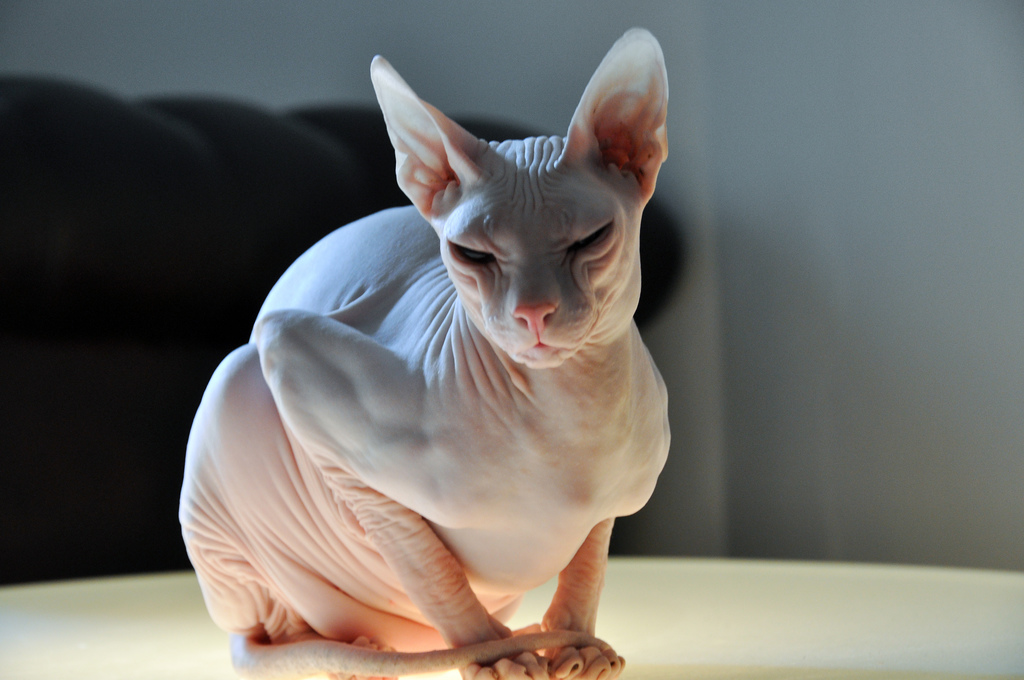
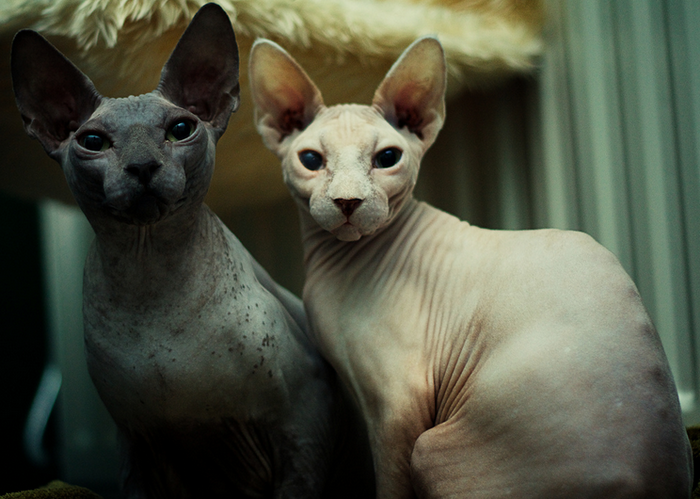
Don Sphynxes are massive cats with strong bones and well-developed muscles, soft and warm to the touch, and a distinctive feature—the absence of hair. They are medium-sized, with males being significantly larger than females. Below, we'll describe this cat breed in detail.
Head and muzzle
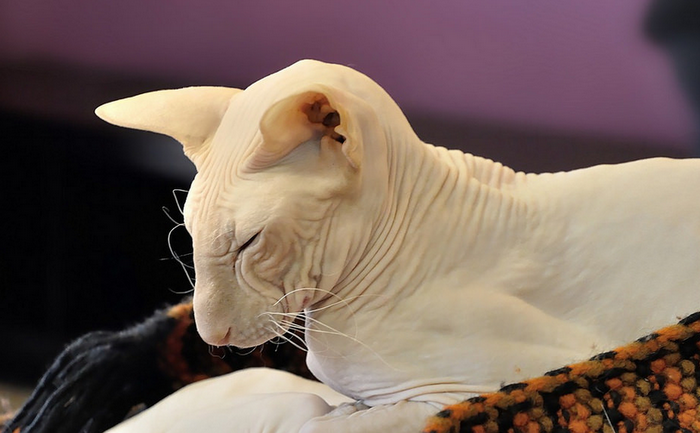
The Don Sphynx has a wedge-shaped head with clearly defined cheekbones and brow ridges. The cat's forehead is flat with numerous folds that fan out above the eyes. The cat's nose is medium length, and the muzzle is slightly rounded with a slight pinch. The Don Sphynx has strong, large teeth, with long upper tabs that can even peek out from under the lip. Sphynx ears are set high, tilted slightly forward, and have rounded tips. Their eyes are almond-shaped, medium in size, set obliquely, and slightly hooded. Eyes can come in any color.
Body
The body is proportional, strong, and of medium length. The croup is fairly wide. The hind legs are longer than the front legs, slender, and proportionate to the body. The tail is straight and long.
Skin and coat
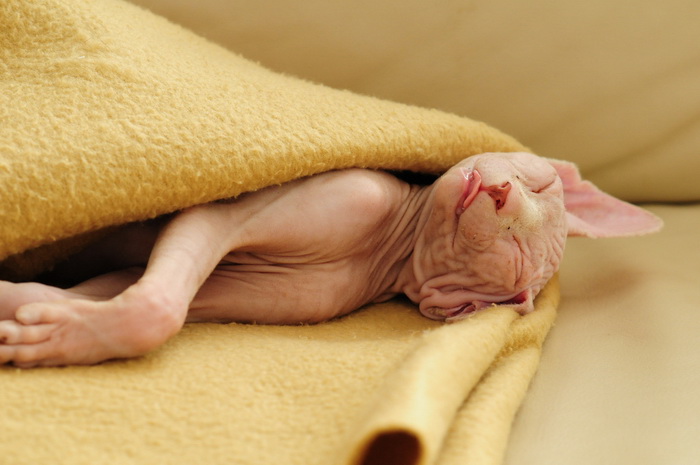
The skin is elastic, bare, and wrinkled, hot and velvety to the touch. Sphynxes are prone to sweating and acne. In the sun, their skin tans and becomes brighter. Whiskers are thick and can be any length or broken off. Wrinkles are desirable on the muzzle, between the ears, around the shoulders, and on the legs and belly. A large number of folds should not interfere with normal functioning.
In winter, Don Sphynxes may develop sparse soft fluff all over their bodies.
Depending on the quality of the wool, Don Sphynxes are divided into four types
- Hairless (or "rubber," or "plasticine") – refers to a completely hairless skin. "Rubber" kittens are usually born hairless.
- Velour – the entire body is covered with a fine, short downy fur that feels like the fabric of the same name. These cats may become bald with age.
- Flock – the skin is covered with short, soft fur that's practically invisible from a distance, somewhat reminiscent of a peach. By the age of two, flock cats sometimes become completely "naked."
- Brush (derived from the English word "brush" meaning "brush") are cats with long, coarse, and curly fur. Bald patches are often seen on the head, neck, and abdomen. Brush-haired Sphynxes may periodically "dress" and "undress," which is due to many factors (hormonal imbalances, pregnancy, weather, neutering, and other causes).
Brushies do not receive titles at shows, but they are allowed to be bred. This is because litters from two completely hairless Donchaks typically produce weak kittens with significant mutations and are often nonviable.
There are no completely hairless Sphynx cats; residual hair remains behind the ears and on the nose, and sometimes on the tip of the tail. In addition, a light, invisible downy fluff remains on the skin.
Colors
Absolutely any color is allowed, including all types of patterns and combinations of shades with any amount of white.
Character
The Don Sphynx breed is characterized by a curious saying: "Not yet human, but no longer a cat." They have a gentle nature, are attached to their owners, are active, and love attention and affection. Don Sphynx kittens aged 2-4 months are quite active, interested in literally everything around them, regardless of the object, and will try to chew on everything. Kittens are constantly seeking new fun, love their surroundings, and if left alone in the house for long periods, they can become very bored and even cry.
During adolescence, they become calmer, spend less time playing, and devote all their attention to their owners. They begin to discern who treats them best, pets them more, feeds them, plays with them, and treat them accordingly, in their own way. It is at this age that Sphynx cats' character and temperament are finally established, and all the habits they have acquired during this time are solidified. Adult Donskoy cats are a true source of pride for their owners. It's also worth noting that the personality of a Donskoy male differs from that of a Donskoy female. Unneutered males are almost always preoccupied with procreation.
The character of Don Sphynxes is greatly influenced by their care, the owners' relationship with the animal, their upbringing, and their genetic makeup.
Reviews of the breed
Owner reviews, of course, are no substitute for face-to-face interaction, but they can help you get to know the breed better and form a general image. Don Sphynxes are peaceful and completely non-aggressive cats that form strong bonds with their people, yet remain independent and treat their owners as equals.
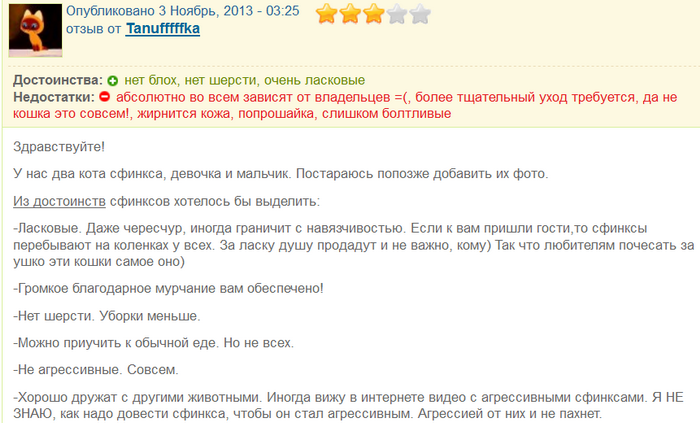
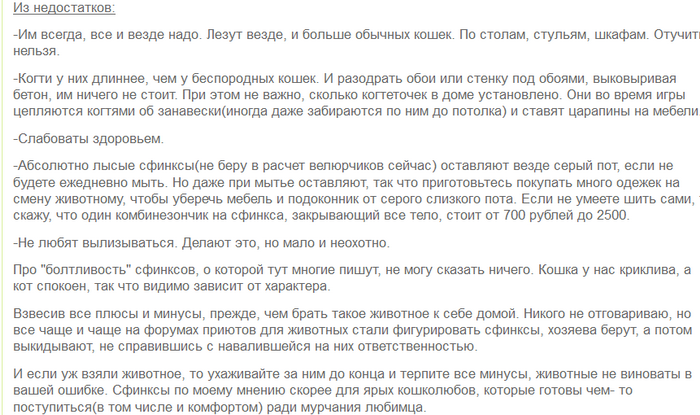

Many pet owners describe them as very smart and clean animals with their own character and habits that they have to either live with or put up with.


Among the Donchaks there are both tame and independent ones in approximately equal numbers.
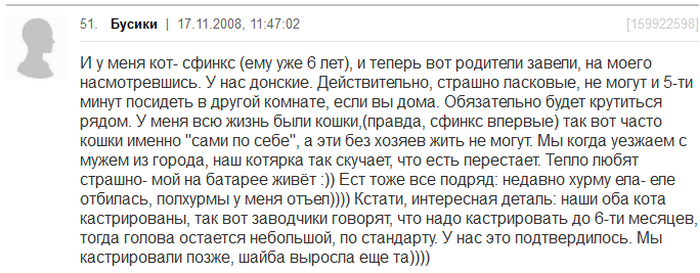
The story of one cat:
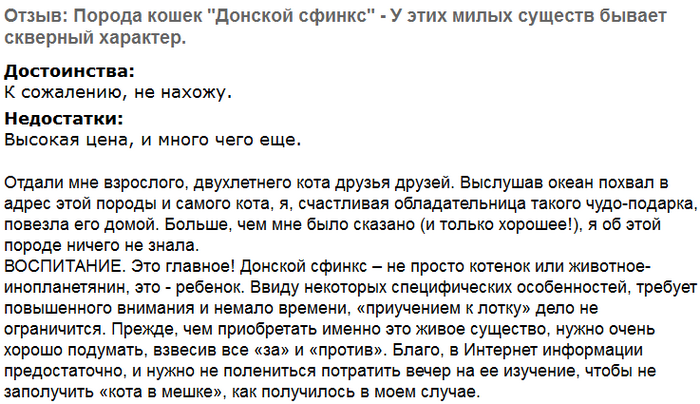
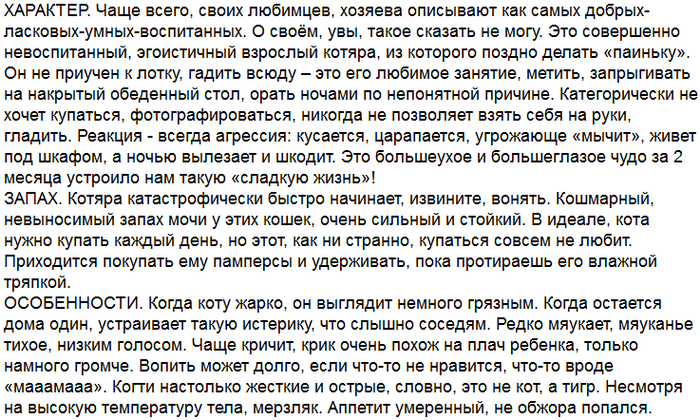
To summarize, let's highlight several character traits and characteristics inherent to the hairless cat breed native to Rostov-on-Don:
- Don Sphynxes are not aggressive, become very attached to their owners, are clean and quite intelligent.
- They require a lot of attention;
- Talkative;
- They can be touchy, but not vindictive;
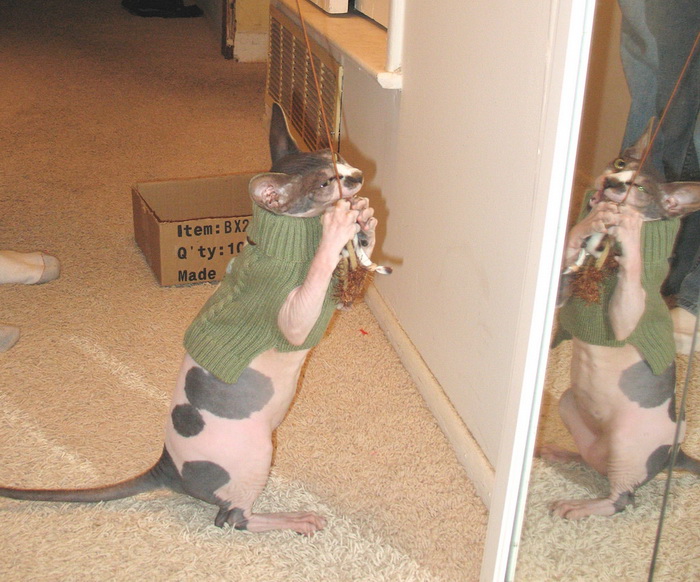
- They love warmth and don't tolerate drafts or cold well. Sometimes you'll need to dress the cat.
- They eat more and more often than other cat breeds;
- Donchaks require daily care;
Before getting a Donskoy Sphynx, consider your physical and financial capabilities. Will you have enough time to devote to this little one, play with them, pet them, feed them, and wipe their bottom regularly, not just occasionally?
Maintenance and care
Don Sphynxes are adapted to living only in the warmth of an apartment. Cold temperatures and drafts can lead to colds, so ensure you have adequate clothing for your pet. In summer, protect your cat from harmful ultraviolet rays. To ensure your pet brings you joy, learn how to properly care for and feed them. Be sure to provide them with toys, food bowls, a scratching post, and a litter box.
Don Sphynxes are not a hypoallergenic breed and, like others, can cause an allergic reaction.
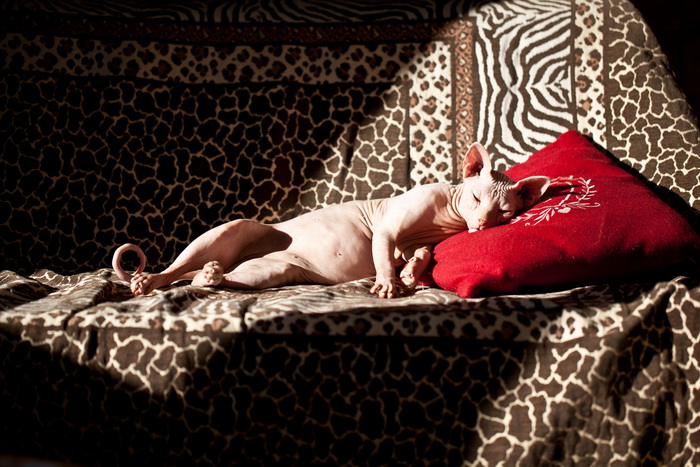
Don Sphynxes require attention, care and regular, but rather laborious, daily maintenance from their owners.
Don Chaks need to be bathed much more frequently than other cat breeds, approximately once a week using special shampoos. If not, dark sebum accumulates on the skin, causing an unpleasant odor. It's a good idea to wipe the skin between the toes and folds, in the groin area, and on the tail daily with a damp cotton pad, as these areas are more prone to dirt and rashes, especially during adolescence.
Sometimes, bathing can be replaced by wiping with a damp towel or baby wipes. After bathing, the skin should be thoroughly dried with a towel and lubricated with baby oil or moisturizer. Sphynxes have virtually no instinct to groom themselves due to their lack of fur, so small kittens, and sometimes adult cats, need to have their bottoms washed after doing "big things." Due to the lack of eyelashes, the eyes of Don Chak cats require special care. They are regularly cleaned of acidic particles and wiped with chamomile infusion or tea. Ears should be cleaned about once a week. The claws on the front paws are trimmed once a week, and those on the back paws every two weeks.
Diet
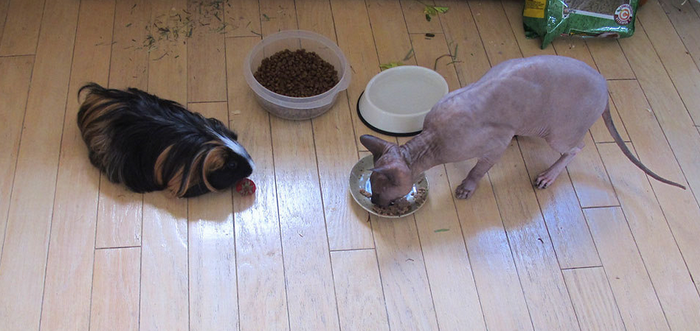
It's worth noting that hairless cats require a number of specific dietary considerations. This is due to their increased energy metabolism and high heat output, meaning their diet must be appropriate for their rapid metabolism. It's recommended to feed Sphynx cats 3-4 times a day in small portions. A consistent feeding schedule is essential.
Don Sphynxes can be fed natural food or prepared food. The choice is always up to the owner.
If your cat isn't picky, you can choose a convenient diet and prepare it yourself. The basis of a natural diet is meat, a little porridge, and vegetables; sometimes fermented milk products; and fish and a raw quail egg once a week. Vitamin and mineral supplements are also a must.
However, if your Donets Basset Havanese is a fussy eater and can't be fed a complete diet of natural foods, it's best to opt for a premium or higher quality dry food. High-calorie diets for active indoor cats or foods specifically designed for hairless breeds are best.
Many Sphynxes are prone to overeating, which leads to excess weight gain. These pets' diets need to be closely monitored.
Health and life expectancy
The most common skin problems in Don Sphynxes are caused by excessive sebum production, which is a breeding ground for germs, and poor hygiene. A skin scraping is recommended for diagnosis, and treatment is prescribed based on the results.
Don Sphynxes are prone to a number of hereditary diseases:
- Microphthalmos is a congenital defect that causes a decrease in vision and the development of other eye diseases.
- Kitten sleep syndrome most often occurs when two "rubber" Sphynx cats are bred. The kittens suffer from underdevelopment of the vital gland, the thymus, which leads to death;
- Curvature of the spine in the caudal region is often associated with a number of other pathologies: underdevelopment of the intestinal sections, skeletal system;
- Shortening of the lower jaw occurs in varying degrees and has different impacts on quality of life;
- Vasculitis of the skin is an inflammation of the walls of the blood vessels of the skin, to which Don Chaks are most susceptible;
- Congenital inversion of the eyelids is corrected by surgery;
- Nipple hyperplasia occurs when females were given medications to suppress sexual function before pregnancy. The nipples swell, increase in size, and are eventually recommended for surgical removal.
It's believed that Don Sphynxes have a much higher body temperature than other cats, but this isn't true. It fluctuates within the normal range of 38-39.5°C. Young animals are closer to the upper limit, while pregnant and older cats are closer to the lower limit.
Life expectancy of a sphinx on average 13-14 years.
Choosing a kitten and price
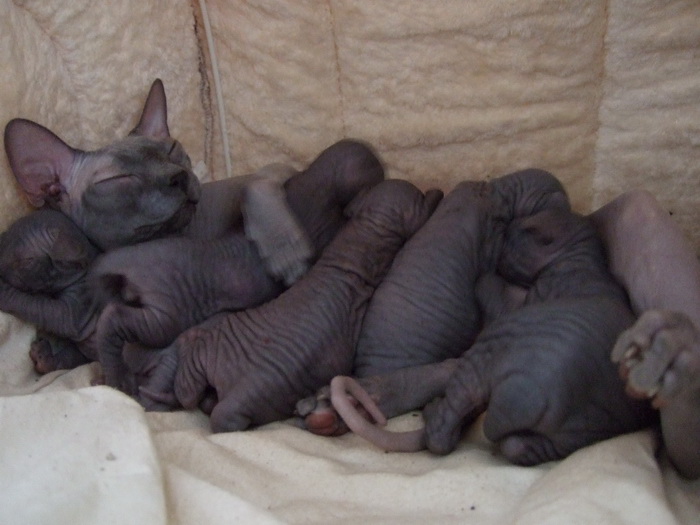
Little Don Sphynx kittens make a captivating impression on people. Imagine the following scene: plump, naked, wrinkled bundles of fur constantly tumbling.
They are very curious, which explains their early intellectual development. One of the distinctive features of Don Sphynx cats is that kittens open their eyes within the first 1-3 days of life, rather than after 2 weeks, as with other cats.
Regardless of the purpose of acquiring a puppy—whether for personal use or for breeding—it's important to ensure that the puppy is healthy. It should be active, playful, alert, and clean, with a round, firm tummy.The price of Don Sphynxes is influenced by many factors: the merits of the parents, the type of coat, the gender, the class of the animal (for home, breeding, exhibitions), etc.
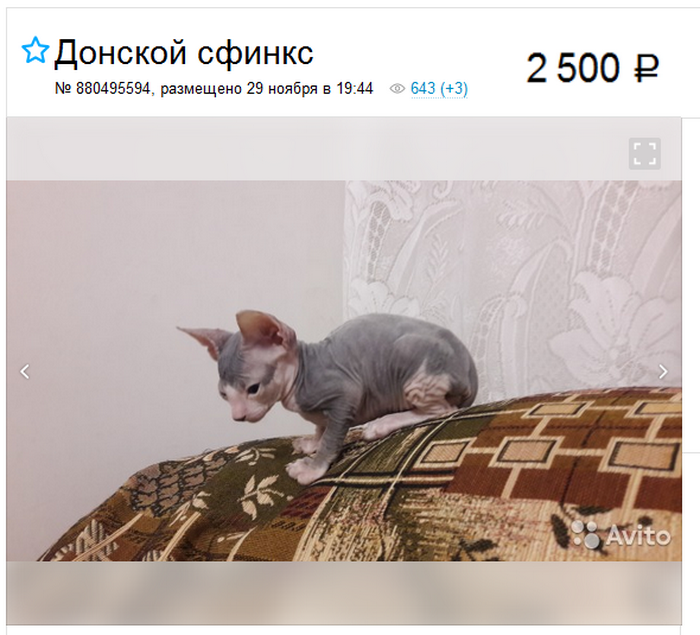
On Avito, kittens without documents, and therefore without proof of breed, are sold for up to 5,000 rubles.
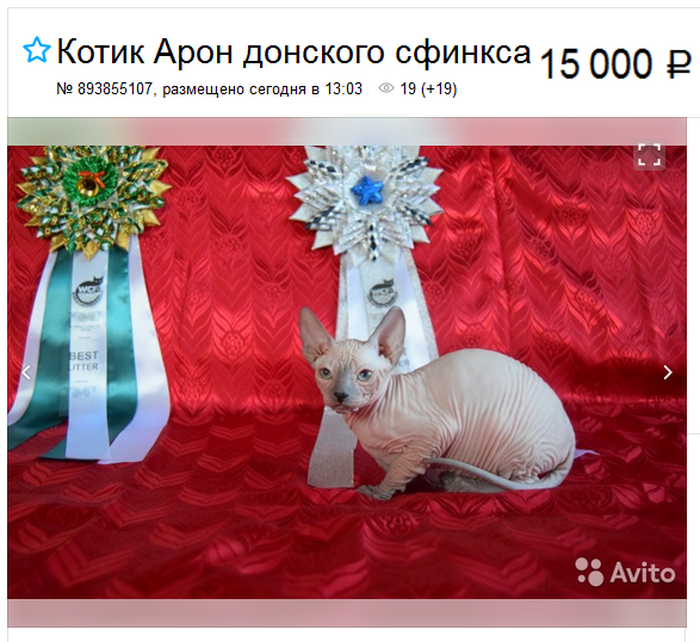
Pet-class kittens (for castration/sterilization) with documents cost from 15 thousand rubles.
Animals for breeding and show careers can cost from 35,000 rubles and up.
Photos
Photos of Don Sphynx cats:
Read also:
-550x418.jpg)


2 comments
Lily
Three years ago, I went to visit relatives, and they had two cats. One was a shorthair and the other a Donchak. I was sitting on the couch watching TV when suddenly the Sphynx jumped up onto the couch, climbed onto my chest, and settled down to sleep. Everyone was shocked. No one expected this from him; after all, he'd never seen me before. But his purring and warmth filled my soul. Anyway, Bim made the journey from Bashkiria to Tatarstan safely, sat on my lap the whole way, came home like he was the boss, and acts like he is.
He has everything under control: where everything is, who's doing what. He's very talkative and loves to argue. If you scold him for good reason, he keeps quiet and runs away, but if he thinks he's right, he'll yell, grumble, and then sit down and demonstratively turn away from you. He's cunning, impudent, and smart all at once. If his daughter offends him during the day, everything on her desk will be on the floor by morning.
He loves to eat with us. He enjoys it when everyone is home, talking to him, playing with him. Ours even sits on the corner of the tub and watches you in the bath. If we leave him alone for too long, especially at night, he grumbles for two hours, walks around sulking, and only after a treat does his Majesty begin to purr and go for cuddles. If everyone is watching TV and he's not being noticed, he'll climb onto the nightstand and sit so the TV screen is invisible. He'll sit there and wait to be picked up, meaning someone will pay attention to him. He decides who sleeps with him. The radiators in the apartment are all his, as are the windowsills. Before he moved in, there were flowers, but they interfere with his sunbathing, and he's gradually driven them out of the windowsill (he ate some, and threw others off). Sometimes I think these animals are smarter than most people.
He eats everything, and loves dairy products, porridge, and soups.
Alla
WE NEED A POSTER WITH A SPHINX IN THE ENTRANCE…
There have been cases of sphinxes suffering and even dying due to misunderstandings... You should always hang a poster of a sphinx in your building's entryway. A poster explaining to your neighbors that it's a cat (and that it's kind, despite the sounds it makes, which aren't cat-like, and despite its bat-like ears) will prevent them from panicking and doing something wrong (if it's a sphinx, and it accidentally runs out of the apartment). Explaining things to people after something irreparable has already happened is wrong. The sound a sphinx makes (similar to croaking) can frighten not so much a child as an adult frightened for their child. And the LOOK of a sphinx's round eyes can seem like it's about to pounce. And then, in self-defense, a person might instinctively do something that could kill the sphinx. Hang up explanatory posters in the entrance hall, even if you are vigilant so that the sphinx does not accidentally leave the apartment.
Add a comment