
Cat house made from a box
Every pet needs its own place to rest, feel safe, and observe its surroundings. Many cat breeders build their own cat house from a simple cardboard box left over from household appliances. This is a very stable and durable structure that anyone can build.
Content
Materials and tools
To make a homemade cat house from a box, you will need the following items:
- PVA glue, scotch tape.
- Large scissors.
- Stationery knife.
- Natural fabric for upholstery.
- Medium-sized box made of thick cardboard.
- Additional fittings.
- An old sweater or pillow.
- A brush, a simple pencil and a tape measure.
It is very important that the materials for the cat shelter do not emit an unpleasant or pungent odor, which will simply scare off the pet, and it will immediately refuse to live in the new home.
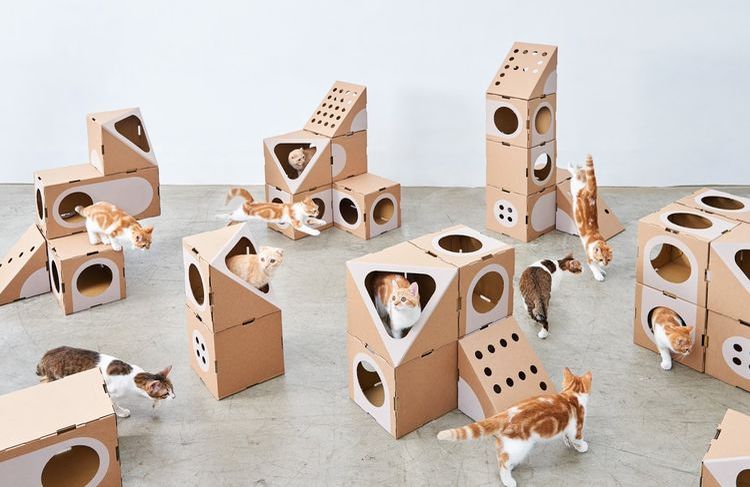
Shape and size
A cat house made from boxes is sure to be a hit with your cat if its dimensions are chosen correctly. Ideally, there should be enough space for your pet to sharpen its claws, stretch after a nap, and stand up to its full height. For a medium-sized cat, a structure at least 40 cm high and 50 cm wide is ideal. It's best to cut a rounded entrance, without gaps or sharp corners that could injure themselves. The average diameter of the entrance window is 20-25 cm.
Cardboard teepee-shaped houses are ideal for Bengal and Siamese cats, who sometimes like to stand on their hind legs. The height of such a house should be no less than 60-70 cm. Large Maine Coons prefer spacious apartments, at least 60 cm high and 180 cm wide.
Fastening and sheathing
A cardboard cat house is often made from a simple box, left unadorned and unlined. However, caring owners know that it's best to line the cat house with material to make it more comfortable and cozy for the cat in its new home, and to ensure it fits perfectly into the home's interior.
For the structure's covering, choose colored cardboard, self-adhesive paper, wallpaper, soft but dense fabric with water-repellent properties that is pet-safe and non-toxic. Carpet is ideal. Avoid using fabric that is too bright or stiff, as it will fade quickly and begin to press on the cardboard, gradually reducing its support.
The simplest house out of a box
Using a large compass, mark a circular entrance on the box and cut it out with a utility knife. The joints of the new cat house are further reinforced by applying tape to the sides. This will prevent the product from warping and extend its lifespan. The carpet or thick material is cut to size, first measuring the bottom and walls. It is then secured from the inside with glue or a stapler. All joints are also covered with fabric.
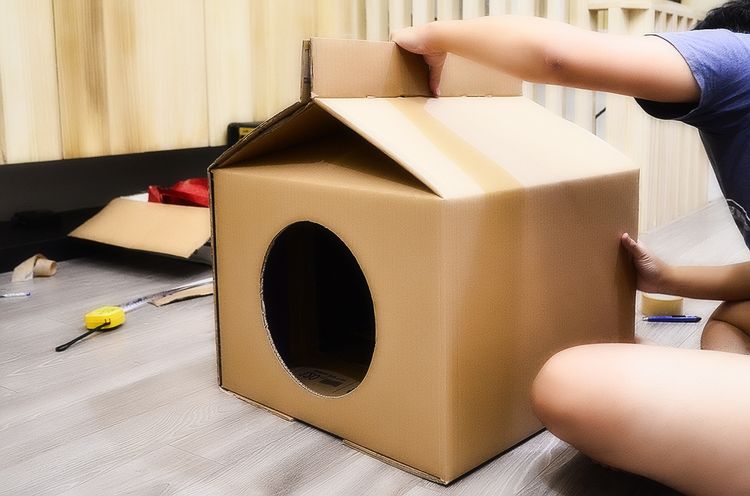
The entrance to the home can be arched, with a small round window in the roof for additional lighting. It's a good idea to secure the cardboard structure to the outside with tape at the joints and decorate it with decorative fabric or scrap wallpaper, using a hot glue gun or regular PVA glue. Inside, the floor is usually covered with an old blanket or sweater, along with a small flat pillow. Before showing the pet the new apartment, let it dry in the sun for a few days.
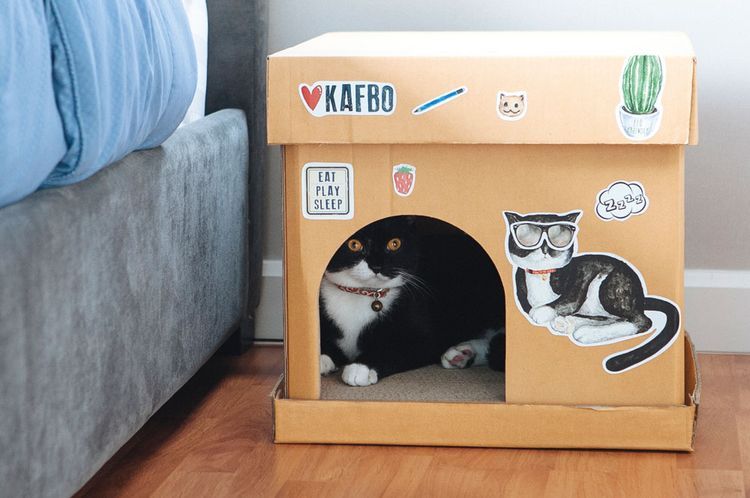
T-shirt tent
Making this cat house model from a box and a T-shirt will take more time, and also:
- sewing accessories;
- awl;
- nippers;
- scotch;
- foam rubber or pillow;
- thick cardboard;
- large short-sleeved t-shirt;
- wire hangers.
Read on our website also about why cats and kittens love boxes and bags
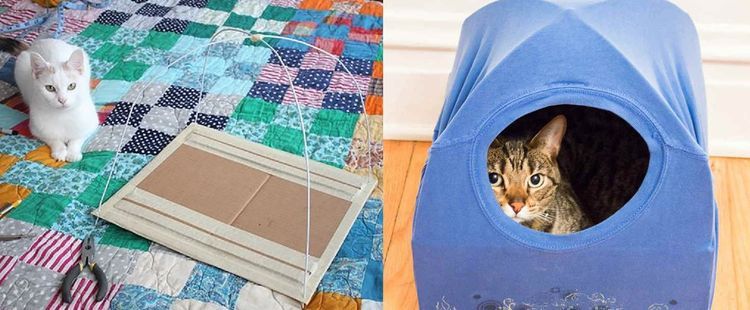
Several hangers are straightened by hand or with pliers – this will form the frame of the cat's home. The arches are installed crosswise and secured to the cardboard base. They are secured at the top with electrical tape or duct tape. The metal arches are also secured to the cardboard base with duct tape. The cardboard is heated with duct tape, folded over, and the corners are secured to the outside of the base with duct tape. A pillow, foam rubber, or carpet is placed on top of the base for added comfort.
A T-shirt is stretched over the frame, folded over the cardboard at the bottom, and glued or stapled in place. The opening in the collar should form a round entrance. Slits in the sleeve area serve as additional openings.
Wigwam made from cardboard circles
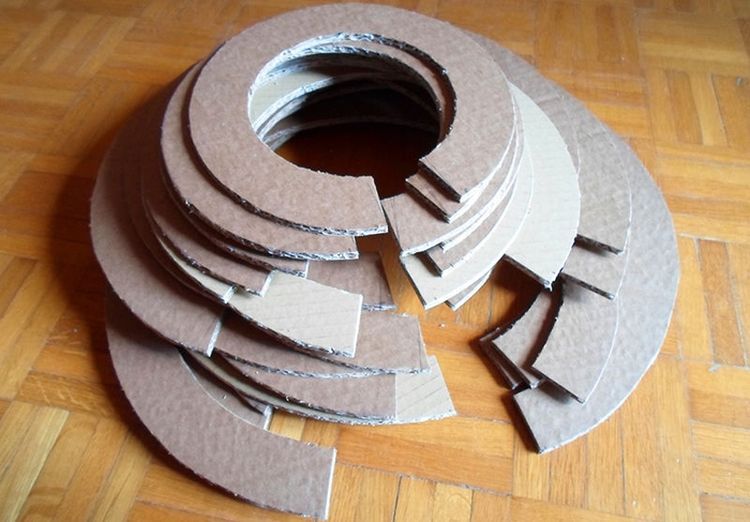
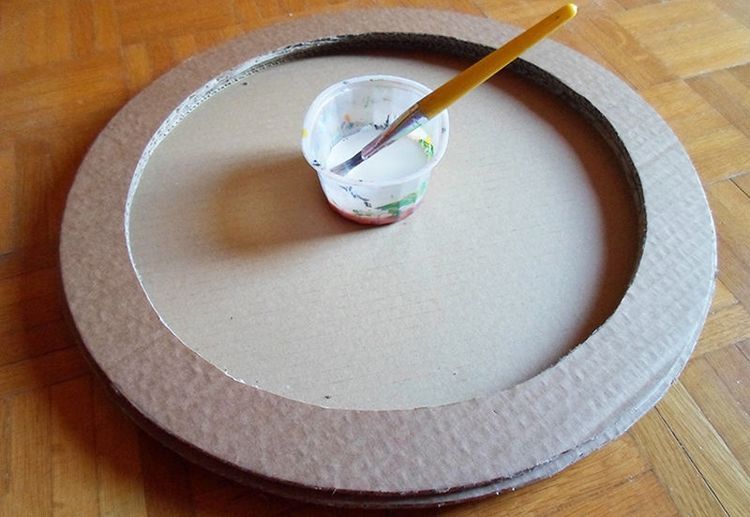
This option is ideal for adult pets. To make it, you'll need a pencil, PVA glue, a utility knife, and pressed corrugated cardboard. Circles are cut from the corrugated cardboard. The first six circles are 21-22 cm in diameter, and the subsequent ones are made 0.5 cm smaller. First, cut out a round base and lay the rings on it one after another.
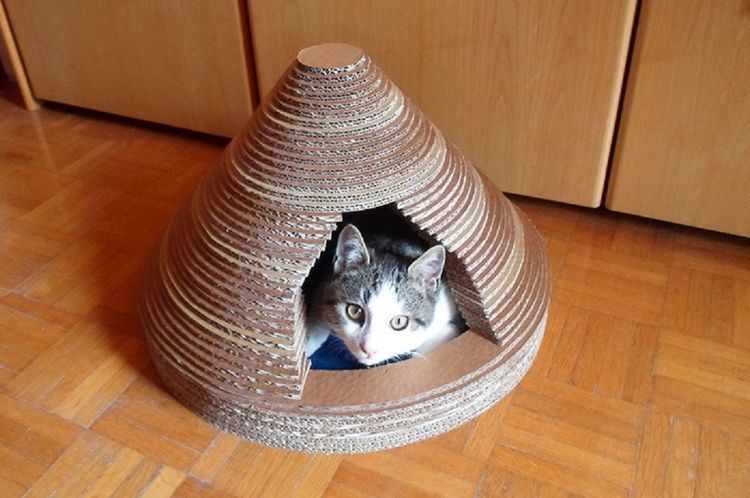
The pieces will eventually form a cone. The intended entry point is marked on all the circles. Then, after the main structure is built, it is cut out with a utility knife. Finally, the structure is disassembled and the gluing process begins, step by step.
In a large apartment, if there is free space, some owners build real ones for their pets cardboard complexes, consisting not only of houses, but of multi-level open beds, scratching posts, play ties, bedding, and round tubes. This homemade maze prevents household clutter and becomes a real escape for animals, especially if there's more than one in the house.
Read also:


Add a comment