
Until what age do dogs grow?
When a puppy arrives home, many owners wonder what size and weight it will reach. Some are interested in the age at which dogs grow—that is, when their active growth period ends and muscle mass is fully developed. For most breeds, there are several guidelines that can be used to answer these questions.
Content
The need for parameter control
Monitoring your four-legged pet's growth and weight isn't necessary if you buy it from a reputable breeder. Once you've acquired a puppy of a certain breed, you can check out what the adult dog will be like by looking at its parents, and learn about the growth stages by reading relevant literature.
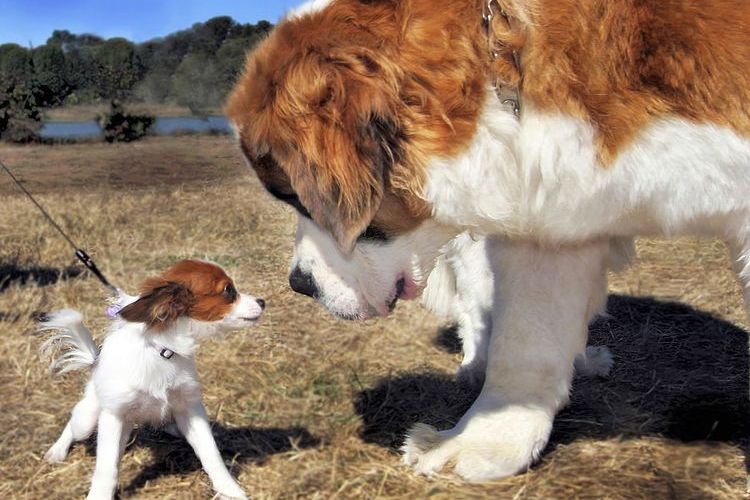
Answers to questions about puppy development are much more important for owners of animals obtained freely or even found on the street. However, it's quite difficult to accurately determine how long mongrels grow, much less what they'll look like in a few months or years. These answers are equally important for owners who notice that their pet's growth rate isn't quite what they expected.
To monitor the development of a puppy, and later a young dog, it is recommended to periodically weigh it using a standard scale and measure it using a tape measure or measuring tape. Until the puppy is two months old, measurements are taken every five days, every ten days until it is six months old, and then monthly. The dog's standing height at the withers, the circumference of the pastern (carpal joint), and the chest are measured. Elbow height may also be measured.
Puppy growth stages
A dog's developmental pace at the initial stage of its life follows certain patterns unrelated to its breed. Moreover, the beginning of growth is usually considered to be the period when the puppy is still an embryo, still in its mother's womb. During this time, the animal's body is developing, which is why it's recommended to only buy a puppy from a responsible breeder who monitors its health. pregnant females.
The second stage is the period from birth to 1.5 months. This period is called the pre-suckling period and is the same for all breeds. This period is the same and lasts for up to six months. During this time, the dog's permanent teeth appear, its height at the withers approximately doubles, and its weight triples. The puppies' ears also grow for up to six months, eventually taking on the same shape as an adult dog's.
Growth of young animals
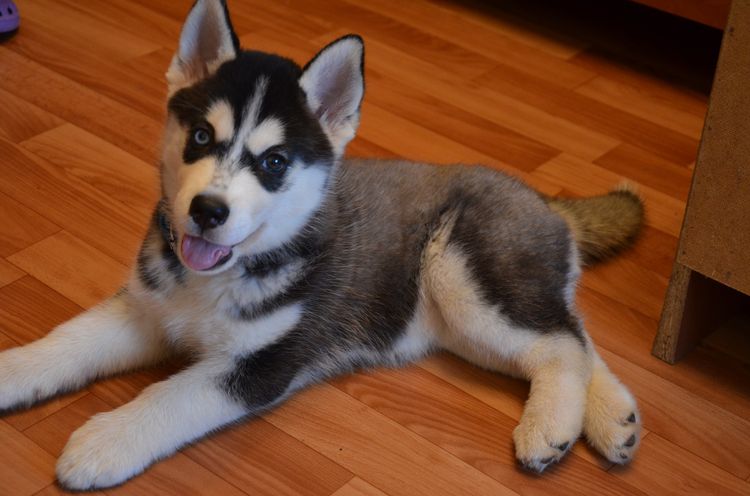
Between 6 and 12 months, a dog is no longer considered a puppy, but a young dog. It continues to grow, although not always until the end of its lifespan. Most small breeds complete their growth by eight or nine months, while large dogs continue to grow for up to a year. It's also easy to determine the age at which medium-sized breeds (spaniels, bulldogs, basset hounds, huskies, and chow chows) grow. They typically stop growing by nine or ten months.
During these six months, the sternum develops most noticeably in all breeds. However, growth is no longer as intense as in the previous stage. However, the exterior changes noticeably – by the age of one year, the pet looks almost the same as it will throughout its life.
Development of a young dog
The next stage, when a pet can be called a young dog, lasts for most breeds until 16 months of age. In small breeds, it ends earlier, before a year. This period can be characterized by either rapid weight or body size gain or a complete halt in development. Much depends on the following factors:
- from health in the early stages - active puppies grow faster and can mature earlier than their sisters and brothers from the same litter;
- the quality of the dog's nutrition - a responsible attitude towards the pet's diet will allow it to develop longer and become larger - although not by much;
- depends on the animal's sex. Females are generally smaller in size and weight.
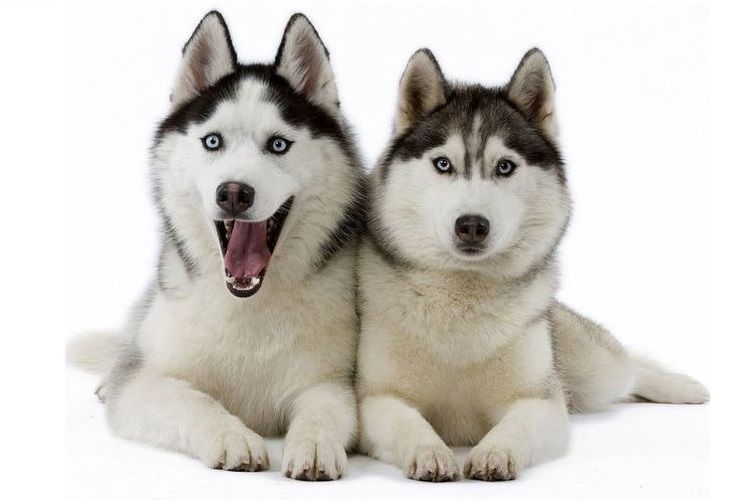
The final stage of development is considered to be the period from one year to two or three years. During this time, small pets have long since stopped growing, but larger dogs can begin to gain muscle mass. Thus, the answer to the question of how long it takes for dogs to reach full adulthood depends on the breed. The smaller the dog, the earlier it matures. But even representatives of the largest breeds—for example, Newfoundland or St. Bernard – can be considered an adult by the age of three.
Specific breeds
Taking a closer look at the age at which small breed dogs grow, it is worth noting the following facts:
- Chihuahuas and Yorkshire Terriers finish growing by 8 months, and then only weight gain occurs;
- Toy Terriers can mature even faster—by six months. From this point on, neither their height nor their weight changes;
- Pugs vary in size - some young dogs of this breed may stop growing at 6-7 months, while others continue to develop until they are nine;
- The growth of a female Pekingese ends at 8–9 months, and that of a male at one year;
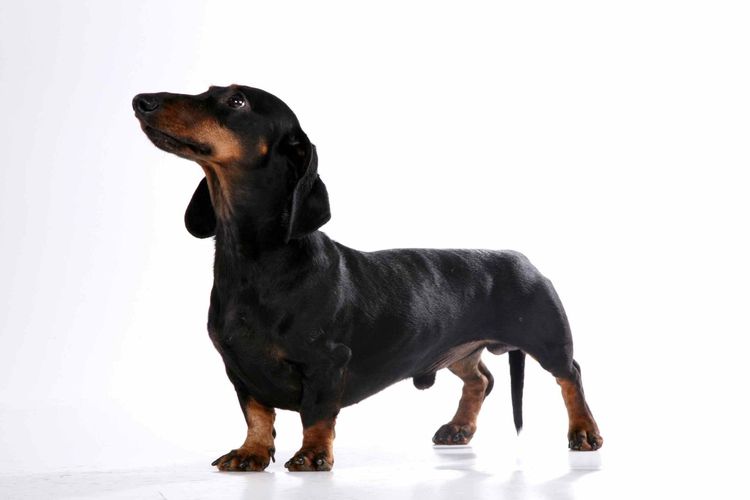
- Dachshunds grow in length until they are eight months old, after which they only increase in width.
Large, muscular dogs like Rottweilers reach their full size by 12 months, and their muscles can continue to grow until they reach 2 years of age. German Shepherds, St. Bernards, and Labrador Retrievers grow faster until they reach 1 year of age, and then almost imperceptibly during their final years. They are considered fully developed by 2.5 to 3 years of age.
Read also:




Add a comment