
Dingo (Australian wild dog)
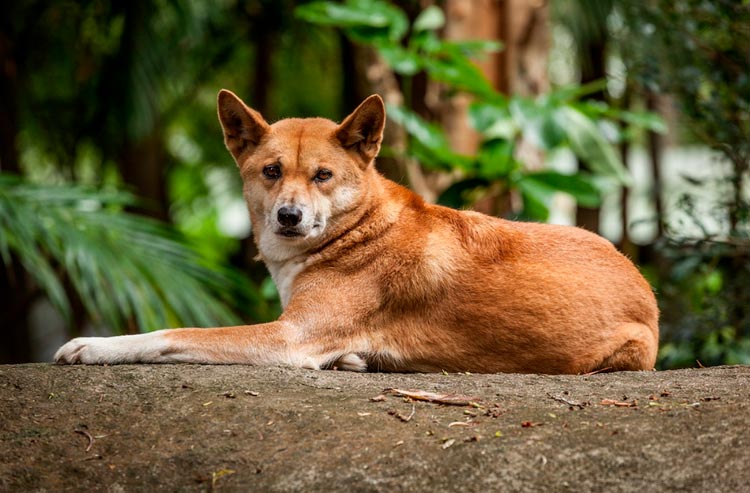
The Australian dingo is a unique creature. A wild animal, a true predator, it is easily tamed by humans and becomes a devoted friend and protector. It is a distinct species, but it readily interbreeds with domestic dogs, resulting in the creation of several new breeds. In Australia, it is considered a pest by authorities, but in the rest of the world, it is increasingly being kept as an exotic pet, despite the difficulties associated with purchasing and maintaining a puppy. And it's not just the price.
Content
The History of Dingo
According to research conducted in 2004, dingoes cannot be native to Australia. They likely arrived on the continent with Asian settlers approximately 5,000 years ago. All modern dingoes are related to varying degrees, meaning they descended from a single small group of dogs that were abandoned or lost. Here in Australia, they have no serious enemies or competitors, and their ability to hunt in packs gave them an advantage over solitary marsupial predators.
Regarding the Australian dingo's ancestors, scientists disagree greatly. Some believe they descended from Indonesian wild dogs. Others claim they descended from Chinese domestic dogs, while others maintain they descended from Indian wolves.
There are many species of wolves and hyenas in the world, but wild dogs are rare: the Australian dingo, the New Guinea singing dog, the Batak dog from the island of Sumatra, the semi-wild red-haired Buansu dogs of the Himalayas, and the wild Carolina dog, recently discovered in the southeastern United States.
Video about Australian wild dogs, dingoes:
The appearance of the Australian dingo
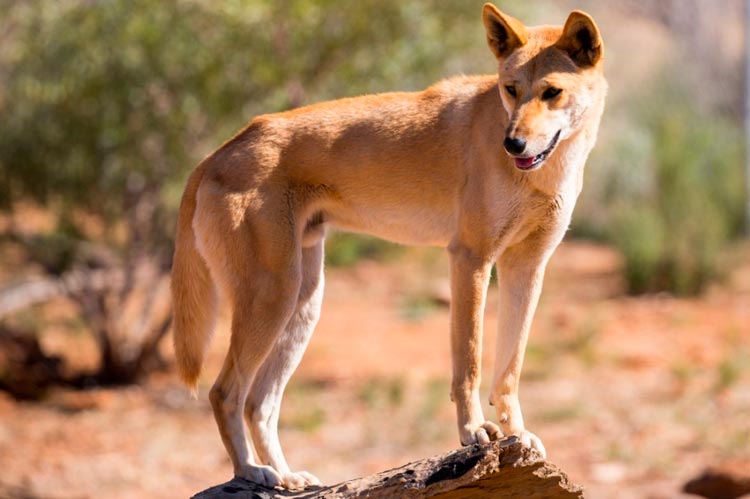
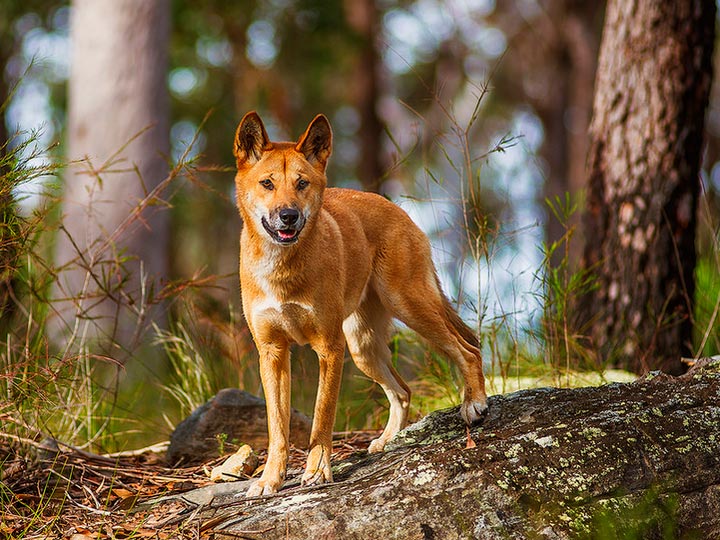
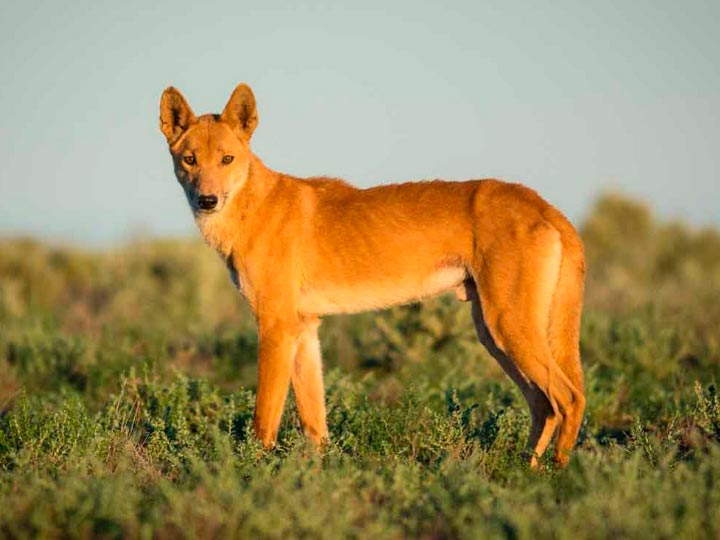
The Australian dingo is a sturdy, fit, medium-sized dog with relatively long legs. Height at the withers is 45-65 cm, body length is 86-120 cm, and tail length is 25-40 cm. Weight typically ranges from 9-25 kg. Sexual dimorphism is very pronounced. Females are significantly smaller and lighter.
The head is elongated, but not sharply pointed, rather square in outline. The nose is medium in size. The eyes are almond-shaped and set slightly at an angle. The ears are erect and medium in size. The inside of the ear is thickly covered with hair. The jaws are strong, with a full set of teeth meeting in a perfect scissor bite.
Zoologists continue to debate the identity of dingoes: are they truly wild dogs, like the wolves of the Northern Hemisphere, or are they related to African hyenas? The ancestry of these Australian predators is full of mysteries, and morphologically, they are indistinguishable from the common domestic dog. Nevertheless, scientists have decided to classify them as a separate species—Latin: Canis lupus dingo.
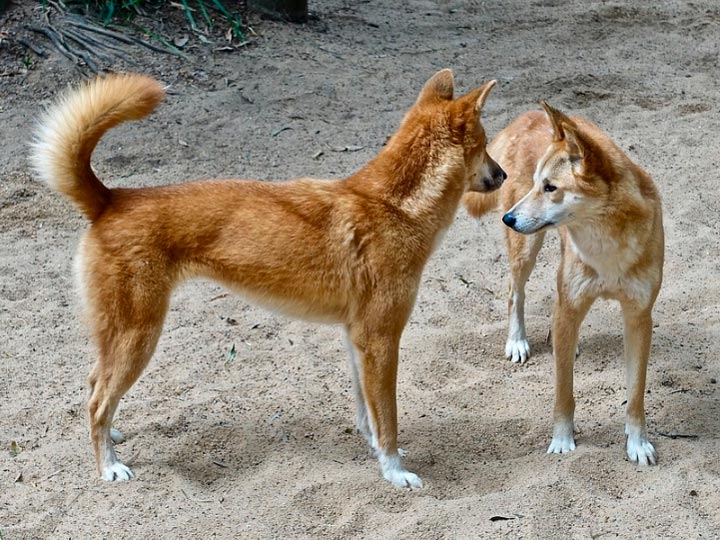
The body is slightly elongated. The back is level with well-defined withers and a sloping croup. The tail is set low, carried low, and may curve slightly. The legs are medium length and strong. The muscles are well developed but not prominent, and are concealed by thick fur.
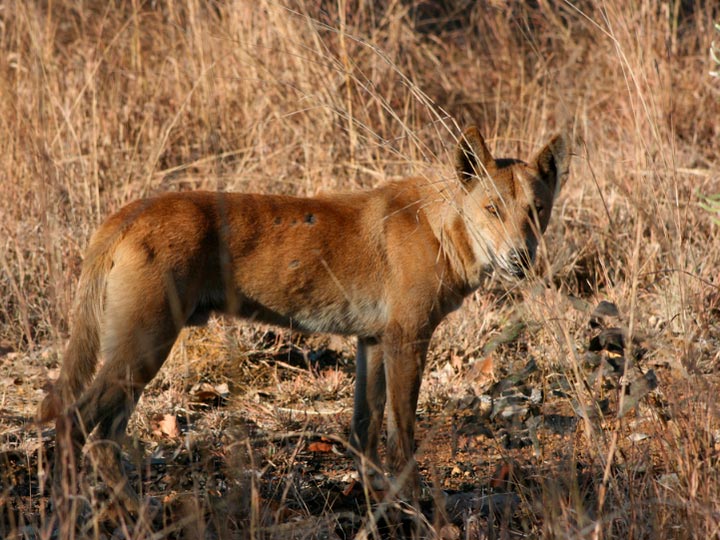
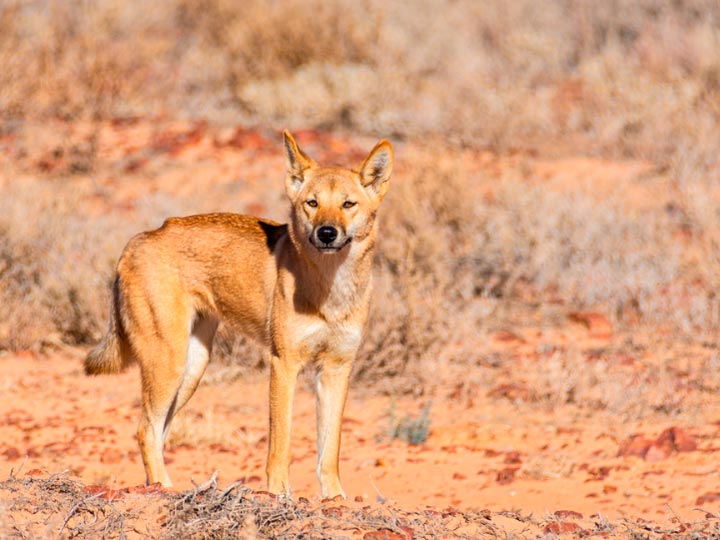
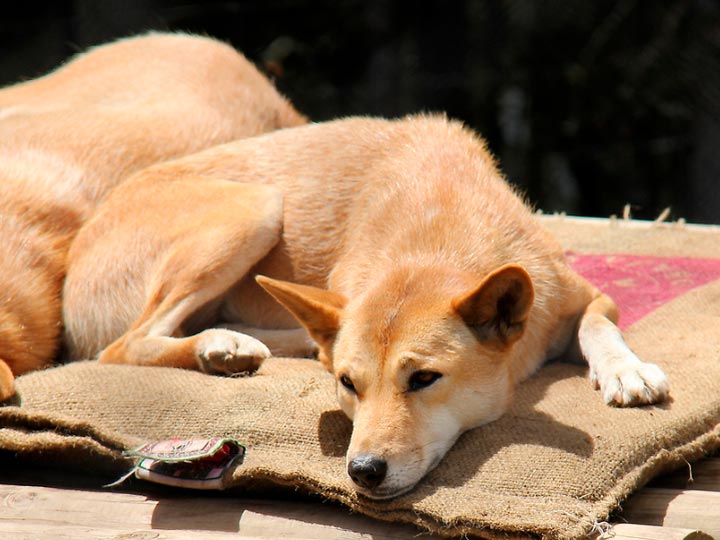
The fur is very thick and short. Typical coloration: rusty red or reddish-brown, with light, almost white fur on the muzzle, underparts, and limbs. Occasionally, individuals are white, piebald, black, and other colors, and in southeastern Australia, gray-white individuals are also found.
Dingo in the wild
In Australia, dingoes inhabit the edges of rainforests, arid deserts, and eucalyptus thickets. This is very different from Asian wild dogs, which prefer to live near human settlements and scavenge. They live in small packs of 5-6 dogs. They make dens in empty burrows, caves, or tree roots, usually near bodies of water. They are primarily nocturnal.
The Australian dingo is the only predatory mammal in the continent's wild fauna.
Dingoes' lives in Australia are paradoxical. On the one hand, they are agricultural pests that can be exterminated without time limits or restrictions. At the same time, as endemic species to the continent, they are protected. Export from the country is strictly controlled, and captivity in most states requires a permit. The main threat is the dilution of the gene pool. More and more wild animals are mating with common dogs, losing their uniqueness.
A fence across the continent
The first settlers to arrive in Australia were interested in and tolerant of wild dogs, but when sheep farming became the main industry, the predators became unwelcome guests on farms. Dingoes were shot, poisoned, and trapped. In South Wales alone, farmers spent several tons of strychnine annually to control the "pests." But even these measures were insufficient. In the 1880s, construction began on a massive chain-link fence, dubbed the "dog fence." It protected sheep pastures in southern Queensland, southern New Wales, and South Australia from dogs and prevented rabbits from entering the area. Individual sections are interrupted only at intersections with highways. The fence stretches 5,614 kilometers, and its maintenance costs the three states $15 million annually. By the way, in the state of Western Australia a similar structure is called a "rabbit fence", built for the same purpose, its length is 1833 km.
Reproduction and lifespan
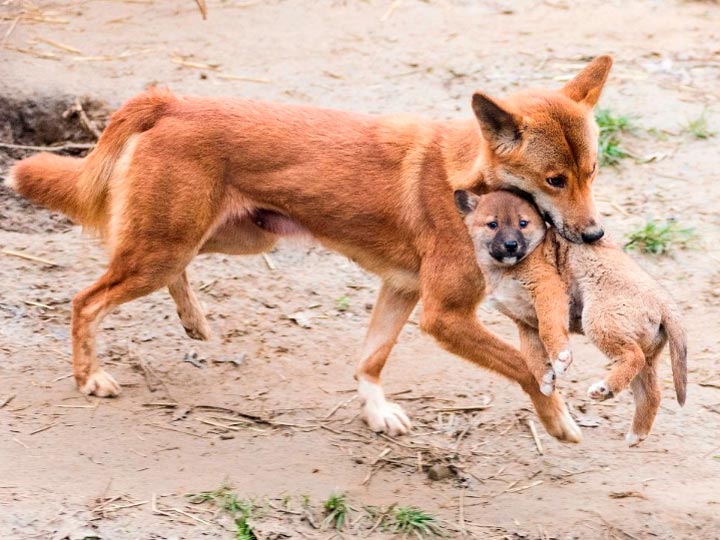
In the small packs that dingoes form, only dominant pairs reproduce. If puppies are born to another female, they are killed. All those below the alpha male and his female care for the pups, hunt, and guard the territory, but are not allowed to produce offspring. The hierarchy is built on intimidation and occasional fighting.
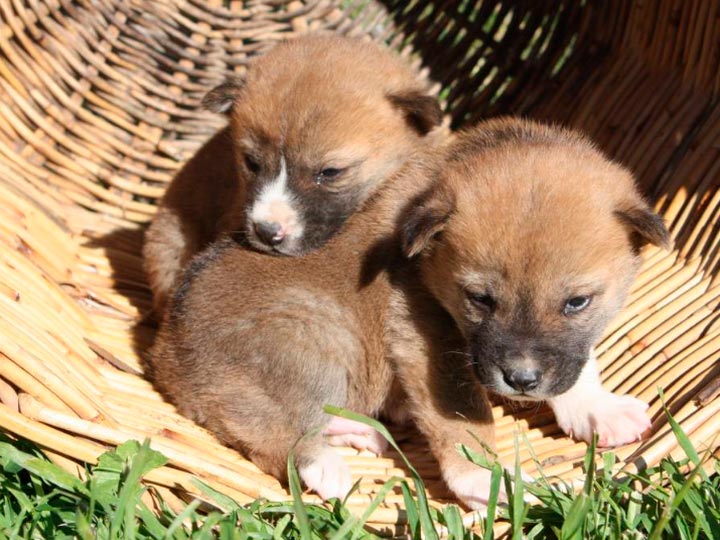
Dingoes reproduce once a year. Mating season typically occurs in early to mid-spring. The gestation period, like that of ordinary dogs, lasts approximately 63 days. A litter consists of 6-8 blind puppies. Both parents care for the newborns.
Dingoes readily interbreed with domestic dogs, so most of the population is hybridized. Purebred dingoes are found primarily in national parks and other protected areas where mongrels are not allowed.
They reach sexual maturity at 1-3 years of age. They are monogamous. In the wild, they live for about 10 years, and in captivity, up to 13.
Diet
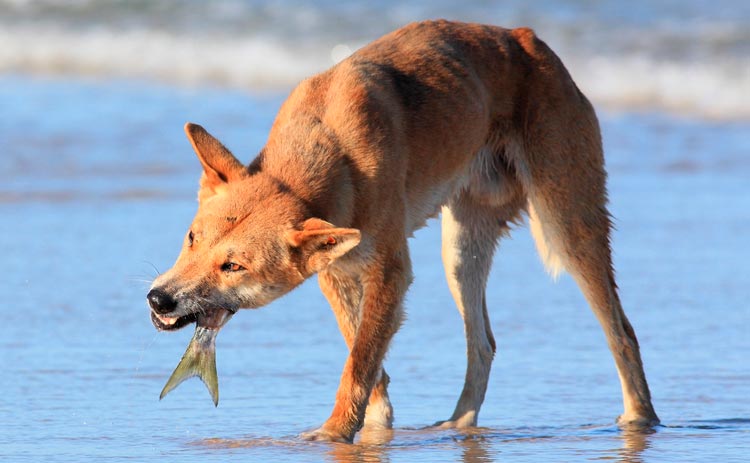
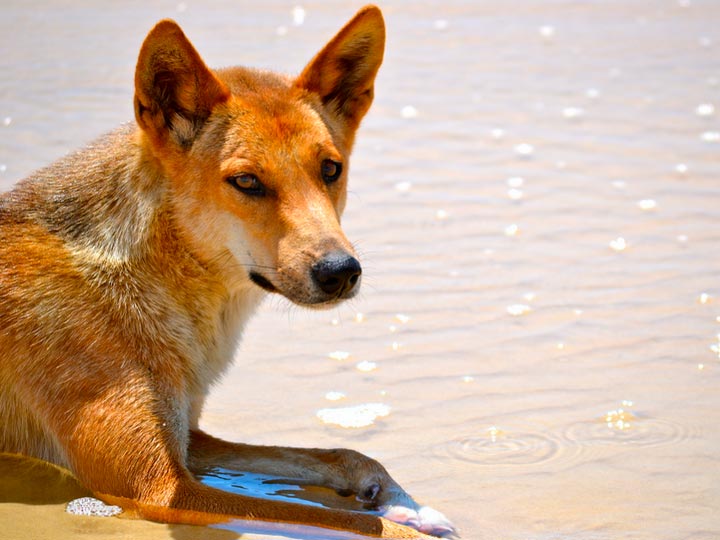
Small animals make up most of their diet: rabbits, martens, flying foxes, and others. Dogs may also hunt kangaroos or wallabies. Less frequently, they feed on birds, reptiles, insects, and carrion. Dingoes have been reported to catch and pull sharks from the water that have swum close to shore. The fact that dogs easily catch small fish in shallow water is beyond doubt.
With the arrival of European farmers in Australia and the increase in livestock numbers, dingoes' diet improved even further. It's worth noting that they often attacked sheep, but did not eat them. Dingo-dog crossbreeds pose a greater threat to livestock; they breed twice a year and are more aggressive, including toward humans.
Character and behavior
Dingoes are highly intelligent, agile, and resilient dogs with excellent vision and hearing, a well-developed pack instinct, and a strong hunting instinct. They are naturally very cautious and careful, which allows them to avoid people and traps, and to recognize poisoned food. Purebred dingoes do not bark, only howling and growling.
Dingoes are generally considered non-violent and rarely attack humans. Only a few such cases have been recorded throughout history. One of the most high-profile was the death of Azaria Chamberlain, a nine-month-old girl who was believed to have been carried off by a wild dog.
Tamed dingoes are mischievous, intelligent, and cheerful. They form strong bonds with one person and cannot tolerate a change of owner, often running away or dying. They are generally friendly with other family members. They are prone to escape and unpredictable in behavior. They do not get along well with other animals. Conflicts with dogs often arise, and other animals can awaken their hunting instinct. If alone or neglected, they quickly become feral.
Keeping dingoes in captivity
The English naturalist Wilbur Chesling, who lived for several years among the Australian Aborigines, wrote that the locals treat the domestication of dogs with great sensitivity, accepting the puppy as a full member of the family. Often, the dog grows up with children; women train the dog to find small animals or even dig up roots, while men take the dog hunting. A deceased friend is mourned and buried like a human. However, dingoes never become truly domesticated. Even modern dogs, bred in kennels and raised literally from the first days of life, will loyally follow their owner, guard the house, and protect children, but they will not shed their wild animal instincts. They will dig holes, run away, and hunt anything that moves; in this pursuit, they are frisky, bold, and reckless. Dingoes require persistent, consistent training. A person without experience keeping such independent and self-sufficient dogs is unlikely to be able to cope with a wild predator.
Even tamed dingoes remain wild dogs and live on their own. They're not the best choice for anyone who needs a four-legged companion. Owning a dingo is like owning a wolf, and as we know, a wolf still looks into the forest. No Australian would dare leave one in a sheep pen overnight.
Dingoes typically live in packs, and similar relationships develop within families. It's important for owners to establish leadership and maintain that position. Even if a dog has accepted that humans are the alpha male, they will regularly challenge this. Dingoes generally believe they know and can do everything better. They won't fetch a stick or play games, especially obedience games. Relationships with dogs are built solely on mutual respect and shared interests, one of which could be a daily walk together. Incidentally, dingoes require a great deal of physical exercise, and mental stimulation is equally important. The minimum an owner should provide is 10-12 km of more or less free running per day. This should include opportunities to mark territory, hunt, sniff, and do whatever else is necessary.
Dingoes are not picky eaters and are not prone to overeating. Their food needs vary greatly depending on the season, their physiological state, and their activity level. Wild dogs are generally healthy and have strong immune systems. Dingoes kept in captivity are usually vaccinated and treated for parasites, just like domesticated animals.
Where to buy a wild Australian dingo
In the 1980s, Australians were forced to reconsider their views on dingoes, which attracted the attention of zoos in Europe and America. From predators and vermin, they were elevated to the status of exclusive wild animals, becoming a symbol of prestige, with long lines of people wanting to acquire a puppy.
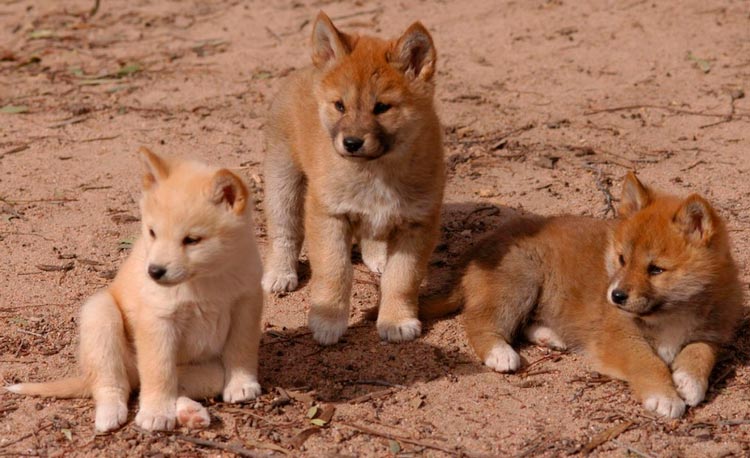
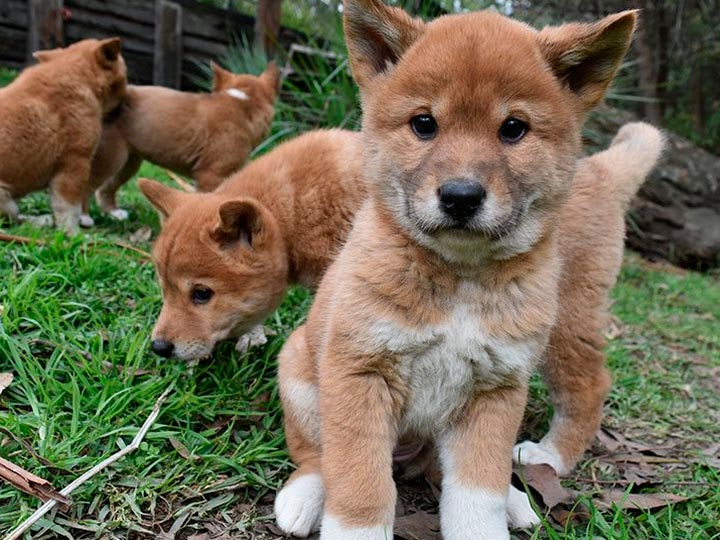
Around that time, European and American cynologists began breeding dingoes in kennels. In Spain and France, they are even accepted into various dog competitions and shows, and in Switzerland, there is an official standard for the Australian dingo. Of course, kennels also appeared in Australia where puppies are raised for sale. Dingo puppies are very friendly and affectionate, they do not show aggression toward people, and are curious and playful, like ordinary dogs. The average price of an Australian dingo puppy from a kennel is $3,000.
Dog breeds that descended from dingoes
With the development of sheep farming, Australian farmers urgently needed a dog that could protect their flocks from wild animals and also help with herding. A large number of four-legged shepherds were imported to Australia from Europe, but most were unsuitable for farmers for various reasons. In the early 19th century, the first experiments began to cross-breed herding dogs into dingoes. It is now believed that several breeds emerged from this hybridization. Three of these remain today: Australian Heeler, Australian Kelpie and its variety, the Australian Stumpy Tail. These dog breeds are an excellent alternative for those who dream of an independent, hardy, and healthy working dog that lacks the main negative traits of a wild animal, but still shares many similarities.
Photos
This gallery features vibrant photos of Australian dingoes of varying ages in breeding facilities, zoos, and the wild.
Read also:
- Australian Silky Terrier (Silky)
- Australian Labradoodle (Australian Cobberdog)
- Australian coolie (obsolete German coolie)


Add a comment