
Dilated cardiomyopathy in dogs: symptoms and treatment
Dilated cardiomyopathy DCM is one of many heart diseases that occurs in dogs of various breeds and can lead to chronic heart failure. In this article, we'll discuss the symptoms that suggest DCM in your pet, how the disease should be diagnosed in a veterinary clinic, and what treatment may be prescribed based on the diagnostic results.
Content
Development and causes of DCM
The name of the disease comes from the Latin word "dilatatio," which translates as "stretching" or "expansion," perfectly reflecting the pathogenesis of DCM in dogs. The disease is characterized by dilation of the heart chambers, as well as thinning of the walls, leading to cardiac dysfunction, insufficient pumping function, and congestion.
Without proper treatment, the disease progresses rapidly and leads to irreversible changes in the heart muscle and the development of severe chronic heart failure.
Dilated cardiomyopathy (DCM) occurs in dogs of all sizes:
- Of the small breeds, Yorkies and Chihuahuas are most susceptible to heart problems;
- Spaniels of medium size often suffer from heart disease;
- Most often, the diagnosis of DCM is made in representatives of large and giant breeds (the disease is very common in Dobermans, Great Danes, Boxers, Labradors, Rottweilers and German Shepherds).
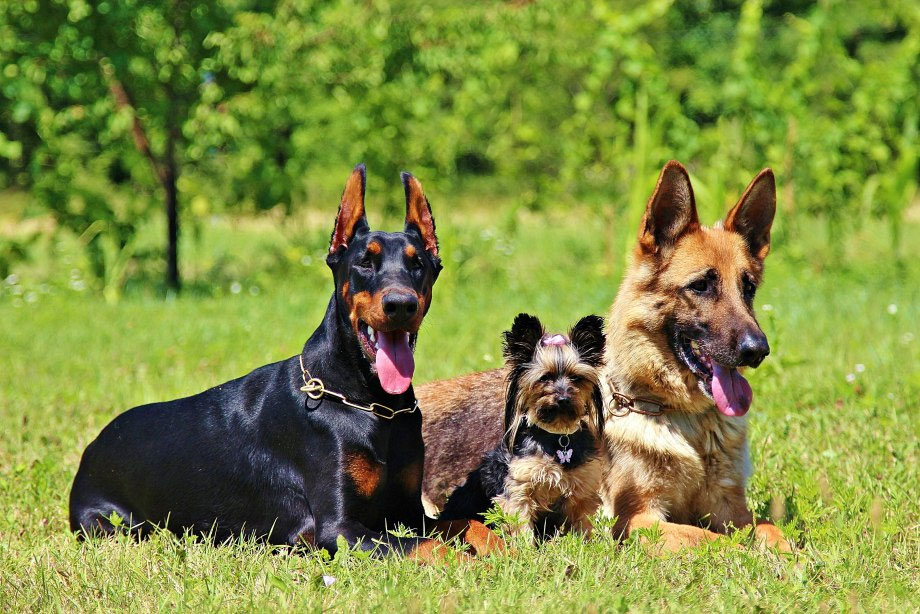
According to statistics, the disease is diagnosed in dogs of both sexes, but it is much more common in males.
The causes of dilated cardiomyopathy in dogs, as well as the high incidence of this disease in Dobermans, are unknown, but scientists associate the development of dilated cardiomyopathy with factors such as:
- hereditary predisposition to heart disease (valvular pathology);
- deficiency of taurine and L-carnitine in the animal’s body;
- inflammation of the heart muscle (myocarditis), which occurs against the background of severe infectious diseases;
- chronic diseases (diabetes mellitus, thyroid disease);
- the effect of toxins on the body.
Symptoms of the disease
The symptoms of the disease are in many ways similar to those of other ailments in this group and are caused by disturbances in the functioning of the heart.
The disease can develop in a latent stage for quite a long time (over several years), so it's crucial to pay attention to the early signs of DCM. The following should alert the owner:
- rapid fatigue of the pet (the dog refuses active games, long walks, and becomes apathetic);
- the appearance of shortness of breath with little physical activity.
It is very important to examine the animal and identify the disease at an early stage, before irreversible changes develop.

If the owner misses the initial symptoms, then as the heart disease progresses, the dog will experience increasing symptoms such as:
- lack of appetite (as a result, weight loss may occur);
- tachypnea or dyspnea;
- severe shortness of breath;
- pallor of the mucous membranes;
- cardiac cough;
- the first signs of congestion in the lung tissue.
The terminal stage of DCM is characterized by acute symptoms, including:
- various forms of ventricular arrhythmias (including atrial fibrillation);
- ventricular tachycardia;
- ascites;
- hydrothorax.
As a result of cardiac dysfunction, dogs with DCM experience acute heart attacks, which in some cases lead to death.
Diagnostic methods
Diagnostic methods used in modern veterinary medicine are designed to determine which specific changes in the structure and function of the heart lead to the appearance of characteristic symptoms in an animal.
The manifestations described above can also be observed in other diseases:
- heart defects;
- cardiomyopathy (including hypertrophic cardiomyopathy or HCM);
- cardiomegaly;
- myocarditis;
- pericarditis.
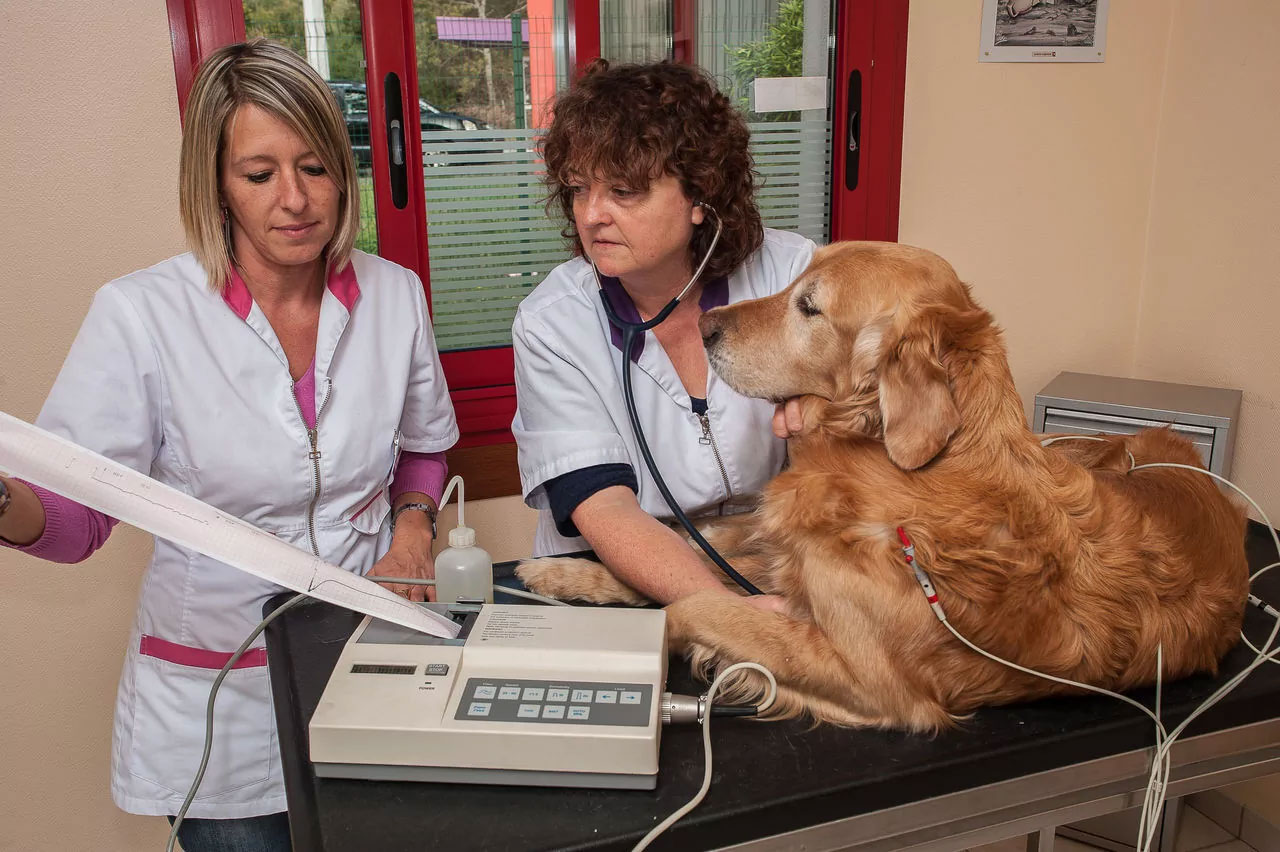
To diagnose DCM or HCM in dogs, clinical and instrumental diagnostic methods are used, including:
- electrocardiogram (ECG);
- Holter monitoring;
- Ultrasound of the heart (ECHO CG);
- chest x-ray.
Forecast
Important! The earlier the disease is detected, the greater the chance of effective treatment to prolong and improve the pet's quality of life. If the disease is detected at a late stage, the prognosis is poor.
The lifespan of dogs with DCM largely depends on the stage at which the pathology was detected and treatment was started:
- If the diagnosis is made at an early stage and the prescribed treatment produces results, the dog can live up to 4 years or more;
- if irreversible changes have already occurred, therapy will help prolong the animal’s life up to 12 months (sometimes more);
- Without treatment or if the disease is detected in the late stages, the prognosis for the animal is 3-4 months.
Treatment of DCM
Dilated cardiomyopathy is a serious condition that cannot be completely cured. However, with early detection, it is possible to control and slow the progression of the pathology, as well as reduce the negative symptoms that arise with DCM.
The treatment regimen may include medications from the following groups:
- ACE inhibitors;
- diuretics;
- cardiac glycosides;
- calcium sensitizers;
- calcium channel blockers;
- adrenergic blockers.
The specific medication and its dosage form are selected by a cardiologist based on the diagnosed problems and the animal's overall condition. Since DCM will progress even with medication, regular visits to the cardiologist are necessary to assess the dog's condition and review the prescribed treatment plan.
In some cases, surgical treatment may be recommended, involving the installation of elastic frames to support the heart's function. The surgery is expensive and quite complex, so only a few leading clinics in Moscow and St. Petersburg offer this treatment for animals.
Prevention of heart disease
To minimize the risk of heart disease in your pet, it's essential to select a puppy from a reputable breeder who conducts genetic and health checks on dogs approved for mating, provides a full package of accompanying documents for the puppy, and guarantees the absence of genetic pathologies.
If your pet belongs to a breed that is at high risk for developing DCM, veterinarians recommend:
- provide the dog with a balanced diet (if necessary, introduce food supplements with taurine and L-carnitine into the diet);
- pay special attention to daily moderate physical activity;
- undergo regular preventative examinations and monitor any changes in your pet's hair color;
- get basic vaccinations on time;
- Contact your veterinarian as soon as possible if your dog's health deteriorates in order to detect any illnesses at an early stage.
Veterinarian's advice
Read also:
- Normal heart rate in dogs: normal pulse
- Stroke in Dogs: Symptoms and Treatment
- Heart attack in a dog


Add a comment