
Wild Cats: Breeds with Photos and Names
Humankind's desire to demonstrate their strength and power has also found expression in the domestication of wild animals. While domesticating powerful predators like cheetahs and tigers is inherently futile and downright dangerous, "cheating" nature with genetics has proven quite possible. Let's see how this has worked out using cat breeding as an example. Here are the names and photographs of breeds that have emerged from scientific experiments. And it must be said, they're quite interesting and successful.
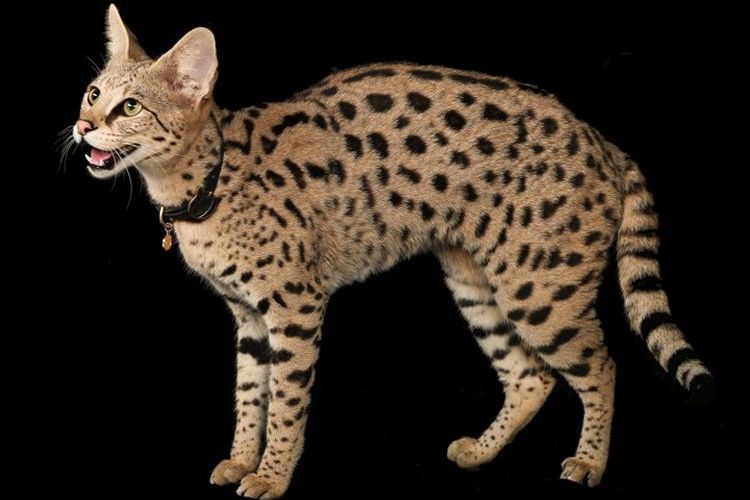
Savannah
One of the wildest and most exotic cat breeds, in which the blood of the temperamental and freedom-loving African flows servalThe official date of the standard's appearance is considered to be 1986, but its official recognition savannah The breed was only awarded in 2001. The cat has a striking and pedigree appearance thanks to its distinctive coat and noble posture. It is energetic, cunning, agile, and possesses remarkable intelligence. It has incredible jumping ability, and its behavior is similar to that of its distant relative, the cheetah. Adults can weigh up to 14 kg. Its intelligence and intelligence are more reminiscent of a dog than a cat. It gets along well on a leash, loves to swim, and is fairly easy to train.
Safari
A rare breed developed in America in the 1970s. The result of crossing a Geoffroy's wild cat with a domestic cat. They have powerful muscles and a large skeleton. In adulthood, they can reach a weight of 13 kg. Their coat is short, soft, and dense.
Traditionally, they have a golden-brown spotted brindle coat, but sometimes animals with a silvery sheen are found. Safaris have a boisterous nature, making them tireless in active play. Like all wild animals, they are excellent hunters and never miss a chance to practice their skills on birds, rodents, and other small prey. Despite their independent nature, they quickly become attached to their owners and are excellent with children.
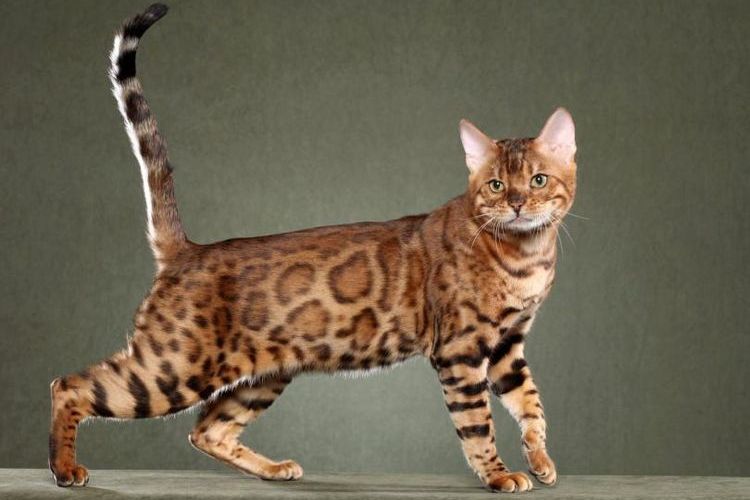
Serengeti
African grace and beauty—that's how one can describe this large wild cat. The breed's name translates as "endless valley," which essentially captures the essence of the animal's character: willfulness, pride, and natural originality. Interestingly, initially Serengeti It was intended to be similar to the serval, but in practice its “progenitors” were Bengal, Abyssinian and the Oriental Shorthair. This breed originated in the 1990s and is currently the rarest in the world. There are only a few hundred of them, and the number of official breeders is less than ten. This cat is very graceful, curious, and possesses clear leadership qualities. Fearless, yet incredibly talkative, it literally follows its owner around.
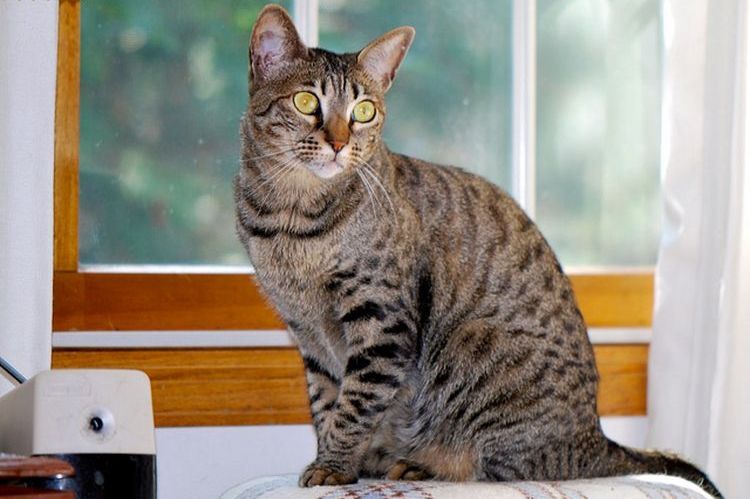
Siberian
The breed acquired its current appearance through both the efforts of breeders and natural evolution, mutating the cat in its natural environment. It is equally at home in both wild and domestic statuses. The first standard was published in 1988. The distinctive features of this cat include a large, well-developed body with powerful paws, as well as long, coarse, thick fur with a water-repellent coating. Bathing such a fluffy bundle requires considerable effort. The Siberian cat's coat color can vary widely: from silver-ash to peach and red with tan markings. In Russia, a wide variety of color names are used, photos of which are easily found online. These cats are very affectionate, friendly, and have a keen intelligence. They love to roam freely, happily hunting birds and mice.
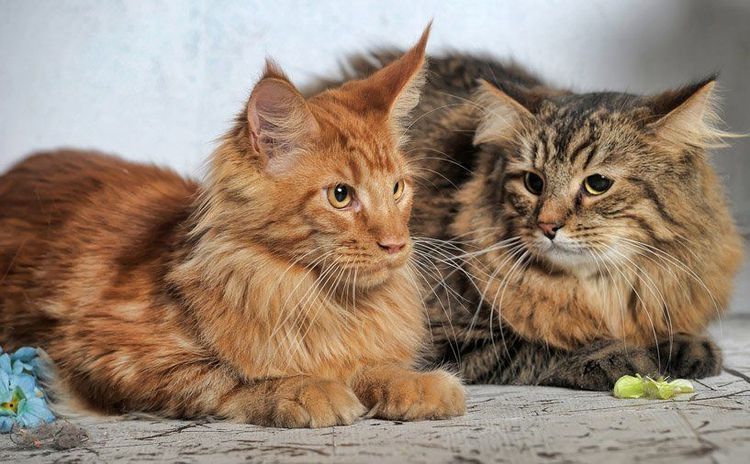
Chausie
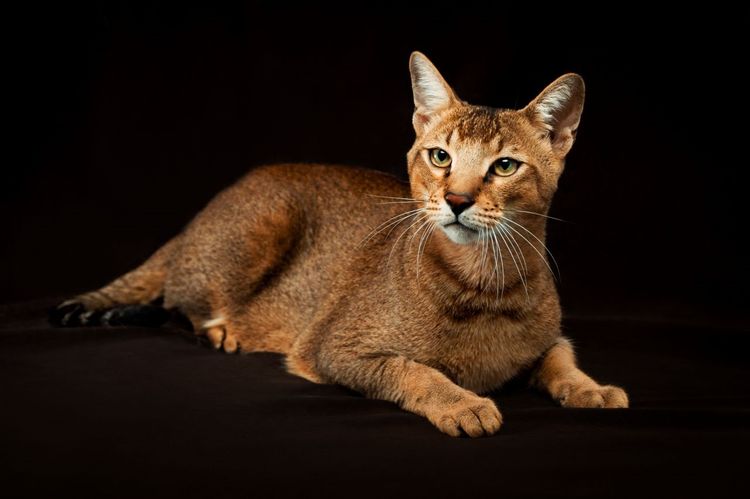
One of the most expensive breeds in the world, officially recognized only in 2003. It is considered a hybrid, created by crossing Bengals, Savannahs, Abyssinians, and the common domestic cat. The result is an animal with a domesticated nature but a wild temperament. It is extremely difficult to breed and is virtually unheard of in the former Soviet Union. Many of the Chausie's traits have been preserved from its distant ancestors: long, strong legs, a proud and graceful posture, high cheekbones, and large ears that catch the slightest nuances of sound. These cats are active and inquisitive, adore heights, and are ready to spend hours jumping on closets and sofa backs. They do not tolerate loneliness well, missing all the family members.
Chito
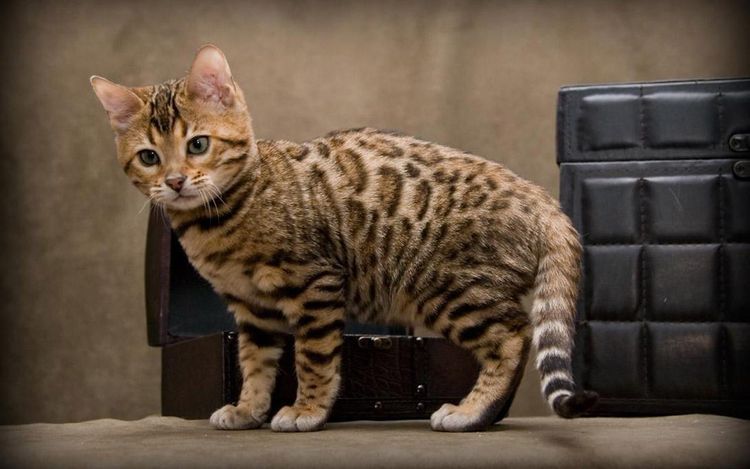
A true Tarzan cat, inheriting from its descendants a courageous disposition and domestic docility. The breed was created by crossing a Bengal cat and OcicatThe resemblance to cheetahs is no coincidence, although many generations separate them from their wild relatives. Despite their fearless nature, these cats do not live alone in the wild, although they are very willful and energetic. Cheetos are intelligent, devoted to their owners, enjoy being petted, and are known for their enviable obedience. A distinctive feature of this breed is that males show tender care for their kittens—a rare phenomenon in the feline world.
Pixie-bob
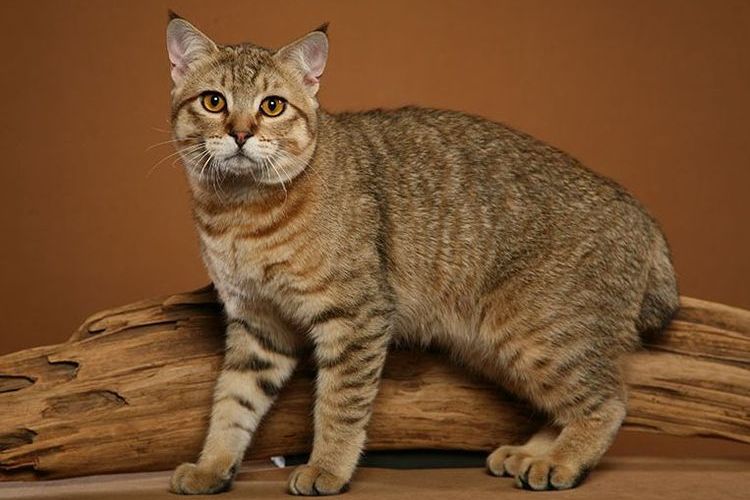
The breed was registered in 1995, although test breedings were conducted long before official recognition by TICA. The cat's name translates as "short-tailed elf." Besides the short tail, the playful tufts on its ears give the cat its unique appearance. resembling a wild lynxThe drooping eyebrows make the face appear somewhat sullen and gloomy, although in reality, the cat has a cheerful, kind, and inquisitive nature. She is very tactful and self-possessed, easily accustomed to a leash, and enjoys conversation and active play. Despite her outgoing nature, the Pixie-Bob is wary of strangers, but this quality stems more from a jealousy of her owner than from mistrust or suspicion.
Bombay
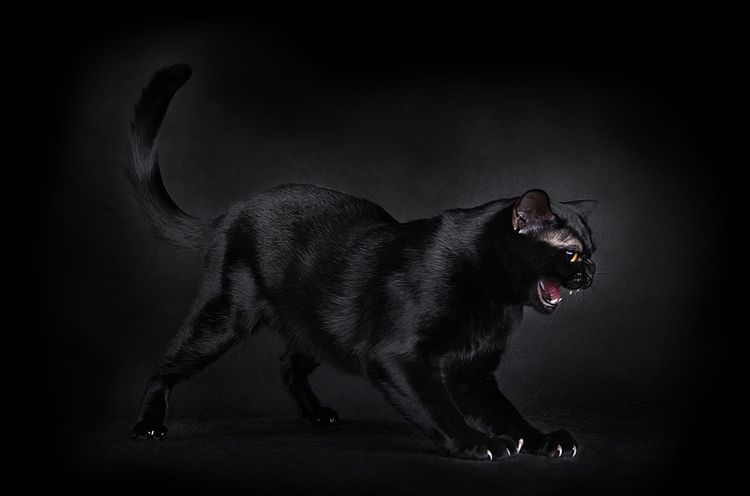
A domestic miniature panther is the first thing one thinks of when seeing this cat. Development of the breed began in the United States as early as 1956, and only after 20 years of painstaking selection experiments did it achieve its long-awaited standard. The result of crossing a Burmese and an American Shorthair cat was the beautiful Bombay—perfectly black, orange-eyed, and incredibly graceful in its stance. The cat's coat is so smooth and shiny that it seems as if it has been treated with a special wax. Animals of this breed are very affectionate, sociable, and active. They also possess a high sense of self-worth, not tolerating excessive liberties, especially from children.
Bengal
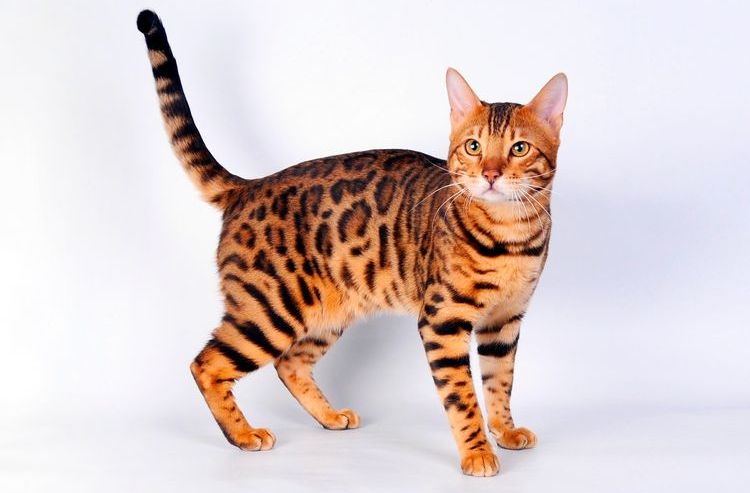
The result of crossing an Asian leopard cat with a shorthaired domestic cat. The ancestors of this breed continue to lead a wild life, while their descendants have been successfully domesticated, preserving perhaps only their unusual coloring and flexible, powerful body from bygone times. The Bengal cat's coat is truly admirable—smooth, shiny, with a dense texture and a distinctive pattern of golden-orange tan markings. This miniature leopard has a tolerant nature, allowing it to get along even with dogs. Due to its genetics, the animal loves to climb trees, is not afraid of water, and is noted for its quick reflexes.
Canaani
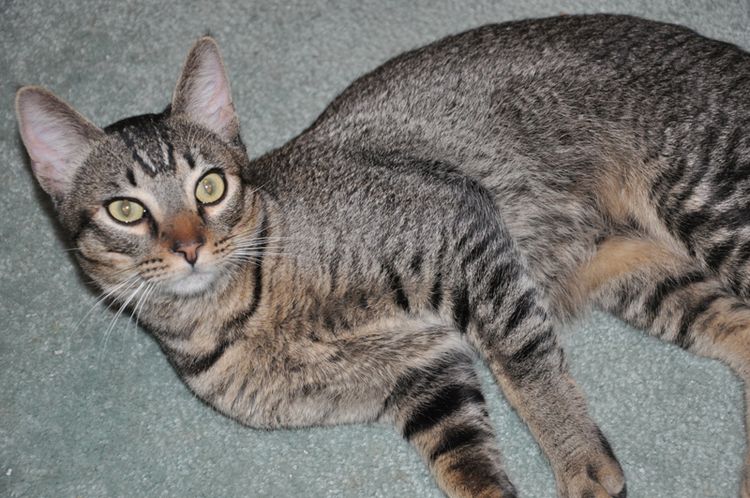
This breed originated in Israel. It was formed by the genes of the Bengal, Abyssinian, and Ocicat cats, as well as the Libyan wildcat and mixed-breed cats. The result of this "vinaigrette" is a cat with a very interesting character and appearance. The animal's coloring can vary from apricot to chocolate, but several details remain constant: three rings on the tip of the tail, black socks on the paws, and a necklace around the neck. The forehead is always adorned with a clearly visible "M"-shaped pattern. Despite its kindness, playfulness, and affection, this cat is quite stubborn and self-assured. It dislikes sitting on laps for long periods, is very active, and naturally dislikes loneliness. It quickly learns household rules and becomes attached to its owner.
In addition to the above-mentioned names and photos of wild cats, there are a number of other breeds that are currently considered experimental. It's quite possible that in the near future, this list will be expanded with new and exciting felines that will become pets in many families around the world.
Read also:


Add a comment