
Wild dog dingo
The dingo is not only a unique representative of Australian fauna but also an animal that has left a profound mark on human life and culture. In Russia, the image of the "tingo" (the ancient name for the animal by the Aborigines of the Green Continent) has been romanticized for many years, and therefore few people know what this animal truly is.
Content
History of appearance
The wild dingo is believed to have appeared on the Australian continent approximately 3,500-4,000 years ago. According to one theory, the animal was brought here by European or Asian settlers. However, other researchers believe it is a direct descendant of the Indian wolf, stray pariahs, or the domesticated Chinese Crested, whose history began approximately 6,000 years ago.
The predator can be viewed both as a secondarily feral animal and as a creature originally docile to humans. Scientists have been unable to determine precisely how the species evolved: it may have become feral after its ancestors were domesticated, or it may have acquired a fierce and unruly nature as a result of artificial crossbreeding.
Important! Today, Australian farmers use the animal's name derogatorily, referring to cowardly, vile, and unworthy people. The problem is that wild dogs cause significant damage to farms: gathering in packs of 4-12 animals, they attack flocks of sheep under cover of night, reducing the flock by as many as 20 animals in a single raid! Neither culling nor the construction of a massive "dog fence," which stretches 1/3 the length of the Great Wall of China, have completely solved the problem.
Habitat areas
Despite recent efforts to re-domesticate these predators, international cynological unions have yet to recognize this breed. Most countries prohibit the keeping of wild animals as pets. They remain free-spirited creatures in the following countries:
- Philippines;
- Malaysia;
- New Guinea;
- Australia;
- Thailand;
- Myanmar;
- Borneo;
- Indonesia;
- China;
- Laos.
Tingos from different parts of the world have their own distinctive features and characteristics. They also occupy different niches in biocenotic processes. These animals are especially important for the environment of the fifth continent, where they regulate the quantitative balance of animals. Having exterminated their main competitors, the Tasmanian devil and the Thylacine, these predators switched to rabbits. Thanks to feral dogs, the risk of critical rodent reproduction in Australia has been significantly reduced. They also attack kangaroos, wallabies, birds, reptiles, insects, and are not averse to carrion.
Description of appearance and lifestyle
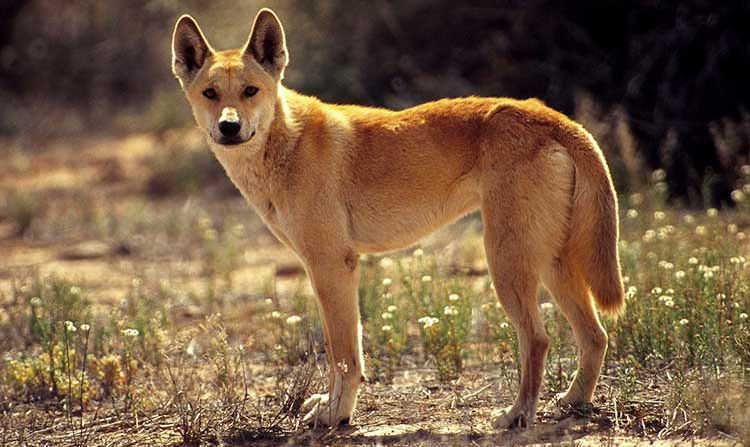
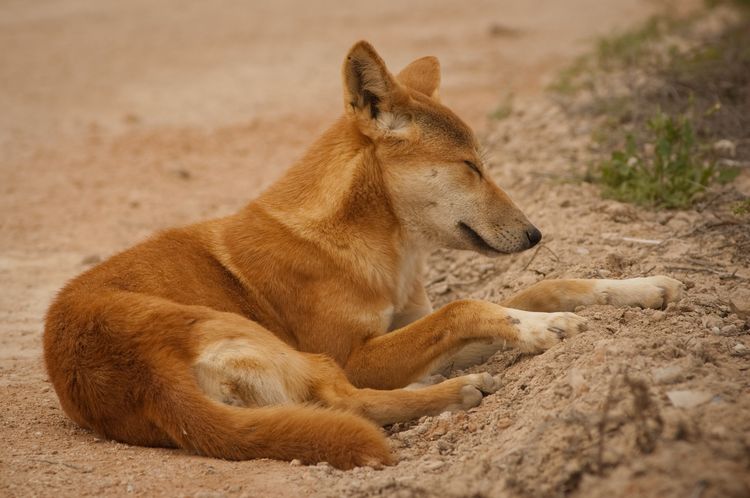
Photos of dingoes fully demonstrate the beauty of these freedom-loving animals. They have a massive, broad skull and a sharp, pointed muzzle, somewhat reminiscent of a fox. Dingoes' triangular ears never droop, and their strong jaws, studded with rows of long canines, form a precise, powerful bite. The muscular neck flows smoothly into a deep chest and back with a short, slightly tapering loin. Their strong limbs are designed for fast, leaping movements with a swift push-off. Mature individuals weigh between 10 and 19 kg, and their height at the withers ranges from 47 to 67 cm. Males are significantly larger than females by all measures, just as all Australian representatives of the species are larger than their Asian relatives.
The fur color is reddish-brown or rusty-red, with slight patches of lighter shades on the muzzle and belly. Black, piebald, or white fur indicates hybrids, most likely the result of mating with German Shepherds.
Important! An interesting feature of purebreds is that they are completely incapable of barking, only able to howl and growl.
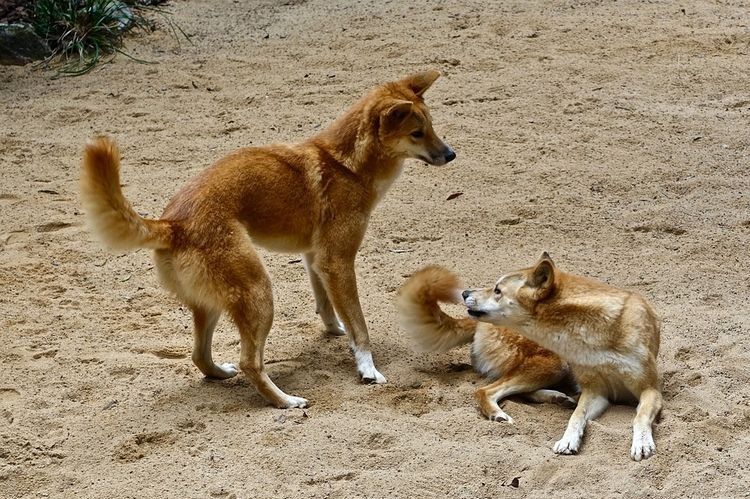
Some breeders are interested in the price of dingoes not only because of their appearance but also because of their unusual character. A predator can be purchased for as little as $600-800, but raising one as a pet is more expensive, both in terms of time and money. The problem is that in the wild, these mammals live in packs formed around dominant pairs of alpha males and their females. The hierarchy is built solely around them: no other female has the opportunity to give birth to puppies, as they would be immediately killed. However, once the dominant female produces a litter (an average of 6 to 8 puppies), the entire pack immediately begins to groom them. The clan, generally avoiding human habitats, operates according to the laws of strength and dominance.
And yet, if you acquire a mammal as a puppy, it can indeed be raised to be an obedient pet. However, it's important to remember that such a fosterling will only recognize one person as its owner for life.
Packs typically consist of 5–12 individuals, led by a dominant pair that reproduces once a year. Young animals live separately from the pack. When the leader ages, a succession of alphas occurs: the alpha children overthrow their father. Hunting often occurs at night, when their advanced night vision provides an advantage in hunting small game.
Is it possible to keep a dingo at home?
Dingoes are not entirely suitable for captivity. The nature and lifestyle of a wild animal require:
-
Space on private property, preferably fenced
-
One owner - a change in the center of attention causes stress and escapes
-
Time and effort to adapt: they retain hunting and territorial instincts
Domestic dingoes remain independent and can be unpredictable and aggressive towards other animals.
Conservation and population status
Purebred dingoes are considered a vulnerable species due to hybridization, hunting, and habitat loss. Hybrids reproduce faster, posing a threat to the evolution of the wild population. Protected areas and national parks have been established in some areas, where conservation and breeding programs for purebred wild individuals are underway.
Practice for pet owners
Although dingoes are not traditional domestic dogs, studying their ecology and behavior helps pet owners:
| Subject | Applicability |
|---|---|
| Understanding Genetics | The dingo demonstrates how feralization changes behavior and physiology—useful for understanding the genetics of domestic breeds. |
| Behavioral models | Pack research helps owners understand their pets' hierarchies and socialization. |
| Diet and Hydration | The dingo's diet can be compared to that of domestic dogs (meat, wet food), but it is important to ensure that the diet is sufficiently moist. |
| Limiting aggression | If your pet exhibits hunting instincts, it is important to provide stimulation through walks, toys, and training. |
Reflection in culture
One of the most famous works of art to feature the image of this predator was the Soviet film "Wild Dog Dingo," directed by Yuli Karasik. Released on October 15, 1962, this black-and-white film was a visualization of a story by children's author Ruvim Fraerman. The book, first published in 1939, also had a second title: "A Tale of First Love."
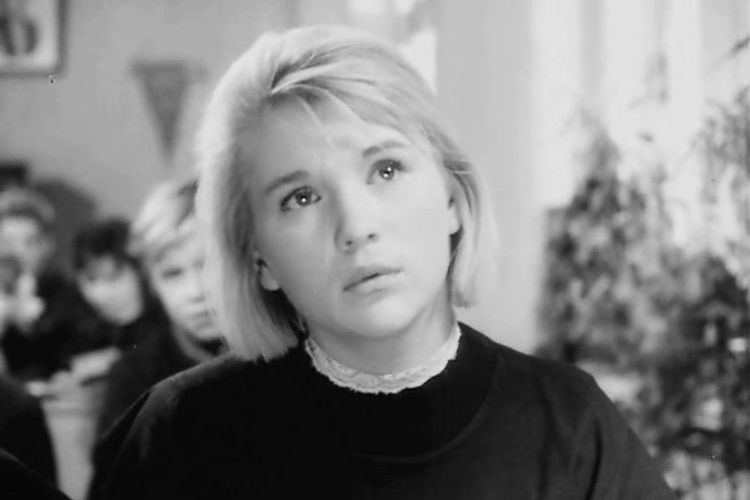
The synopsis of the film "Wild Dog Dingo" takes the viewer to the Far Eastern town of Primorsk, where a young schoolgirl named Tanya Sabaneeva lives with her mother. One day, Tanya's father, transferred from the capital to a new posting, arrives in town. He arrives not alone, but with his new wife and her nephew, Kolya. Upon meeting Kolya, the headstrong and fickle protagonist gradually discovers the true meaning of first love, with its joys and sorrows. It is Tanya who is referred to in the film as the wild dog, or dingo.
The film, which has been viewed by approximately 21.8 million people since its inception, stars:
- Galina Polskikh (Tanya);
- Vladimir Osobik (Kolya);
- Talas Umurzakov (Filka, their classmate);
- Anya Rodionova (Zhenya, Tanya’s classmate);
- Inna Kondratyeva (Maria Sabaneeva, Tanya’s mother);
- Nikolai Timofeev (Tanya's father, Colonel Sabaneev);
- Irina Radchenko (Nadezhda Petrovna, Sabaneev’s second wife);
- Tamara Loginova (Russian language teacher).
For almost all of the lead actors, including 22-year-old VGIK student Galina Polskikh, this filming marked their debut. It's worth noting that the crew didn't have to travel to the real Primorsk to make the film—exterior shots were filmed in the village of Semenovka in the Leninsky District of Crimea, and the indoor scenes were actually recorded on sound stages at the Lenfilm Studios.
Read also:
- The breed of dog from the movie The Mask
- Movies about dogs: a list of the best
- The World's 10 Most Beautiful Dogs


Add a comment