
Devon Rex: Cats and Kittens
Devon Rex breed (DRX) The Devonshire breed appeared relatively recently, in the second half of the 20th century, in England—hence the name. Devons captivate the hearts of both amateurs and professionals with their unique, even somewhat mythical, appearance and gentle, affectionate nature. Furthermore, they require little grooming and are ideal for apartment living.
Content
History of the breed's origin
The first registered cat of this breed was Kirly, from the English word "curly"; it was his wavy coat that distinguished this kitten from others. Initially, Devon Rexes were thought to be related to the Cornish Rexes, a breed already known to breeders, but it later turned out that curly hair The Devon's condition is caused by a different genetic mutation. Breeders had to fight for recognition for more than five years until FIFe (the largest international federation of European cat fanciers) finally recognized the Devon in 1967.
Video review of the Devon Rex cat breed:
Description of the breed
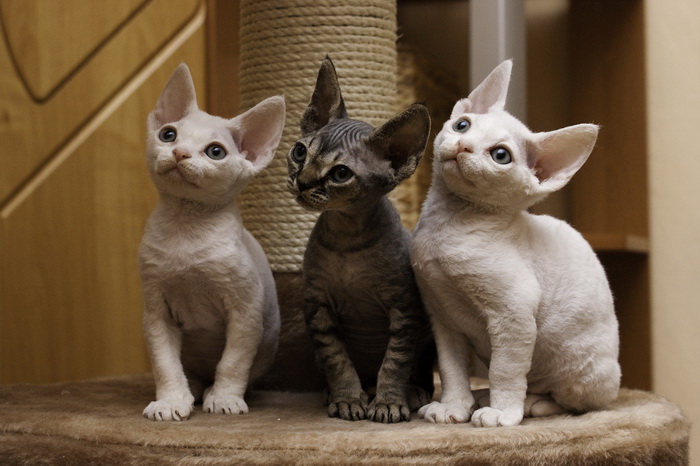
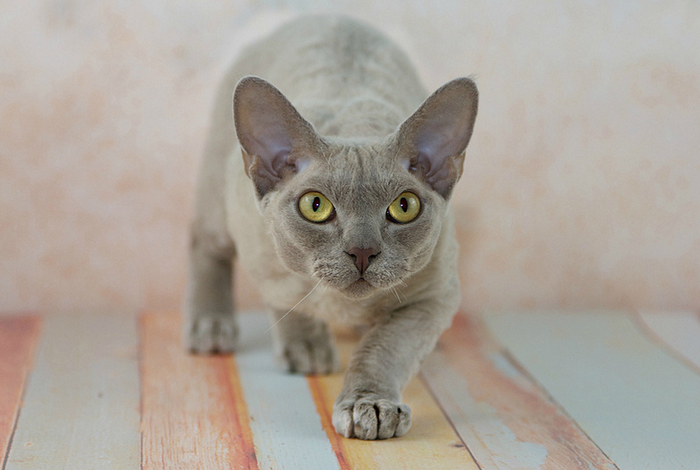
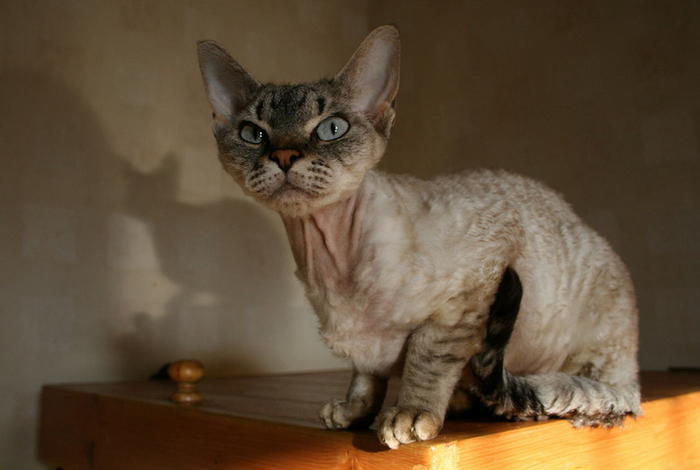
Devon Rex cats are distinguished by a truly unique, "alien" appearance: large, wide-set, low-set ears and huge, slanted, almond-shaped eyes set on a small, flat face. The cunning gaze of these eyes gives Devons a particularly mysterious, elfin appearance. Below, we'll go over the breed's description in detail:
Head and muzzle
Devon Rexes have a small, wedge-shaped head with fairly sharp contours. Viewed from the front, three distinct lines can be distinguished: the outlines around the outer ears, the forehead, and the whisker pads. The skull is broad and flat, with a distinct stop at the nasal transition.
The eyes are large and expressive, oval-shaped, set obliquely and widely apart. The ears are very large relative to the head, wide at the base, and set very deep; the tips are always rounded, and tufts are permitted.
The color of the iris must match the coat color, with the exception of Siamese divans: they are allowed to have only green or yellow eyes.
Frame
The body is proportional, with fine bone structure and well-developed muscles. The chest is broad, with rounded contours visible in profile. The limbs are tall and strong; the hind legs are slightly longer. The paws are oval and small. The tail is thin and long.
Coat and color
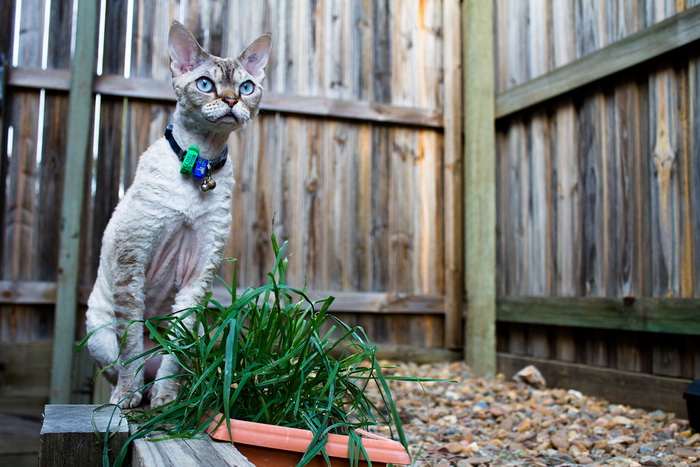
The coat is wavy and very short. It feels very soft and fine to the touch due to the absence of a guard hair. The curl pattern is open. The hair is shortest on the chest, limbs, crown, belly, and tail, while it is slightly longer and thicker on the muzzle, back, sides, and thighs. Absolutely any color is allowed, including acromelanic, or heat-sensitive, "Siamese" colors.
Character
Besides their striking appearance, Devon Rexes have an incredible personality for a cat. They bond with people like dogs, always seeking companionship, and love to play and have fun. This breed will never hiss at its owner or show aggression, but will purr, come to a lap, ride on a shoulder, and sleep cuddled with a beloved family member.
Devon Rexes also love to talk to their owners and respond with a gentle "meow." Their dexterity and ability to use their front paws resemble small monkeys. They easily stand on their hind legs and play with their front paws, using their favorite toys—pencils or bows. Devons remain childlike until old age: active and curious pranksters.
Reviews of the breed
The reviews alone make you fall in love with this breed, which is practically flawless. Devon Rexes are energetic and playful, especially when young. They treat their owners with affection and love. They crave attention and affection, and constantly want to be close to their humans, snuggling, cuddling, and purring.


Devon Rexes usually get along well with other animals.


Devon Rex cats do not require complex grooming, and their short undercoat sheds almost nothing.

The Devon Rex's appearance is striking and memorable. While not everyone likes it at first, many people change their minds over time.

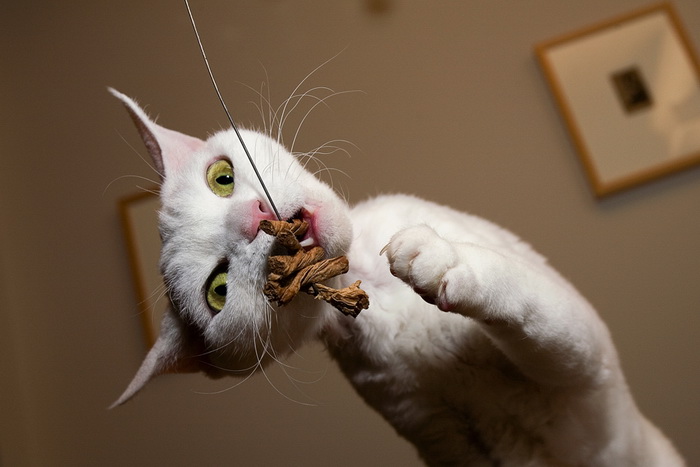
A Devon Rex can use anything as a toy, as long as it can be moved or picked up in its mouth. Like real dogs, they love the game of fetch.


The main character traits and habits of Devon Rex cats, compiled from reviews, will help you decide on the breed.
- Very active cats with the ability to climb into the most inaccessible and high places.
- They constantly play with any objects that come into their hands.
- They are very talkative, but their voice is quiet and soft, and the number of sounds they make seems limitless.
- Devon Rexes are loyal and attached to their people. It's impossible to ignore them if you're at home. In their absence, they'll miss you very much, and they'll let you know when you see them.
- Taking care of a cat is not difficult.
- Excellent appetite when sensitive digestion and a tendency toward obesity. Also, a habit of stealing everything edible from the table.
- When at rest, Devon Rex are very gentle and affectionate; they will try to snuggle closer to their owner, purring and hugging.
- Never shows aggression and will not release its claws even in response to the “caresses” of a small child.
Maintenance and care
Devon Rexes are designed for apartment living; only on warm summer days are they allowed to go for a walk with their owner and bask in the sun. Because these cats are quite playful, a high level of self-control is a must at home. As for toys, Devons are very inventive, playing with everything and everywhere, so extreme caution is necessary: especially young Rexes often swallow shoelaces and small objects during play, which can lead to serious problems.
It is important to remember that Devon Rexes do not tolerate cold well and are sensitive to drafts.
Question about Devon Rexes' allergies
Some people believe that Devon Rexes are hypoallergenic, but this is not true. While some people with allergies don't react to Devons, the opposite can also happen: they develop an allergy to cats, even though they weren't allergic before.
You can only find out if you are allergic to Devon Rexes after close contact with representatives of the breed.
Cats of this breed don't require any special grooming. They should be brushed once a week with a special massage brush. During shedding season, they can be brushed a little more often to maintain their beautiful appearance and keep their home hair-free. Devons need to be bathed frequently, approximately every two to three weeks. The good news is that they generally tolerate the procedure. Cosmetics should be selected individually.
Regularly inspect the eyes and ears, but don't clean them unless absolutely necessary. You can trim the cat's claws if desired, but your cat should always have a scratching post. During colder months, if the house is cool, it's a good idea to dress your cat in T-shirts or sweaters.
Nutritional Features
As with any other animal, the best solution is to balance the diet with premium and super-premium foods; avoid feeding this breed cheap products. So, if you've decided to get a Devon Rex, consider purchasing high-quality food.
Devons require careful monitoring of their diet. Feedings should be scheduled and strictly portioned. They have sensitive digestion and insatiable appetites, which can lead to obesity, allergies, and other serious health issues.
Devon Rexes often surprise their owners with their food preferences: they can develop a passion for pickles, bananas, or other unusual foods. But this doesn't indicate a nutritional deficiency or other nonsense. It's simply a characteristic of the breed, and the food they choose isn't always healthy.
Health and life expectancy
The Devon Rex breed is genetically very complex, and breeders still face several challenges: maintaining its appearance, good psyche, and minimizing hereditary diseases, of which, unfortunately, there is a long list.
- Coagulopathy is poor blood clotting caused by vitamin K deficiency.
- Devon Rex myopathy is a neurological disorder that manifests before six months of age and is characterized by muscle weakness. There is no cure for the condition and it inevitably leads to death.
- Malassezia dermatitis is caused by a commensal fungus, meaning the disease only develops in the context of allergies or a weakened immune system. Normally, the fungus can be found on the skin of most cats.
- Hip dysplasia is often accompanied by papillary luxation (dislocation of the patella). Clinically, it manifests as gait disturbance and an inability to jump.
Other Devon diseases are usually related to improper housing or feeding.
Average life expectancy is 12-13 years.
Choosing a kitten and price
Healthy kittens are easy to spot: their fur is shiny, their eyes are clear and bright, and there is no discharge. They are neither skinny nor pot-bellied, although they may appear a bit underweight compared to fur-bearing breeds. If you run your hand along the kitten's back, the pelvic bones and spine should not be palpable.
The kitten should be interested in people, playful, and have a good appetite. If you're choosing a kitten from a photo, you should confirm with the breeder that you're seeing the correct kitten.
A good way to see a kitten from a distance is on video; it's practically impossible to embellish the baby or hide anything on it.
In catteries, pet-class kittens cost from 20,000 rubles.
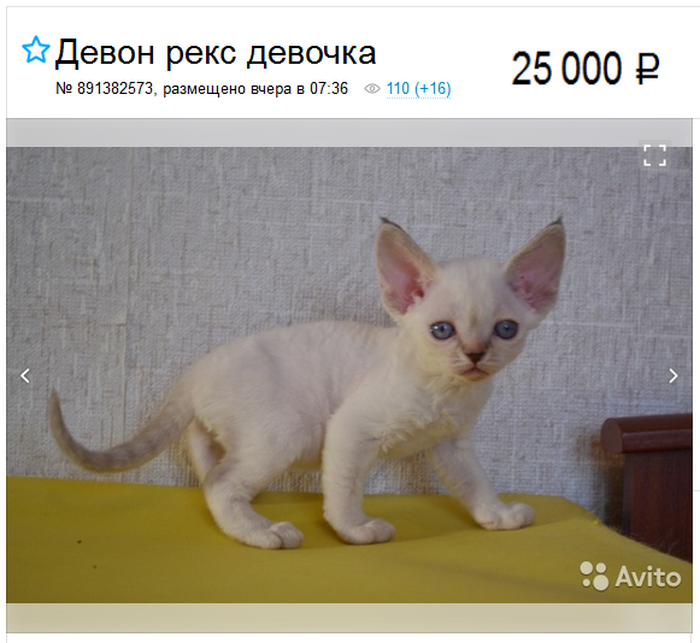
Devon Rex cats with potential for a show career and for breeding cost from 40,000 rubles.
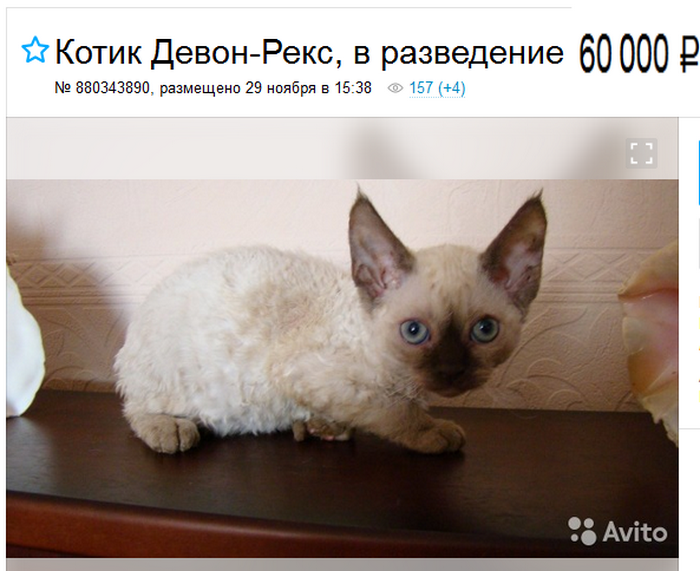
Interest in the Devon Rex breed is growing, meaning many breeders, sensing a profit, are selling kittens. Unfortunately, most of them sell sick, unvaccinated kittens under three months of age, often carrying latent infections and never tested for genetic diseases. While it's not a guarantee that buying a kitten at the lowest price will lead to its subsequent treatment, it's certainly possible.
Photos
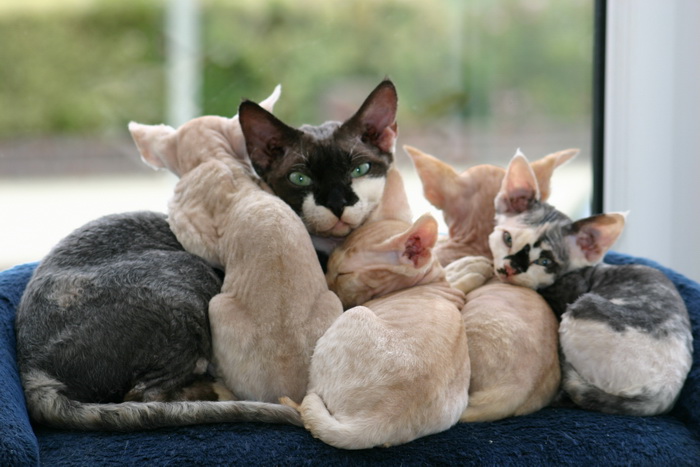
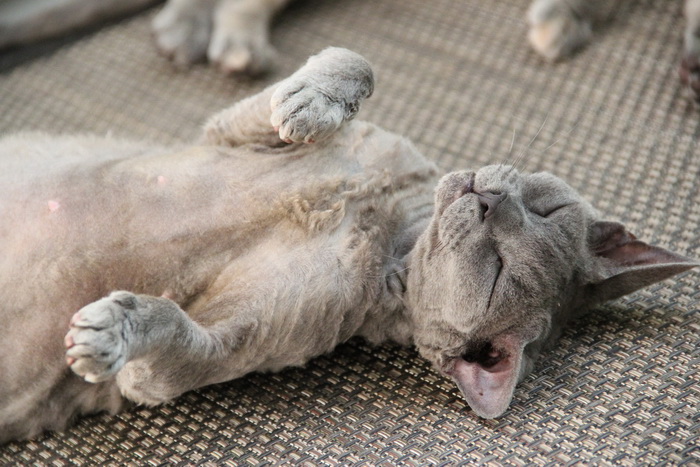
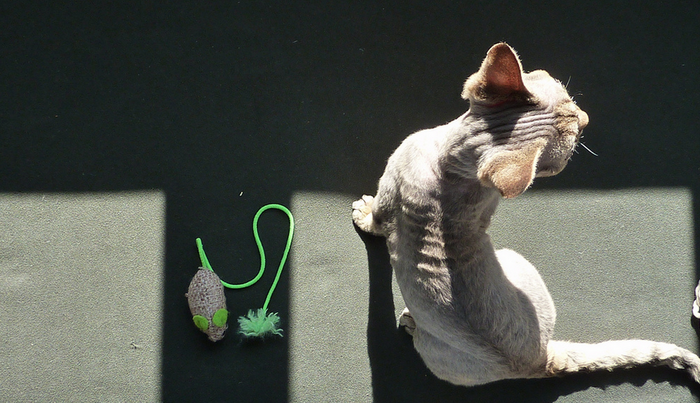
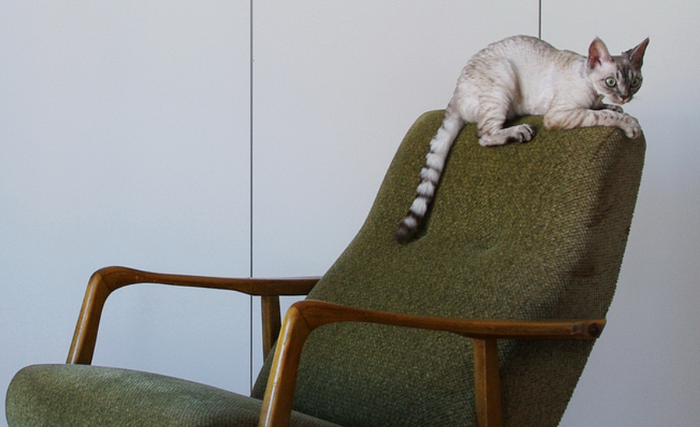
Photos of Devon Rex cats:
Read also:


Add a comment