
Dermatomycosis in dogs: symptoms and treatment
Dermatomycosis is a general category of skin diseases, commonly known as "lichen." The disease is caused by microscopic fungi that affect the skin, fur, and even the claws of an animal. At the first sign of dermatomycosis in dogs, treatment should be started immediately, as it is easily transmitted to humans. Small breeds and animals with weakened immune systems are most susceptible to infection.
Content
Reasons for occurrence
Fungal infections are caused by infected mammals. Through direct or indirect contact, the pathogens can enter the skin and penetrate through microscopic wounds. Not every dog can become infected, but only those at risk.
The following are considered provoking factors:
- improper nutrition without sufficient amounts of natural meat and other necessary components in the diet;
- weakened immunity, typical for puppies, elderly or sick animals;
- metabolic, hormonal or vitamin imbalance disorders;
- antibiotic treatment;
- helminthic infestations, especially chronic ones;
- lack of proper conditions of detention according to sanitary, hygienic and temperature requirements.
In addition, dermatomycosis can be caused by constant skin trauma in pets kept on a leash or leading a sedentary lifestyle in small enclosures.
Important! The incubation period for the disease ranges from 1 week to 1 month, but can extend up to 3 months. During this period, the dog remains a carrier of the infection and poses a danger to humans.
Characteristic signs
The symptoms of dermatomycosis are largely determined by the form in which it progresses, which can be:
- atypical (weakly expressed);
- follicular (deep).
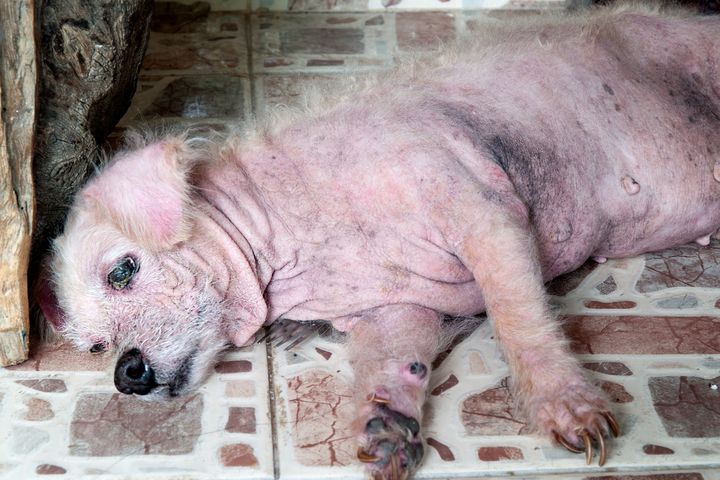
The first type typically affects dogs with strong immune systems, while the second type affects puppies and weak animals. Untreated atypical lichen quickly develops into a follicular form with all its symptoms. In any case, without adequate treatment, photos of ringworm in dogs present a horrific picture. The infection can affect the entire body—not only the skin and fur, but also internal organs.
Additionally, dermatomycosis is classified by the type of pathogen. Dogs are most commonly affected by two types of fungus:
- microsporia;
- trichophytosis.
Less common is achorion, which causes scab. Each type of disease has its own distinctive symptoms.
Microsporia
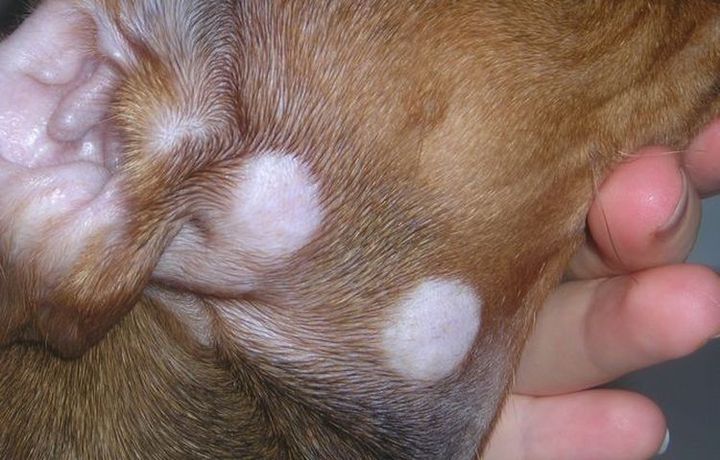
Symptoms of microsporia include the formation of small lesions with clearly defined edges and hair loss or broken hair. Depending on the form, the skin condition varies significantly:
- with atypical - redness, dryness and flaking appear;
- in follicular cases, it fester and releases exudate, which forms a crust after drying.
More often lichen appear on the top of the head, near the ears, on the paws, around the tail and between the toes.
Trichophytosis
The symptoms of trichophytosis are similar to those of microsporia, but this variety is more typically follicular. Trichophytosis is often considered a severe stage of microsporia.
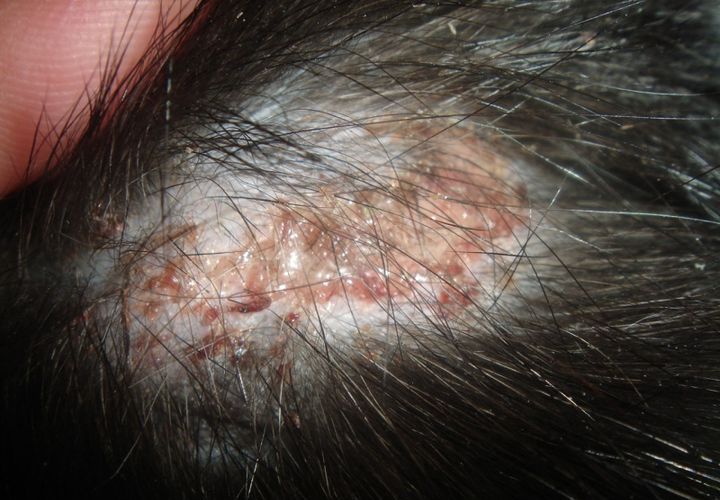
The fungus causes profuse purulent discharge from the affected areas, forming thick crusts. Therefore, the main symptom of this type of dermatomycosis is hairless patches covered with dried purulent crusts. In the final stage, the disease affects the paw pads and claws.
Scab
Scab is the most severe form of this fungal infection, which is characterized by the following symptoms:
- Not only the skin is affected, but also the bones, and in advanced cases, even the internal organs;
- the first lichen appears on the head, ears and around the claws;
- the lesions become covered with scabs;
- the coat falls out completely.
A common symptom of any form or type of dermatomycosis is severe, persistent itching, burning, and a fine rash. In severe cases, the dog becomes weak, exhausted, and lethargic due to damage to internal organs.
Important! Even in advanced stages, dermatomycosis is treatable. However, it's impossible to completely rid your dog of the fungus, so if any of the above-mentioned triggers appear, the symptoms will recur.
A photo of dermatomycosis in dogs before treatment is enough to visualize the overall clinical picture of the disease and independently identify its symptoms already in its early stages. Skin and coat lesions, such as ringworm, have distinct, characteristic signs that are difficult to confuse with other diseases. However, a definitive diagnosis can only be made using specialized diagnostic methods.
Diagnostic methods
Dermatomycosis in dogs is detected in the following ways:
- fungal culture;
- microscopic examination;
- Wood's lamp illumination.
However, only the first option—cultivation—provides an 80% accurate result. Microscopy has a 40% success rate. And the Wood's lamp often produces false positives.
Treatment options
For any symptoms of dermatomycosis in dogs, treatment is comprehensive. Treatment measures should include:
- vaccination or administration of antibiotics;
- external skin treatment;
- Strengthening the immune system with vitamin supplements.
Simultaneously with the treatment, the provoking factor is eliminated and the pet is provided with appropriate living conditions.
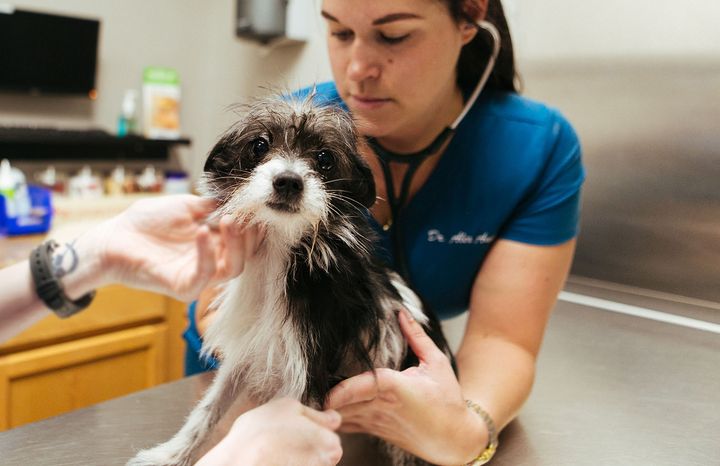
Vaccination
Traditionally, vaccines are used for preventative purposes, but in the case of dermatomycosis, they can be an excellent treatment.
The main antifungal drugs for dogs are:
- Polivak-TM – administered 3 times with an interval of 10–14 days;
- Vakderm – applied twice with the same interval;
- Microderm – usually 1 injection is enough, but if necessary it can be repeated after 2 weeks.
A lump often appears at the injection site, which resolves within 2–3 days. Vaccination should not be administered if the patient has a fever.
Drug treatment
In cases of hyperthermia, when vaccines are prohibited, treatment of dermatomycosis in dogs is carried out with antibiotics in tablet form. The following medications are considered the most effective:
- Itraconazole
- Ketoconazole
- Griseofulvin.
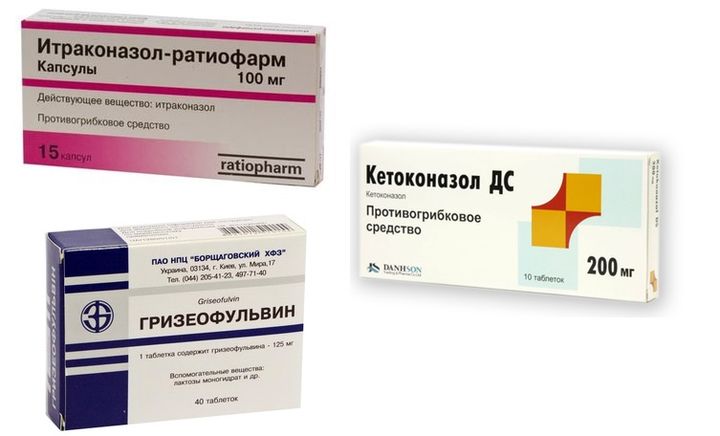
Along with any of the above internal treatment options, external skin treatment is performed. Beforehand, shave or trim the hair around the affected areas. Applying the following ointments twice daily yields good results:
- Clotrimazole.
- Nystatin.
- Ketoconazole.
For the follicular form of the disease, the dog is bathed every 3-4 days using special shampoos.
To speed up treatment, it is recommended to irradiate your pet with a quartz lamp. These treatments quickly reduce redness, improve tissue regeneration, and strengthen the immune system. In most cases, quartz lamp treatments can fully replace antibiotics, which can negatively impact the animal's body. After proper treatment, the symptoms of dermatomycosis in dogs (pictured) gradually disappear, and the affected areas eventually become covered with hair.
Preventive measures
Since treating dermatomycosis is much more difficult than preventing it, simple preventative measures are recommended. These include:
- vaccination once a year;
- ensuring proper nutrition and appropriate living conditions;
- avoiding contact with potential carriers of the fungus.
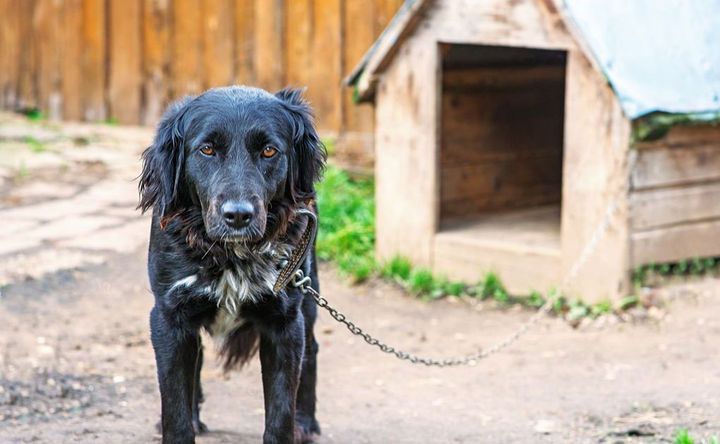
Ringworm is not only an unpleasant but also a very serious condition that is easily transmitted to humans. Therefore, it's important to closely monitor your pet's condition and, if any unusual bald spots appear on their skin, consult a veterinarian immediately.
Read also:
- Hives in Dogs: Symptoms and Treatment
- Flea Dermatitis in Dogs: Symptoms and Treatment
- Microsporia in dogs: symptoms and treatment


Add a comment