
Dermatitis in cats
Dermatitis encompasses various inflammatory skin conditions in cats that develop as a result of irritants. These conditions not only unsightly for the pet but also pose a risk due to disruption of the skin's barrier function, creating a favorable environment for infection and weakened immunity. The pet owner's goal is to identify the cause of the condition and begin treatment as quickly as possible.
Content
Causes and types of pathology
Dermatitis in cats is not a separate disease, but rather a sign of underlying health issues and other pathologies. It can develop due to a weakened immune system, hormonal imbalances, or poor nutrition. Furthermore, there are a number of other causes, depending on which type of dermatitis is distinguished:
- Parasitic – occurs as a result of infestation with external and internal parasites (fleas, ticks, helminths). The saliva and waste products of these parasites cause itching and skin irritation.
- Allergic – is a consequence of the body's reaction to certain foods, feed components, medications, plant pollen, environmental conditions, etc. A type of it is contact dermatitis – a local reaction of the skin to exposure to external irritants (sometimes even the animal's own feces). Another type is atopic – is the result of an altered, "abnormal" immune system response to food or other allergens. It is most often diagnosed in cats with a genetic predisposition, sensitive skin, and a tendency toward various inflammations and rashes.
- Bacterial, fungal – develops under the influence of pathogenic microflora (streptococci, staphylococci, etc.). One of the bacterial varieties is seborrheic dermatitis, which is accompanied by the appearance of dandruff, keratinization of the skin and excessive formation of sebum.
- Traumatic – occurs as a result of damage to the skin (for example, from a bite from another animal, constant irritation of the skin by a collar, etc.).
- Chemical – appears after contact with certain household chemicals, cosmetics, and repellents.
Dermatitis in cats: video from a veterinarian
The risk of cat dermatitis spreading to humans depends on the underlying cause. For example, allergic and traumatic contact dermatitis are completely safe. Inflammations caused by microsporia can be contagious. In any case, basic hygiene precautions should be followed when treating your pet (wear gloves and wash your hands after each contact).
Possible symptoms
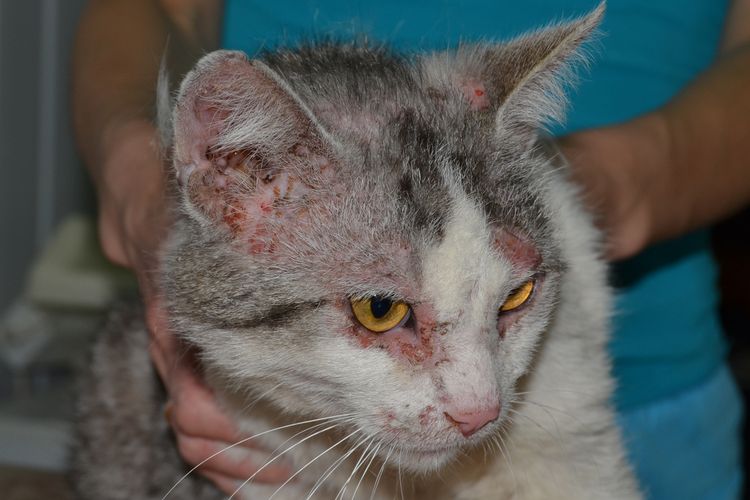
The symptoms of dermatitis in cats are non-specific and similar to other skin conditions. Your pet may experience:
- redness, swelling of the skin;
- increasing itching, causing a desire to constantly scratch and, consequently, irritability and aggressiveness;
- the appearance of a rash, blisters, ulcers, cracks on the skin;
- purulent inflammation or dry skin with the formation of scales on the affected areas;
- partial or complete hair loss;
- increased body temperature in areas of inflammation;
- complications in the form of inflammation of the mucous membrane of the eye, otitis.
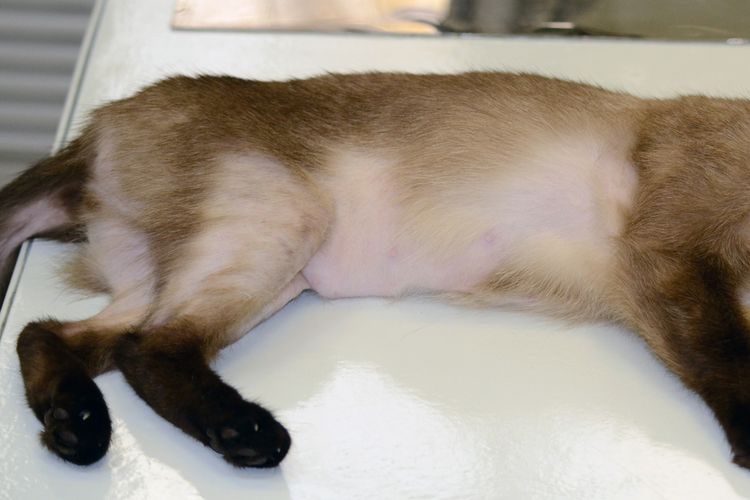
Dermatitis most commonly affects cats' heads (especially the eyes, mouth, and ears), abdomens, armpits, and sometimes paw pads. Even at the same stage of development, reactions to the condition can vary significantly among animals: some may only scratch occasionally, while others bite almost constantly, tearing their skin until it bleeds. To prevent the latter scenario, it's important to regularly inspect your pet's body. Even small red spots should alert owners, as these can gradually spread to larger areas of skin if left untreated.
Diagnosis and treatment
The main difficulty in diagnosing dermatitis is not the diagnosis itself, but rather the identification of the underlying causes. This typically involves the following procedures:
- elimination of the presence of fleas and other types of parasites (lice, ticks) in the animal;
- examination of the nature of inflammation – fungal or bacterial (using microscopy of smears from the affected areas);
- conducting allergy tests to check the body's reaction to food products and the effects of environmental allergens);
- general clinical studies (blood and urine tests, immunological tests for viral infections) and, in some cases, ultrasound diagnostics and biopsy.
Treatment of dermatitis depends largely on the underlying cause and symptoms of the disease. It involves two main approaches: addressing the underlying causes and symptomatic therapy.
Don't try to choose ointments and tablets to treat your pet yourself. Some may simply provide healing and antipruritic effects, but they won't kill the bacteria. Consequently, the condition will recur over time and become chronic. Only a veterinarian can determine the appropriate treatment for dermatitis in cats and the appropriate dosage.
Eliminating root causes
Depending on the causes of inflammatory processes on the skin, the following can be used:
- Antiparasitic treatment. To get rid of external parasites, the following may be prescribed:Frontline», «Leopard» «Advantage", from helminths - "Pratel", "Milbemax"
- Corticosteroid therapy (for allergic or autoimmune causes of dermatitis, to relieve itching): Prednisolone, Dexamethasone, etc.
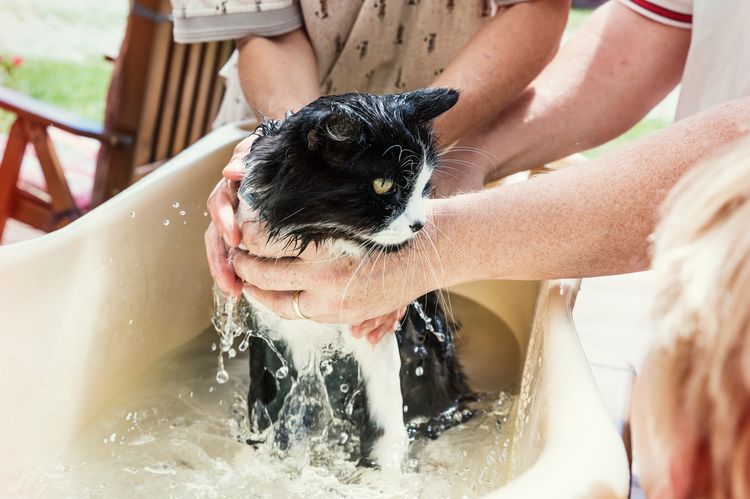
- Antibacterial and antifungal therapy. The use of such medications also helps prevent secondary infections that can penetrate through damaged skin. Antifungal and antiseptic shampoos are sometimes prescribed for prevention.
- Antihistamines (for allergies, acute course): Tavegil, Suprastin, Fenkarol.
- Immunomodulators (to stimulate the body's defenses)Fosprenil», «Gamavit".
- Maintain a diet that excludes foods that trigger skin inflammation (if allergic). When feeding prepared foods, it is recommended to choose products of at least super-premium quality.
Symptomatic therapy
The main goal of symptomatic treatment is to restore healthy skin. This is achieved by:
- Removing hair from damaged areas.
- Treatment of the skin with antiseptic agents (hydrogen peroxide, Chloroquinone, Miramistin), special veterinary shampoos (exfoliating, antifungal).
- Applying topical antipruritic and anti-inflammatory agents (Cortvans spray, Vishnevsky ointment, ASD solution) and sometimes antibiotic ointments (Clindamycin, Tetracycline, Levomekol) is helpful. Zinc ointment has a good drying effect on weeping inflammations, and clotrimazole ointment is helpful for fungal infections.
- Reception vitamin complexes for cats, supplements with Omega-3 fatty acids to speed up the restoration of the skin's protective functions.
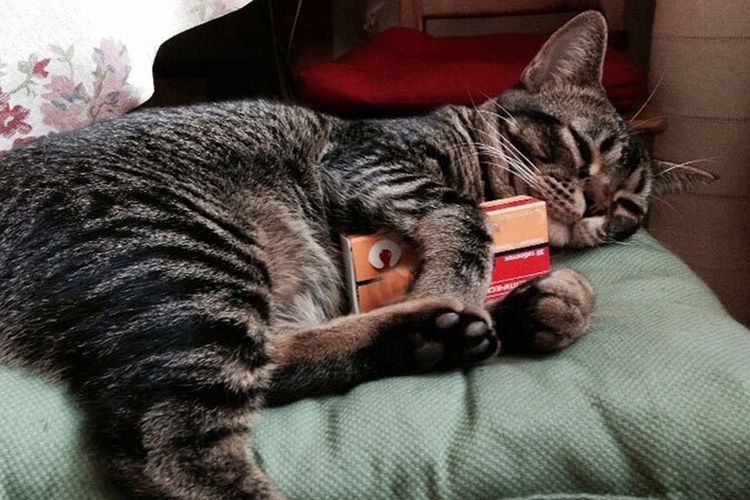
Ointments can be applied under a bandage to prevent the cat from licking the product. For extensive skin lesions, a special blanket or Elizabethan collar may be more convenient. These can also be used to prevent the pet from scratching itself until it bleeds.
Preventive measures
The following preventative measures will help significantly minimize the risk of developing dermatitis:
- regular antiparasitic treatment of your pet;
- limiting contact with stray, sick animals;
- maintaining hygiene in the area where the cat is kept (timely cleaning of the bed, changing the litter in the tray) and in the house as a whole;
- a balanced diet, for animals with allergies - adherence to a diet and careful use of medications;
- storing chemicals and household chemicals in inaccessible places;
- Regular skin examinations, and at the first signs of dermatitis, a visit to the veterinarian.
Read also:
- Can ringworm be transmitted to humans from cats?
- Red spots on a cat's body
- Scabs on a cat's neck and body: causes and treatment


3 comments
Rita
I'd like to share my review of the veterinary medication Lecaderm. My cat is very fluffy, pampered, and allergic. We tried many ointments, but they only solved the problem for a short time, then the itching returned. Unlike all the other treatments we tried, Lecaderm ointment really helped us get rid of the dermatitis. There were no side effects.
Tatiana
I'm treating my cat's dermatitis. I adopted her from a basement. I've been to two vets—all the treatments: Zyrtec, antiparasitic, panthenol, changing her food. It's all working. She's been sick before, but it's gotten worse since moving into an apartment. I'm afraid to deworm her because she's pregnant. She doesn't have ringworm.
Dasha
There are gentle deworming medications available: they can be used by pregnant and nursing mothers, as well as young kittens. However, this is most likely not a reaction to internal parasites. It could be a skin parasite. It could be fleas or mites (maybe even subcutaneous scabies). A more thorough examination is needed. A blood test is recommended (if eosinophils are elevated, rule out allergies).
What are you feeding him? What did you wash him with? Has he come into contact with any chemicals? Could it be a flea collar? And why are you so sure about ringworm? Only microsporum glows under the lamp. Trichophytosis doesn't glow. There are also pityriasis rosea, tinea versicolor, and pityriasis versicolor, which may also not glow. Change your clinic and doctor, and get additional tests (including blood tests and skin scrapings). Without eliminating the cause (which is not easy to identify), it is impossible to cure the animal.
Add a comment