
Dandie Dinmont Terrier
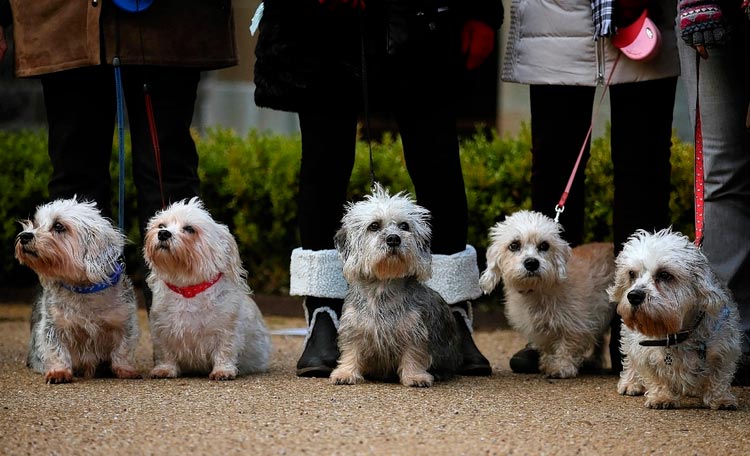
The owners of these funny little dogs have heard all sorts of things from passersby. It's good if they're simply asked what breed they are. Sometimes, they're even called names: crossbreeds, brownies, dachshunds in hats. How insulting Sir Walter Scott would have been if he'd heard something similar about his favorite breed, the Dandie Dinmont Terrier. These small, energetic dogs with their distinctive appearance were once bred for burrow hunting. Today, they're used exclusively as companions, and if not for their rich history, they might be classified as toy dogs.
Content
History of origin
Very little is known about the origins of the Dandie Dinmont Terrier. Apparently, dogs of this type appeared in the mid-17th century on the border between Scotland and England and were artificially bred from old Scottish terriers used for burrow hunting. Also involved in the selection were Skye Terriers And Bedlington TerriersThe Dandie Dinmont Terrier has been depicted in paintings by famous artists, allowing us to see firsthand the changes that have occurred in them over more than three centuries.
In the 18th century, Dandie Dinmont Terriers were popular among itinerant musicians, traveling artisans, and gypsies. They were not used for rough work, but instead participated in demonstration badger hunts, during which bets were placed. From 1882 to 1982, an Edinburgh company produced a whisky called Dandie Dinmont Scotch Whisky, a testament to their popularity.
The breed received its name thanks to the writer Walter Scott. He was a great fan of small, capped terriers. In 1815, his novel "Guy Mannering" was published. One of the characters in the novel was a hunter named Dandie Dinmont, who kept six dogs, which he called "the immortal six." He claimed that his terriers were capable of catching anything with fur. From the description of the dogs, one can guess that these are the same Scottish terriers known today as Dandie Dinmonts. The model for Dandie Dinmont was the famous Oxham hunter James Davidson. His tombstone even bears the inscription "Dandie Dinmont" next to his name.
The first Dandie Dinmont Terrier club was founded in 1875 in Selkirk, and the first standard was written in Scotland in 1876.
Video about the Dandie Dinmont Terrier dog breed:
Appearance
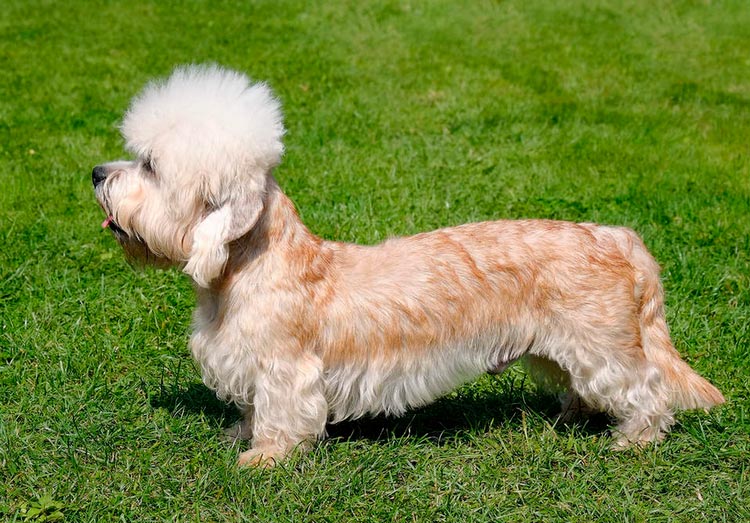
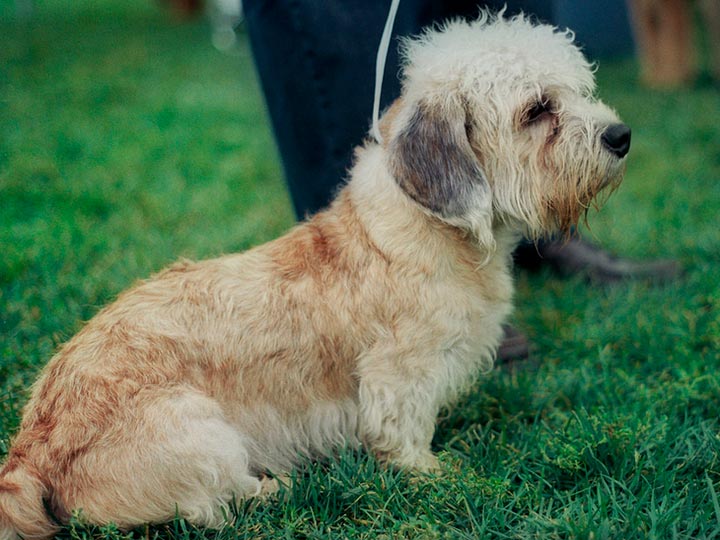
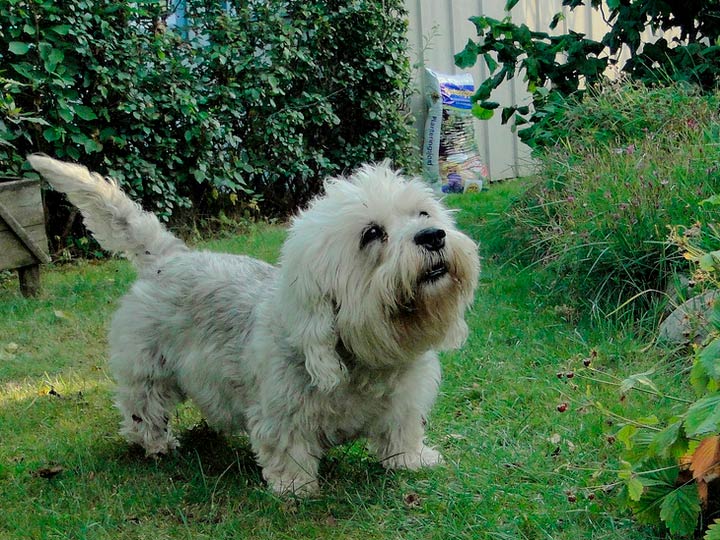
The Dandie Dinmont is very different from other dogs in the terrier family. It has an elongated body, short legs, and a fairly large head with the breed's characteristic cap of silky hair. Working dogs weigh between 8 and 11 kg. A minimum weight is encouraged.
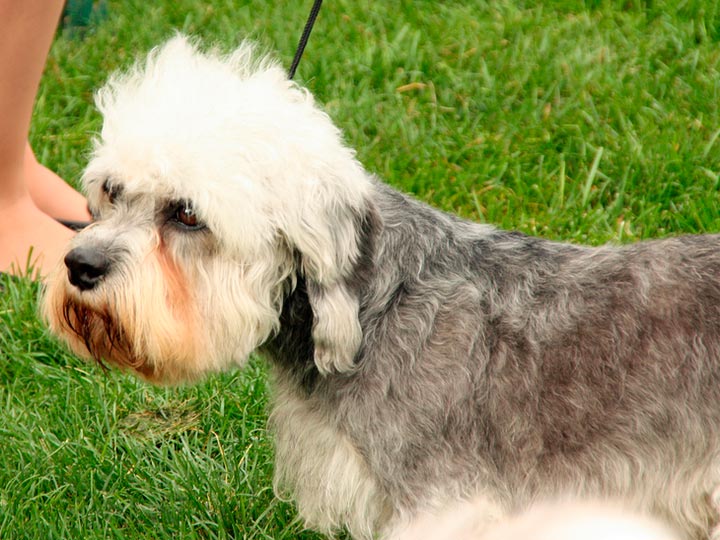
The head is large but proportionate to the dog's size. The muscles are well developed, especially those of the upper jaw. The skull is broad, gradually narrowing toward the eyes. The forehead is convex. The entire head is covered with very soft hair. The length of the muzzle to the length of the skull is 3:5. The upper part of the muzzle has a triangular area devoid of hair. The apex of this area points toward the eyes, and the base is approximately 2.5 cm wide at the nose. The jaws are strong, with a scissor bite. The teeth are very well developed, with canines appearing large for such a small dog. The eyes are hazel-colored, set low and wide apart, large, round, and the whites should not be prominent. The ears are set close to the back of the head, low, and drooping. Due to the cartilage, they stand slightly away from the head at the base. The color of the hair on the ears should be darker than the base coat, but in harmony with it. The furnishings on the ears are formed by two years of age.
The neck is well developed, very muscular, and strong. The body is flexible, long, and strong. The topline is noticeably arched: low at the level of the shoulder blades, then rises, forming an arch, and tapers to the base of the tail. The highest point is where the back joins the loin. The chest is let down between the forelegs and is well developed. The ribs are well arched. The tail is short and fairly thick. When relaxed, it is carried gaily, slightly above the line of the back; when excited, it is almost vertical. The limbs are short, with well-developed muscles and bone, set wide apart, straight, and parallel. The hind legs are slightly longer than the front legs, with good angulation. The paws are rounded with black claws and strong pads; the hind feet are slightly smaller than the front ones.
The Dandie Dinmont is the only terrier whose exterior does not have a single straight line, which is generally not typical for this family.
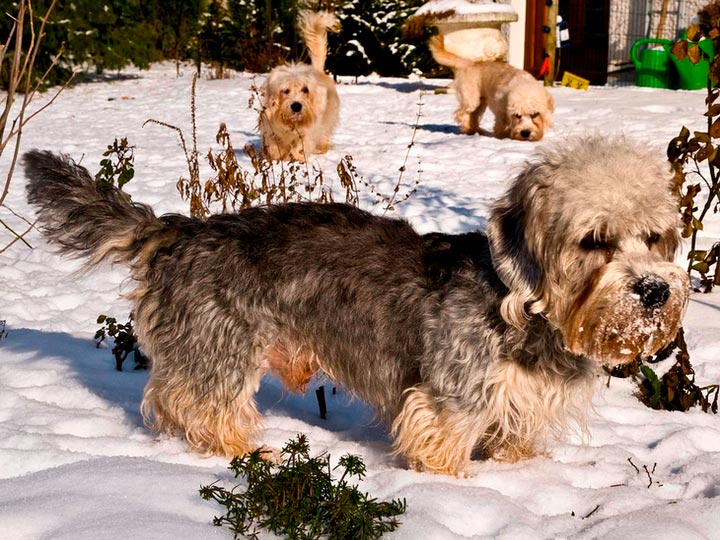
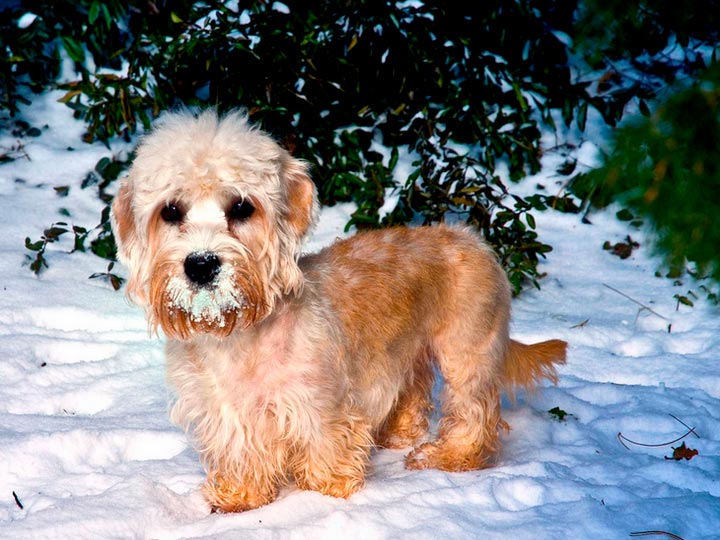
The coat is an important characteristic of the breed. It is double, with a soft undercoat and a harsher outer coat, but not wiry. The hair on the back lies in strands and passes through the soft undercoat. The legs have feathering about 5 cm long. The upper part of the tail is covered with harsh hair, while the lower part is softer, forming a fringe. The muzzle is completely covered with soft hair, the longer hair on the upper part forming a cap. The ears should also have well-developed feathering.
Colors:
- Pepper – from dark black to light silver. Intermediate shades are preferred. The underparts and legs range from deep red to fawn. The cap is pale silver.
- Mustard - the cap is pale cream. The body ranges from reddish-brown to fawn. The limbs and paws are darker in color than the head.
For any color, the feathering should be lighter than the fur on the front of the legs. Small white spots on the toes and chest are permitted. The underside of the tail is lighter than the top.
Character and behavior
The breed's unpopularity and scarcity outside its homeland have given rise to countless rumors and speculation. All sorts of stories have been written about these little "dogs in hats." They've been bred by gypsies, they're designed to catch rats and mice, they're clumsy toy dogs. The Dandie Dinmont Terrier hasn't lived on farms or been a working dog for a long time. Once a popular breed among French and English nobility, today it's considered a cross between a toy dog and a true terrier. It perfectly embodies the true Scottish character: "small, but very proud."
Dandie Dinmont Terriers are cheerful, friendly dogsThey are boundlessly devoted to their family, very gentle and affectionate with children, energetic and playful. They are wary of strangers, but upon closer acquaintance, they quickly elevate them to their status as friends. They typically recognize only one person as their owner, and obey others reluctantly or selectively.
The Dandie Dinmont Terrier has a balanced temperament; it is determined and independent, but not willful. They are obedient and, when well-trained, do not try to dominate the family, although spoiled Dandies can often cause problems. Owners should remember that they have an innate sense of self-worth, a strong character, and a tendency to make decisions independently.
The Dandie Dinmont Terrier is serious and unflappable, earning him the nickname "the gentleman of the dog world." He's not quarrelsome and is difficult to anger, but if he does, this sweet little wonder turns into a vicious fury who knows no fear in a fight. He doesn't care how many opponents he faces, whether feline, animal, or canine. In everyday life, the Dandie is non-confrontational and gets along well with other pets in the house, but often shows a keen interest in cats, birds, and other small animals outdoors.
Education and training
The Dandie Dinmont Terrier is very intelligent and highly trainable, but raising an obedient dog, let alone teaching it basic commands, will require considerable time and patience. Dandies are independent and not prone to unquestioning obedience. Even as puppies, they often prefer to pursue their own, more important interests rather than work with their owner. As they mature, provided they maintain close contact with their owner, the Dandie becomes more obedient and responsive to commands.
Training sessions with a Dandie should be short. The dog is taught simple commands one at a time. Once these are fully mastered, more complex ones are moved on. During training, it's important not to give in to a cunning puppy and demand that it obey commands. Don't overindulge a Dinmont. It should be raised in a moderately strict environment, understanding who's boss. This doesn't mean hitting or using other physical punishment. A stern tone and a disapproving look are usually sufficient.
Content Features
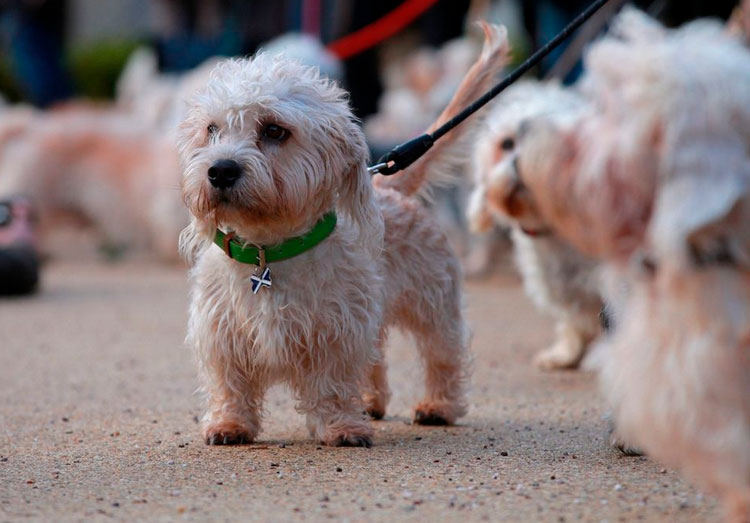
The Dandie Dinmont Terrier adapts well to any living environment. However, the ideal environment for this dog is a house or apartment. The size of the living space isn't particularly important. A Dandie Dinmont Terrier won't take up much space.
With regular grooming, their coat is virtually non-shedding and odorless. Furthermore, they are naturally clean and tidy.
Moderate exercise is essential. Two daily walks of approximately 60 minutes, with playtime and exercise, are sufficient to keep the dog in good shape. It's worth noting that Dandies adapt well to their owners' personalities and lifestyles. With sedentary people, they learn to be content with less. With energetic people, they adapt to the same active lifestyle. They happily support any initiative, are capable of long hikes, and tolerate travel well.
Care
Grooming a Dandie Dinmont Terrier requires time and money. Owners claim that daily grooming isn't as difficult as it might seem. Every 7-10 days, the Dandie needs to be bathed with shampoo and conditioner. After washing, the wet coat is combed with a comb. If tangles appear, they are carefully detangled after being moistened with a special combing product. As the coat grows, the body hair is counted, and the cap, beard, and feathering are trimmed with scissors.
Eyes tend to water excessively, which often causes the tear ducts to become brown. To brighten the color, special bleaching agents or hydrogen peroxide are used.
To keep drooping, shaggy ears dry and prevent infection, it is recommended to use a drying powder. Hair inside the ears can be removed with fingers or tweezers. Eyes should be wiped daily. It is important to keep them dry and clean. Ears should be cleaned and plucked once a week. Nails should be trimmed as they grow, usually every 3-4 weeks. It is advisable to train your dog to do this from puppyhood. dog for teeth cleaningYoung dogs rarely suffer from dental diseases, but from 6-7 years old they begin to develop stone, causing associated problems.
Nutrition
Nutrition should be taken seriously. A nutrient deficiency will impact not only the condition of the coat but also the pet's health. A balanced diet can be provided in two ways: with natural products or prepared dry food. These should be super-premium or holistic foods for small dogs with a normal lifestyle. Feeding natural products requires periodic vitamin and mineral supplementation.
Dandies are prone to overeating and gaining excess weight, so it is important to monitor their diet, calorie content, and the number of treats they give.
Health and life expectancy
The Dandie Dinmont Terrier is considered a healthy breed. Centuries of natural selection have given these dogs robust health and strong immunity, which breeders have managed to preserve to this day. A few hereditary diseases are rare, and most are not life-threatening:
- Eye diseases (cataract, glaucoma, corneal ulcer) usually develop in adulthood;
- Orthopedic diseases (patella dislocation, hip dysplasia, intervertebral disc disease);
- Allergic reactions;
- Hormonal diseases (hypothyroidism, Cushing's disease);
- Problems with teeth and gums;
- Lymphosarcoma.
Poor ventilation of the ear canal can predispose them to ear infections. Furthermore, their thick fur makes it difficult to spot cuts or scratches, which can lead to skin infections.
Mandatory veterinary preventative measures include vaccinations and treatment for external and internal parasites. An annual medical examination is recommended. Average life expectancy is 12 years.
Choosing a Dandie Dinmont Terrier Puppy
The Russian population of Dandie Dinmont Terriers numbers only a few dozen dogs, and only a few kennels are professionally involved in their breeding.
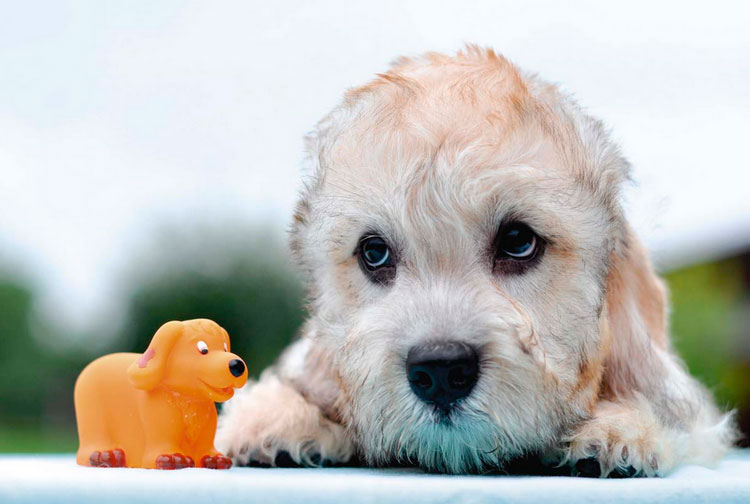
It's important to buy a puppy from a reputable breeder or kennel, if only because Dandie Dinmont Terrier puppies are very different from adult dogs. In the pursuit of a free lunch, you could run into scammers and end up with a dog that only vaguely resembles the original breed, not only in appearance but also in character. It's advisable to see at least one of the parents in person and assess the dogs' living conditions. By two months of age, puppies should already have received a tattoo, papers, and their first vaccinations. They should be treated for external and internal parasites. All puppies should be completely healthy, showing no signs of illness. Slight tearing is acceptable, due to the special structure of the tear ducts. It is recommended to take a puppy to a new home no earlier than two months of age.
Price
The average price of a Dandie Dinmont Terrier puppy from a kennel is 45,000 rubles. The price is heavily influenced by the parents' show records, but unfortunately, this does not guarantee that all puppies will become champions.
Photos
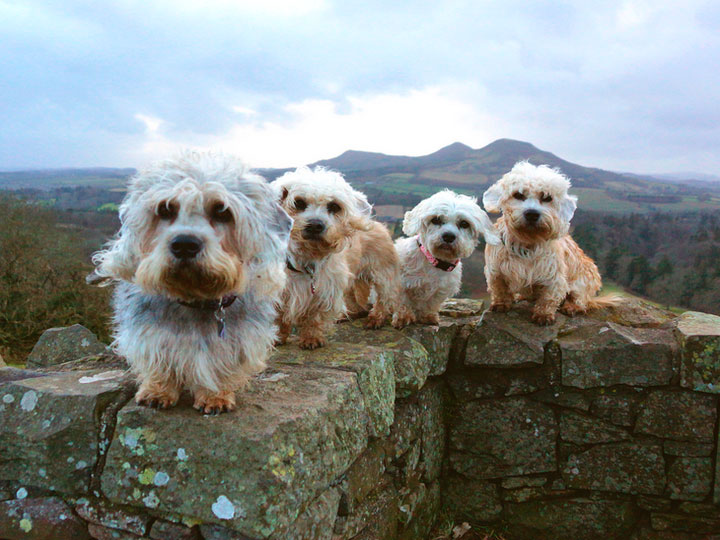
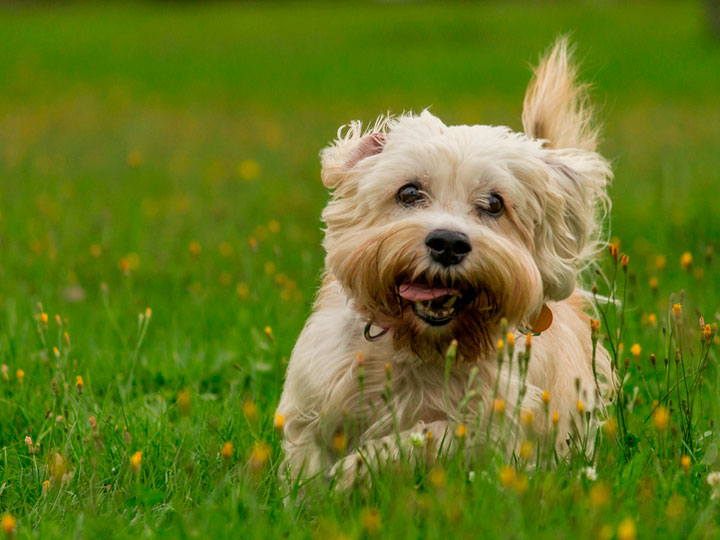
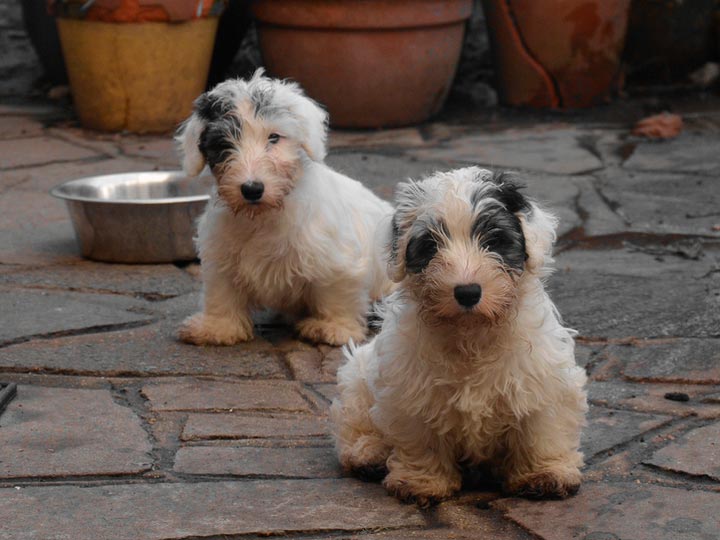
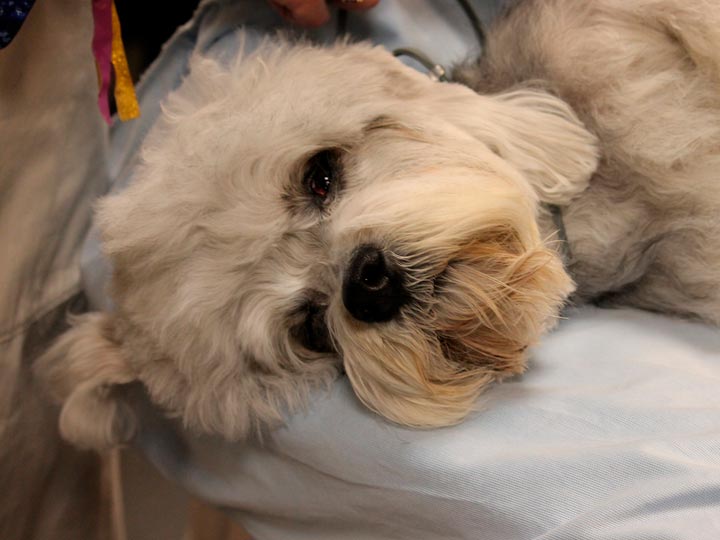
The gallery contains vibrant photographs of Dandie Dinmont Terriers.
Read also:


Add a comment