
Demodectic mange in dogs
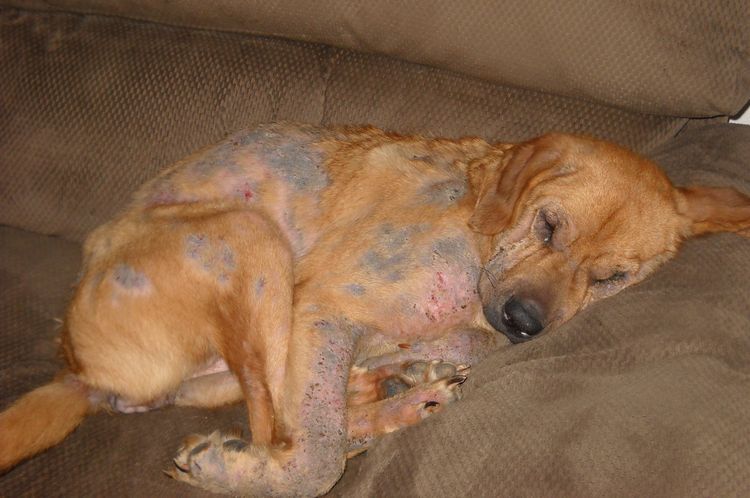
Demodicosis (demodicosis) is a disease of the acariasis group that affects the skin and internal organs. In dogs, demodicosis is caused by mites of the species Demodex canis. This disease is dangerous: it is difficult and time-consuming to treat, and in advanced cases, it can be fatal. Dogs with weakened immune systems are at risk; the breeds most susceptible to demodicosis include shepherds, shar-peis, rottweilers, bulldogs, terriers, and pugs.
Content
The mechanism of disease development
The Demodex mite is an arthropod with a translucent body up to 3 mm long. Each of the four pairs of legs located at the front of its body is equipped with forked claws, which the parasite uses to attach itself to its host. Once on the skin, the mite burrows into it, penetrating the hair follicles. There, it lives and reproduces, feeding on sebum components and dermal cells.
Over time, the follicle inhabited by the mite dies, and the hair, deprived of its root, falls out. The "tunnel" dug by the mite causes inflammation and rashes in the skin and serves as a gateway for secondary infection. Thus, demodicosis is often associated with microbial and fungal skin diseases.
Demodex mites live in colonies that can number thousands of individuals. Their life cycle lasts from two to two and a half weeks. Female mites lay eggs, which hatch into larvae, which undergo two intermediate developmental stages—nymph and imago—before emerging as mature mites.
The subcutaneous mite Demodex canis is found in 8% of healthy dogs, but its activity is suppressed by the animal's immune system. It can only form large colonies under favorable conditions—when the body's resistance is weakened. Demodex mange in dogs is caused by factors that suppress the immune system:
- parasitic, infectious, hormonal or oncological diseases;
- long-term use of drugs that have an immunosuppressive effect (antibiotics, hormones, chemotherapeutic drugs);
- unbalanced diet (deficiency of proteins, microelements, vitamins);
- stress;
- genetic predisposition.
Routes of infection
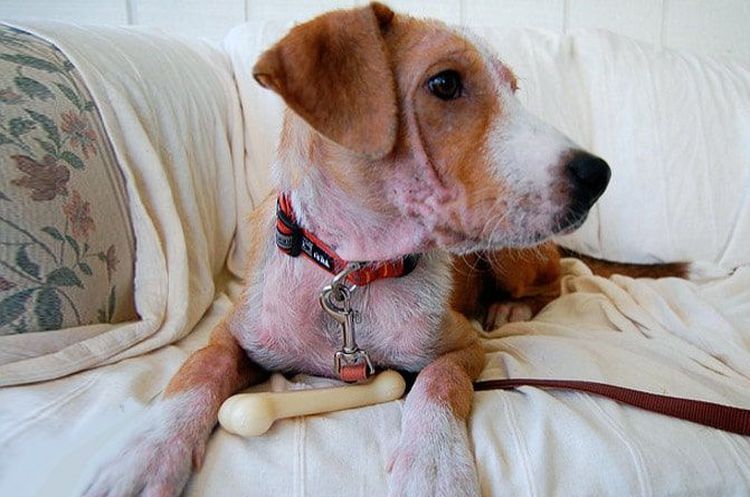
Demodex canis mites are transmitted from an infected animal through direct contact, as well as through grooming items, toys, and bedding. Puppies under one year of age are usually infected by the mother.
Important! Demodicosis affects both humans and many animals. However, they are affected by different species of the Demodex mite. Only Demodex canis infects dogs, so neither dog owners nor cats can contract the mite from their dogs.
Forms and symptoms of demodicosis
Typical signs of acariasis in dogs include alopecia—hair loss in patches. Itching occurs when a bacterial infection occurs in addition to demodicosis. The clinical manifestations of this disease depend on its form. Localized, generalized, and juvenile demodicosis are distinguished.
Localized (focal) form The mildest form of demodicosis, in most cases requiring no special treatment other than general tonics and immunomodulators, is the most common. Focal demodicosis manifests as several small bald patches on the dog's coat, most often located on the head, chest, or abdomen. The skin in the affected areas may be inflamed and flaky. The disease usually resolves on its own within 1-3 months.
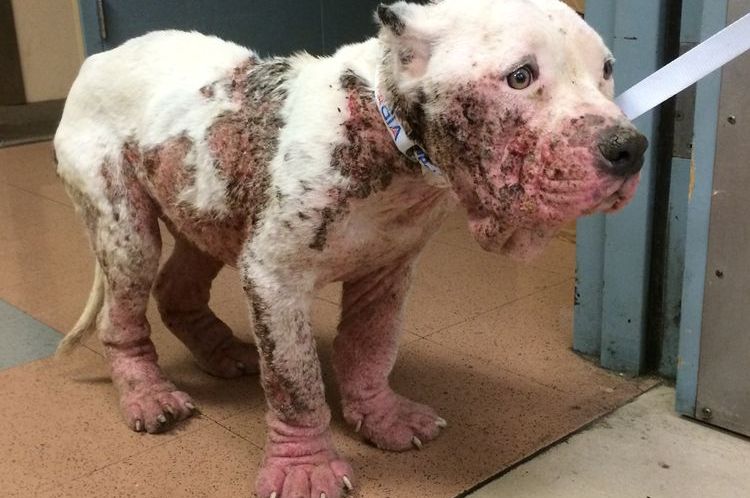
Generalized form. Mite colonies occupy large areas of skin and, if left untreated, penetrate internal organs, causing destruction. The generalized form is difficult to treat because the infected animal's immune system is unable to adequately fight the invading organism.
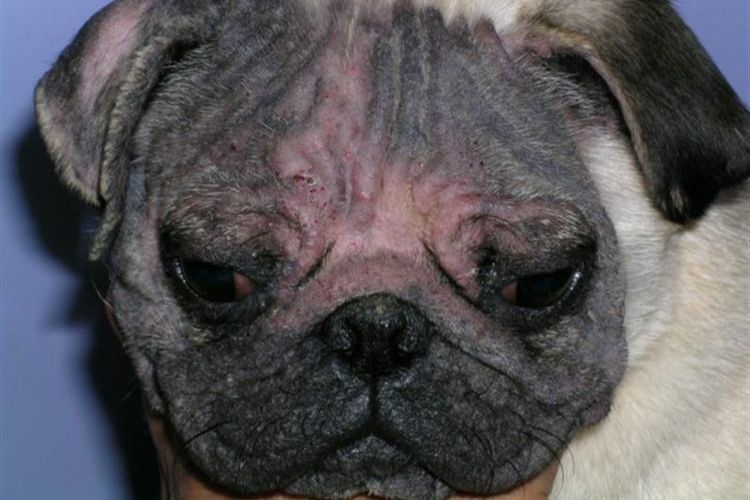
Generalized demodicosis is characterized by the formation of vesicular or purulent, foul-smelling rashes, inflamed, reddish-purple skin, and hyperkeratosis (thickening of the stratum corneum). Due to damage to internal organs, dogs may experience salivation, vomiting, dyspepsia, exhaustion, and seizures. Treatment for this type of disease can take up to six months, and improper or no treatment can be fatal.
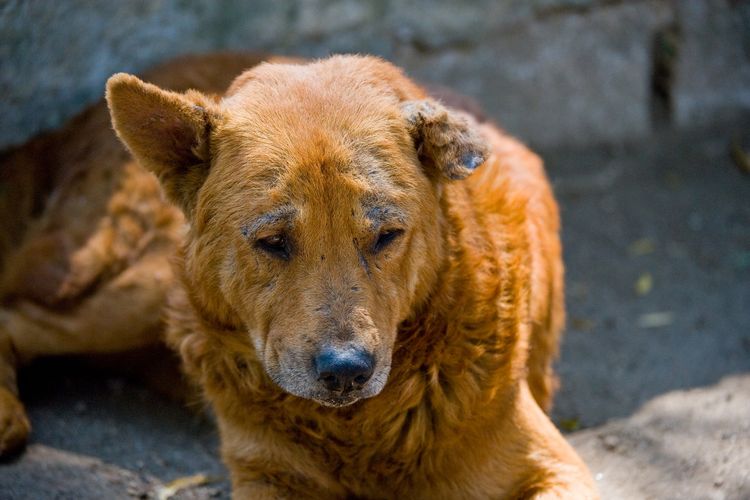
Juvenile form The disease is typically diagnosed in puppies under two years of age. Affected areas in this form are localized on the paws (pododemodicosis), ears (otodemodicosis), and around the eyes (the dog develops spectacle-like bald spots). With a strong immune system, the disease resolves on its own within a couple of months; otherwise, juvenile demodicosis transforms into a focal or generalized form.
Diagnostics
Since many skin diseases have symptoms similar to demodicosis, the purpose of diagnosis when a gland is suspected is to differentiate it from mycosis, furunculosis or pyodermaThe simplest and most reliable diagnostic method is microscopic examination of a deep skin scraping (acarogram). This technique allows for the detection of even single mites, and in infected animals, the number of mites in a sample can reach several dozen.
Another popular method for diagnosing acariasis is the Scotch tape test. A glass slide with a drop of adhesive applied to it is pressed against the affected area of skin, trapping epidermal particles on the slide and then examining them under a microscope for the presence of mites.
Treatment
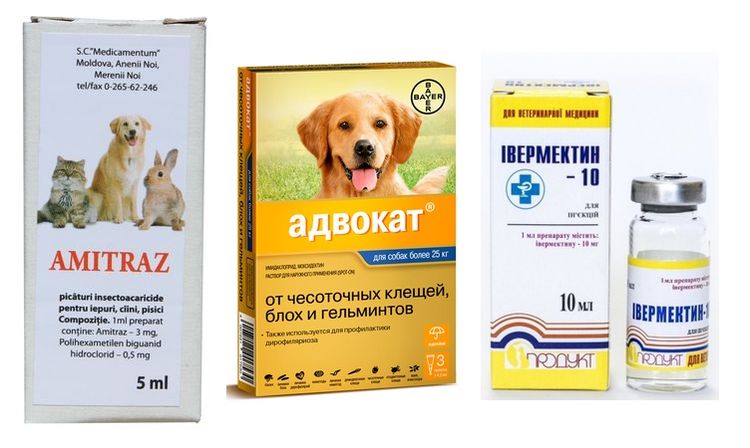
A treatment plan for demodicosis is developed individually. In any case, antiparasitic agents such as Amitraz or AdvocateThe drug solutions are applied to the dog's skin with a sponge: Advocate - to the withers area once a month, Amitraz - to the affected and healthy areas of the skin once every 1-2 weeks. The course of treatment is 2 to 4 months.
Ivermectin, produced by fermenting bacteria of the genus Actinomycetales, is also used to kill ecto- and endoparasites. However, since this drug is classified as a highly hazardous drug, it should be used with caution in weakened animals. Ivermectin is contraindicated in pregnant bitches and puppies under 1.5 months of age.
To support the liver, which is responsible for removing toxins from the body, dogs are prescribed hepatoprotectors, and if a bacterial infection is detected, a course of antibiotics is prescribed. To strengthen the immune system, immunostimulants and vitamin complexes are used.
For severe skin rashes, topical treatments include ichthyol or sulfur ointment, Vetabiol, Stronghold, Sebacil, and Ronnel. Decoctions of wormwood, celandine, and St. John's wort can also be used to treat affected skin.
Important! Treatment for demodicosis is considered complete if the results of two microscopic examinations, performed one month apart, are negative. Premature discontinuation of medication may cause recurrence of the disease.
Prevention
To prevent your dog from contracting demodicosis, you should:
- eliminate her contact with stray animals;
- ensure complete, balanced nutrition;
- Have your animal examined by a veterinarian regularly;
- carry out deworming and anti-fungal treatment in a timely manner ectoparasites;
- When bathing, use special insecticidal shampoos.

An effective method of protection against Demodex mites is vaccination with the Immunoparasitan vaccine. It can be administered to dogs of any age, except for those showing symptoms of demodicosis, as the vaccine may exacerbate the condition.
Read also:
- Interdigital Dermatitis in Dogs: Causes and Treatment
- Flea Dermatitis in Dogs: Symptoms and Treatment
- Pododermatitis on the paws of dogs: symptoms and treatment


64 comments
Tina
Wow, that happens with dogs. I heard some vets recommend Metrogyl-A.
Daria is a veterinarian
Hello! What nonsense these veterinarians advise! Run away from them, just to make your heels shine! Metrogyl is metronidazole, which is used for protozoan parasites and some types of bacteria, but not ticks!
There are now plenty of affordable, safe, and specialized treatments specifically for this disease. The simplest is to give a Bravecto tablet! There are also plenty of cheaper options. In extreme cases, ivermectin is used (this is especially true in villages and small towns where there are no other options or where there are only cattle farms and the vet doesn't specialize in small animals). However, there are some caveats: ivermectin is prohibited for certain breeds due to genetic intolerance to the active ingredient.
Nargiza
Hello! Today I noticed my puppy developing some characteristic bald spots. I was alarmed and applied Metrogyl-A, which I used to treat acne. I've already made an appointment at the clinic for the next day, but I want to ask – will it be okay if I apply this ointment to him? I'm really worried.
Daria is a veterinarian
Hello! Before a veterinary appointment (especially a dermatologist), do not apply any ointments or medications to damaged skin areas, as this may complicate diagnosis. Clinical signs of the disease will be blurred, a film will form on the skin, and if a scraping is taken, the microscopic examination may be incorrect.
Moreover, medications used in human medicine can be harmful to animals. A very large number of medications are banned in veterinary medicine because they are contraindicated due to intolerance.
Igor
Hello. Of course, it's too late. My 1.5-month-old Pekingese puppy died. I'm writing and crying as if he were a family member. I wanted to ask for the future, based on the puppy's physical description, what could have led to his death, as he didn't show any signs of illness right away?
When he was very little, we didn't touch him and he was near his mother, but when he started to move independently, we noticed that he was often whining and scratching himself. It turned out that he had a lot of lice, we bought lice shampoo and treated both the puppy and the mother.
The puppy seemed to have calmed down. We bought a flea collar and put it on the puppy and the mother. But most importantly, when examining for lice, we noticed that scabs in the form of hard subcutaneous growths about 1.5 mm in size had appeared on his neck and back. His hair was not falling out, and the growths did not appear red, just hard subcutaneous growths. Therefore, we did not pay attention to this at first, thinking it was from the collar. We immediately removed the flea collar, although it is unlikely that this was from the collar.
Since we had never encountered this type of disease before and the puppy was feeling healthy for his age, we were in no hurry to take him to the vet. When we saw that the growths were increasing and bothering him all the time, it became obvious that fleas weren't the only cause, but it just so happened that when we were about to go to the vet.
The puppy's health deteriorated sharply, he became lethargic, stopped eating completely (he could already eat a little on his own), the day before his death he only drank a lot of water, went to the toilet normally without diarrhea, then he refused kefir, milk and water, vomiting spasms appeared and all this within a few hours, he was dying right before our eyes, but since it was late, taking him to the vet made no sense, so he died quietly, without even a peep.
I can't forgive myself. Please tell me what these symptoms are, in your opinion. Could it really be a subcutaneous mite? Could we have saved him at such a young age? Thank you.
Daria is a veterinarian
Hello! My condolences. Regarding the puppy's death: demodicosis at such a young age is extremely rare. And I've never encountered a puppy dying from it so quickly.
If they do die, it's only when demodicosis begins in the internal organs (meaning the animal has no immunity, the disease has been developing for a long time, and no treatment has been provided). The first thing I blame is the over-shampooing and flea collar on such a small puppy.
Almost all manufacturers recommend an age of 8 weeks (2 months) or older. Possibly, the poisoning occurred due to the absorption of too much of the active ingredient from the collar.
Daria is a veterinarian
And if the animals did have fleas/lice, then a second question arises: were the puppy and its mother treated for intestinal parasites? Was there only one puppy in the litter, then? Or were there siblings? Did the puppy scratch itself? What was the puppy fed (was it supplementary food or just the mother)? What was the mother fed or treated with (were any antibiotics, anthelmintics, or other medications given)?
Did the puppy itch after the flea collar was put on? Were the scabs the result of scratching? Was there any pus on the skin (especially where the scabs were)?
Igor
Hello, I'll say this: when we noticed the puppy was squeaking frequently, we thought he was after his mother. We started picking him up and at that time we discovered that he had a lot of fleas. It immediately became clear that the fleas had come from his mother. Then we bought a flea collar and flea shampoo.
When we bought the collar, we were advised to buy a tablet for internal parasites, which we did (only the mother uses the tablet once every three months). First, we bought both with anti-flea shampoo, a day after bathing, we put collars on both, because there were still fleas, but fewer, and the puppy calmed down, the next day he began to fuss again.
When we picked him up to check for fleas, we noticed the presence of scabby, hard bumps in the neck area - it looked like a small cluster of hard bumps about 1.5 mm in size, next to each other, no bigger than a kopeck. There was no redness or abscesses on the skin in this area, and the fur was not falling out. We immediately removed the collar, as we thought it was from the collar. A few days later, we checked the puppy for fleas, and there were a lot of them again.
Confused about how the fleas had gotten so big, we decided that the collar that was already on the mother wasn't working and bought a new one. We then bathed both of them again in flea shampoo and put the collar on the mother. We also began to notice that scabby areas were starting to appear on the puppy's back, and interestingly, after bathing, the puppy's skin became like fish scales in the area of these scabby formations and did not rub off.
I repeat, there were no abscesses, redness, or hair loss at the site of the lesions, so we didn't pay any attention to them, thinking they were fleas. But when we saw that the lesions were appearing not only on his neck but also on his back, we decided that fleas weren't to blame and were about to take him to the vet, but the puppy's condition suddenly worsened. He stopped eating, drank only water, and a lot of it. Then he refused water, didn't want milk either, and began to fade away before our eyes. A few hours before his death, he began vomiting, which he hadn't experienced before. He peed, but there was no diarrhea.
Since everything happened so quickly and it was late, there was no point in taking him to the vet. I'd like to add, if it's relevant, the day before his death, we noticed his stool, which, in shape, was not suspicious, but we noticed two green stripes on it, as if he had eaten grass. Thank you.
Daria is a veterinarian
Hello again! Of course, the fleas will come back! You only treated the animals, but apparently didn't treat the house for parasites! That's why the fleas kept coming back. You should have treated the entire house with a special product, cleaned it, and thrown out all the bedding. You gave a small puppy too much treatment (often with the same products as an adult dog).
The skin rash is either a result of flea bites or an allergic reaction to the collar. Regarding the feces, it's unclear whether it was actually some kind of plant or just green strands (in which case, it's likely highly concentrated bile). It strongly suggests poisoning.
Elena
Hello, Daria. My puppy, a three-month-old foundling, has very dry hair and is losing it. It started on her withers, spreading to her back and sides. Red spots appeared, merging. Now her entire back is red and she has scales, similar to seborrhea. The vet thinks it's new red hair, but it's very short.
The vet treated her with Stromhold and prescribed Sinulox 1 tablet twice a day, Trivit 6 drops, and calcium supplements. But things are progressing. It's been 10 days. Now they recommend giving her 1/2 tablet of Drontal, 2 cc of GAMAVIT subcutaneously once a day, and switching her to dry food for medium-sized puppies. I fed her rolled oats and pearl barley porridge made with chicken gizzard broth and raw milk.
Beef...They told me not to wash it! They took a scraping and found nothing except "some kind of egg" and didn't understand where it came from! What should I do?
Daria is a veterinarian
Hello! You should definitely give Drontal. Especially since a parasite egg was found (even if it was on the fur, or perhaps the puppy urinated in soil where the parasite eggs were already present, which could have caused infection). The puppy's diet isn't very suitable either. It's really better to switch to a commercial food that's balanced and contains vitamins and minerals.
Gamavit is a dumb medication (a drop of vitamin in a barrel of water for injection), and Trivit won't help much either. There are much more "rich" medications; for coat problems, vitamins H (biotin), B vitamins, and micro- and macronutrients are needed. Add dietary supplements to the diet. Start with deworming and normalizing the diet. If there's no improvement after a couple of weeks, a checkup (like a thyroid test) is needed.
Daria
Good afternoon. My 4-month-old husky was diagnosed with demodicosis. The mites are not moving. He was treated with Bravecto. The doctor told me to wait for the results since the medication was given recently.
But our boy still itches, and no additional treatment for the bald patches has been prescribed. A treatment of the apartment with FLEE spray has been prescribed. Is it necessary? And is there any hope for Bravecto alone?
Daria is a veterinarian
Hello! The fact that the ticks aren't moving is good enough. However, recovery is considered complete only when two such results occur in a row. Bravecto works in 9 out of 10 cases. If the puppy has a strong immune system, it will cope with the ticks.
If you're particularly concerned, you can treat the affected areas with avermectin ointment (but protect them from licking by wearing a protective collar). Wipe the scratched areas with chlorhexidine (an antiseptic). Disinfection is recommended to prevent reinfection.
Give an antihistamine for the itching (the mites "crawl out" because the skin already contains poison for them, hence the itching). Unfortunately, demodicosis doesn't go away in a day or even a week. Treating our furry friends for this nasty thing is painstaking, and sometimes this hellish experience can drag on for months (if the animal is weakened).
Natalia
Good afternoon. My dog (a German Shepherd) has been suffering from demodicosis for a year and a half. We've already seen three vets, but there's been no improvement. We've given her injections of Dectomax, used Advocate, NEXT GARD Spectra, antibiotics, drops and ointments, and Chemi Spray, but nothing's working.
His fur has fallen out and he's itching like crazy. He's constantly gnawing at his skin. Please help if you can. Thank you in advance.
Daria is a veterinarian
Hello! I'd like to ask a couple of questions. First, was the diagnosis confirmed (did you take skin scrapings and find the Demodex mite)? Second, did you inject ivermectin/ivermek (or similar products)? This is an old method (it's been replaced by all the lawyers, inspectors, and Bravecto), but it works great.
Apply avermectin ointment to the affected areas (put a collar on the neck to prevent it from licking). Are you giving any supplemental vitamins? If so, remove them, as the ticks will begin to multiply even more actively. Give immunostimulants/modulators to strengthen the body's resistance. A lot depends on the animal's immune system. If it's weak, the animal will have a harder time recovering.
Yana
Good afternoon!!! Help me save my pet. I just got a bad doctor. Since we live in the countryside, we can't go to a clinic. The symptoms are similar to dermatitis: hair loss, an open wound, a large area of skin affected on the belly and paws, and treatment is ineffective. Please help!!!!
Daria is a veterinarian
Hello! These symptoms could be eczema. How exactly are you treating it? What and how are you using it? Did you prescribe it yourself or did your veterinarian prescribe it? What do you feed your pet (it's important to rule out food allergies, which can cause eczema)? Are there any skin parasites? Where is your pet kept?
Lydia
Hello. A week ago, I adopted a German Shepherd puppy (father unknown, presumably Caucasian) for my parents at a private home. He had lost fur and scabs on his sides near his butt. I was told these were wounds from being bitten by other dogs. I took him to the vet, who said it was demodicosis (no tests were done).
They gave me two injections and told me to bring it back in a week. It looks like it's going to be a while. I don't know what to do. I don't want to get rid of the animal, and I can't take it to the countryside without vaccinations (my neighbors' dog there died of enteritis last year). And keeping it in the apartment for a long time, especially without walks, is very problematic. How can I treat it and vaccinate it as quickly as possible? I also have a cat at home, is this dangerous for her? The puppy is two months old.
Daria is a veterinarian
Hello! How can a disease like demodicosis be diagnosed without testing? It would be trivial to give Bravecto—it's effective against both intradermal mites and external parasites (fleas and lice); it's possible the animal has flea allergy dermatitis. Add an anthelmintic to also eliminate intestinal parasites (just before vaccination).
Treat the affected area with at least chlorhexidine as an antiseptic. In any case, this is the ideal age for vaccination. Therefore, it's important to get an accurate diagnosis of your pet. It's also a good idea to understand what medication was administered to the puppy at the clinic.
Lydia
Thank you for the detailed answer. I gave him an anthelmintic right away and washed him with flea shampoo. The diagnosis was apparently based on his appearance; I read up on it and looked at photos, and it really does look very similar. They gave him two injections, intramuscularly. They said one was for ticks and the other for itching. They didn't tell me the names, but recommended he come back in a week for a checkup and repeat injections.
I'll definitely ask him when we go. I applied tar ointment and propolis to the affected areas, and he's feeling better. He's energetic, getting used to it, and eating well. Many years ago, my cat had demodicosis after giving birth, and tar ointment really helped her.
Daria is a veterinarian
Hello! Well, first of all, tar is prohibited for cats! And you used it on your animal. This is clearly self-medication; it's unlikely a veterinarian recommended it. If your pet has been diagnosed with demodicosis, you can give them a Bravecto tablet, or an injection of ivermectin or its analogues (provided your pet has no intolerance to this drug), or apply avermectin ointment to the affected areas.
I think they injected ivermectin and something similar to dexamethasone (since this hormone quickly relieves the symptoms of inflammation and itching). The animal will need to be injected for a month; ticks are very resilient.
Lydia
Of course, I tried self-medication, but it worked (I applied 5% sulfur-tar ointment)! I didn't know cats weren't supposed to be given tar, and there was no Google back then. Before that, we'd been treated with injections at the vet for over a month, with no effect. And yes, we were given Ivermectin; today we got the second injection.
Mayan
Hello, please help. We've been to several vets, and they've diagnosed him with allergic dermatitis. My dog has a bald side (the skin is sometimes burgundy, sometimes beige, and very dry). Then a bald spot appeared on one paw, then another, and today it's on his back. They've prescribed a bunch of vitamins and hormonal medications, but nothing's helping, and the dog is still going bald.
There was a thick beard on his face, but now it's gone. (Dr. Haar breed) Can I give Bravecto myself if they can't make an accurate diagnosis?
Daria is a veterinarian
Hello! Have you had a scraping done? Has a mite been ruled out? What are you feeding him? What have you been treating him with? Have you had a liver and kidney ultrasound and blood chemistry done? Because Bravecto should be given with caution if there are kidney or liver problems (if you've been "treating" him for a long time, it could have damaged these organs, as they filter the blood, including from medications).
What is the basis for diagnosing allergic dermatitis? The cause of the allergy has not yet been found? How old is the animal, and how long ago did these problems begin? Have the thyroid and adrenal glands been examined, including an ultrasound and biochemistry panel?
Natalia
Good afternoon. I really need help. I'm struggling with the internet. My miniature pinscher puppies have a very small bald spot on their foreheads. They are 1.5 months old and weigh 1 kg. The female has had demodicosis for about a month or two. We've been treating it persistently with antifungal spray, but it's been unsuccessful. At what age can children be given Ivermectin injections? And what about routine immunizations?
Daria is a veterinarian
Hello! What does an antifungal spray have to do with demodicosis? Of course, it won't work! You're trying to kill mites (parasites!) with an antifungal agent. Who prescribed this treatment anyway? Who made the diagnosis? Is it ringworm or demodicosis? Treatment is prescribed based on the diagnosis. Spray alone isn't enough.
Oral medications, ointments, and immunostimulants are needed for ringworm. For demodicosis, treatment is more prolonged and meticulous. And you shouldn't have tried ivermecotin. Zwergs are very sensitive to it genetically. There are other medications, too: Inspector, Advocate, Strongold, and Bravecto.
Immunization is permitted only for CLINICALLY HEALTHY animals. While animals are sick and undergoing treatment, no vaccinations are allowed. Why put unnecessary strain on the immune system? It won't be able to fight the disease or produce antibodies.
Natalia
Hello! Could I have demodicosis on my tail? I can't get it on with any spray or cream. My breed is a German Shepherd. My tail keeps getting bloody. Help! How can I treat it?
Daria is a veterinarian
Hello! Subcutaneous mites can be anywhere, but most often appear on the muzzle, front paws, and chest. Are you sure it's demodicosis? Or maybe it's just skin parasites (fleas, lice, or biting lice)? They tend to move there when it's time for the next flea treatment. If it's a mite, you don't necessarily need to spray or apply topical ointments.
Now there are Bravecto tablets, Inspector, Advocate, Stronghold, and Frontline drops. The easiest way is ivermectin-based medications (even the most run-down clinic carries them). However, rule out skin parasites and allergies.
Lyudmila
CAN I ASK YOU A QUESTION?
Daria is a veterinarian
Ask away. People usually write questions right away, and I answer as soon as I get to my computer at home.
Lyudmila
LYUDMILA
Vasily
Good afternoon, Dasha! I have a question: Can I give my dog Ciprolet, an anti-inflammatory antibiotic, to treat purulent wounds on the dog's body while taking Bravecto (for demodicosis treatment)?
Daria is a veterinarian
Hello! I think you misspelled the name of the drug "Tsiprovet." By "purulent wounds," are you referring to pyoderma? Or does the animal actually have wounds? Ciprovet is not recommended for use with many other antibiotics (macrolides, tetracyclines), as well as with medications containing magnesium, calcium, or aluminum cations, as this weakens the antibiotic's effectiveness.
And if you read the ingredients in Bravecto, it contains magnesium, but in a very low concentration. So, its use is acceptable if the benefit outweighs the benefit and the situation is complex and requires the immediate use of both medications. You might want to clarify about wounds.
For pyoderma, you can combine them, as the medications will complement each other. For real wounds (lacerations, cuts, etc.), it is better to first treat the skin and then give Bravecto.
Pauline
Hello.
There are six puppies in the litter, 1.5 months old. Three have signs of dermatitis. We noticed it 10 days ago. We immediately treated them all with Stronghold. There was no result. A scraping was taken from only one today, and demodicosis was confirmed. We will treat the other three.
What's up with the rest? They scratch themselves occasionally.
Dasha is a veterinarian
Hello! Treat everyone. The disease is highly contagious. And the incubation period varies depending on the babies' immune systems. They'll be itchy now, then everyone will be itchy. Some will be recovering, while others will be in full swing.
And you'll have to treat it long and hard. Disinfect it daily. Destroy the old bedding. Clean grooming items (bowls, toys, etc.) daily, at least with boiling water.
Elena
Dasha, will the demodicosis return after the Bravecto tablets expire? My dog never had demodicosis. I gave her Bravecto for the summer as protection against common mites, and after the tablets expired (12 weeks), demodicosis returned.
We went to the vet, but the doctor looked at it from a distance and said it was a subcutaneous mite. He prescribed a 100-ruble ointment and that was it. I'm wondering if I repeat the Bravecto, will there be a relapse? And what can I take to boost my immunity?
Dasha is a veterinarian
Hello! Let's take Bravecto; it will kill the demodex mite. Could you also try Advocate or Inspector drops? Aversectin ointment, perhaps? As an immunostimulant, you can try Ribotan or Immunofan injections. Vitamins should be given intramuscularly.
But Bravecto tablets are usually enough. Demodex will return unless you don't treat it properly. The sooner you start, the better your chances of defeating the parasite. Ideally, you should also take a scraping now and after completing treatment.
Maria
Hello, Daria! What can you tell me about Aversect 0.2% injection solution? Is it similar to Bravecto?
Dasha is a veterinarian
Hello! They have different active ingredients, but that doesn't mean the product is bad. Aversect 0.2% is used as a dewormer (kills intestinal parasites) and insecticidal acaricide (kills scabies mites and bloodsuckers), but it won't provide 12 weeks of protection. However, it can be used for underweight animals (just be sure to calculate the dosage carefully, and a second application is recommended after 10-14 days). Make sure the animal is at least 7 weeks old and not weakened.
An allergic reaction is also possible (as with any veterinary drug). After treatment, if you want to protect your pet from fleas and ticks, you'll need either drops or collars.
Irina
Hello! Could you tell me how to administer BRAVECTO to a dog weighing 1 kg? Can the tablet be broken?
Dasha is a veterinarian
Hello! Breaking the tablet is NOT RECOMMENDED. The smallest tablet is designed for a dog over 2 kg. Option 2: Either take the risk and split the tablet in half (risking either underdosing or overdosing, which is also undesirable). Or, choose a different medication that's ideal for your pet's weight.
Are there any contraindications for Bravecto in your pet? Are their kidneys, liver, and heart healthy? Is their age appropriate? Read the package insert carefully.
Alexander
Why is a dog culled for breeding after demodicosis?
Marina
Hello! My dog is sick, and judging by the symptoms, I think it's definitely demodicosis. I can't go to the vet; the nearest one is 300 km away. I really want to help him, otherwise his parents will throw him out.
How do I take Bravecto if there's only one tablet in the package, or are there other forms? Please help. The problem started about three weeks ago, and my dog's hair started falling out and there's an unpleasant odor. I beg you to help.
Dasha is a veterinarian
Hello! Demodicosis has symptoms similar to sarcoptic mange and other scabies-related diseases. Therefore, only a veterinarian can make an accurate diagnosis after an examination! If you already bought Bravecto tablets, how can you do that without the instructions?
The animal's weight should be taken into account. Otherwise, the dosage should be 2-3 times with a 14-day interval. Bravecto can be replaced with Advocate, Inspector, or Strongold drops, administered according to the instructions once a week (5-7 applications are required, meaning treatment will last at least 5-7 weeks). In addition to Bravecto tablets, Frontline Nexgard is also available (the same dosage and frequency as Bravecto).
In addition to tablets and drops, it is necessary to wipe the affected areas locally with Chlorhexidine 3-4 times a day (course up to 2 months).
Topical application of Aversectin ointment (twice or three times daily for up to a month) is also possible. For liver support, take Karsil, one tablet orally twice daily for up to a month. Mezim and Kalfostonic can also be used as supplements. The animal is considered healthy if, after two scrapings, two weeks apart, no live ticks are found.
Irina
Should I repeat Bravecto after 14 days??? It works for 12 weeks!!!
And why on earth would a lawyer repeat the treatment in a week??? Even the instructions say "for demodicosis - once a month for 2-4 months"
Dasha is a veterinarian
Bravecto lasts up to 85 days; the concentration of the active ingredient decreases, meaning the therapeutic effect weakens. And demodicosis pathogens are very tenacious. Once every 3 months—as a preventative measure or as a treatment for fleas and external ticks. No, you can administer it every 12 weeks, and during this time, with low concentrations of the drug in the body, surviving ticks will reproduce again. Give the tablet three times as directed, and the treatment course will be AT LEAST 9 months—very convenient.
The same goes for drops. Once a month, a course of four applications. A total of four months of treatment. Let's stretch out the therapy when many veterinarians already use a regimen of "drops every 10 days" or "tablets every two weeks."
I wonder what you'll say when you learn that Moscow doctors recommended supplementing Bravecto therapy with drops to speed up recovery? I use this approach, and there have been no fatalities; the animals recovered in 8-9 weeks at most.
Olga
Dasha, hello! So, is it permissible to exceed the Bravecto dose if the tablet is supplemented with drops? Or do you have to split the dose: half a tablet and half a bottle of drops, for example? Thank you.
Daria is a veterinarian
Hello! Why combine them? The tablets do their job perfectly. If you cut the tablet in half, you'll violate the dosage anyway. However, adding drops is also a bad idea; overdosing is not recommended. One or the other, paying attention to the animal's actual weight and the weight indicated on the medication packaging.
Ninel
I think it’s better to treat with injections, because even the same metrogyl can cause a dog to lick itself so much that it won’t know what hit it.
Anna
Please tell me, I went to a veterinary clinic for my dog (miniature pinscher). After she gave birth, we developed mange. They told us we had demodicosis without taking any tests and recommended Bravecto tablets. We already give them from spring to fall, but since the dog was nursing her puppies, I didn't give them to her. Now, not only are we itching, but we're also losing hair! Will a tablet for demodicosis help?
And how long will this continue? Maybe I need to use something else besides Bravecto? When I wash my dog, I pluck his fur like a chicken. Is this normal or not?
Dasha is a veterinarian
Hello! Do you even take breaks between treatments? It sounds odd: from spring to fall. Bravecto is quite a strong medication; it clears up demodicosis almost immediately. Other medications (like Ivermectin and Ivermectin) require a longer course of treatment and aren't always well tolerated by animals (they can be severely damaging to the liver and immune system). Therefore, it's not recommended to begin treatment for demodicosis without confirming the diagnosis.
Has the hair loss been considered a postpartum vitamin deficiency or hormonal imbalance? Has the skin changed in any way? Are there any rashes (flakes, blackheads, rashes)? Has allergies been ruled out?
Inga
I can only say one thing: find a GOOD vet! They prescribed us solanthra for this problem, and it almost developed into eczema! God forbid that kind of treatment!
Regina
This solanthra, or more precisely ivermectin, is used to treat cows for parasites, even worms. It's dangerous stuff. Now it's used less frequently for fleas, and in smaller doses.
Dasha is a veterinarian
Well, actually, "worms" are parasites. Ivermectin and its analogs are used in cows sparingly and with extreme caution, as the elimination period from milk and meat is very long. They are used in dogs with even greater caution, as the drugs are strong, have a significant impact on the liver, and can cause an allergic reaction.
Therefore, you should never self-medicate or choose medications for YOUR pet based on articles or comments you've read. All medications should only be prescribed after an in-person examination by a veterinarian. After the injection, it's best not to rush home. Instead, stay near the clinic for 15-20 minutes to ensure prompt treatment for anaphylactic shock should your pet develop an allergic reaction.
Irina
Dasha! Where did you even learn to be a doctor? Are you talking nonsense and confusing people? If you're going to do something amateur, at least do it with your own dogs. Don't confuse people with things like liver damage and the length of time you need to stay in the hospital after an injection... you're not injecting potassium cyanide...
Dasha is a veterinarian
I graduated from the Vitebsk State Academy of Veterinary Medicine, and I attend annual refresher courses and seminars. I have seven years of experience working with both large farm animals and small domestic animals.
I don't confuse anyone. All my answers are RECOMMENDATIONS. I always refer my pet to a veterinarian for an in-person examination, as a definitive diagnosis via a monitor is impossible, and prescribing medication is risky.
I'm being extra cautious and ask my patients to wait a bit after antibiotic or anthelmintic injections (during this waiting period, I outline the treatment plan, write prescriptions, and answer questions about feeding/housing/care/treatment), as there have been cases of amoxicillin allergies. Have I answered your questions?
Olga
How dangerous is this animal's disease for other animals living in the same house? I have two cats, one of which is a Sphynx; a pet rabbit; a red-eared turtle; and fish. I've listed them all. Thanks in advance.
Dasha is a veterinarian
Hello! This disease is completely harmless for fish and turtles. It is dangerous for warm-blooded animals, but much depends on the type of mite. If it's a mite specific to dogs, the risk of infecting other animals is minimal. Demodicosis itself may not develop, but mild itching may occur. Your veterinarian should have identified the specific mite in your dog.
It's best to keep your Sphynx away from the public. They're very susceptible to disease. It's crucial to follow all your doctor's recommendations, strictly adhere to the treatment regimen, and have regular veterinary checkups and blood tests.
Be sure to continue treating your pet, as even one live tick can cause the disease to develop again. Dogs are now given Bravecto chewable tablets. They work quickly. However, there are contraindications; don't risk it without your veterinarian's approval (it can sometimes damage the liver).
Evgeniya
Good afternoon. I have a French bulldog, he is 1 year old. We bought him and he had some skin problems, but the breeder reassured us and said that it was an allergy and its consequences.
Nevertheless, she injected him with Bravecta (just in case, she said). After some time, we developed very large pimples (like pustules). I went to the vet, and they diagnosed us with entheferitis (I don't remember exactly), and we underwent treatment. But then our skin started turning black (we were 3-4 months old). I thought everything would go away, but now we have demodicosis.
We were prescribed Ivermeg orally, Beetledar shampoo or Doctor with chlorhexidine, intramuscular Ribotan, one dose once every three days three times, and oral Tsamaks. Could you please tell me if the treatment was prescribed correctly? Thank you.
Dasha is a veterinarian
Good afternoon. The breeder lied to you. She knew full well that the animal had demodicosis. Bravecto is a medication used to treat animals with mite-related diseases (and other conditions). Ivermectin is an antiparasitic medication; the shampoo contains chlorhexidine and disinfects the skin to prevent infection through cracks and wounds.
So this treatment is suitable. Just be sure to follow it strictly. Demodectic mites don't just "leave" their host's body.
The treatment will take several months (scrapings will be needed monthly to confirm that there are no more live mites in the skin). Observe how the puppy responds to the treatment.
If this doesn't help, your veterinarian will slightly modify the regimen and prescribe a different antiparasitic medication. We wish you patience and a speedy recovery for your pet.
Olya
Which part of the body exactly?
Larisa
I treated it with metrogyl and hydrocortisone ointment, it helped. The main thing is not to let it get worse.
Regina
I couldn't treat her with Metrogyl. I'd just rub it on her, and she'd rub her paws and then lick them. We switched to injections.
Lyudmila
If demodicosis is diagnosed by scraping, then the best and safest option compared to other poisons, after which a course of IV drips is MANDATORY, is BRAVECTO. We tested it ourselves. The puppy got it from his mother, and we were all treated for six months.
The fur smelled terrible. After taking Bravekta, the sores dried up and fell off within five days. The skin became clear and perfect, and the test results were clear.
Add a comment