
Do they perform abortions on cats and dogs?
Inexperienced breeders, faced with a number of specific problems for the first time, often seek information about whether modern veterinary clinics perform abortions on cats and dogs.
We propose setting aside the debate about the moral and ethical aspects of terminating pregnancy in animals, as well as the human right to make such a decision, and discussing this issue from a medical perspective. When is it appropriate to consider abortion in a cat or dog, what types of terminations are common in veterinary practice, and what complications are possible.
Content
What is abortion?
In veterinary medicine, the concept of abortion is defined as the termination of pregnancy before the fetus acquires the ability to exist outside the mother's womb, or the termination of pregnancy at a later stage when the fetus dies or is nonviable.

Important! Kittens and puppies of most breeds are viable as early as day 56 of pregnancy!
Therefore, if you are wondering whether it is possible to perform a medical abortion on a cat or dog when the animal's pregnancy has already exceeded the viability threshold, a veterinarian may refuse to perform the procedure unless there are compelling medical indications.
There are two types of abortions:
- artificial (medicinal or surgical);
- spontaneous (spontaneous, occurring without outside intervention).
Induced abortions
Artificial termination of pregnancy in cats and dogs can be performed in cases such as:
- the owner's desire;
- medical indications.
Most veterinarians tend to believe that only 1% of induced abortions can be classified as those for which the cat had a compelling medical indication, while the remaining 99% are procedures performed at the request of the owners.
Important! Cases involving stillbirths and other serious pathologies should not be considered induced abortions. Rather, they are assistance to the animal during a spontaneous abortion.

Veterinarians' attitudes toward the procedure (in the absence of medical reasons) can vary greatly. Therefore, it's best to inquire beforehand at the clinic you're visiting whether they perform abortions on cats and dogs simply at the request of an owner who has neglected their pet during the "dangerous" period.
Medicinal
In the early stages, termination of pregnancy in a cat or dog can be accomplished by using appropriate medications.
|
Medicines |
Term |
Peculiarities |
|
Estrogens |
0-3 weeks |
Prevents pregnancy if taken immediately. after knitting |
|
Prostaglandins |
3-6 weeks |
They induce miscarriage by reducing the animal's progesterone levels. |
|
Glucocorticoids |
6-9 weeks |
They cause a miscarriage |
Naturally, such intervention in the animal's body leaves its mark. After three weeks, surgery is often required after the fetus is rejected.
The medications also have serious side effects, leading to problems such as:
- suppression of bone marrow function, which in turn can provoke severe anemia and death of the animal;
- pyometra;
- hormonal imbalances and, as a consequence, infertility;
- various uterine infections.
Veterinarians' opinions vary on whether medical abortions can be performed on cats late in pregnancy, or whether surgical termination is better. However, it's important to keep in mind that after six weeks, the risk of complications and adverse effects from such a procedure increases significantly.
Surgical
Depending on the age and health of the animal, the veterinarian may recommend surgery without sterilization or with complete removal of the reproductive organs.
Surgery without sterilization
It is performed strictly between the 15th and 36th days of pregnancy. It involves removing the fetuses through small incisions in the uterus, after which the animal's reproductive function can be preserved.
The only drawback of this method is its high cost, as the veterinarian must perform a highly detailed procedure, which is not everyone's cup of tea due to its complexity. Owners seeking affordability will certainly not choose this method for their cat or dog. If they are concerned about their pet's health, this is the best possible solution, provided the veterinarian is qualified.
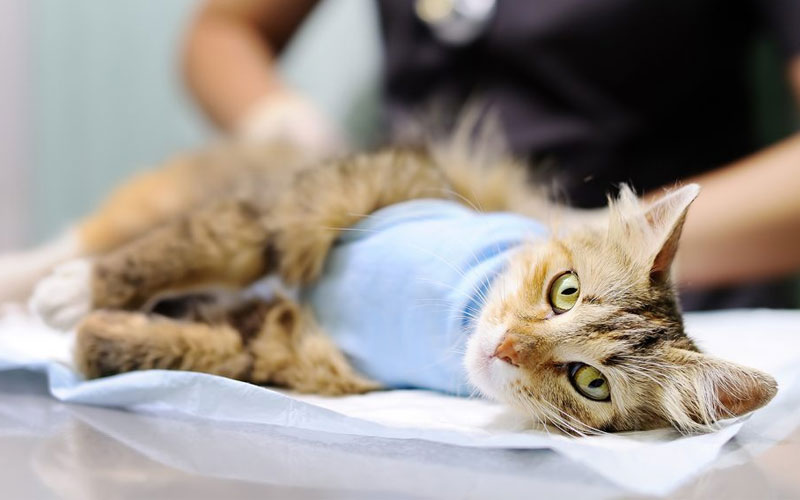
Sterilization surgery
Can be performed up to 7 weeks of pregnancy. It involves the complete removal of the uterus and ovaries, after which the animal will completely lose reproductive function.
Veterinarians most often recommend this type of abortion for dogs or cats if the animal has no breeding value, due to a number of advantages:
- shorter recovery period;
- minimal risk of complications;
- price (unfortunately, many owners are also guided by this parameter).
The operation is most easily tolerated if it is performed before 3-4 weeks of pregnancy.

Spontaneous abortions
Nature has ensured that only strong, healthy kittens and puppies capable of procreation survive. Therefore, if any problems arise with the fetuses, the animal's body in most cases rejects them itself, which is called a spontaneous abortion.
Reasons
There could be quite a few reasons for this:
- genetic abnormalities of the fetus;
- fruit freezing;
- severe helminthic infestations;
- maternal illnesses (infections, inflammatory processes, hormonal disorders, injuries);
- use of drugs;
- damaging effects of external factors;
- persistent bloating;
- stressful state;
- heredity (including breed predisposition).
Symptoms
Important! In the early stages, you may not even notice that your cat or dog has had a spontaneous abortion if the process occurs without complications.
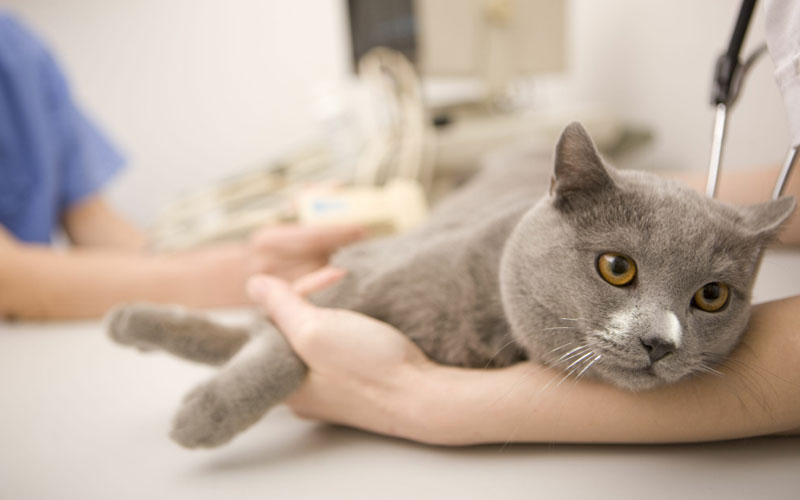
At later stages, the symptoms are obvious to every attentive owner:
- discharge from the genital tract (with streaks of blood, bloody or even purulent);
- anxiety and changes in behavior;
- changes in the size and geometry of the abdomen;
- uterine tone (the abdomen becomes hard to the touch);
- refusal to eat;
- digestive upset (diarrhea, vomiting).
It is not necessary for all the symptoms described to be present, but even the presence of any of them is a good reason to consult a veterinarian, who will assess the animal's condition and decide whether it is worth continuing the pregnancy and whether a surgical abortion can be performed on the cat or dog at this stage if it is no longer possible to continue the pregnancy.
Important! If a cat or dog experiences a spontaneous abortion, veterinary assistance is essential.
Even if the abortion occurred at home, it is necessary to contact a clinic as soon as possible so that a specialist can determine the following using an ultrasound and tests:
- whether there are still fetuses or placentas left in the uterus (one of the most common causes of complications);
- is there an inflammatory process in the genitals;
- What caused the abortion (for the future).
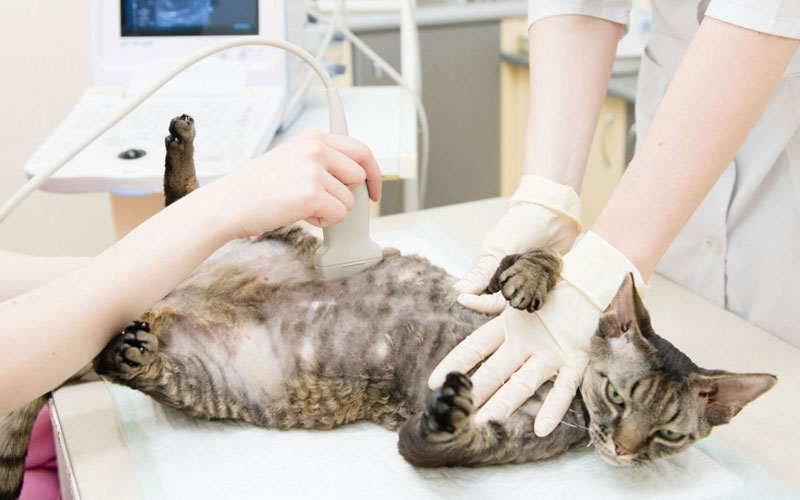
By identifying the cause of the pregnancy termination, you can prevent it from happening again in future attempts to have children.
Complications
Complications are possible with any type of abortion. Owners often worry about the cost of an abortion for a cat or dog, but few are prepared for the cost of treating complications caused by the procedure.
Most often it is:
- infertility;
- uterine diseases: pyometra, ruptures, metritis, etc.;
- neoplasms;
- peritonitis;
- sepsis.
By promptly noticing a deterioration in an animal's condition after a recent termination of pregnancy, most complications can be treated with the correct selection of modern medications. However, in advanced cases, when the infection spreads to the abdominal cavity (peritonitis) or spreads through the bloodstream throughout the body (sepsis), the prognosis can be grave.
Conclusion. When deciding to abort a cat or dog, it's important to weigh all the benefits and potential consequences of the procedure. If breeding is not your plan, have the animal spayed before an unwanted pregnancy occurs. If a cat or dog has already had a pregnancy termination (spontaneous, medically, or surgically), ensure proper care, following veterinarian recommendations, and monitor its condition to prevent potential complications or detect problems early.
Any questions? You can ask our website's staff veterinarian in the comments below, who will answer them as quickly as possible.
Read also:
- A bloated belly in cats: why and what to do
- How to prepare a cat for sterilization
- How to tell if a cat is pregnant


1 comment
Inna
Spaying a pregnant cat can lead to mammary gland cancer, as the mammary glands enlarge during pregnancy and become damaged during surgery.
Add a comment