
Chongqing (Chinese Bulldog)
When it comes to Chinese dogs, most people remember about Pekingese and Chow Chow. Few people even know about the Chongqing breed. It is truly very rare; the Chinese themselves say there are even fewer Chongqings than giant pandas. The breed is one of the most ancient. It is also known as the Chinese Bulldog or Oriental Hound. It is not recognized by the Fédération Cynologique Internationale.
Content
History of origin
Around 2,000 years ago, during the Han Dynasty's reign in China, a new breed of dog developed in Sichuan Province, suited for guarding and hunting. These sturdy, agile, and fierce dogs served as indispensable companions to the poor, able to catch not only small game but also larger ones. Legend has it that Chongqing dogs weren't even afraid of tigers. Back then, peasants kept dogs only if they were useful, capable of providing for themselves, and able to care for their owner's family.
Chongqings haven't always had a kind life. The breed has been on the brink of extinction several times, and today remains rare even in its native China.
The history of the breed's origin and development is shrouded in mystery, likely because it hasn't attracted much attention until recently. Rare references in literature and art make it difficult to piece together the full picture. Its geographical location and use are known, but everything else can only be guessed at. Apparently, the Chongqing is related to the Shar Peis And chow-chow.
In the late 19th and early 20th centuries, most of the land in Sichuan and Chongqing provinces was converted to farmland. The dogs had no hunting grounds, leading to a decline in their numbers. The breed was only saved by the fact that some dog breeders continued to keep Chongqing dogs as guard dogs and companions. Since the 1990s, their numbers have begun to increase, and since 2000, the China Kennel Association, along with the National Breed Club and several breeders, have been promoting the breed. Thanks to their tireless efforts, the dogs have spread worldwide, being exported to Europe and the United States. Currently, the Chongqing is marketed as a multi-purpose dog, serving as a companion, guard dog, security guard, and hunting companion.
Video about the Chongqing (Chinese Bulldog) dog breed:
Appearance
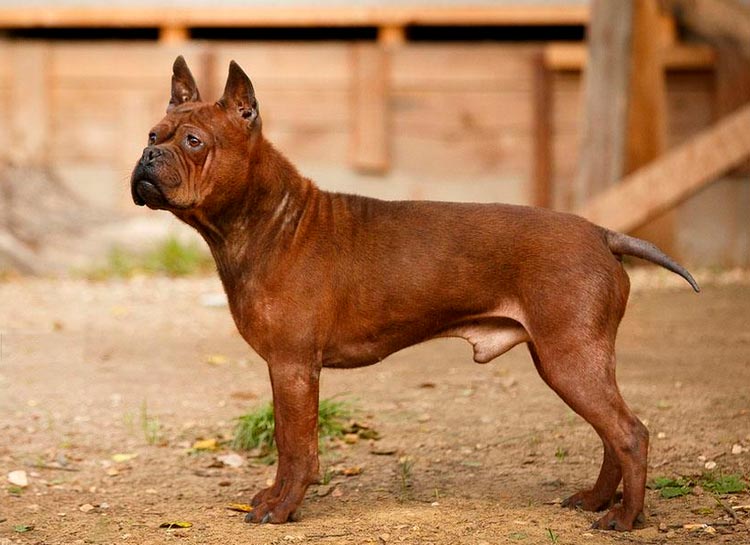
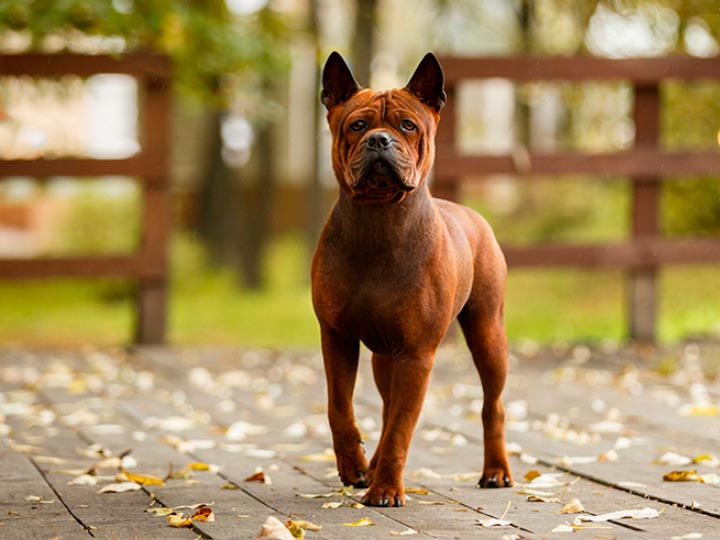
The Chongqing Dog gives the impression of a fast, harmoniously built, strong, and agile dog that should not exhibit any signs of coarseness. Its silhouette is clear, and its body is well-balanced. The current standard, compiled by the Chongqing Dog Breeders Association, distinguishes three height varieties:
• Standard - 45-55 cm; size
• Average – 35-45 cm;
• Miniature - 30-35 cm.
Regardless of size, the Chongqing is considered a guard and hunting dog and must have a typical temperament and appearance.
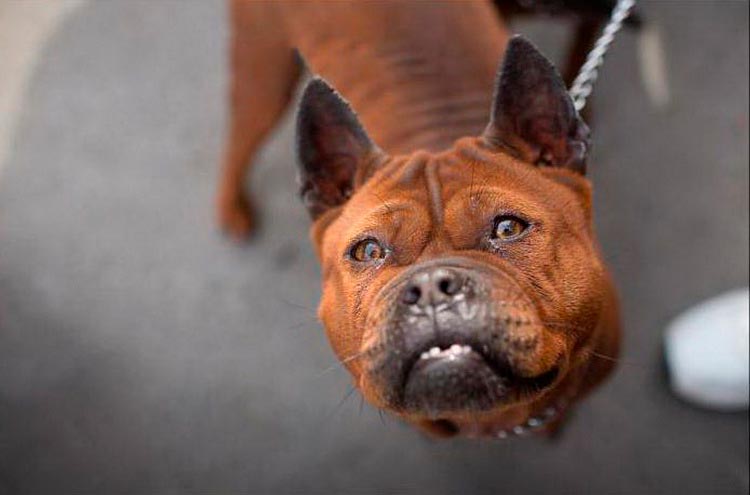
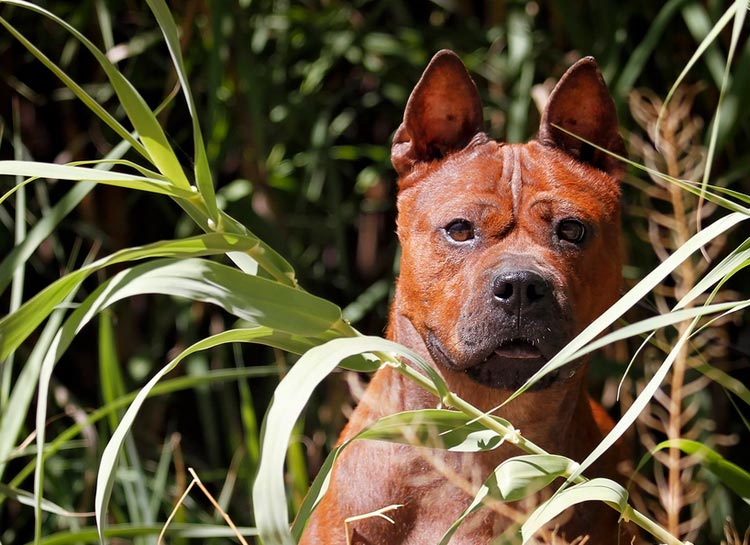
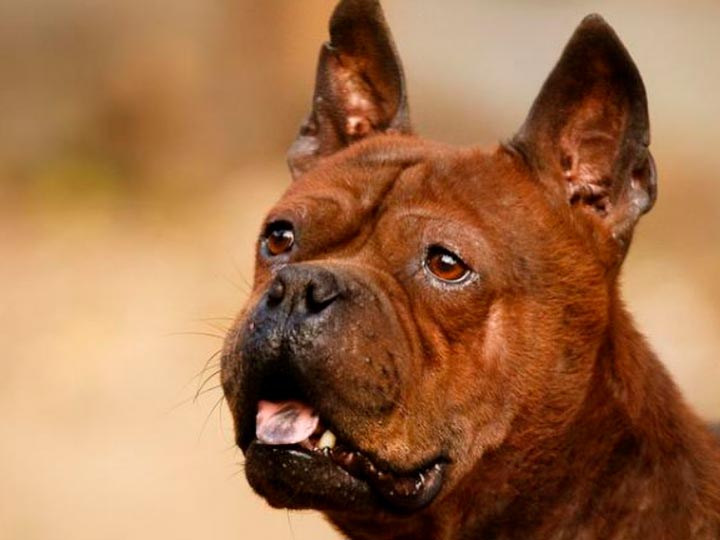
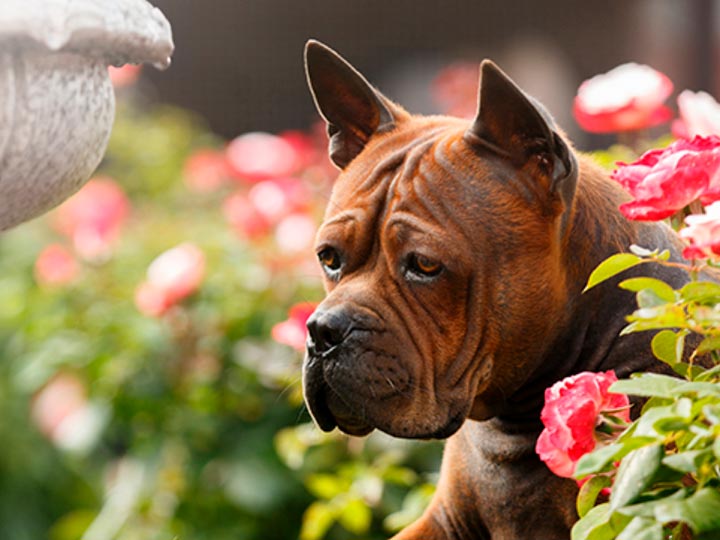
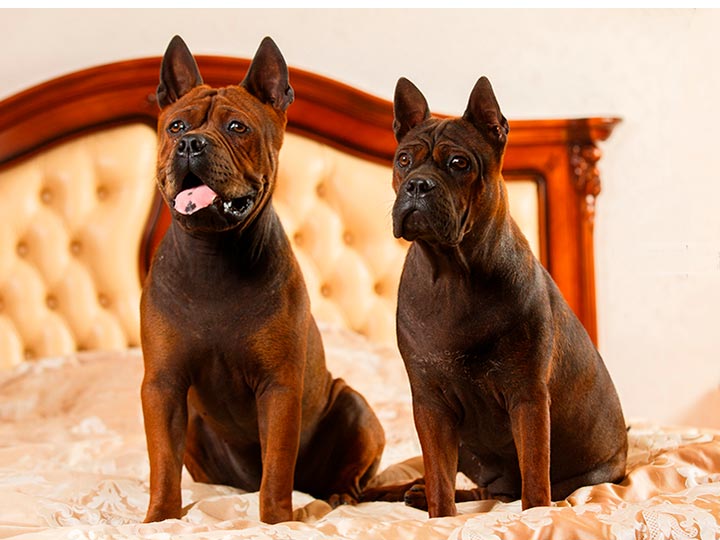
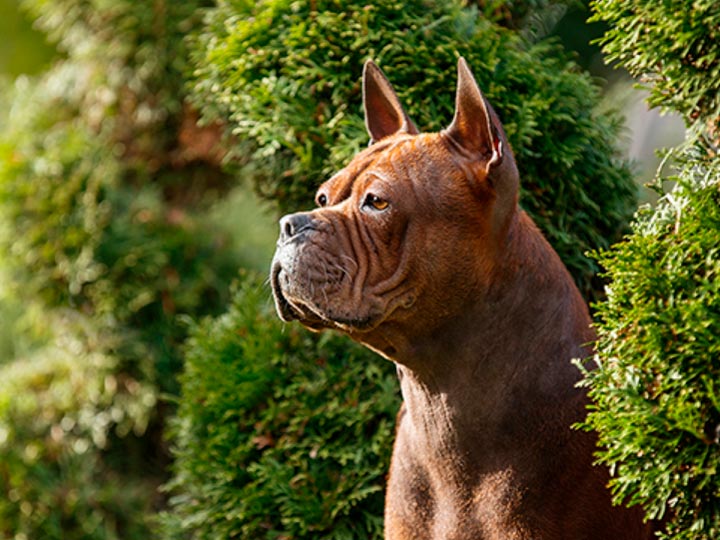
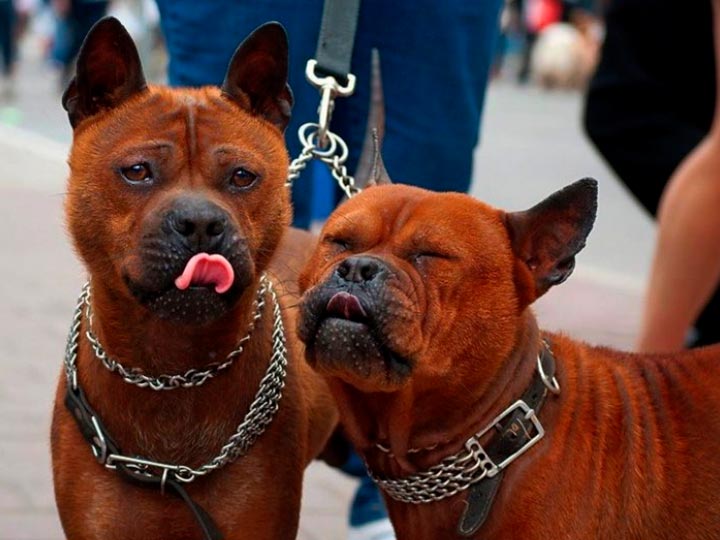
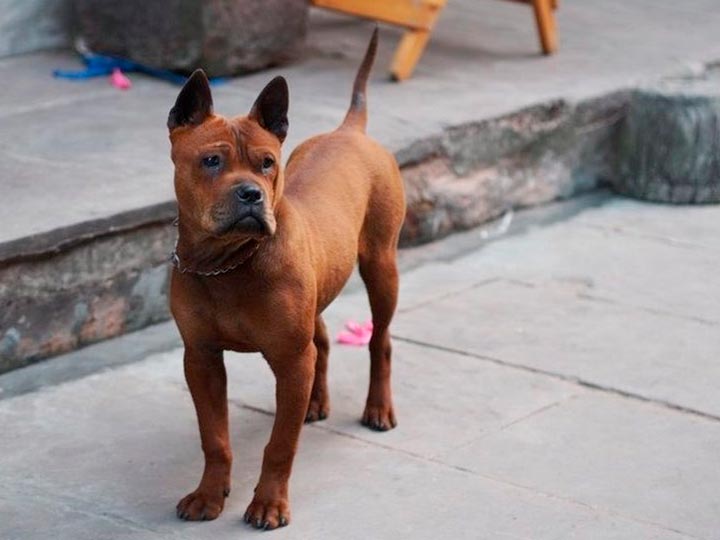
By building The head is large with a wide muzzle and erect ears. The flews hang down by approximately 1 cm. The muzzle is short with a majestic expression. The outline of the head resembles an inverted trapezoid. The skull is broad, powerful, and prominent, tapering toward the muzzle; the occipital protuberance is not pronounced. The planes of the muzzle and skull are almost parallel. The stop is small but well defined. The nose is black; in spotted dogs it may be spotted, and in bronze dogs it may be pink or brown. When tracking, the nasal valves make a buzzing sound. The jaws are wide and powerful. The tongue is black or speckled with blue markings. If there are none, the dog is disqualified. The color of the mouth is also close to black. The teeth are very strong, with a scissor bite. A slight undershot bite of up to 5 mm is permitted. The cheekbones are well developed. The eyes are round or almond-shaped, medium in size, and range in color from black to yellow, depending on the coat color. The eyelids are well pigmented and come in black, brown, or gray. The ears are small, thin, erect, and triangular in shape, covered with short dark hair or hairless. The angle of the ear axis to the horizontal is 50-80°. Both ears should be in the same position. The shape of the auricle resembles a dry leaf.
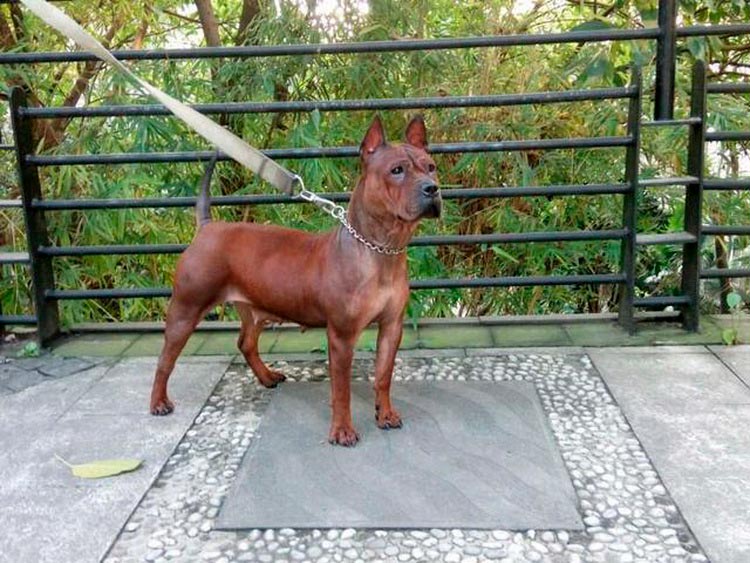
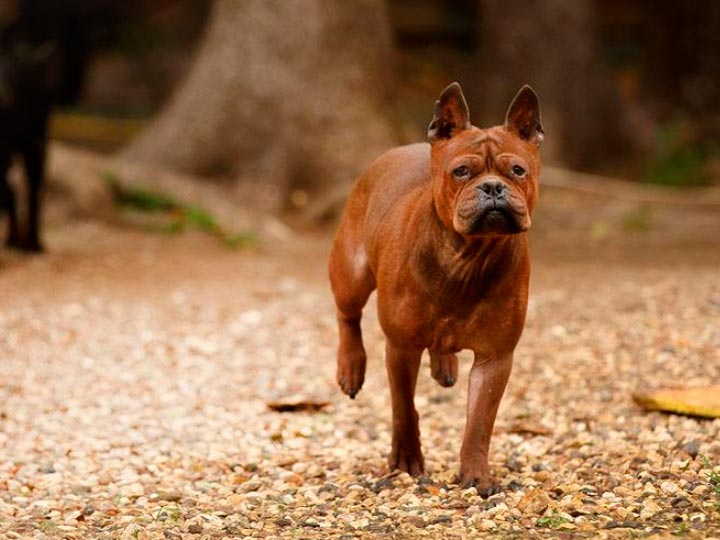
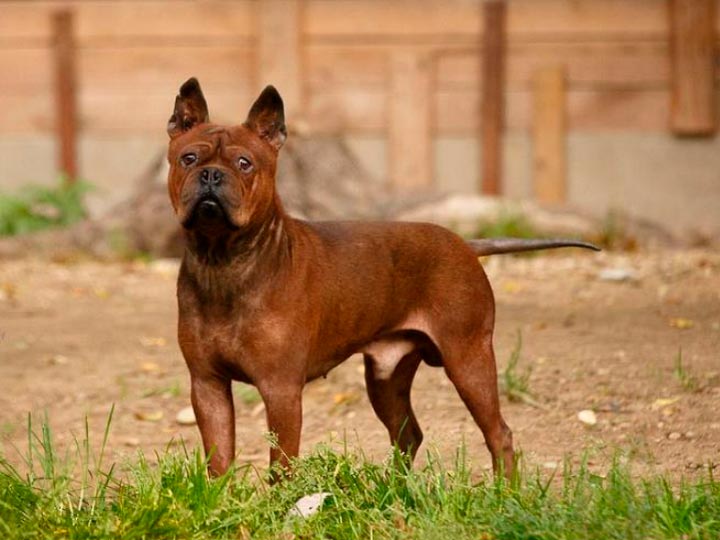
The neck is powerful and short. The body is almost square. The tail is carried stiffly upward at an angle of about 70°, resembling a bamboo shoot to the Chinese. The chest is spacious with well-sprung ribs. The back is short and strong. The loin is strong. The croup is slightly convex, sloping approximately 40° to the horizontal. The belly is tucked up. The limbs are strong-boned, strong, slightly dry, and straight. The paws are compact and rounded. The toes are well-knit. The nails are short and thick; dark in dark-colored dogs, and lighter in light-colored dogs. The pads are very durable.
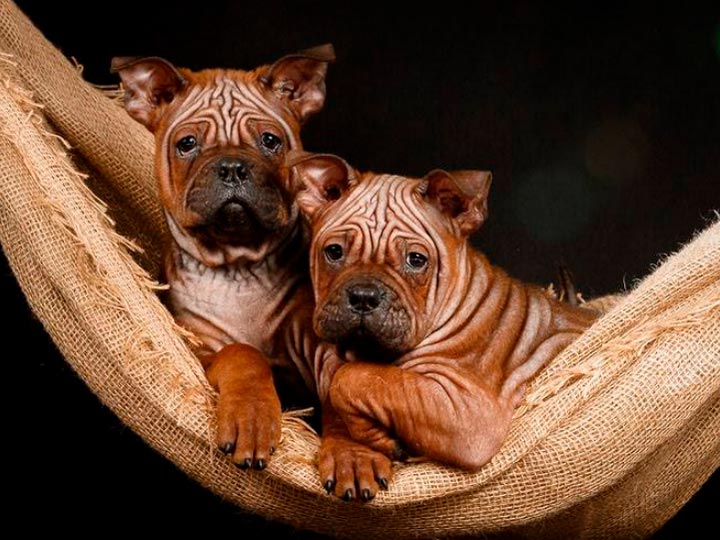
Based on coat type, the breed is further divided into two varieties: coated and hairless. The exterior of both dogs is identical, with the exception of the coat and teeth (hairless dogs often have an incomplete dental formula). The skin on the body forms a wrinkle on the head, chest, and withers. These wrinkles are slightly darker than the base coat. The coat is harsh, short, and often so sparse that the skin is visible through it. It is denser on the neck, limbs, and body. The hair lies close to the skin. Colors include reddish-brown, dark brown, brown, black, white, and straw-yellow. The most prized and common colors are reddish-brown. A small white marking on the chest is permitted.
Character and behavior
The Chongqing is a bold, self-confident dog with a strong character, smart Agile and active, the Chongqing is an excellent hunter and guard dog, possessing quick reflexes and a strong hunting instinct. Its sense of smell is highly developed, enabling it to perform complex search tasks. The Chongqing does not bark without provocation; it is calm, even-tempered, and independent. However, this does not prevent it from being a devoted friend and companion, forming a strong bond with its owner and other family members. With its owners, the Chongqing is endlessly affectionate, friendly, and playful.
The Chongqing is fearless toward other animals and people, but at the same time, it's not particularly confrontational. Occasionally, arguments can break out between males. Furthermore, the Chongqing is unlikely to thrive in the company of a fighting dog, which is naturally aggressive toward its fellow dogs; it will not back down or ignore attacks directed at it. Overall, they are friendly enough to thrive in a social setting.
During puppyhood, special attention should be paid to socialization. It's important to remember that the Chongqing is a hunting dog and therefore may show interest in other small animals, birds, stray cats, and sometimes even small dogs.
Owners appreciate their Chongqings' remarkable insight. These dogs are adaptable to their owner's mood and personality, are sociable, and willing to compromise. If a Chongqing is familiar with children from puppyhood, they treat them with tolerance and care as adults. Of course, interactions between dog and child should always be supervised.
The Chongqing is highly distrustful of strangers. However, if the dog is well trained, the risk of it attacking without command or serious provocation is minimal.
Education and training
The Chongqing has strong leadership qualities. It is independent and quite intelligent, but not prone to unquestioning obedience. Training should be undertaken by an emotionally strong, strong-willed person with a balanced personality. It would be beneficial if they already have experience with similar breeds, which are independent and self-sufficient. Methods developed for service dogs are not suitable for training and education. Close contact between dog and person is more important, as is the owner's ability to establish and maintain a leadership position. As a puppy, a Chongqing will learn for treats or toys, but as an adult, he will comply with requests out of respect for his owner.
The Chongqing's strength of character and independence sometimes surprise even professional dog handlers. Controlling and training such a dog properly can be challenging.
At 7-10 months of age, when puberty begins, males, and to a lesser extent females, may attempt to assert leadership, even displaying aggression. In this case, it's important to seize the moment and demonstrate your dominance early. This doesn't necessarily require physical force. Persistence and insistence on following the rules you've established are crucial. During this period, it's crucial not to give in to your dog's will and not allow it to independently determine the location or duration of walks, the time or place for sleeping, or other household chores.
The Chongqing is not the best choice for beginners. This dog requires an intelligent, experienced, and strong-willed owner who can promptly correct its behavior.
Content Features
In temperate climates, the Chongqing is not suitable for outdoor living. This is due to its very short and sparse coat, which will not provide warmth in cold weather. The Chongqing is suitable for indoor living or in the apartmentEven a small living space won't bother a dog, provided it's properly walked.
The Chongqing is very energetic and active, so it's highly recommended to find something he enjoys. This could include strength sports, such as weight pulling, or running, including following a bicycle. As for obedience competitions (obedience, agility (and other similar tests), Chongqing Bulldogs rarely perform well in these tests. Keeping them in a cage or on a chain is not recommended. Furthermore, Chinese Bulldogs are not suitable as apartment dogs for people who cannot provide sufficient physical and mental stimulation.
Lack of proper exercise, work, and regular training will inevitably lead to consequences: disobedience, destructive behavior, and outbursts of aggression.
Care
Grooming a Chongqing is simple. Regular brushing with a special rubber mitten or a brush for short-haired breeds is sufficient. This will minimize shedding. The frequency of washing varies from person to person. It's crucial to choose the right shampoo that won't overdry the dog's delicate skin, which is already prone to dermatological problems. The ears, teeth, claws, and eyes also require care. Ears should be cleaned as needed to remove excess wax. Eyes should be wiped to remove secretions from the corners; it's important to keep them clean and dry. Claws normally wear down on their own, but if for some reason this doesn't happen, they should be trimmed as they grow. Chongqing teeth are prone to tartar buildup and early loss, so owners should take dental disease prevention seriously. From an early age, accustom your dog to regular brushing, with this procedure performed at least twice a week. If tartar appears, it should be removed promptly by a veterinarian.
Nutrition
Chongqing adapts well to various types of nutrition: natural, mixed or prepared food. However, it's important to keep in mind that they sometimes suffer from allergies to certain foods or a weak digestive system. In this case, it may take a long time to find suitable products or a specific brand of food. Furthermore, a tendency to gain excess weight has been noted, especially if they lack adequate exercise. A proper feeding schedule and calorie-based portion control are essential for the Chongqing. The diet should be tailored to the dog's exercise level, age, and physiological state.
If your dog is fed a natural diet, it's essential to give them vitamin and mineral supplements regularly. If you feed your dog only prepared foods above the super-premium level, no additional supplements are needed for preventative purposes.
Health and life expectancy
Chongqings generally have robust health and a strong immune system. However, it's not uncommon for puppies to be born with various mutations, including hairlessness, malocclusion, incomplete dental formula, predisposition to dental diseases, and more. Various skin and eye diseases are frequently reported. Dogs that do not suffer from bad heredity often live long lives, and 15 years is not the limit for them.
To maintain health, it is important to provide the Chongqing with a complete, balanced diet, get vaccinations on time, and treat for external and internal parasites.
Choosing a Chongqing puppy
There are only about 1,000 Chongqing dogs worldwide. The majority are concentrated in China. A small number live in the United States, Western Europe, and the CIS countries. The easiest way to buy a puppy in China is through the Chinese Chongqing Dog Club. This organization also handles the paperwork for puppies and adult dogs, including those for export, as well as breeder registration and other matters.
Finding a kennel that breeds Chongqing dogs is easy, but finding a puppy for sale is much more difficult. There's usually a long waiting list for the puppies. Puppies look very different from adult dogs. They have many more wrinkles, which smooth out with age, and very sparse fur, making it seem as if their entire body is covered in bald spots. Dogs become fully coated around a year old. It's important to pay attention to the condition of their skin, teeth, eyes, and ears. Puppies should be healthy in appearance. Temperament is also important. They shouldn't show aggression or shyness. Curiosity, playfulness, and friendliness are the most obvious traits up to 2-3 months of age. Also, pay attention to conformity to the standard, body balance, paw strength, ear placement, mucous membrane color, and coat color.
Price
Chongqing puppies are not cheap. In Russia, the average price is 70,000 rubles. Chinese breeders sell these exclusive, rare dogs for 15,000-25,000 Chinese yuan, which is approximately $2,500-4,000.
Photos
The gallery contains vibrant photos of dogs from the rare Chinese Chongqing breed.
Read also:


Add a comment