
Canine distemper: symptoms and treatment
Canine distemper, or canine distemper, is a multisystem viral disease affecting animals of the canine and mustelid families. In dogs, canine distemper is most commonly reported in the spring and fall. The disease has a high mortality rate, with mortality rates reaching 80-90%. Canine distemper is most common in dogs under one year of age, due to their less developed immune system. Breeds most susceptible include collies, bull terriers, Siberian huskies, shepherds, shelties, poodles, and Pekingese.
Content
Pathogen
The causative agent of canine distemper is an RNA-containing morbillivirus, which contains two immunogenic proteins capable of triggering a powerful elimination response (elimination or destruction of foreign compounds) in the body. However, due to the presence of a ribonucleic acid molecule within the virus's structure, it integrates into the host's DNA, protecting itself from suppression by the immune system.
The plague virus is resistant to prolonged exposure to low temperatures, remaining viable for up to 5 years at -20°C. However, at +60°C, it dies within 30 minutes, and boiling kills it instantly. Disinfectants kill the virus fairly quickly: solutions of lysol, caustic soda, phenol, and formalin kill it within 1-2 hours, while ultraviolet rays kill it within 30 minutes.
Routes of infection
Canine distemper infection occurs through the fecal-oral, airborne, and airborne dust routes: through contact with animals carrying the virus, or through contaminated food, water, and care items used by sick animals. The incubation period for the disease ranges from a week to 2-3 months.
Important! Canine distemper is considered a highly virulent disease: at least 70 out of 100 dogs exposed to the canine distemper virus will become infected. Animals that recover from distemper develop long-term, but not lifelong, immunity; they remain carriers of the virus for three months.
Symptoms and forms of the disease
Plague can occur in a hyperacute, acute, or subacute form. The hyperacute form, due to accelerated antibody production, is characterized by a sharp rise in temperature to 40-41°C, extreme depression, refusal of food and water, and severe, purulent discharge. rhinitis and conjunctivitis. Rapid viral replication causes general poisoning of the body with waste products, which the affected organs are unable to eliminate. After 2-3 days, the dog begins to convulse, then goes into a coma, and dies.
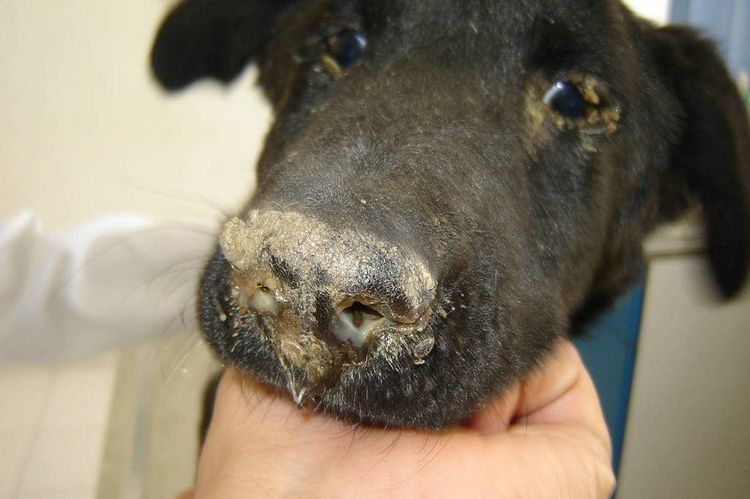
The acute and subacute course of the disease lasts from 1-2 to 4 weeks, and can be limited to general weakness and fever (this is typical for adult dogs with a high level of immunity), or manifest itself with a variety of different symptoms:
- During the first two or three days, the animal is depressed, with a temperature rising to 40°C. The dog loses its appetite and refuses even water.
- On the 3rd or 4th day, severe chills and coughing begin, breathing becomes difficult, hoarse and rapid, and there is profuse discharge from the nose and eyes.
- This is followed by vomiting, and if the animal has managed to feed, diarrhea, which is caused by the destruction of cells in the gastrointestinal mucosa by the virus.
- A blistering rash appears on the pads and the inside of the paws; the vesicles are filled with a colorless liquid, and after they burst, purulent crusts form.
- The virus travels through the bloodstream to the brain and destroys nerve cells. This causes seizures, sensory loss, and paralysis of the legs.
Prognosis. In the hyperacute form of canine distemper, the outcome is fatal in most cases. In the acute and subacute forms, if adequate treatment does not complicate the disease with concomitant infections, the prognosis is uncertain or favorable.
Diagnostics
To diagnose canine distemper in dogs, a veterinarian relies primarily on clinical signs:
- High fever, chills, loss of activity;
- Refusal of food and water;
- Catarrhal processes of the respiratory organs and mucous membranes of the eyes;
- Symptoms of gastroenteritis;
- Hyperkeratosis (thickening of the stratum corneum) of the skin, accompanied by the formation of dandruff;
- Vesicular rash;
- Photophobia, paresis, paralysis, and convulsions caused by damage to the nervous system.

Confirming the diagnosis with laboratory tests, that is, detecting and identifying the canine distemper virus, is not always possible. Canine distemper virus does not thrive in culture, so bacteriological testing can yield false negative results. Reliable cytological results can only be obtained in the early stages of the disease. Blood tests are also not considered sufficiently informative, as they often reveal low platelet and lymphocyte levels—a sign not specific for canine distemper.
Treatment
Treatment for canine distemper in dogs is most effective in the early stages of the disease. Treatment includes:
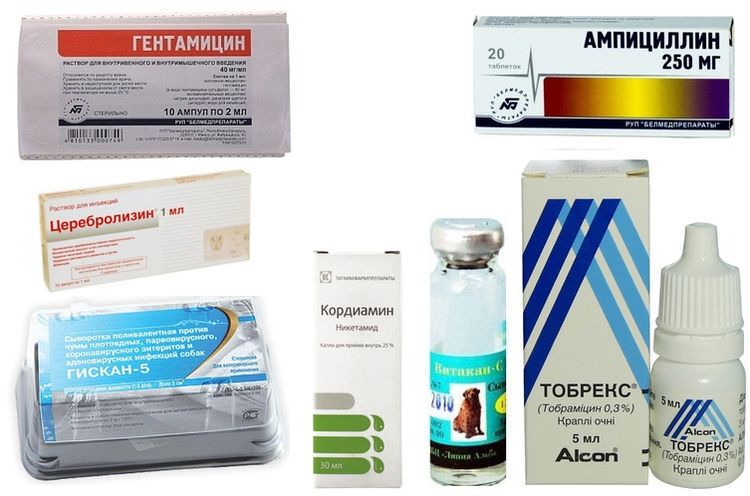
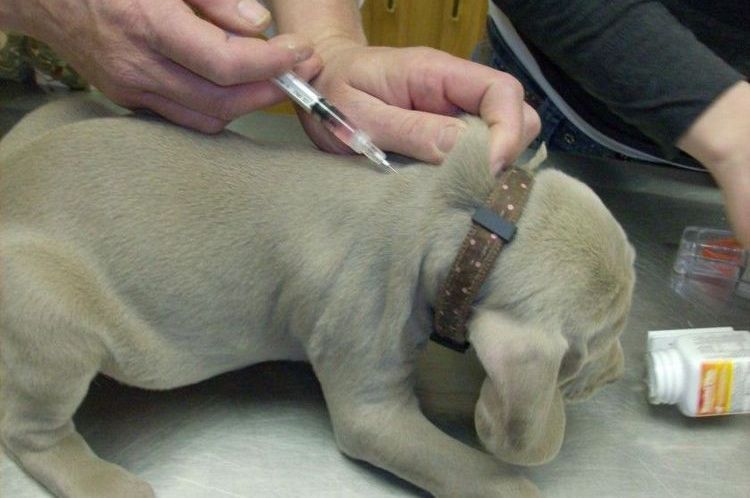
- Suppression or destruction of the pathogen. For this purpose, monovalent hyperimmune serums against canine distemper or polyvalent serums Vitakan-S or Giskan-5They are administered intramuscularly or subcutaneously, the dosage is calculated depending on the dog's weight and the severity of clinical symptoms.
- Treatment of secondary infections. In severe cases of the disease, antibiotics are used to prevent or treat secondary bacterial infections: Ampicillin, Gentamicin, semi-synthetic penicillins (Cypracillin, Azlocillin), cephalosporins (Cefradine, Cephaloridine), aminoglycoside antibiotics (Amikacin, Tobramycin).
- Restoration of organ function. In cases of heart failure, caffeine or cordiamine are used. For gastrointestinal damage, the dog is prescribed medications that protect the mucous membrane from the damaging effects of digestive enzymes (oak bark extract, flaxseed decoction). In cases of frequent vomiting, metoclopramide or cerucal are used. To replace lost fluids, the animal may be prescribed infusion therapy with isotonic solutions such as Trisol or Ringer-Locke.
- Restoration of the nervous systemRehabilitation of a dog's nervous system after canine distemper is a lengthy process that can take several months. Medications may include Actovegin, Cerebrolysin, Piracetam, or Remnil, and physical therapy may include shockwave therapy (exposure to sound pulses), magnetic therapy (exposure to a static or dynamic magnetic field), and darsonvalization (exposure to low-power, high-frequency currents).
After recovery, the dog is prescribed a gentle diet for 1-2 months, and physical activity is limited for the same period.
Prevention
It's impossible to completely prevent a dog's exposure to the canine distemper pathogen, so vaccination is the primary method of disease prevention. Single-dose and combination vaccines are used for canine distemper immunoprophylaxis:
- Vaccum (one of the most effective monovalent vaccines);
- Biovac (a quadrivalent vaccine consisting of liquid and lyophilized components);
- Dipentavak, Hexakanivac, Vladivak, Nobivac (complex vaccines for the prevention of rabies, adenovirus, canine distemper, infectious hepatitis and leptospirosis);
- Multikan 4 And Multikan 8 (a combination drug against plague virus, parvovirus, adenovirus, leptospirosis and coronavirus);
- Vanguard (a series of lyophilized vaccines of different valence);
- Hexadog (polyvalent vaccine against plague, viral hepatitis, parvovirus, rabies and leptospirosis).
To increase the body's resistance, dogs are prescribed immunostimulants: Anfluron, Nutri Vet, Norvac Globcan, Ribotan, FiBS and others.
Read also:
- Dog Vaccination: Vaccination Schedule
- Viral papillomatosis in dogs
- Injections for dogs against distemper


Add a comment