
What do raccoons eat?
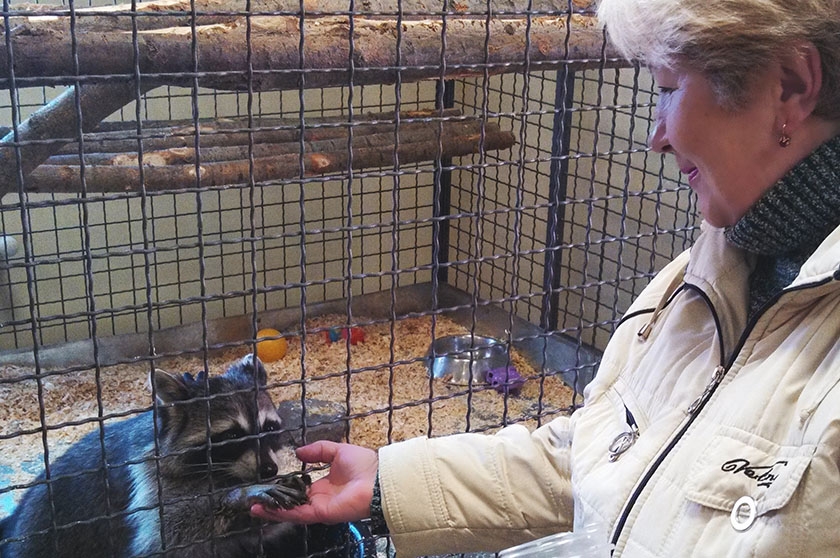
Today, it's hard to find a country in Europe where the raccoon isn't popular—it's beautiful and incredibly charming. These playful little creatures, resembling plump cats, have become popular pets. Given their friendly and sociable nature, owners derive great joy from interacting with them. However, since the digestive system is the most vulnerable part of domestic raccoons, their health and longevity largely depend on what they eat.
Content
What does a wild raccoon eat?
Raccoons (Procyon) belong to the canine family and are considered carnivores, but they are actually myxophages—omnivores. There are four species of raccoons in the wild today. They are virtually identical in appearance and are classified based on their habitat. The most common species is the common raccoon, native to the forests of North America. The common raccoon is common in the jungles of South America. Two other species—the Cozumel raccoon and the Guadalupe raccoon—are found only on the Caribbean islands.
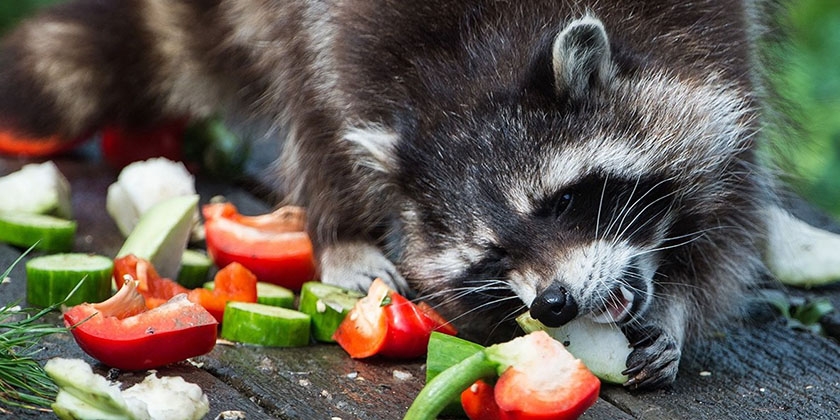
In the wild, raccoons eat both plants and animals. They feed on grains, fruits, berries, nuts, and eggs. Their diet also includes insects, earthworms, frogs, crayfish, mussels, turtles, fish, and small mammals such as mice, young muskrats, and hares. These animals also enjoy carrion, happily and harmlessly devouring half-rotten food found in garbage dumps.
The diet of wild raccoons varies depending on the season: in the spring, they are carnivorous, but as autumn approaches, when vegetables, fruits, and berries ripen, they switch to a "vegetarian diet." Moreover, they begin harvesting their produce earlier than farm owners, and in America, where the raccoon population is quite large, they often cause significant damage to farms.
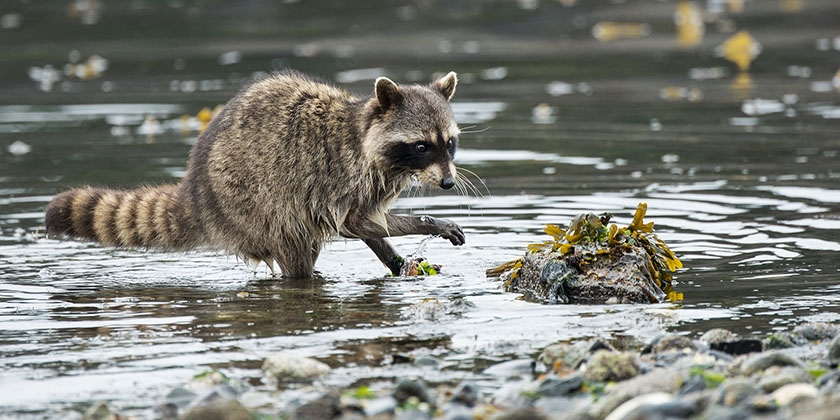
Raccoons have an unusual habit of thoroughly washing their food before eating it. One theory is that they rinse their food to remove any odor: raccoons typically hunt near bodies of water, and their prey smells of swamps. However, this theory isn't entirely convincing, as a half-decomposed rat smells no better than a fish caught in the water. Furthermore, this animal can also meticulously wash with its paws and "hands" anything it doesn't intend to eat: a piece of clothing found in a closet, its owner's slippers, or their cell phone.
What can you feed a pet raccoon?
Procyon's diet can be natural or commercial. Raccoons readily eat dog food at home. However, when using dry kibble, keep in mind that it expands in the stomach, so it's important to carefully follow the recommended dosage. Veterinarians recommend not feeding raccoons exclusively commercial food; it's best to combine it with natural foods.
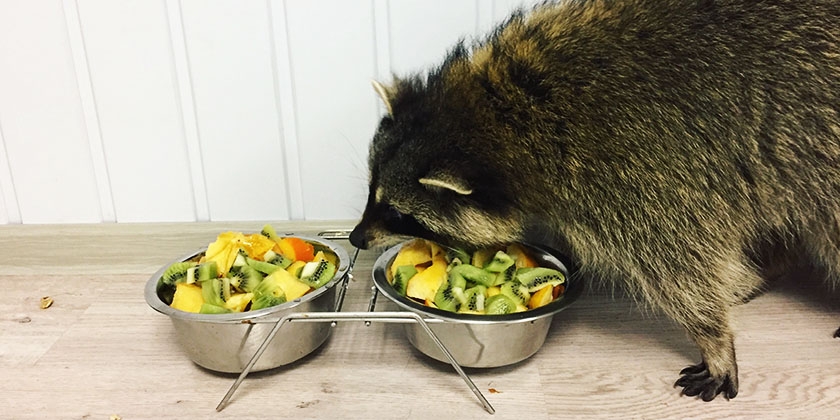
Domestic raccoons should be fed roughly equal amounts of plant and animal food. Animal products include meat, organ meats, fish, shrimp, crayfish, shellfish, live small amphibians, and rodents. Dairy products (kefir, cottage cheese) are also acceptable. All canines should be avoided with salty, spicy, peppery, smoked, or baked goods. The only sweet treat allowed is honey.
The recommended daily diet for adults consists of:
- 400 g meat;
- 200 g fish;
- 1 egg;
- 200 g dairy products;
- a live mouse or frog;
- 100 g mealworms or ant pupae;
- 50 g of fruits, berries or vegetables;
- 20 g nuts;
- 100 g of bread or bran;
- 100 g of porridge.
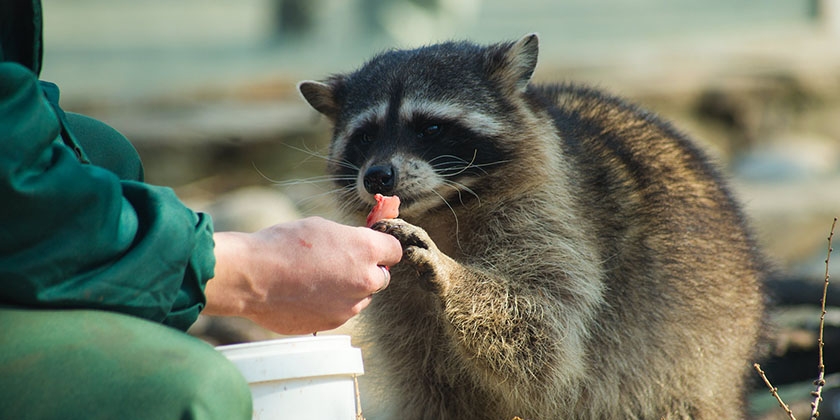
Domestic raccoons enjoy a dish called "farshekasha." It's easy to prepare: mix equal amounts of ground chicken and buckwheat, add water, and simmer for 10-15 minutes.
It's recommended to feed an adult raccoon 2-3 times a day. Clean water, as well as fruits and vegetables for snacks, should be freely available. The daily food portion depends on the individual animal and the season. In the fall, raccoons eat more animal food, storing fat for the winter, while in the spring they can gorge themselves on a few nuts and actively lose weight.
How to feed a baby raccoon
Many people acquire raccoons when they're still babies—that way, they become accustomed to humans more quickly, grow up less aggressive, and get along better with other pets. However, if they're still "weaned puppies," they need to be bottle-fed for several months with a milk substitute before being transitioned to adult food. Many formulas are available on the market today, and both dog and cat formulas are suitable for raccoons.
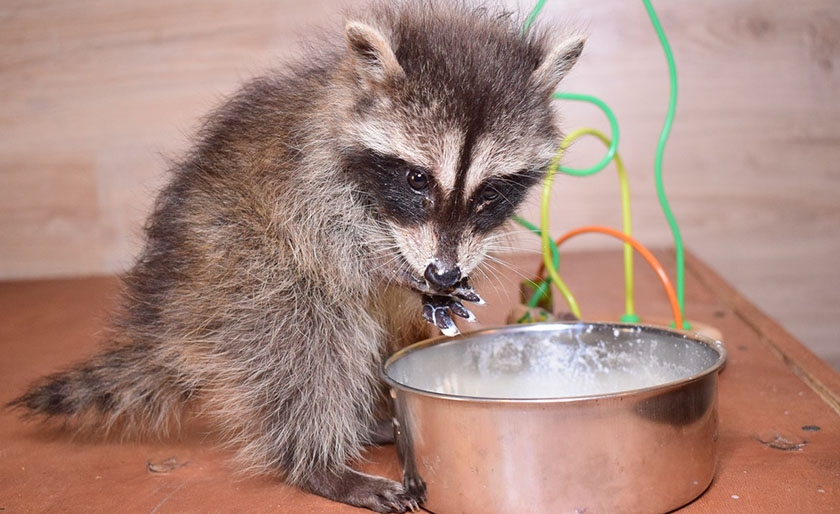
A very important part of raising a small raccoon is massaging its tummy after each feeding. This pleasant procedure stimulates intestinal peristalsis and improves intestinal permeability.
Veterinarians recommend the following feeding norms for raccoons aged 1 to 2.5 months:
|
Age, months |
Volume of milk formula, ml |
Frequency of feeding |
|
1 |
40 |
every 2-3 hours |
|
1.5 |
60 |
every 3-4 hours |
|
2 |
80 |
every 5 hours |
|
2.5 |
40 + cottage cheese with banana or egg |
every 5 hours |
Raccoon breeders sometimes disagree about the best way to feed a pet raccoon—keeping it on a strict diet or allowing it to eat whatever it wants. The most reasonable option is to consider whether, before introducing any new food to your pet, it's best to determine whether it can obtain it naturally. If so, it's safe to feed it.
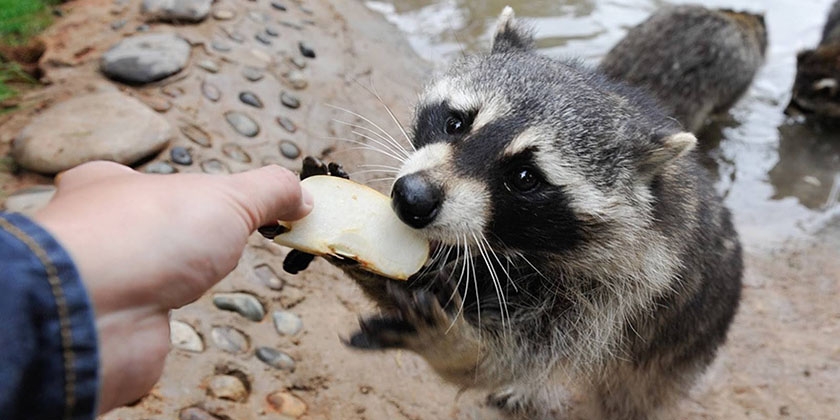
And here's another helpful tip from experts: the smaller the variety of foods included in a raccoon's daily menu, the easier it is for the animal's digestive system to function. Its body automatically produces the enzymes needed to digest food in the required quantities.
Read also:
- Where do raccoons live in the wild?
- What is the difference between a raccoon and a raccoon dog?
- How long do raccoons live?


Add a comment