
What to do if a cat bites you and your hand swells
It's rare to find a cat owner who hasn't been bitten at least once by their pet. A seemingly gentle and calm animal can, in certain situations, resort to claws and teeth. Most often, this behavior is caused by owners themselves or children who fail to consider the mood and personal boundaries of their naturally independent pet. Cat bites can be quite dangerous, especially for children. Only timely and competent medical attention can reduce the risk of complications and negative consequences.
Content
Why is a cat bite dangerous?
Injuries caused by cat teeth are noticeably different from bites from dogs or other large animals. Despite the small size of the wound, the punctures are deep and close quickly, complicating healing. As a result, tissue repair takes longer. Cat saliva, which contains a large number of bacteria and microbes, poses an additional danger. During a bite, these bacteria penetrate deep into the tissue and can cause varying degrees of inflammation. A scar often forms at the site of injury, which takes a long time to heal.
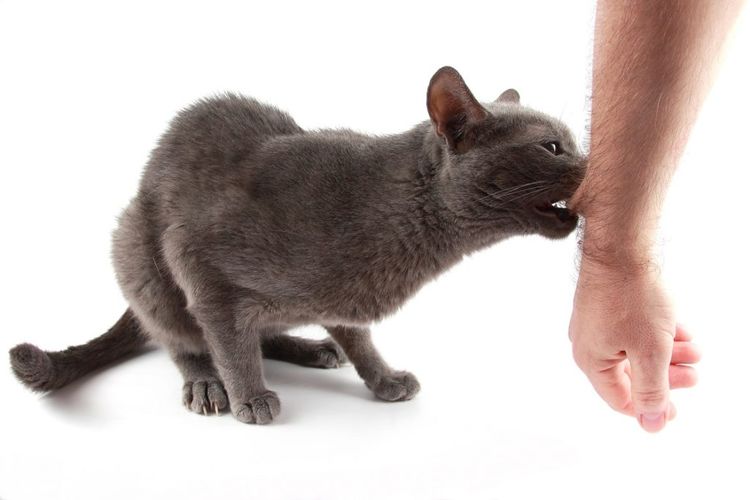
Scratches and bites from a sick animal can have serious consequences. It's important to know what steps to take if you're bitten by a cat.
First aid
Treating the wound as soon as possible will help avoid negative consequences and complications. Immediately after a bite, follow these steps:
- Rinse the affected area of skin under running water for 10 minutes. You can use laundry soap.
- Thoroughly treat the bite site with hydrogen peroxide or chlorhexidine, then rinse again.
- If there is minor capillary bleeding, do not attempt to stop it—the blood will remove aggressive substances from the wound. If the bleeding is severe, it should be stopped with a pressure bandage.
- Apply iodine, brilliant green, or alcohol to the wound edges. Never allow these to penetrate deep into the tissue.
- Bandage the bite site to protect the wound from dust.
It is not recommended to apply any ointment or bandage to the wound. Tight occlusion promotes the development of the disease process. After treatment, it is necessary to monitor the wound. If the inflammation continues, you will need to visit a medical facility.
What to do if you are bitten by a vaccinated domestic cat
Even a bite from a vaccinated domestic cat can be dangerous, as the animal's saliva contains bacteria. While minor injuries are minimal in risk of complications, proper wound care is essential.
If you are bitten by a vaccinated domestic cat, follow these steps:
- Wash the wound. Immediately wash the bite area under running water with soap, preferably laundry soap. This helps remove saliva and reduce bacteria. If running water is unavailable, you can use wet wipes.
- Stop the bleeding. If bleeding is severe, apply pressure with a clean cloth or bandage to the wound, then wash the area again.
- Treat the bite. Use hydrogen peroxide or chlorhexidine, and alcohol if necessary. For a deep wound, apply a sterile bandage; for a superficial wound, no dressing is required.
- Consult a doctor. A specialist will assess the depth and location of the bite, perform surgical debridement if necessary, prescribe antibiotics, and administer a tetanus shot.
- Monitor your condition. Monitor your wound healing and overall well-being for 2-3 weeks. If pain, redness, swelling, pus, or fever occur, consult a doctor immediately.
What to do if you are bitten by a stray or potentially rabid cat
Bites from stray cats are considered more dangerous due to the risk of rabies. Even minor wounds require immediate medical attention.
The algorithm of actions is as follows:
- Rinse the wound under running water and soap to remove saliva and bacteria.
- Treat the bite site and stop the bleeding. Use iodine or other antiseptics with a strong antibacterial effect. If bleeding occurs, apply pressure to the wound with a bandage or clean cloth.
- If possible, quarantine the animal. Observing the cat for 10 days helps rule out rabies if there are no symptoms.
- Go to the emergency room that same day. The doctor will administer an emergency rabies vaccine, a tetanus shot if necessary, treat the wound, and prescribe antibiotics.
- If a domestic cat is not vaccinated and has contact with the street or other animals, the same action plan should be followed as in the case of a bite from a stray cat.
When to see a doctor
Qualified medical care is required in the following cases:
- Unable to stop bleeding at home.
- When the affected area is extensive.
- If the ligaments and joint are damaged.
- Bite to the face or neck area.
- Increased temperature, deterioration of health.
- The inflammation progresses, and suppuration develops. This is especially true if the hand is swollen and red after the cat bite.
- If bitten by a stray cat or one that has not been vaccinated against rabies.
If no signs of infection are observed within two days, drug treatment will not be required.
Treatment after a bite
If there is a suspicion that the attacking animal may be rabid, the victim is given a special anti-rabies serum to prevent rabies infection. A tetanus vaccine is also administered, provided the patient has not received one in the past five years. The rabies serum is administered repeatedly, spaced out over time. Such preventative measures help prevent dangerous diseases that can sometimes be fatal.

In addition, a course of broad-spectrum antibacterial medications is prescribed. Their purpose is to prevent wound suppuration. Doctors most often prefer medications such as amoxicillin, ceftriaxone, and clavulanate. The duration of the course depends on the time of presentation and ranges from 5 to 10 days. The sooner the medication is started after the injury, the shorter the treatment period.
The wound is sutured only in certain cases:
- If the cat has bitten, causing very significant damage to the skin.
- The wound is located in the head area.
- To stop bleeding from injured vessels.
In other cases, cat bites heal on their own.
What should you do if your hand is swollen after a cat bite, and you have to postpone a visit to the doctor for some reason? After treating the wound, it's recommended to apply a bandage soaked in Levomekol ointment and alcohol to the affected area. Leave it on throughout the day. Periodically moisten the bandage with alcohol. By opening the pores, it promotes better penetration of Levomekol. This bandage helps alleviate the victim's condition until medical attention is received.
Folk remedies
Old, time-tested folk remedies can help treat a cat bite at home. Made with natural antiseptics, they are effective only in improving the patient's well-being due to their antimicrobial, anti-inflammatory, and wound-healing properties. Unfortunately, such remedies are not effective against diseases such as rabies and tetanus.
Calendula tincture in alcohol is excellent for wound treatment. Chlorophyllipt tincture can combat large numbers of staph bacteria introduced into the wound by the animal's saliva.
Compresses and baths with calendula or chamomile infusions can help reduce swelling. Meadowsweet has similar healing and antiseptic properties. Crushed leaves of the plant are applied to the wound and secured with a light bandage.
There are many known recipes for preparing products intended for internal use:
- Immortelle infusion. Brew the dried flowers overnight (one tablespoon per cup of boiling water) and let steep overnight. Strain and take one spoon three times daily. Effectively reduces inflammation and accelerates healing.
- A mixture of crushed walnuts, honey, onion, and table salt. Take two parts nuts and honey, one part onion and salt, and mix thoroughly. Take one spoonful of the mixture three times a day and store in the refrigerator.
- Snakeweed. A tincture is prepared from the rhizomes of this plant. 20g of crushed raw material is poured into 1 liter of dry wine and steeped for 8 hours, shaking occasionally. Take small doses several times daily.
It's important to remember that treating a cat bite with folk remedies is only a supplement. If the victim's condition worsens even slightly, seek medical attention.
Possible complications
The most dangerous consequences that a cat bite can lead to are: rabies and tetanus. Infections caused by staphylococci, streptococci, pasteurella, and other pathogenic bacteria are also possible. These can lead to serious complications such as respiratory inflammation, bone and tendon infections, chronic renal failure, and blood poisoning.
People with weakened immune systems, diabetes, liver disease, peripheral vascular disease, and alcohol dependence are more susceptible to developing such problems. These patients should not self-medicate, and if bitten by a cat, they should seek immediate medical attention.
You can also ask our website's staff veterinarian a question, who will answer them as quickly as possible in the comments box below.
Read also:
- Cat scratch disease – felinosis
- Cats and dogs are predators
- Love between cats and people improves health


58 comments
Julia
I was bitten by a domestic cat. My hand is swollen and I can't bend my fingers. I was sent to a surgeon. What could it be?
Daria is a veterinarian
Hello! This issue is beyond the veterinary expertise. For such injuries and further treatment, please contact your local medical facility. Veterinarians do not prescribe treatment for humans.
Valentina
Yesterday, my grandson was bitten by an unknown cat walking with his little girl. Today, his wrist is swollen and he feels nauseous. We went to the emergency room. They treated the wound. They gave him an injection. They told him to come back on Monday for a checkup and on Tuesday for a second injection. They prescribed Nurofen. I doubt they didn't prescribe antibiotics, both topical and oral. Why bother bringing down a fever that doesn't exist? It's a sign of danger.
Daria is a veterinarian
Hello! Veterinary specialists are prohibited from providing consultations to people. Surgeons, pediatricians, and infectious disease specialists are responsible for prescribing treatment in this situation (most often a course of rabies vaccination and a tetanus vaccine if there is no current vaccination, along with antipyretic and anti-inflammatory medications if needed). Antibiotics are prescribed for purulent infections (suppuration and severe inflammation).
Svetlana
Hello. A kitten bit my child on the arm, and it became swollen. We went to the vet, received treatment, and received the necessary vaccinations as scheduled. Does the kitten need any treatment other than a rabies shot to prevent future bites from causing inflammation?
Daria is a veterinarian
Hello! A kitten doesn't require any treatment unless there are any clinical signs of illness. A kitten will simply have bacteria in its mouth every day, and you can't force-feed it with strong antibiotics for the rest of its life. That would simply kill the animal. This is precisely why it's impossible to create a "sterile" mouth. Therefore, it's impossible to avoid inflammation after a bite. Incidentally, the human mouth contains far more bacteria than that of dogs and cats. But we live with it somehow; that's just nature.
Olga
Good afternoon, my cat bit me yesterday. He was chased by two dogs yesterday. I tried to save him, but he bit me hard on the shoulder. He's vaccinated, and I have a month left before his vaccinations are up. The dogs that chased him are also vaccinated against rabies. Should I get rabies shots? Thank you.
Daria is a veterinarian
Hello! No, you shouldn't. Firstly, contact with other animals occurred on the same day as your pet's bite. The rabies virus (even if it had entered your whiskered companion's system) moves too slowly along the nerve fibers to the brain. The active virus also won't reach the salivary glands for a couple of hours. So, the bite couldn't have infected you unless there had been other contact with animals beforehand. But! You should still take your cat for a ten-day observation period. And after this period, vaccinate your cat (it's better to vaccinate early than to delay and lose the strength of its immune system).
Olya
Good afternoon, 45 days have passed since the bite, the cat is alive, can we be sure that he was healthy at the time of the injury?
Daria is a veterinarian
Hello! There's a 99% chance your pet doesn't have rabies (the incubation period is extremely rare), especially once the saliva becomes "dangerous." In the future, vaccinate your pet promptly with a good vaccine to avoid such fears and worries (and unnecessary questions from your veterinarians).
Olya
Thanks a lot
Novel
What should you do if you are bitten by a domestic cat, but not very deeply?
Daria is a veterinarian
Hello! Rinse and treat with an antiseptic. You can use Levomekol ointment. But it's best to see a vet. This is especially true if your cat isn't vaccinated against rabies and has access to the outdoors or comes into contact with other warm-blooded, unvaccinated animals that roam outdoors (rabies should always be ruled out). You may need a course of antibiotics to help fight off any pathogens (teeth and saliva aren't sterile; they contain bacteria, including pyogenic ones). Your vet may also prescribe an NSAID to help reduce swelling and redness. It all depends on the severity of the cat bite and your immune system (whether it can fight it normally or whether it needs medication).
Sergey
Yesterday a 2.5 year old child was bitten by a stray cat. We got all the vaccinations. What should we do with the cat? When and to whom should we show it?
Daria is a veterinarian
Hello! What do you mean, all the vaccinations are done and now we're taking the cat in? Human vaccinations stretch out for almost six months! And the cat bit us yesterday. The sanitary and epidemiological station (or the clinic you contacted) should send a notification to your regional disease control agency notifying you of the need for observation. If you managed to catch the cat, take it to that agency. Let them euthanize it themselves and conduct a test (ELISA of brain swabs). If no characteristic changes are found, the child's vaccinations may be cancelled. If the bite is confirmed, everyone who was in contact with the cat will be sent back for a full course of vaccinations.
Elena
A small kitten bit my finger badly, I washed the wound with hydrogen peroxide. Should I see a doctor?
Daria is a veterinarian
Hello! Is this kitten yours or a stray? In what context did the bite occur? Is it possible to observe the kitten for at least two weeks? Regarding seeking veterinary attention: it all depends on the severity of the bite. Sometimes, surgical intervention is necessary, as sharp teeth penetrate deep into the tissue, leaving pathogens in the wound, which can lead to severe inflammation.
Sapishka
Hello. My 6-year-old child was bitten by a stray cat. He wanted to pet it and walked toward it, but it jumped and bit him on the wrist. An hour later, we went to the doctor and got an injection in the shoulder. The last injection will be on November 20th. That was at the end of August. For the last few days, my child has had a fever of 37-38 degrees Celsius, but no cold symptoms other than a sore throat. The fever disappears for a couple of days, then rises again. I'm very afraid that the effects of the bite may appear now. We can't monitor the cat because it's a stray. We were visiting someone that day. The wound on his arm has healed.
Daria is a veterinarian
Hello! Don't worry. The vaccination course is almost complete. The risk is minimal, almost zero, since we started the preventative treatment on time. It's a shame you can't see the cat. If she's still alive, there's no need to worry. Regarding your child's symptoms, see a pediatrician. Get a blood test (at least a general analysis to see if there's any inflammation). And discuss what to do with the final shot, since vaccinating a weakened or sick child is absolutely unacceptable.
Maria
Hello, my cat bit me on the wrist on both sides, really badly, and there was swelling on both sides, and it was just getting bigger. The next day, I noticed the swelling and hard spots, I started pressing on it, and pus came out. I treated it again with brilliant green and bandaged it. What should I do? The cat is an indoor cat, but we live in a private house, and he's always outside! He hasn't had any vaccinations.
Dasha is a veterinarian
Hello! You need to contact YOUR local clinic for medical care. Let a HUMAN doctor prescribe your treatment. I can only recommend placing your cat under veterinary observation for 10-14 days. You may also be referred for mandatory rabies vaccination (the sooner you seek it, the better). If your cat shows no clinical signs of rabies within 10-14 days and survives, you can forgo further preventative rabies vaccinations, but ensure all your warm-blooded pets are vaccinated, as they have access to the outdoors.
Alena
Hello, my cat bit me yesterday! She's an indoor cat, but not vaccinated. She got outside yesterday and, trying to catch me, she bit my hand hard. I rinsed the bite with running water, then treated it with chlorhexidine, then green tea. This morning, the bite site and my thumb are inflamed, and it hurts to move! My cat is calm and eating! Could you please tell me what to do with her hand?
Dasha is a veterinarian
Hello! Has your cat been outside before? Has there been contact with other animals? If it hasn't been outside or had any contact with other animals, then further questions shouldn't be directed to me, but to a surgeon (human) or at least a general practitioner. Contact the clinic where you're registered. You wouldn't go to a general practitioner and ask, "My cat is coughing, what should I do?" You'd go to a veterinarian. The wound is yours, not your cat's, so you should consult a human doctor for all treatment recommendations. If your cat experiences behavioral changes or other problems, please let me know—I'll answer.
Xiu
Hello! My cat bit me. He was given a rabies shot over three years ago. He's an indoor cat, but we let him outside. He had an injury on his paw, and it's unclear what caused the bite. It's been 20 days since the injury. He bit me 6 days ago. The bite was most likely provoked, as he's a strong-willed cat. I'm pregnant, and my baby is due in 10 days. I refused to get him vaccinated, so I'm keeping an eye on him. He drinks and eats. Oddly enough, he growls at me sometimes, but he doesn't growl at others, but I'm really afraid of him now, afraid he's bothering me. Can you tell me if he should get vaccinated? The bite was on my leg, but the wound healed quickly and there's no inflammation. I'm just in a very difficult situation because of the pregnancy, and I don't know what to do.
Dasha is a veterinarian
Hello! Let's start with this. If your cat is indoors and you don't let it out, where did the bite on its paw come from? Secondly, has anything happened to your cat in the 20 days since the bite appeared? Are there any other animals that go outside? Maybe a dog, cats, or neighbors' pets? Perhaps a friend or relative visited with their pet during this period. In 20 days, your cat would have died if it had been infected (at least the clinical symptoms would have already manifested; there isn't always a violent stage; there are quiet and atypical forms). Under what circumstances does it growl? My cat also has a temper; when it's in a bad mood, it starts a bullfight: it lunges, bites, and growls. Perhaps your cat senses that you are nervous, and that's why it reacts this way (while ignoring others). Observe your cat. Unfortunately, I can't tell you for sure whether to vaccinate or not. The risks are high in both cases. But you should have immediately taken your cat to the clinic for mandatory rabies vaccination after the bite appeared on its paw (describe in detail where the animal could have received the wound if it doesn't go outside)
Suzanne
Hello again! I wrote at the very beginning that we are letting him outside now, and while he was outside, he got a bite (presumably, it might not have been a bite). I didn't think to vaccinate him right away, to be honest. Please clarify what you mean by "would there have been clinical signs"? I am keeping an eye on the cat; he drinks water, eats food, and drinks milk. He enjoys walking outside in the sun, and the wound has already healed. He doesn't touch it, doesn't bite, only licked it. What other symptoms might he be showing? Could it be that he is infected? Unfortunately, no one can tell me what to do. We vaccinated him sometime in October-November 2015, when he was a little under three years old.
My friend and I were feeding him today, and the same thing happened—he doesn't hiss at me, he's calm. He asks for food. He's only reacting this way to me so far, but he's a Bengal, so it's not surprising for him to show his temper.
Dasha is a veterinarian
Good evening! You initially wrote that the cat is an indoor cat and doesn't go outside. That's why I was surprised—what's there to be afraid of if the cat is completely indoors? And then it turns out the cat isn't vaccinated and has been outside. Regarding the "clinical" part, forgive me =))) My own vocabulary is creeping in, out of habit =) I popped onto the website between patients, and that's how it came up. "Clinical" refers to clinical signs and symptoms. If the aggression is only directed at you, there's no need to panic too much. A rabid animal doesn't choose its "victim," but attacks/slobbers on the first warm-blooded creature it encounters. Keep an eye on it, and if nothing changes in a week or two, take it in for a rabies vaccination.
Now, stop letting your unvaccinated pet out! Vaccinate against infectious diseases with a combination biopreparation (twice, 21-28 days apart, according to the package insert for your chosen vaccine). Only 14 days after the booster vaccination can you let your cat outside! You're still taking risks by letting your cat out for walks.
Lesya
Hello, I was bitten by a house cat. I've never been outside in the seven years I've been a cat. He bit me on the leg. I treated it with chlorhexidine and brilliant green. Only on the third day did redness appear around one wound. I immediately went to the surgeon, but as you wrote, I need rabies and tetanus shots. They didn't give me any, and they didn't even offer them. When I asked about the shots myself, the doctor smiled and said the cat was a house cat. It's been ten days now, and I've been getting bandages and cleanings every day since the bite. I'm especially concerned about how this might affect my health. (Tetanus) doesn't seem to have rabies, and the cat is alive. Thanks in advance for your reply.
Dasha is a veterinarian
Hello! Since your cat has been alive and well for 10 days, there's no need to worry about rabies. Tetanus vaccinations are rarely given after animal bites; they're more common with rusty nails, metal, and other nasty things. Start antibiotics if the bite site has been bothering you for so long, preferably with an active ingredient that's effective against staphylococci and streptococci (these bacteria are often found in animals' mouths and cause suppuration).
Nadya
I'm visiting a stable, there's a cat there, today she bit or scratched me, I treated the wounds, but one of the holes is still bleeding, about a month ago this situation happened already, everything healed fine without going to the doctor, should I worry now?
Dasha is a veterinarian
Hello! Why is my cat biting? Did you touch it or did it jump? Is it someone's pet or a stray? Has it been vaccinated against rabies? The wound may be deep, which is why it's bleeding. Treat the wound thoroughly. It's advisable to keep the cat under observation for 10 days, and consult a vet yourself. It's best to be safe than sorry, as long as the cat doesn't have rabies. If the cat shows no symptoms within 10 days, it should be vaccinated (oral rabies baits are available; they're less effective than intramuscular injections, but they protect wild animals or those that won't be handled).
Galina
Hello. Could you tell me what to do? I was bitten by a stray cat. The wound wasn't large, so I treated it with hydrogen peroxide, then iodine. After 20 minutes, I rinsed it under cold water with laundry soap, then treated it again with hydrogen peroxide and iodine. There's no swelling. I can't see a vet yet. The cat doesn't live in the country, and it's homeless. Could you recommend an antibiotic?
Dasha is a veterinarian
Hello! Under what circumstances did the cat bite you? Antibiotics aren't an option here. The animal is a stray and unvaccinated, so there's a risk of rabies. Therefore, think about how to get to a vet and get it under observation. It's advisable to notify a state veterinary station so the cat can be monitored.
Victor
Hello !
My wife's domestic cat bit her leg until it bled, with both teeth and claws!
He has a habit of biting, there was such an incident a long time ago, he spent 14 days in a veterinary clinic, everything was fine, but after 5 years the parasite started to spread his claws again!
I treated her leg with hydrogen peroxide and iodine and wrapped it in a bandage!
I went to work and my leg was swollen!
Now I will treat it again and with Levomekol too!
She is breastfeeding, so we are thinking about what to do: go to the clinic or not!
How many days can you safely stay at home and observe, maybe the swelling will go away on its own!
The cat is definitely not contagious, I trimmed his claws, all that's left is to pull out his teeth and he'll be fine!
Dasha is a veterinarian
Hello! Of course, you should see a doctor! Especially since you're nursing and have a small child. The doctor will determine whether antibiotics are necessary based on the examination. Vaccinate your pet against rabies (be sure to get a passport for it, and have the veterinarian record the information in it; this will protect you from unnecessary vaccinations after a bite). What if the cat's bite carried dangerous bacteria that could be passed on to the baby? You don't know what's in the cat's saliva. Don't delay the visit. It's better to have the vet examine the wound.
Olga
A domestic cat bit me on the cheek, the bite was deep, the eye was swollen with a hematoma, I washed it with cold water, treated it with hydrogen peroxide, treated the wounds with iodine, the cheek swelled a little.
Dasha is a veterinarian
Hello! See a HUMAN doctor who will examine you, treat your wounds, and prescribe treatment (compresses, antibiotics, ointments). Pets' mouths are full of pathogenic microorganisms that can cause serious inflammation once they enter a wound. Don't delay your visit to the doctor, otherwise it will be more difficult to treat yourself.
Alexey
Hello! My cat left home and returned after four months. He spent almost two weeks at home! Yesterday he bit my hand. My hand immediately swelled up. Today the swelling has spread even further. Could he have rabies? Since he spent two weeks at home?
Dasha is a veterinarian
Hello! No doctor can tell you what's wrong with your pet without examining it in person. Swollen hands can simply be caused by bacteria from the cat's mouth entering the wound (this reaction after a bite is not due to rabies). The incubation period for rabies varies depending on the location of the bite, the virulence of the pathogen, and the animal's vaccination status. For some, it takes a couple of days, while for others, it can take up to a month before the virus appears in saliva (but the typical observation period is 10-14 days). Other symptoms and the circumstances of the bite should also be taken into account. But it's not worth the risk. It's best to see a vet and get a preventative vaccination.
Shah
Hello, two months ago, a 4-month-old domestic kitten bit me. We were always at home. There were four of them, and all of them started losing their back legs, couldn't walk, and began dying day after day. They all had the same symptoms, but the mother was fine, there was no tumor, everything was fine. I treated the wound myself, but the cats weren't vaccinated, so I couldn't go to the vet. Now I'm afraid.
Daria is a veterinarian
Hello! Firstly, you haven't found time to see a veterinarian in two months? What's so important that you can't find the time? But never mind. Secondly, just because animals don't go outside doesn't mean they can't get sick. You bring hundreds of bacteria and viruses into the house every day on your shoes and clothes. But most animals' bodies can handle it, or the pathogen isn't specific to cats. Young kittens don't yet have a strong immune system. And if they all died one after another with the same symptoms, then it's clearly infectious.
Daria is a veterinarian
Third, if you're worried about rabies, even if it were, you've clearly missed two months. Humans don't survive that long after a bite without showing clinical signs. So, there's a 99% chance that the infection that killed the kittens is strictly specific to cats. And the cat has a stronger immune system (especially if vaccinated), so she didn't get sick and survived. You need to thoroughly clean and disinfect your home (including bedding, toys, and bowls). Deworm your cat and vaccinate her against viral diseases (for future reference).
Elena
I was bitten by a house cat. It bit through the skin until it bled. It was on the outer center of my forearm. There was swelling and redness all the way to the wrist, and pain, including when extending the little and ring fingers. I applied Ortofen. Maybe it bit a nerve?
Dasha is a veterinarian
Hello! If a cat had bitten your nerves, you'd be howling in pain, and your arm would be less functional. A cat bite is quite painful, and the saliva is full of bacteria, so the cat could have introduced an infection deep into the wound. The pain is caused by the inflammation that has begun (it's one of the symptoms of inflammation, along with redness, swelling, loss of organ or tissue function, and increased local temperature). See a doctor if you're concerned. They may prescribe antibiotics.
Michael
Hello, I have a problem: a cat bit me on the arm this morning. There was no blood by the evening, but there was a slight swelling. On the second day, the swelling got bigger and it hurt. I treated it with hydrogen peroxide, applied tetracycline to soften the wound a bit, and then treated it with hydrogen peroxide again. Do you think this kind of bite is serious?
Dasha is a veterinarian
Hello! A surgeon should assess the severity of the bite and prescribe treatment. Instead of hydrogen peroxide, treat the wound with chlorhexidine (it's a better antiseptic solution). You can also apply Levomekol—it's also good for wound healing, and even works against purulent wounds. What's the tetracycline ointment strength? I hope it's not the 1% ophthalmic ointment. Generally, swelling and soreness are normal for the first few days (the body's reaction). Make sure there's no suppuration, discharge, severe redness, or swelling. But it's still best to see a doctor (a human one =) )
Tatiana
On January 19th, a house cat bit me severely on my leg in two places. I treated the wound myself, then applied ichthyol ointment. Two weeks have passed. The wounds have healed, but hard lumps have formed around them. What should I do?
Dasha is a veterinarian
Well, let's start with the idea of seeing a "human" doctor—a surgeon who will examine the wound (even if it's healed) and tell you whether it's healed well, whether any "pockets" have formed, or whether transudate (edema fluid) or pus has accumulated. Generally, hardening (as deep wounds heal) is not uncommon, especially during secondary healing. But you were bitten by a cat, whose mouth is full of bacteria, and these bacteria entered the wound during the bite and could have caused inflammation.
Gayane
The cat bit me. On the third day, we went to the vet. They gave me two injections. They treated the wound. They stopped taking some medication. They prescribed the antibiotic ciprofloxacin. I'm taking it. My hand is even more swollen today. What should I do?
Dasha is a veterinarian
Contact your doctor. Treat the bite site, possibly change the antibiotic (use a stronger one), and maybe even switch to intramuscular injections. See a general practitioner/surgeon/infectious disease specialist: they will refer you to a specialist after the examination. Animals have a huge number of pathogenic microorganisms in their mouths. Therefore, severe inflammation often develops after their bite. Make sure there is no pus.
Diana
Today a stray cat bit my finger (they live in a barn on our property, there are no rats). I washed it, treated it with hydrogen peroxide, sprinkled baneocin on the wound, my finger doesn’t hurt, I checked the cat for rabies (fear of light, inadequate, foaming at the mouth) she has nothing
Is it necessary to go to the doctor?
I just didn't tell my parents that a cat bit me.
Dasha is a veterinarian
Hello! Well, firstly, not all animals show such symptoms (there are exceptions). Secondly, if they do appear, it's already the final stage, a day or three before the animal's death (that is, an infected animal can bite on the first day of its illness, but such symptoms may not appear until a week later, say). And starting treatment for a person after such a long time is useless. And rabies is a fatal disease! It's better not to risk it and start a course of vaccinations (especially if the biting animal is stray). It's best to tell your parents. There's no need to worry. They're worried about you. Even if they scold you, it's out of fear for your health and life. If all goes well (the animal hasn't died after 10 days of observation), then you can stop completing the course of anti-rabies vaccinations.
Denis
A house cat bit me, I've never been outside, my finger has been better for 2 days now, I went to the doctor, they prescribed antibiotics and Betalink, and also a rabies shot, but I refused the shot, the question is, should I still get it?
Dasha is a veterinarian
Hello! Generally, it's recommended to get a rabies vaccination if you've been bitten by an animal. You can get 2-3 shots while your cat is under veterinary observation for 10-14 days. I would recommend vaccinating all your pets (cats and dogs) against rabies according to the schedule after the observation period, and then boosting them annually (even if the cat doesn't go outside). And be sure to get a passport with the date, the vaccine name/batch/state control, the doctor's signature, and the official seal of the agency. This will protect both you and your pet (if they bite, drool, or scratch anyone else). It's up to you to decide: take the risk and wait (what if you get away with it) or get vaccinated. Unfortunately, they don’t really ask us questions – they force us to get vaccinated, because we come into contact with a wide variety of animals (domestic, stray, healthy, sick, dead).
Irina
In any case, you should see a vet, even if it was your cat. Whenever I get bitten or scratched by a cat, the area swells up a lot, so I apply Tyrosur gel and always treat it with hydrogen peroxide. This quickly reduces the inflammation and promotes healing.
Shah
Hello! Yes, you're absolutely right. At first, I didn't take it seriously, but then I read various articles about rabies, got scared, and contacted you. It says that the speed of the disease's progression depends on the location of the bite, the wound (mine wasn't deep, just a finger), and the person's immunity. The incubation period can last from 2.3 months to a year. Is that true?
Daria is a veterinarian
Hello again! The incubation period isn't 2-3 months. That's too long. Not everyone is so "lucky." The observation period is 10-14 days. This is the most likely "latent period." Just today I read a story about a man who spent two months recovering from an arctic fox bite. Based on the symptoms described during his lifetime, it was already possible to suspect that rabies wasn't far away. You should see a doctor immediately after the bite, well, within a day or two at most. Once symptoms appear, it's useless. In school, we heard about a case where an animal lived for a year after being bitten by a rabid animal. But that's rare!
Shah
Thanks in advance for your reply.
Add a comment