
What to do if a dog attacks
The risk of encountering an aggressive or sick dog is always and everywhere: on the way home, during a walk in the park, or even in the countryside. Therefore, knowing what to do if a dog attacks is important for everyone, including children.
Content
If the dog behaves aggressively
Situation: You're walking calmly down the street, road, or park. Suddenly, an unfamiliar dog runs up to you, starts growling, baring its teeth, and is clearly preparing to attack. In this situation, you should act as follows.

Don't be afraid and don't panic. Dogs intuitively sense fear, and this encourages them to attack.
Don't move. Remain calm and steady, keeping your arms at your sides. Stand to the side of the advancing animal, keeping it in sight. Avoid:
- stare at the dog in the eyes (perceived as a challenge);
- wave your limbs, make sudden movements (the dog will think that you are threatening it and may attack).
- Trying to run away from an animal will awaken the dog's hunting instinct, and it will likely give chase, even if it had no initial intention of attacking.
Distract the dog's attention from yourself. This can be done, for example, with the help of food, toys, or any object that the dog can bite - a ball, a backpack, etc. While the animal is busy playing or eating a treat, you can carefully leave the scene.
Restrain the animal with your voice. If your dog advances, face it and firmly command, "Back!" or "No!" You can also pretend to pick up a rock or stick from the ground—a healthy dog will then stop and consider whether it's worth engaging.
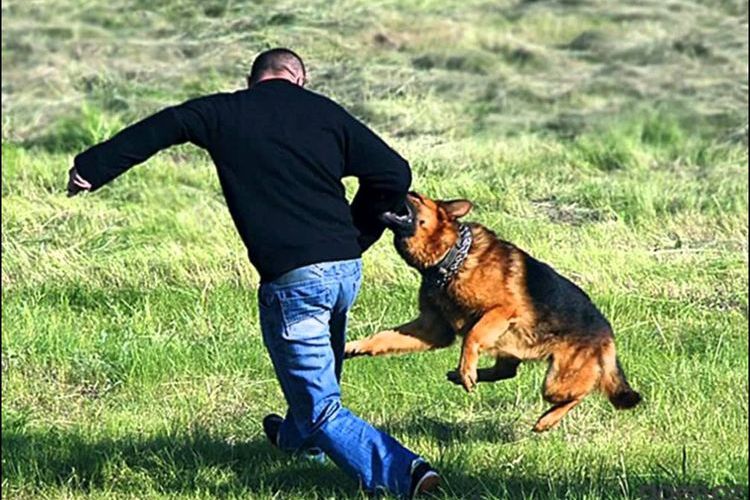
If the dog is not provoked, it may simply lose interest in the person and leave.
Methods of self-defense
If the dog does attack, you need to respond quickly and calmly:
Protect vital organs: throat, face, and chest. The main thing is to prevent the dog from biting your neck (this is especially true for fighting breeds). To do this, you can pull your head into your shoulders, press your chin to your chest, or protect your throat with your hand. It's a good idea to hold a bulky object in your hands: a bag, hat, or backpack—you can use it to shield yourself from the dog by holding it out in front.
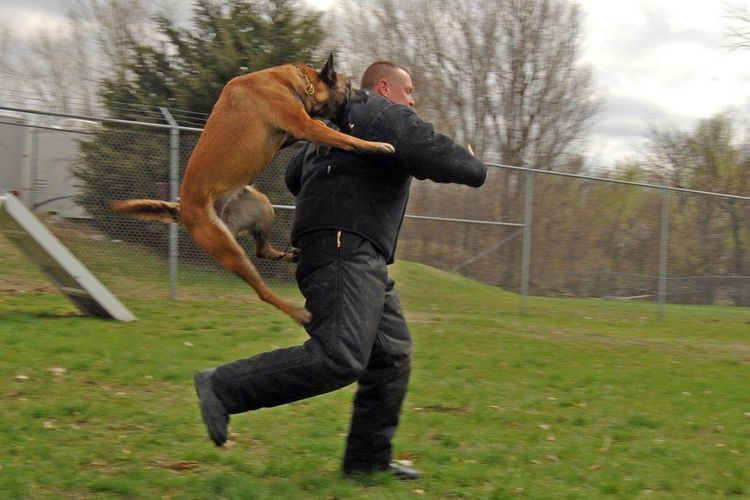
Fight back against the animal. Throw a rock or other heavy object at the attacking dog. You can also throw a handful of sand in its eyes. While the dog is trying to grab your legs, arms, neck, or face, hit it in the most sensitive areas of its body: the nose and throat, and try to deliver a strong, stunning blow to the back of its head.
To fight an aggressive animal, you can use a strong stick, pepper spray, or an ultrasonic repeller (if available).
- Lean on the dog, using your elbows and knees to suppress it with your weight. Although a dog can give you a serious bite, it doesn't know how to fight. Try to bring the animal to the ground and choke it or apply strong pressure to its ribs.
- Try to stay on your feet—falling will leave you vulnerable. If this does happen, curl up, tuck your neck, and continue to swat the dog away, aiming for its sensitive nose. Try grabbing the animal by the ears and pulling it down, then begin strangling it.
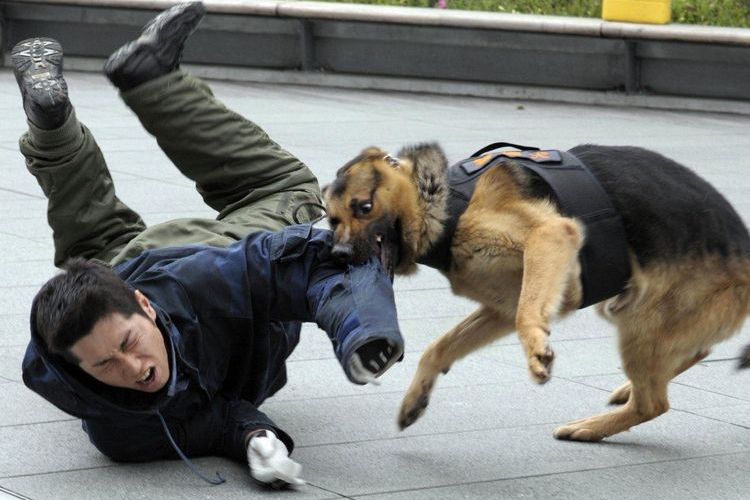
Shout. You can call for help, scare the dog away with your voice, threaten it, or give commands—the louder the better. Someone else might hear you. The presence of a new person can confuse the dog. Most importantly, avoid yelping—such sounds will only further enrage the animal.
Advice from dog handlers
According to experts, if a dog attacks, you should behave as follows:
- Stand facing the dog, put one foot forward, and assume a fighting stance. When the dog charges, throw out your hand—the dog will lunge at it first, allowing you to kick it in the nose or back of the head.
- Be prepared for the dog to be killed during the fight;
- Please note: a rabid dog often attacks from behind, aiming for the legs. A domestic dog will often bite its victim's arms.
- Try with all your might to stay on your feet – it will be much more difficult to fight off the dog in a lying position.
In the case of a rabid dog, try to get someone to help you as quickly as possible and do not allow the dog to bite your neck or face.
What to do if attacked by a pack of dogs
A pack of dogs is a much more dangerous situation than an encounter with a single aggressive dog. Typically, a pack of dogs surrounds its prey, coming from behind. Therefore, the first step is to escape this encirclement. Break the circle and try to get as far away as possible. To scare off attacking dogs, shout and throw rocks, bottles, and other heavy objects.
Important! Don't run from a pack of dogs. Only do this if there's shelter nearby—a building or tree—and you're confident you'll reach a safe spot in time.
If you have pepper spray with you, spray it, but make sure its contents do not reach you.
In a pack, all dogs follow the leader, so if a fight is inevitable, it's best to fight him first. Let the dogs know you can fight back and that it's best not to mess with you. If you force the leader to retreat, the others will follow.
What to do after an attack
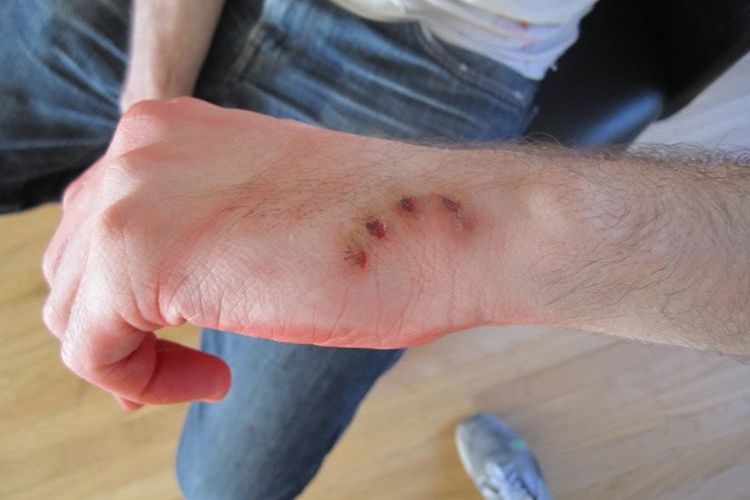
Treat the bites. Even the smallest wounds received in a fight with a dog should be treated as soon as possible as follows:
- Stop the bleeding with a gauze or cloth bandage;
- Wash the affected body part with warm water and soap;
- Lubricate the edges of the wounds with brilliant green or iodine;
- Bandage the wounds and cover minor scratches and bites with a plaster;
- Inspect the bites for signs of infection or infection.
Visit the emergency room. This should be done as soon as possible, preferably immediately after the bite, to prevent rabies. There, the bite marks will be recorded, a course of rabies injections will be prescribed, and the necessary certificates will be issued.
Contact the police.A local police officer should respond to your call. Write a statement requesting that the dog's owner be held accountable and hand it to the officer. When the officer draws up a report of the incident, they should leave a copy for you.
Next, you need to try to find the dog's owner. If you know the owner, arrange for them to bring the dog to the veterinarian for a checkup. The vet's prescribed course of injections will depend on the results. If the dog is a stray or the owner is unresponsive, you'll need to administer a full course of six vaccinations—this is free. You can sue the dog's owner, if there is one, or try to reach an amicable settlement.
A dog attack is always a very unpleasant and potentially traumatic situation. To avoid it, avoid contact with unfamiliar dogs, and never tease or provoke them. If possible, carry appropriate self-defense equipment.
Read also:


Add a comment