
What to do if the kitten doesn’t eat anything?
Sometimes a small kitten won't eat. What should the owner do in this case? In some cases, the cause is a stressful situation. For example, the kitten has just been weaned from its mother. Or it may have moved to a new home. For many animals, this is a huge shock when the familiar environment changes. But sometimes the cause is worms, inflammation, or infection.
Reasons why a kitten won't eat food
Let's figure out why the kitten isn't eating anything. What's causing the little one to starve?
Stress
As proud as cats are, they are very sensitive. It might seem like a move or a change of scenery is nothing special. But such small things can have a significant impact on a cat's psychological state. It takes a couple of days for the cat to adapt to the new environment. If possible, eliminate all possible sources of stress and provide the kitten with peace. Keep fresh water and some food within its sight, but away from people. The kitten may need a quiet environment and privacy.
Too young
Some people buy kittens that are too small, almost newborn. Unscrupulous breeders try to quickly "unload" the kittens so the mother can go into heat sooner and have more kittens. As a result, the kittens don't yet know how to feed themselves. This leads to starvation.
The baby would love to eat a hearty meal, but he can't. He doesn't know how. To keep him from starving, you'll need to buy a special cat milk replacer (it's expensive, but ideal for kittens) and a bottle. Cow's or goat's milk aren't suitable because a kitten's intestines can't digest such fatty milk. milk.
The surrounding environment
Cats are very clean creatures (with rare exceptions), so they dislike the mere fact that their feeding area looks untidy or dirty. They'll endure it until the last minute, but won't touch even their favorite food if the bowl isn't cleaned properly or the area around it is littered.
A strong odor from food or a bowl
Some bowls made of polymers, especially during the first few days of use, have a strong, unpleasant odor. Cats have a keen sense of smell. Such a strong, chemical smell will put your pet off eating the food. Furthermore, the food may smell like plastic and have an unpleasant aftertaste. Even if the bowl (in your opinion) no longer smells, the detergents you use to clean the cat's bowl will bowls, may have a pungent odor. Remember that they also have a fairly diverse chemical composition. It's still best to avoid using chemicals when washing your pet's food bowls. If you want to kill any germs, simply rinse the bowl with boiling water (if the manufacturer and material allow it).
Helminths
Some types of parasites, on the contrary, awaken a ravenous appetite in kittens. However, in most cases, the tiny body is unable to fight off the helminths. All the immune system's energy is devoted solely to fighting them, leaving no energy left for food consumption. Modern veterinary medications can be given to tiny kittens. Some anthelmintics can be administered only once, but it is generally recommended to repeat the treatment after 10-14 days.
This is because during this time, the parasites that weren't affected by the first dose reach a different stage of development. At this stage, they become sensitive to the active ingredient of the anthelmintic. Be sure to perform two deworming treatments, even if you haven't found any worms in your kitten's feces or vomit. It's possible that the larval stage is still present, which is covered by a thick shell that prevents the medication from killing the worm.
Infectious diseases
A small kitten isn't eating because it's suffering from a raging infection. Just think back to when you had the flu. Do you eat a lot? A baby, especially one weaned too early or recently separated from its mother, can be susceptible to a multitude of life-threatening illnesses. Any infection can easily infect its fragile body. Its immune system isn't fully developed yet. That's why it's so important to administer age-appropriate preventative vaccinations on time. This can protect your pet from a host of problems.
What to do?
If you've followed all the kitten feeding guidelines and know the reasons why your kitten isn't eating, the first step is to address the issue. No reason, no problem. If you've ruled out stress, and the bowl and feeding area are perfectly clean and odor-free, then rush to the vet. Better safe than sorry. Have the vet examine the kitten if it's unwilling to eat. If the examination reveals any underlying medical condition, the vet will prescribe the necessary treatment. Below, we've prepared some helpful tips on what to do if your kitten isn't eating.
Self-medication will not produce results and will only worsen your pet's condition. Diagnosing your kitten over the internet is not the best way to resolve the issue of starvation. Even with treatment, their appetite may not fully recover.
A bottle with a nipple, a pipette, or a cat nurse
A bottle with a nipple, a dropper, or a nurse cat are options for very tiny kittens. If the cat is very small, buy a bottle with a small nipple to fit in the kitten's mouth and some cat milk replacer. Alternatively, find a nurse cat. Perhaps someone you know recently had a kitten, and you could try introducing your hungry little one to her. Just let them sniff each other first. Some adult cats are defensive about strange kittens.
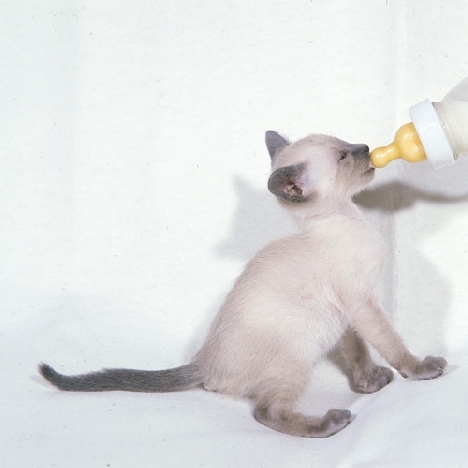
Don't try to force feed! This can be frightening for a kitten who isn't eating anything. Yes, sometimes it's the only way to keep a small pet from starving to death. But this should be a last resort.
Place soft wet food in the bowl.
Just a little. Otherwise, it might spoil. Food should be fresh, after all. If you want to offer natural food, you can try adding a little boiled fish or lean meat.
When a kitten doesn't eat, it should at least drink.
Therefore, provide a bowl of clean (filtered or boiled) water. If your baby can't sip on his own, you'll need to give him at least small amounts of water using either a dropper or a pacifier.
No fatty foods
Many kittens feed their kitten broth. However, this isn't the best option, as their meowing, furry little creatures aren't yet ready to digest fatty foods. This is especially true if their fast has lasted several days. A weakened body requires very light food. Yes, if a kitten hasn't eaten food for just one day, and is over 2-3 months old, you can try giving them broth through a bottle. Just don't add salt or any seasonings. Avoid pork or lamb as meat, as they're too fatty.
Try feeding with your finger
Alternatively, try giving food from your finger. Place a small amount of water, milk, low-fat sour cream, or broth on your finger and hold it to the kitten's nose. If they stubbornly turn away, don't force them. Try again later (in half an hour to an hour). If a kitten that isn't eating from a bowl suddenly licks the food off your finger, add more drops. Gradually move your finger closer to the bowl; perhaps the kitten will taste the food from your hand and try eating from the bowl on its own. It's preferable to use soft foods so they don't have to chew for long; simply licking them off the bowl is enough. Canned baby meat is a good option. It's salt-free, the meat is finely ground, and often contains grains.
Contact the breeder
If you got your kitten from a breeder, ask them what to do if the kitten isn't eating, whether the kitten has been vaccinated, and what they fed the little one before the sale. You may be offering it food it's not used to. Some purebred kittens are very picky about food. It could be the wrong brand, the wrong flavor, or the wrong form. Therefore, contact the breeder and inquire about feeding the kitten of the breed you bought from them.
Don't delay a visit to the vet, even if your kitten has started eating. Let them rule out any serious illnesses.
Any questions? You can ask our website's staff veterinarian in the comments below, who will answer them as quickly as possible.
Read also:


94 comments
Xenia
Hello! My kitten is one month old and has stopped drinking from his mother. He has lost a lot of weight, is lethargic, and has started defecating on his own. He sometimes walks unsteadily and cries loudly. Just three days ago, he was fine. What should I do in situations like this?
This is my first time having kittens, and I have no idea what to do...
Danzan
Hello, our kitten is old enough to eat. He recently broke his paw. He used to eat very well, but now he refuses to eat at all. We don’t know how to feed him. We’ve already been to the vet, they told him to take pills, and we’ll make an appointment again in 10 days. Now we don’t know how to feed him. If we force him to eat, he still won’t eat. He’s become very ill. Can I ask how to make him eat something?
Daria is a veterinarian
Hello! Has your kitten been prescribed pain medication? It's possible he's in pain, which is why he's not eating. Try soft food (there are special lines for animals recovering from surgery or severely malnourished). Syringe feed. Your kitten needs to eat to ensure proper healing and recovery.
Evgeniya
Hello, my 1.5-month-old cat refuses to eat and sleeps all day. What should I do?
Daria is a veterinarian
Hello! Standard questions: Vaccinations? Deworming? Feeding? Was the mother vaccinated? Were there other animals in the house? Is the pet free-roaming or indoor-only? How long ago did this start? How long has it been going on? Have you given any medications? Is there a fever? Are there any other symptoms besides refusal to eat? Has the diet been changed recently? It's very important to provide as much information as possible about the pet's medical history and illness, so that we can at least suspect something and consider several differential diagnoses. Refusal to eat can be temporary (simply a bad mood, a dislike of the food, stress), or a sign of illness.
Evgeny
We also bought a 2-month-old kitten. He ate boiled chicken for two days, as the owners said, and on the third day he started having nausea and loose stools. We took him to the vet and were told he shouldn't have any of the food they were feeding him. We bought premium liquid and solid food on the vet's advice. He still won't eat anything. We feed him smecta, ispumisan, and chamomile. He's lost 25 grams in a day. He only drinks our cat's milk through his breast. We don't know what to do. But he runs and jumps and plays, and has no fever.
Daria is a veterinarian
Hello! Remove the smecta, otherwise the kitten will become constipated and stop eating altogether. Until normal bowel movements occur, the intestines won't function, meaning there will be no appetite. Perhaps the kitten is still stressed, which is why he's eating less. What kind of food did they recommend? When we dropped off a kitten at work, I also had more problems feeding him. I was racking my brain because he wouldn't eat commercial food. He only devoured fermented milk products and pates with gusto. At first, I had to adjust to his diet. After a couple of weeks, he started "stealing" food from the adult cat. He still didn't like the "baby" food.
Alina
Hello. We bought a kitten. He's two months old. He's been with us for a week and a half now. He doesn't eat anything, only drinks milk and a little water.
Very playful, uses a litter box.
What to do?
We haven't dewormed him yet. We're planning to take him to the vet tomorrow, and we're already worried.
Daria is a veterinarian
Hello! Did the previous owners tell you what to feed the kitten? Perhaps they were accustomed to a different food? Milk is not a complete diet! Moreover, with age, digestion declines in cats, causing digestive upset (loose stools). A 1-month-old kitten should already be eating solid food and learning to bite and chew, not just lap it up. Otherwise, problems will arise. If they refuse to chew and gnaw, you could try meat pates, which are specially formulated for kittens. Add variety and balance to their diet. Otherwise, bone and muscle problems will develop. This is the most active growth phase.
Irina
Hello
Please tell me what to do. My kitten is about 1.5 months old. His mother abandoned him two or three weeks ago. He's not eating well, drinking much, and has lost a lot of weight and is lethargic. He meows often and sleeps a lot.
What to do?
Daria is a veterinarian
Hello! Have you treated the kitten for parasites? What are you feeding him? How are his bowel movements? Kittens generally sleep a lot at one month of age, and around two they start running around the house. Does he go outside? He's too young, and there's a high risk of catching an infection (viral infection, parasites). Right now, I'm specifically interested in the kitten's diet: what does it consist of, how often, does he eat on his own, or did you feed him for the last two weeks? Do you massage his tummy after he eats to promote intestinal motility and encourage bowel and bladder movement?
Irina
Good afternoon.
We adopted a kitten, apparently 1.5-2 months old. Active, goes to the toilet.
He hasn't eaten for 2 days since they brought him.
Tell me what this could be.
Daria is a veterinarian
Hello! The kitten may be refusing food due to stress from moving. It's also possible that the food you're offering is unfamiliar to the kitten (or that it doesn't like it). If you got it from a breeder or someone else, ask what they fed it (if dry food, what brand it was, and what flavor it tasted like). If you found it on the street, you'll probably have to choose the food yourself. Try placing the food and water in a corner, out of sight (it might be afraid to eat in front of you). How does it drink water? How does it go to the bathroom?
Irina
Hello. My kitten is 8 months old. We were feeding him dry food. He was very playful, affectionate, and cheerful. Suddenly, he started vomiting something brown. He stopped eating and is constantly sleeping. What should I do and how can I treat him? Can you help?
Daria is a veterinarian
Hello! What kind of food? What brand? How often do you feed per day and how much? Deworming? Vaccinations? Access to the outdoors or contact with other animals? Is your pet's body temperature normal, high, or low? How are their stools? How often does they vomit? Have you given them any medications? Vitamins, supplements? Is there access to indoor plants? There's too little information even for a few possible diagnoses.
Natalia
Hello. We adopted a female cat, about two months old. She ate little for the first two days. We thought she was stressed. In the evening, she started eating well, and at night, she ate everything from her bowl. The next morning, she started burping heavily, with white foam. We diluted some baby smecta and injected a small amount with a syringe, then repeated it two hours later. She stopped burping after the first dose of smecta. However, she refused to eat. She sleeps a lot, but when she wakes up, she's playful and not sick. We tried everything we could give her, but she won't eat. She ate a little boiled meat over the past two days, and that's it.
Daria is a veterinarian
Hello! Why did you give smecta for vomiting? The kitten was most likely vomiting due to hunger. Now I suspect the kitten has no bowel movements (constipation) because smecta will make it sticky. Plus, meat (pure protein) without vegetables will also lead to hardening of the stool. This could be the reason for the poor appetite, as the intestines are "stagnate" (not moving normally). You should ask the previous owners what they fed the kitten. Perhaps the pet is accustomed to dry or wet commercial food of a certain brand? Did you deworm the kitten when you first got it? How is it drinking water? What kind of meat do you feed it? You'll need to add cereals and vegetables to the diet if you decide to feed it natural food. Regarding the volume of food, remember that a kitten is small, and so is its stomach, so protein is very filling.
Valeria
Hello.. Four days ago, a kitten was dropped off at our door. He looked about a month and a half old. On the first day, he played and drank milk. But on the second day, he started having diarrhea. And now on the fourth day, he has diarrhea, no vomiting, only drinks water, but very little. And he doesn’t eat anything at all. Every day he gets weaker and more and more lethargic.
Dilafruz
Hello! I got a new kitten. We've never had cats before. I don't know how to care for them. At first, she ate everything. I gave her soft bread and boiled eggs. She ate it with pleasure. I also diluted cow's milk with water, drank a little, but still doesn't drink milk very much. Yesterday evening and this morning she didn't eat anything. I don't know what to do. She's thin, but very active.
Daria is a veterinarian
Hello! Well, if you've never had cats, you definitely should have read and consulted about how and what to feed them. Bread pulp is a no-no. It's not pet food; it's simply not digestible, and there's a high risk of the pulp clumping in the intestines. Cooked meat without spices, cereals (not all, many are also contraindicated for pets), boiled eggs (rarely, once or twice a week at most, mixed into porridge), and fermented milk products (fresh or even store-bought milk is not recommended, as it's much less digestible than fermented milk). There are special foods: both dry and wet (balanced). Only buy prepared foods of the super-premium or holistic class. You can try meat-based baby food, as it's salt- and spice-free.
Elena
Hello, we adopted a British Shorthair kitten today. He's 8 weeks old. We brought him here 7 hours ago, and he hasn't eaten or drunk anything yet. We understand he's stressed, but he's hungry, so we're really worried! How long can a kitten refuse food and water? We'll take him to the vet for vaccinations, but should we be worried and request an urgent appointment?
Daria is a veterinarian
Hello! Your kitten should definitely drink water within 24 hours, but may not approach food for several days. The easiest way is to place the food bowl and feeder out of sight (in a secluded area), avoid disturbing the kitten, and let it sniff around the house, getting to know its surroundings and everyone else. Once it finds a secluded spot, it will calm down and go eat and drink at night when no one will see or disturb it. An urgent visit is only necessary if there's a fever, vomiting, diarrhea, or it refuses to drink for more than 2 days. Then, IVs will be necessary. But I think the kitten will quickly adjust to its new surroundings.
Daniel
What if the kitten doesn't eat?
And the fur is disheveled
And Kobuto's eyes are watery and he's lost a lot of weight.
Daria is a veterinarian
Hello! Has the kitten been dewormed? What kind of food is he on? Has he received age-appropriate vaccinations? I would primarily look for problems with parasites and his diet. Deworm him and add vitamins to his diet (don't give him vitamins without deworming, otherwise you'll feed the parasites, not the kitten).
Natalia
Hello! We have a serious problem: a two-month-old kitten, his mother is nearby, and he's not digesting food at all. He's trying really hard, eating well, but he vomits everything right away, even water. He's become extremely weak and thin. I wanted to give him an antiparasitic solution, but I'm afraid he'll vomit it up too. What should I do?
Daria is a veterinarian
Hello! We need to rule out inflammatory processes in the stomach or other health issues. What exactly are you feeding? Perhaps the food is too fatty and not suitable for the baby? How long ago did this start? Did this happen when the mother was "eating" or was everything normal? If the animal is emaciated, it will need IVs. Do not force-feed it, as this will cause constant vomiting. After an examination, antiemetics and medications to relieve pain in the inflamed stomach lining and reduce acidity may be prescribed.
Anastasia
Hello! Yesterday, my kitten seemed to be dying, but we managed to revive him. Yesterday he lay motionless, couldn't swallow, and was barely breathing. I thought he was going to die, but I saved him by giving him vodka and egg yolk, and then potassium permanganate. He was very weak, even though he was the most active and large kitten, and he ate little, but after being rescued, he started sucking a little from a syringe. This morning, it seems like the same thing happened again: he's very weak, barely meowing, barely moving, and not eating.
Daria is a veterinarian
Hello! What you used for "treatment" will do more harm than good to the animal! Vodka will burn the mucous membranes (especially if they're inflamed), and potassium permanganate, if dissolved incorrectly, can also cause a burn. Then the animal won't be able to eat or drink anything on its own, and it will be painful. The only options are IVs or, in the worst case, subcutaneous saline injections to urgently support the animal, and then investigate the cause of the illness. Antibiotic therapy might be necessary.
Elena
Hello! We adopted a kitten two days ago, a simple, mixed-breed, two-month-old. He played both days, ate only in the evening, refused food in the morning and afternoon, went to the toilet only twice to pee, still hasn't pooped. Today he's been sleeping all day, not playing, not eating, we're worried about him.
Daria is a veterinarian
Hello! Your kitten may be stressed, causing problems with bowel movements. Furthermore, they may not have been eating or drinking enough, causing constipation. It's also important to deworm them, as they can also cause poor bowel movements and loss of appetite. Is your kitten feeling well? Is their belly soft and comfortable? What are you feeding them? Choose high-quality wet and soft foods. If you're feeding them raw food, avoid too much meat for now, as protein draws out moisture, causing their stool to become dry.
Olga
I have a regular alley cat, but she's smart and clean. She gave birth to a single kitten. He's now 2.5 months old, very active, uses the litter box, and all he's fed is milk, a little baby food (of only one brand), and beef and turkey. Anything else I don't suggest: dry kitten food vs. wet food, he keeps trying to bury everything. He's wormed. What should I do?
Daria is a veterinarian
Hello! So isolate him from the cat! Review the cat's diet too. You should probably feed her a galactogogue. Her milk is coming in, and she's feeding it to prevent her glands from swelling and hurting. Take her to the vet. They'll prescribe Galostop or similar medications and bandage her. It's high time to feed the kitten like an adult: either high-quality dry commercial food or natural solid food (cereals, meat, vegetables, fish, etc.). What purees? A kitten this age can already chew food on its own. Don't indulge it. He'll be capricious for a day, then a second, then a third, and then he'll be fine—he'll start eating properly.
Katarina
Hello, we got a kitten. His age is unknown because he's been living in a garage. He completely refuses food and water, his nose is dry and hot, he sleeps a lot, and he avoids the light. What should we do? He's only been with us for three days, and he hasn't eaten or gone to the bathroom once.
Daria is a veterinarian
Hello! The kitten needs to be seen by a vet. An IV should be given: isotonic solutions, glucose, and nutrient solutions. Antibiotics and symptomatic medications are likely needed. You can give a subcutaneous injection of Ringer's syndrome and at least 5% glucose into the scruff of the neck to provide fluids. For appetite, try phosphosal, catosal, butostim, or vitosal—any choice for 5 days (at least 3). Tonocardium is good for cardiac function (and is also suitable for severe shock). SuperAmino/SuperAmino C/Aminoplex—via IV or subcutaneous injection—is excellent for those who are "starving." To stimulate the intestines and bladder, try prozerin or carbachol (but these medications are only available by prescription and are strictly weight-based!). Therefore, a vet's appointment is essential.
Xenia
Hello, we bought a Scottish Fold kitten. He ate poorly for the first few days, but drank water. It's been 9 days since we bought him. We bought two types of dry food at once, based on the advice of a store consultant. The kitten refused to eat them the first day. We bought canned food. The first time, he ate very well. The second time (we gave him fresh, from a new package), he didn't eat at all, eating a little of the dry food. We alternated between the two for several days, and now he's not eating at all. Yesterday, we tried feeding him canned fish food for kittens, but today he reacted with diarrhea and a complete refusal to eat. He sleeps throughout the day, has watery eyes, a runny nose, and is weak. He's losing a lot of weight. We just fed him with a pipette. He ate. Two hours later, he went to the bathroom. He has loose stools and is sleeping. We're very worried about him. Please help.
Daria is a veterinarian
Hello! How old is the animal? Was it from a breeder or private seller? Did the animal have any paperwork (specifically, a passport with vaccinations and deworming)? What kind of food was it fed (manufacturer)? What did the owner feed it before it was given to you? What is the animal's body temperature? In general, infectious diseases should be ruled out first, then parasites, and lastly, consider a simple digestive upset due to stress and a sudden change in its usual food. Taking any action without at least a tentative diagnosis is too risky. Small kittens (especially unvaccinated ones) are very susceptible to infection.
Alena
Hello! I have two 4-day-old kittens. One drinks breast milk, the other can't find the nipple and won't eat from a pipette. We've been feeding them goat milk and baby formula (baby formula). What should I do? I can't afford special formula.
Daria is a veterinarian
Hello! Have you tried putting a bottle to the kitten and placing it in its mouth? Choose the mammary glands between the hind legs; these are often the most engorged with milk, making it easier to extract colostrum (and right now, colostrum is essential, as it contains ready-made antibodies from the mother, which help develop colostral immunity). It's possible the kitten doesn't have a sucking reflex, in which case feeding will be extremely difficult. Inspect the mouth for a cleft palate (commonly known as a cleft palate).
Kartashova
Darya, hello, yesterday the kitten was happy and playful, but in the evening he stopped eating and drinking. He ate homemade food and liquid kitten food. Today he lies all day, doesn’t eat, doesn’t even drink water, and has trouble standing on his front paw. What should I do?
Daria is a veterinarian
Hello! What is the kitten's age? Vaccinations? What is the diet? Deworming? Other treatments? Has the kitten been allowed outside or in contact with other animals? Has the kitten's rectal temperature been taken? What happened after this? Did it eat something unusual or new? Did it start after a walk outside or a week or two after contact with another animal or a person who has sick animals? Is vomiting? Nausea (is frequent licking typical for the kitten)? Any changes in stool or urine output? There is insufficient medical history to narrow the list of possible causes down to at least five differential diagnoses.
Pairav
Hello
My cat doesn't eat anything, at first she started vomiting.
I haven't eaten anything for 3-4 days now and my eyes are swollen.
This incident happened when a stray cat was brought in from the street.
Sleep a lot
What to do?
Daria is a veterinarian
Hello! Why did you wait so long? Your pet hasn't eaten for over three days; it was in contact with a stray animal. I suspect your pet hasn't been vaccinated against viral diseases. This is a risk. It's not even necessary for the animal to have direct contact with another pet; you could carry the pathogen on your shoes or clothing. Get to the vet immediately. Rule out an infectious cause. Antibiotics, antiviral medications, and then symptomatic treatment (eye drops may be needed).
Anna
Hello, we found a kitten three days ago. He's about three months old. At first, he was eating, then he refused to eat, attacked the water, and started having diarrhea. Then he stopped eating altogether. I gave him a deworming pill, and the diarrhea stopped, but he won't eat. He refuses food and water. We don't have a veterinary clinic, so there's no one to take him to.
Daria is a veterinarian
Hello! We need to find someone to examine him. The kitten already needs IVs, otherwise he will die of dehydration. At the very least, saline solutions (Ringer-Locke, sodium chloride) and glucose should be injected subcutaneously into the withers. Give him rehydron through a syringe without a needle. Regarding food, what have you tried? Maybe he's never eaten that kind of food before or doesn't like it. Give Fortiflora with food when he starts eating to restore the microflora. Give him an injection of Katozal/Phosphosal to stimulate appetite and blood production. In general, infectious diseases should be ruled out, as the kitten is a stray (they often suffer from viral infections and die from them in 7 out of 10 cases). Antivirals are needed (at least interferon injections for 5 days in a row), antibiotics are needed, probiotics, IVs, and then we'll look at the symptoms—antidiarrheals, antiemetics, depending on the kitten's specific needs. But be sure to give IV drips and water to prevent dehydration!
Natalia
Hello, I have a 3-month-old cat. I adopted a healthy one. She recently got so sick that she completely refused food. She hasn’t eaten anything for two days now, and I don’t know what to do...
Daria is a veterinarian
Hello! Has the kitten been vaccinated? Have you dewormed it? What other symptoms are there besides "refusing to eat"? What are you feeding it? If you haven't dewormed it, start there. Be sure to give it water. Ideally, take it to the vet to rule out infectious diseases (in which case it should be given a serum test in a timely manner; intravenous fluids may be required to support vital functions). If it's simply a loss of appetite, you can give it an injection of Catosal, Phosphosal, or other similar medications to stimulate appetite and improve hematopoiesis.
Anastasia
Hello, I have a small problem. My 5-month-old kitten isn't eating well. When he was younger, he had a ravenous appetite. One day, he was out for a walk and came back vomiting (we live outside in the Moscow region, so he has access to the outdoors). That's when it all started. He vomits undigested food, and sometimes throws up mucus. Now he eats little. He won't eat dry food, but he enjoys meat. My other cat (2 years old) eats the same thing and drinks water. He has no fever, and I deworm him every three months. He feels fine. He plays and walks, but his eyes are burning, and his nose is wet. What should I do? What is causing this? Is this normal? We've been to the vets, but they can't figure it out. Please help.
Daria is a veterinarian
Hello! Gastritis and other gastrointestinal inflammations need to be ruled out. You don't know what he eats when he's out and about (you have to keep pets indoors if you don't want to have to treat him or mourn him later). When was the last time you dewormed him, and what was the last time? How is his shedding progressing? What exactly are you feeding him? What tests did your veterinarians perform that they couldn't diagnose? What medications did they recommend, and have you given him any yet?
Anastasia
I dewormed him for the last time a week ago. I used a product called "Celandine." There was no shedding. I feed him PURINA ONE dry food for kittens aged 1 to 12 months. What tests have you done? None, I'd say. They're just trying to extort money. I haven't given him any medications. By the way, it looks like the kitten is recovering. This morning I woke up to the crunching of food in the kitchen. I looked at him and he was eating, and with such an appetite!
Daria is a veterinarian
Hello! Did the vomiting happen to start a day or two after the deworming? Did you calculate the dosage correctly? That's why you need to ask questions. For some reason, owners don't consider dewormers, dietary supplements, and vitamins added to food to be medications. It's very important to tell them everything about their pet. Keep an eye on your pet for now. Feed them small portions to prevent them from overeating and stopping their bowel movements in their excitement, which could trigger vomiting again.
Anastasia
The kitten recovered. We didn't do anything. Please give me any advice, thanks in advance.
Daria is a veterinarian
Hello! Try deworming again (10-14 days have probably passed by now), but use a more well-known and high-quality product (I would recommend Milbemax for kittens or Drontal). Feed the kitten Gastrointestinalis line of food for 2-3 months now, and add the probiotic Fortiflora to improve intestinal function. Avoid natural food (if commercial food is used, then only that). Give vitamins and supplements. To stimulate hematopoiesis (and appetite, too), you can give injections of Catosal, Phosphosal, and other vitamin B12-containing medications for a couple of days. And keep an eye on them. If anything raises concerns, seek medical help. In the meantime, help the kitten restore gastrointestinal function.
Pashka.Evstigneev
Hello! We adopted a 1.5-month-old kitten who won't eat anything. We tried dry food, Nistogen baby formula, and store-bought cow's milk. He runs away and won't drink or eat anything. What should we do? He's been in his new environment for a couple of days.
Daria is a veterinarian
Hello! Where did you get your kitten from? If you got it from a breeder or someone else, ask the previous owner what they fed it. If you got it from a street or shelter, you'll have to find a way out yourself. A 1.5-month-old kitten can already feed itself and can do without milk (or baby food). It's quite possible to eat soft canned food (like baby food or special soft pouches or canned food for kittens). It's still too early to introduce dry food. Try soft cottage cheese (without additives), kefir, or sour cream. Remember that stress can take its toll. Place the food out of your sight; the kitten may be afraid to eat in front of you and needs a quiet place.
Karina
Hello!
I have a four-month-old foundling, a female kitten. I found her when she was about ten days old, and she's been with me ever since. She was dewormed and treated for worms when she was six weeks old. She's also been seen by a veterinarian.
She hasn't eaten for three days. She drinks water. The vet examined her, and she has no fever. He said it might be stomach acidity and prescribed phosphalugel half an hour before meals. But she still won't eat. Yesterday she literally ate a couple of grams of meat with rice and vomited it all up a few hours later. What could it be? What should I do? What tests should I get?
Daria is a veterinarian
Hello! Now do the math: the kitten is 4 months old, and we dewormed it at 1.5 months. We can deworm it again (every 3 months). This will rule out a reaction to parasites.
If there were stomach issues, the kitten would have vomited immediately after eating or within half an hour (usually from undigested food). A biochemical and complete blood count would be a good start. If there are any abnormalities (check amylase and liver enzymes), then an ultrasound would be in order. For now, feed light foods (meat can be a bit fatty, especially after several days of fasting). Remember: after going without food for a long time and then eating something heavy (like meat), your stomach feels heavy and you might feel nauseous. Try cottage cheese, plain yogurt, porridge, or low-fat broth without meat.
Marie
Hello. I bought a small kitten at the market. They only told me to deworm him, so I dissolved a small amount of piperazine and injected it with a syringe. He vomited that evening and was foaming in the morning.
On Sunday evening, the kitten ate wet food from a bag, and he ate a little on Monday. We also found fleas, gave him drops, and he's still itchy. He's about 1.5 months old. He hasn't eaten anything since Tuesday, only drinking a little. Yesterday he had a bowel movement in the evening, a variety of stools, one formed and a little diarrhea (more accurately, a little cloudy). Today, Thursday, he peed in the morning, but isn't eating, so we gave him a few grams of chicken broth. He sleeps a lot, but plays, chases a mouse… He hasn't vomited anymore. His tummy is sunken, completely empty.
Daria is a veterinarian
Hello! Why did you give him piperazine? Couldn't you buy a special kitten medication at a veterinary pharmacy? It's best to take kittens like these, bought from the market, to the vet immediately. They often already have viral infections (they're kept in close quarters, and their mothers aren't vaccinated). What did you use to get rid of fleas? Usually, if the drops are effective, the fleas disappear within a couple of days! Give the kitten Rehydron and Vetom 1.1 via syringe, small amounts, but often. You can even use Enterosgel or Fortiflora. But take them to the vet for an appointment; they may need IVs or even serums (to rule out infectious diseases).
Lida
Hello! My two kittens are vomiting, and I don't know why I'm so worried. They're two months old, and one is a little older. I've washed their bowls and cleaned their food area, but they won't eat anything! They've lost weight! Help!!!
Dasha is a veterinarian
Hello! Have you dewormed your pet according to their age? Have they had any vaccinations? What are they feeding them? Can they go outside? What is their body temperature? Has diarrhea developed? How often does they vomit per day? What does they vomit: bile, foam, undigested food, mucus, or something else? Before or after meals? Or is it independent of meals? Are they drinking? How long has the vomiting been going on, and what have they given them so far?
Irina
I have the same problem. 4 months old. She vomits undigested food almost immediately after eating. She doesn't eat anything. In the morning there's white foam. She only drinks. She doesn't even want what she ate yesterday today. We used flea drops, but I think it's them. Maybe she got poisoned?
Daria is a veterinarian
Hello! What treatment did you use and how? How many days ago was it given and how long has the vomiting been going on? How long after the flea treatment did the vomiting start? Was there any depression, lethargy, or excessive salivation? What are you feeding him?
Svetlana
Hello, my 4-month-old kitten hasn't been eating well for a few days now. We haven't changed the food. He wanders around the kitchen begging, I give him a little food, and then he leaves. He's playful, but his belly is almost empty after he eats. Could you tell me what to do?
Dasha is a veterinarian
Hello! What's the diet? What exactly are you feeding? Have you dewormed your kitten according to her age? Is her stool normal? Maybe your kitten isn't a glutton and eats only a little. There's no belly—meaning it doesn't swell up like a balloon, or is it skinny like a bicycle? If you mean it doesn't swell up after eating, that's not what it should be (this is typical in tiny kittens, but it disappears as they get older). If it becomes noticeably rounder, it means the kitten is overeating.
Artemy
Good afternoon. I have a little kitten, about 3 weeks old. We found him in our entryway. He's been with us for a couple of weeks now. He was very restless and vocal. As soon as he wakes up, he starts screaming at the top of his lungs and runs off somewhere, apparently looking for a boob. We fed him regular milk from the store with a syringe, and he'd fall asleep and sleep for a long time, then we fed him again. The problem is, in the last 3 days, he stopped eating. He's not growing and he's weak. Now he sleeps all the time... and if you wake him up, he won't eat anything, he can't stand up, and he no longer screams, but gurgles or wheezes, as if he's hoarse. But you can tell he's in pain and not feeling well. Today we took him to the vet, where they gave him a vitamin injection and said he had a cold and needed to keep him warm. But I think something's wrong with his tummy; it feels like he's in pain there. And as soon as he wakes up, he starts crying. And he's all wet and cold. What should I do? How can I save her? Should I take her to a different (normal) vet? And what should I feed her once she recovers? (I've been eating 7% milk with eggs and sugar) Or should I give her some water to dehydrate her?
Dasha is a veterinarian
Hello! 7% milk? Where did you find that? That's like cream, and it's very fatty. Egg and sugar? Why? Why go to such lengths, forgive the rudeness, when you can buy a special cat milk replacer at the veterinary pharmacy, which is easily digested and will replenish the kitten's body with everything it needs. Maybe he's crying because store-bought milk isn't suitable for feeding a kitten. Start feeding him the cat milk replacer as directed, massage his tummy clockwise, and place a heating pad under the baby (cover it with a blanket first to avoid burning him).
Nastya
Hello, my kitten is 1.5 months old. Yesterday, my mother accidentally crushed him with the front door, saying it wasn't too hard. He started crawling and meowing, and his hindquarters weren't listening. I put him in a box. He lay quietly. I watched him throughout the day and gave him food, but he kept turning away. He hasn't eaten or drunk for two days. I suspect it's something to do with his spine, and I'm very worried. There are no veterinary clinics in our village. He can move around, but mostly he lies down. He's very weak and emaciated. I don't know what to do... He needs to be fed urgently, but I'm afraid he'll only make things worse. I'll try giving him some water with a syringe.
Dasha is a veterinarian
Hello! What's not serious for your mother is a serious injury for a tiny, fragile creature. It could have damaged its spine and internal organs (internal bleeding may have already begun; look at the visible mucous membranes; they'll become very pale). If there are no clinics in the village, find one who can take you to the city. The animal needs an x-ray. Even if you manage to feed it with a syringe, it won't survive long without veterinary care if there's a spinal or internal injury.
Valida
Hello! My month-old kitten isn't eating anything. He's become weak and sleeps a lot. He hasn't eaten anything since yesterday. I took him to the vet, and he said he's healthy. He's not drinking his mother's milk. What should I do?
Dasha is a veterinarian
Hello! Have you introduced solids yet? Have you tried cat milk replacer with a dropper? Did they take the baby's temperature at the clinic? Is it just one kitten or more? If more than one, how are the others doing? Your only option is to force-feed the baby with a dropper/nipple/syringe without a needle. At least give her something to drink (ideally with cat milk replacer, but 5% glucose or water-salt solutions like Vetom 1:1, Regidron, and others will do). Don't let the baby get too weak.
Alexey
Hello, please help. I picked up a kitten from the street. I gave him some bread, he ate it, and drank some milk. I've had him for 4-5 days now, and he hasn't eaten since then. What should I do? He seems to have diarrhea.
Dasha is a veterinarian
Hello! Bread? A kitten? It's not a dog. Diarrhea, you know? It's either there or it isn't! Take the kitten for a checkup. Start an IV immediately to save the little one! Give immunomodulators/stimulants to help the immune system fight the infection. Serums (Globfel, Vitafel) to fight off viral infections faster (kittens often get infectious diseases outside) + antibiotics to prevent secondary pathogenic bacterial infections + probiotics to support the intestinal microflora.
Olga
Hello. We got a three-month-old kitten a week ago. The first few days he ate little, but the second day he didn't eat, only drank water and a little milk. He sleeps a lot. Could this be a disease?
Dasha is a veterinarian
Hello! Is your kitten's temperature normal? Vomiting? Diarrhea? Any discharge from the eyes or nose? Wheezing, sneezing, or coughing? Are there any symptoms? Have you had your kitten dewormed since you got him? What are you feeding him? Maybe he doesn't like the food? Could you please provide more information about the animal and its symptoms?
Natalia
Hello. We picked up two 4-month-old kittens from the street. They refuse food and won't drink water. One has diarrhea, while the other has neither vomiting nor diarrhea. Please advise what to do.
Dasha is a veterinarian
Hello! Take them to the clinic for a checkup to rule out infectious diseases (they were picked up from the street, after all). If no infections are found, then treat for parasites. It's possible they're refusing to eat due to stress, but they need to be examined. Have you taken their temperature? Are the babies emaciated? Force them to drink with a syringe without a needle (maybe special saline solutions that are given for dehydration, or maybe a glucose solution—the sweet taste will appeal to babies). Give them white charcoal, phosphogel, and probiotics/prebiotics. But be sure to attend the appointment.
Love
I really need help. The day before yesterday we found blind kittens, they are very thin and very weak and refuse to eat. What should I do? Help.
Dasha is a veterinarian
Hello! Buy some kitten milk replacer and feed them with a dropper or bottle. If they're blind, they're still suckling. Or are they blind because they're sick? Then take them to the vet. The kittens will need comprehensive treatment. Once they're a little stronger, deworm them. You can try giving them a glucose solution via dropper (it's sweet, so kittens shouldn't refuse it, but it will replenish their energy).
Julia
Hello, I have a 1.5-month-old cat. We adopted her from the street. At first, she ate well, but now she barely eats anything, but asks for water and goes to the bathroom a little at a time. We bought Caniquantel, but I can't figure out the dosage. She weighs about 500g.
Dasha is a veterinarian
Hello! Caniquantel is used for kittens over 3 months old. Therefore, there's no specific dosage. And if you're going to give it to a kitten, buy medications that can be easily dosed based on its small weight. Caniquantel is usually given as one tablet per 10 kilograms of body weight. You can't split it into 20 tablets. You'll definitely get the dosage wrong.
IRINA
He was born on April 30th, today is July 2nd, he was active, he ate chicken meat, he fought with his head, and now he hasn’t eaten food for 4 days. We dewormed the puppy, he was about 2 months old, and the kitten has shed, now he is bored, there is no temperature, what should we do? We live in a remote village, and I, an old woman, broke my leg, please help.
Dasha is a veterinarian
Why feed a month-old kitten chicken heads? You're clogging its intestines with junk. It's a growing organism, and it needs proper nutrition: good, boiled meat and fish, grains, vegetables, fermented milk products (kefir, sour cream, cottage cheese), and a boiled egg once a week. Since you live in a remote village, you won't be able to get any medications. The most you can give is charcoal (1/5 of a tablet an hour before or after feeding). Don't force-feed. You need to give the little one water. Find someone to at least take the kitten to the vet. Maybe there are dairy farms nearby; let the vet at least take a look (they'll have veterinary medications too).
Lera
Hello, my kitten doesn't eat anything, he only drinks and is very active. How can I get him to eat?
Dasha is a veterinarian
Hello! Don't force it. How old is the animal? Has it been dewormed? Vaccinated? Let outside? Has its temperature been taken? What are you trying to feed it? What is its staple diet?
Angelina
What are you feeding him, Kitty? Try 2.5% or 3.2% milk, but never fatty foods. Mashed potatoes are also an option. If not, take him to the vet.
Angelina
At a young age they cannot be fed chemicals.
Olga
Hello. My kitten is a month old, his eyes are swollen and his nose is stuffy. He's not eating anything. I've been putting drops in his eyes and nose, but there's no improvement yet. His eyes are oozing pus, and when I put the drops in, they open a little, but not for long. What's wrong with him? He's not eating or drinking anything.
Dasha is a veterinarian
Hello! What are you using? What is the name of the medication and dosage? Have you taken his temperature? What is the discharge from his eyes and nose? Clear or purulent? Is he sneezing? Coughing? Are there any other symptoms? Is the kitten with his mother and other kittens, or did you find him and bring him home from somewhere? He needs to be taken to the vet to rule out an infectious disease.
Kate
Hello! I have two kittens, one is a month old, one eats, but the other doesn't. He started eating splints, but now he doesn't eat, doesn't even drink water. He sleeps often, but plays. You can't force him to eat. How should I feed him?
Dasha is a veterinarian
Hello! What were you feeding him? Maybe he has different food preferences. Another option is to treat parasites (but the mildest medications work for at least 6 weeks). The main thing is to get the little one to drink (you'll have to force him to drink, using a syringe without a needle. You can give him water, or you can use special solutions that restore the water-salt balance, and "feed" him with the same broth). Water is a must! Are there any other symptoms? Vomiting, diarrhea, lethargy, high fever? Are the kittens motherless or are they nursing from a mother cat?
Victoria
The kitten is 1.5 months old, and we've been force-feeding her with water through pipettes for four days. We went to the vet yesterday and discovered ear mites. We're treating them, ordering an ear wash, but she still has no appetite. We've tried various feeding methods... Today, we're force-feeding her with baby formula through a syringe. What should we do next? Should we continue feeding her like this? The kitten has no appetite at all.
Dasha is a veterinarian
Hello! Well, ear mites won't cause a loss of appetite. It's something else. The question is: is the kitten alone? One and a half months is too young to be weaned. Is the kitten with the mother and other kittens, or is it a foundling? If they sold it to you at such a young age, they made a grave mistake. Such young weaned kittens are difficult to socialize. How long have you had the kitten? Have you dewormed it? How well fed is it?
Maria
A 5-month-old kitten hasn't eaten anything for two days, only drinks. He sleeps a lot. His nose is wet and cold. He runs to the kitchen asking for food. When we give him something, he turns away and leaves. He doesn't even have any broth.
Dasha is a veterinarian
Hello! The nose isn't an indicator. You need to take your pet's temperature (rectally). It's best to take your pet to the vet to rule out any serious pathologies. Have you had parasite treatment recently, and how? Have you noticed anything else besides a poor appetite? What were you feeding them before? Natural food or commercial pet food?
Add a comment