
Cirneco dell'Etna (Sicilian Greyhound)
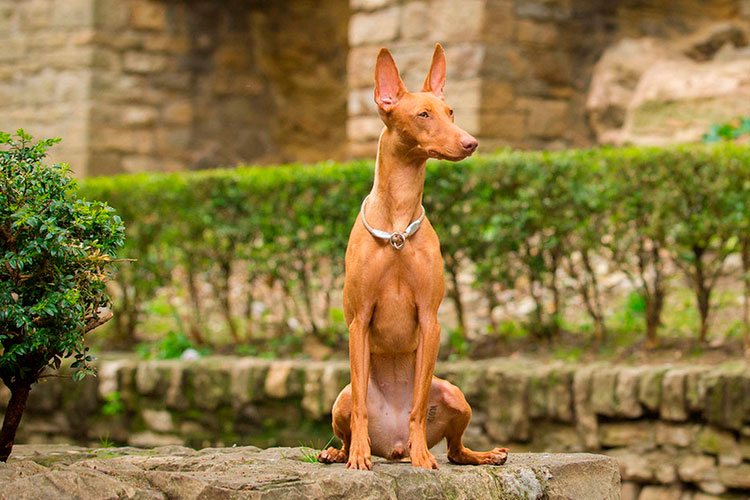
The Cirneco dell'Etna, or Sicilian Greyhound, is an ancient dog breed used for centuries to hunt rabbits in difficult terrain. It has a strong character and a strong instinct for pursuing game. It is intelligent and quick-witted, can demonstrate leadership qualities, and is gentle and affectionate with its family.
Content
History of origin
The Cirneco dell'Etna is a small hunting dog, also known as the Sicilian Greyhound or Sicilian Greyhound. On the Italian island, it is a living landmark, one of the oldest breeds. The Cirneco is considered a primitive breed, meaning it developed with minimal human influence and has remained virtually unchanged for several millennia. Most cynologists agree that sighthound-like dogs descend from pointed-eared Egyptian dogs. In their modern form, they are represented by the breed pharaoh houndThey could have reached Sicily with the Phoenicians.
Renowned cynologist Fiorenzo Fiorone says there are no true sighthounds in Sicily, but the Cirneco dell'Etna is an adaptation of those originally brought to the island's coast. Prolonged inbreeding, limited space, and limited food led to their miniaturization.
Evidence that Cirnecchi have been found in Sicily for at least 2,000 years is the large number of artifacts bearing their image, minted between the 5th and 3rd centuries BC. Excavations have uncovered approximately 150 different varieties of bronze and silver coins. Cirnecchi can be found throughout Sicily, but the Mount Etna region is considered the breed's cradle. According to legend, a temple to the god Ardanos was once built here, and thousands of dogs guarded it, identifying unbelievers and thieves, who were immediately attacked.
Until 1932, the Cirneco dell'Etna was virtually unknown outside of Sicily. Their existence came to light after Dr. Maurizio Minieco, a veterinarian from Atrona, published an article in the magazine "Italian Hunter" in which he spoke of the undeserved oblivion of this wonderful breed. Soon, under the patronage of Baroness Agata Paterno Castello, enthusiasts began to revive and develop the Cirneco. Dogs were selected throughout Sicily. The first standard for the Cirneco dell'Etna was drawn up by the eminent zoologist Giuseppe Solaro. The description was accepted by the Italian Kennel Club in 1939. The Cirneco dell'Etna was officially recognized by the International Cynological Association in 1956.
Video about the Cirneco dell'Etna dog breed:
Appearance according to standard
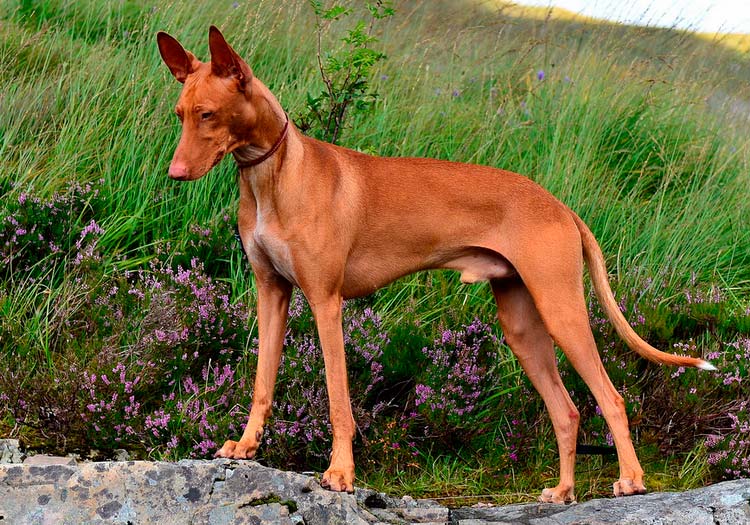
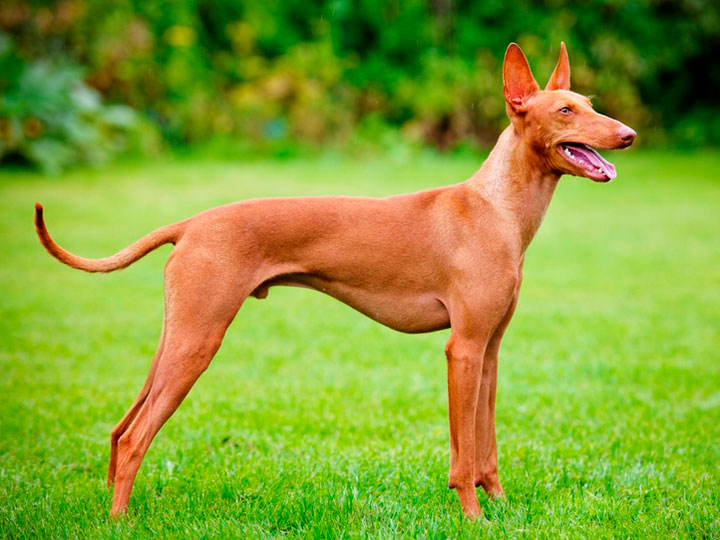
The Cirneco dell'Etna is a primitive-type dog with a refined, elegant build, medium in size, strong and robust, square in build, and short, fine hair. Sexual dimorphism is moderate. Males stand 46-50 cm at the withers and weigh 10-12 kg. Females stand 42-46 cm at the withers and weigh 8-10 kg.
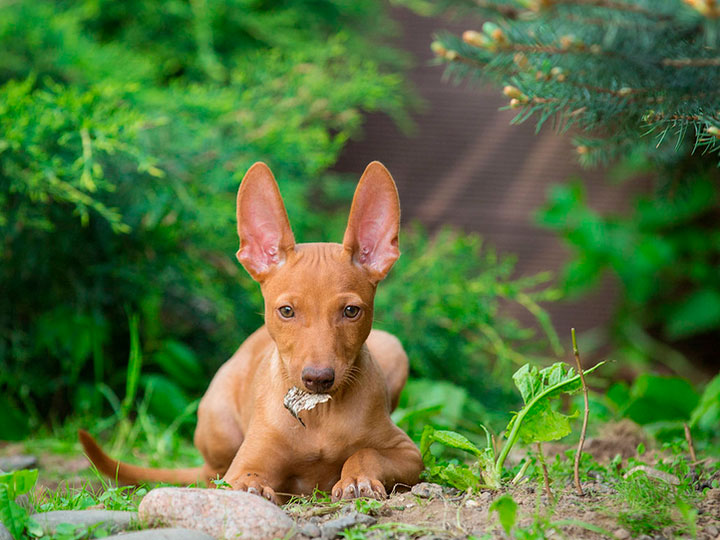
The skull is oval and elongated; its width between the zygomatic arches should not exceed 1/2 the length of the head. The stop is smooth, practically undefined, and equals an angle of 140 degrees. The muzzle is at least 80% of the length of the skull, pointed with a straight nasal bridge. The nose is rectangular, large, light, dark brown, or flesh-colored depending on the coat color. The lips are dry, thin, and fit tightly. The teeth are strong, powerful, and white, with a scissor bite. The cheekbones are flat. The eyes are small, oval, amber or gray. The pigmentation of the eyelids matches the color of the nose. The ears are set high, close together, erect, and directed forward. The length of the ears should not exceed half the length of the head.
By dog's structureThe neck is well arched, its length equal to the length of the head. The topline is straight, sloping slightly from the withers to the croup. The withers are prominent, blending harmoniously into the neck. The back is straight, with moderately developed muscles. The loin reaches 1/5 of the height, and its width is equal to the length. The croup is flat and sloping. The chest is flat, the length slightly exceeds the height, and the width slightly less than 1/3 of the height at the withers. The ribcage does not extend beyond the line of the elbows. The belly is taut and dry. The tail is set low and long. When relaxed, it is carried in a sabre-like manner. When excited or alert, it is raised vertically above the back. The muscles are well developed, but not expressive. The front and hind legs are straight, parallel.
The skin is thin and tightly taut over the entire body. The color depends on the coat color. The mucous membranes, skin, and nose are uniform in color, without black spots, but also not depigmented. The coat is smooth and short. On the ears, legs, and head, the fur is longer, about 3 cm, and lies close. Color:
- Solid fawn in light or dark shades, and can also be weakened such as sable, isabella, and so on.
- Red with more or less pronounced white markings on the head, chest, paws, tip of the tail, and belly. A white collar is undesirable.
- Solid white or white with red markings are allowed.
Character and behavior
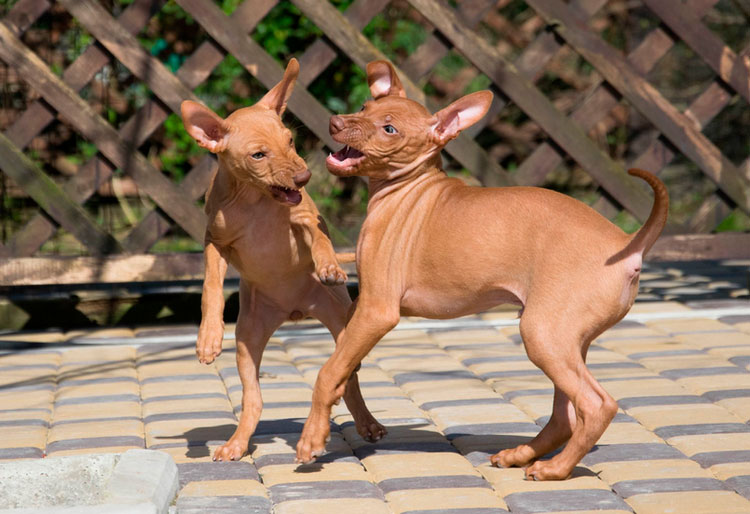
Cirneco dell'Etna are very energetic, intelligent, sociable, and playful. They form strong bonds with all family members, are loyal and obedient, but also very demanding. They must always be engaged under the owner's direction; they will not entertain themselves or stay indoors and be content with short walks. If the dog doesn't release all its energy outdoors, it becomes unruly and destructive. Cirnecos remain courageous into old age, and are, to a greater or lesser degree, proud and independent.
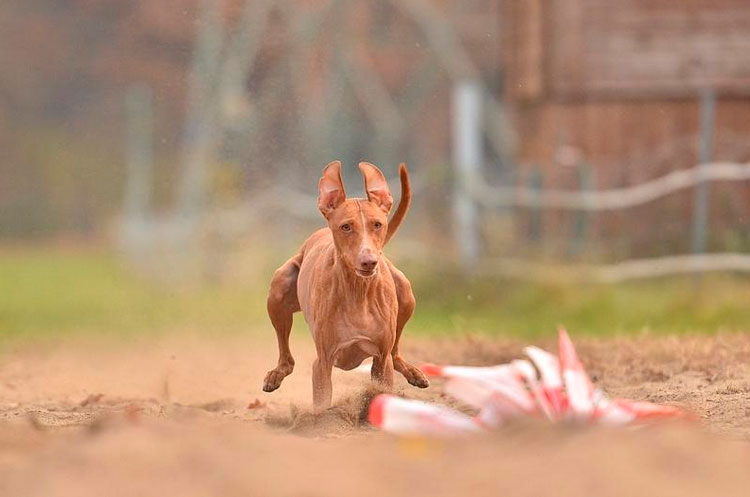
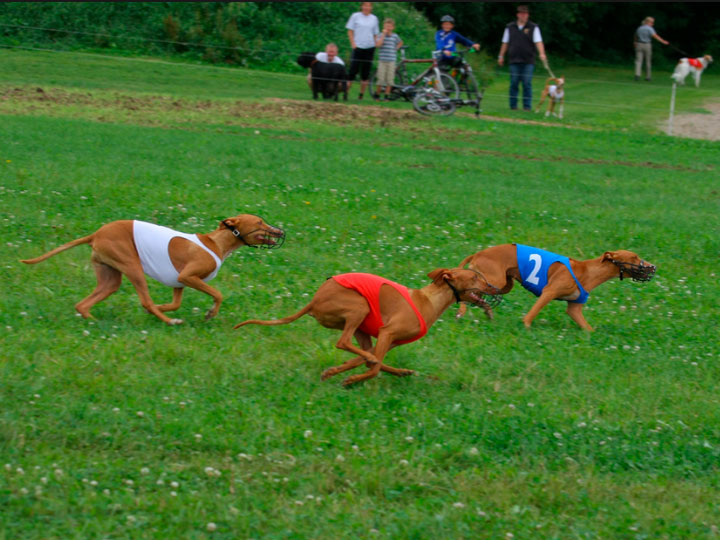
In many countries, Cirnecas participate in lure coursing competitions and often become champions. They can also be found in rabbit field trials and competitions. agility, flyball, freestyle.
Despite the Cirneco's charm and appeal, its purpose should not be forgotten. A passionate hunter by nature, it must be stubborn and persistent, capable of intense concentration and a passion for the chase. Cirneco dell'Etna work as both scent hounds and sighted greyhounds. Females typically have a more pronounced hunting instinct, but males are also ready to pursue their prey at any moment.
On the one hand, qualities such as energy, a strong pursuit instinct, and a fierceness toward animals are beneficial. They make for excellent coursing dogs or the use of enthusiastic, fast hunting dogs. But they also come with the challenges of keeping Cirennes in urban environments, where birds and neighborhood cats abound, and cars dart around every corner.
Cirneks form strong bonds with their owners and suffer during separations or prolonged loneliness. They can become offended if they feel they have been treated unfairly. They can be stubborn and prefer to make their own decisions. However, this should not be allowed to happen in all life situations, nor should overindulge the dog. This can lead to the dog becoming the leader of the family, which can lead to various behavioral problems. Puppies that have been properly socialized are very good with children, without aggression. They are not afraid of small children and know when to step aside.
Cirneki rarely bark, mostly when excited or demanding something. They are very curious by nature and always like to be in the center of things. They will happily accompany their owner everywhere. They are interested in absolutely everything, including people, dogs, and anything lying on the ground, running, or flying.
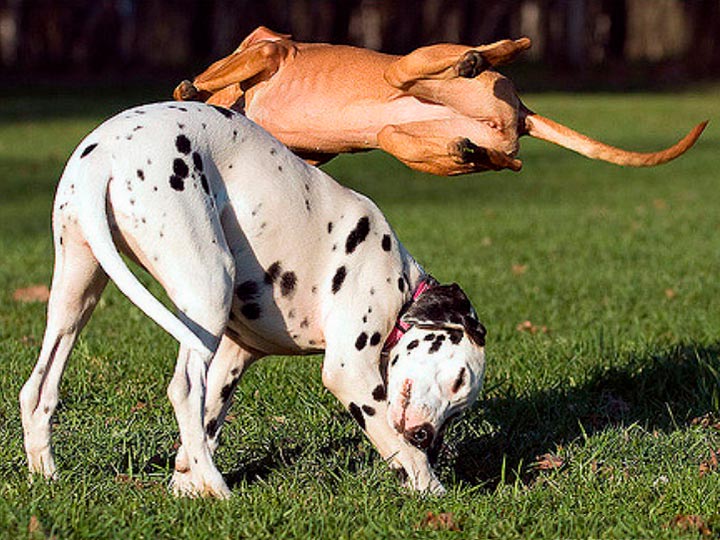
They get along well with other animals, including family members, dogs, and cats. They are not aggressive, but may try to dominate. They are often wary of very large dogs. They happily play with those of a similar size or simply ignore them. However, they can provoke conflicts over territory, food, or attention.
Education and training
The conventional training protocol for service dogs is not suitable for raising and training the Cirneco dell'Etna. Cirnecos cannot be forced to obey commands, and they do not tolerate raised voices or physical punishment. They will only comply with requests if they are motivated to do so.
Any command training should be based on the dog's interest in performing it. Rewards can include treats, praise, or toys.
Content Features
Cirneco dell'Etna are ideal for apartment or house life; they are neat and clean. They require little grooming. Living in a crate, and especially on a leash, should be completely avoided. Firstly, this short-haired dog is sensitive to cold and dampness. Secondly, it is a hunter who requires close contact with its owner and as much freedom as possible. It is best to create a private space in the house on an elevated surface. Cirnecos prefer armchairs, sofas, and the owner's bed, but it is also possible to train a puppy from an early age to sleep in its own bed.
Physical and mental exercise should be commensurate with the dog's activity level. A typical schedule includes two 30-45-minute walks, including active playtime with the owner or other dogs and opportunities for free running. Sicilian Greyhounds should only be let off leash in a fenced area, such as a park or a nature walk, provided they are trained to return on command, monitor their owner's whereabouts, and don't wander off too far.
It's rare to find a Cirne pig splashing around in the first puddle they come across. More often, they proudly stride along dry sidewalks, loving warmth and comfort. With the onset of the first cold weather and damp, windy conditions, it's best to keep the dog warm.
The overalls will protect against hypothermia, dirt, and daily washing. In windy and frosty weather, the charcoal's ears should be protected from chapping and hypothermia with a hood.
Care
The Cirneco dell'Etna's coat consists of short outer coats with no undercoat, so with proper care, seasonal shedding is minimal and there is no specific odor at all.
Sicilian dogs don't require any special grooming. All routine procedures include weekly brushing, nail trimming, and ear cleaning. brushing teeth and rare washing.
Nutrition
Most Cirneco breeders and owners prefer to feed their dogs natural foods using the BARF system. This diet is considered to be as close to natural as possible and meets all the animal's needs. High-quality dry food is also available. Cirnecos are best suited to foods above super-premium for active small and medium-sized dogs. Furthermore, the diet should be appropriate for the dog's age (puppy, junior, or adult) and physiological condition.pregnancy, lactation).
Health and life expectancy
Cirneco dell'Etna are considered exceptionally healthy dogs. While they can suffer from various infectious and non-infectious diseases, as well as illnesses resulting from improper care and nutrition, the breed is genetically sound. Veterinary preventative measures (vaccinations, parasite treatment, routine medical examination).
Cirneco dell'Etna are very hardy dogs, capable of working for hours without food or water in the scorching sun. However, this doesn't mean the dog should be constantly exposed to extreme conditions. This simply reflects their breeding and the conditions they can work in, not the conditions they should live in. Their lifespan is typically 12-15 years.
Choosing a Cirneco dell'Etna puppy
Just 10-15 years ago, it was practically impossible to find a Cirneco dell'Etna in the former Soviet Union, and the number of representatives of the breed could be counted on one's fingers. Today, Cirneco dell'Etna remain rare and few in number due to their unique characteristics, but they are attracting increasing attention each year. This has contributed to an increase in their numbers. Today, most European countries have officially registered kennels that breed Cirneco dell'Etna. In addition, puppies are sometimes sold by private breeders. Very rarely, these dogs are bred by owners "for health reasons" or for profit, and then sold without papers, but at a significantly lower price.
Regardless of the reason for acquiring a Cirnechi, the puppy chosen must be healthy, with a healthy temperament and good conformation. Of course, their appearance still differs from that of an adult dog and doesn't fully meet the standard, but there are some flaws that even a puppy shouldn't have: malocclusion, drooping ears, a curled tail, black claws or pads, very dark eyes or nose, a solid brown coat, black hairs, or dark spots on the mucous membranes. Pay attention to the dogs' living conditions and feeding. Properly raised puppies are in good condition, active and curious, with a good appetite, and are outwardly completely healthy, with clear, bright eyes and a shiny coat.
Proof of breed affiliation will be a tattoo and a puppy card, which can later be exchanged for a pedigree. Future owners will also be required to obtain a sales contract and a veterinary passport containing records of all procedures and vaccinations.
Price
The average price for a Cirneco dell'Etna puppy in Russia ranges from 40,000 to 50,000 rubles. Promising puppies can fetch significantly more, while dogs not intended for breeding sometimes sell for 5,000 to 10,000 rubles less.
Photos
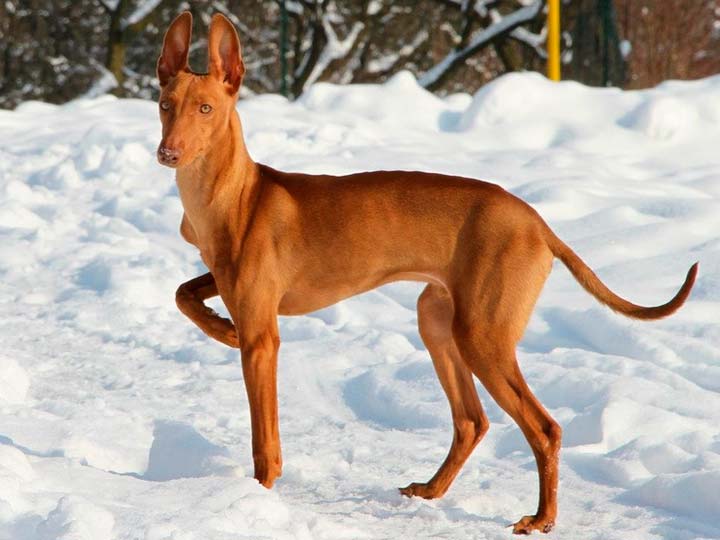
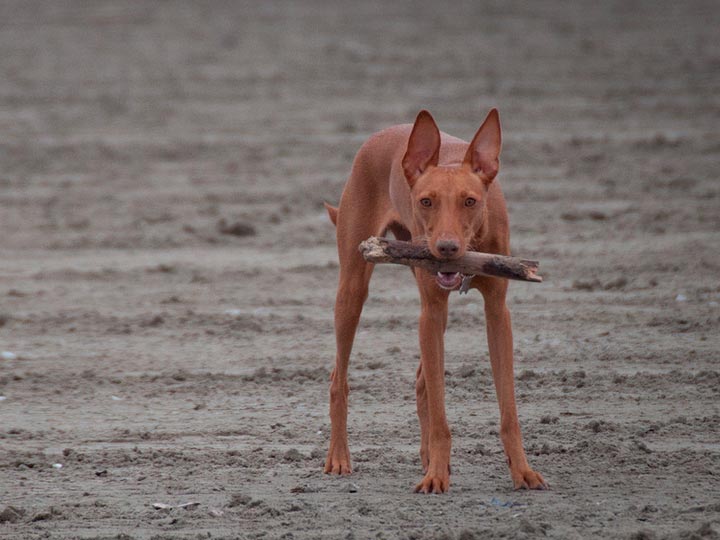
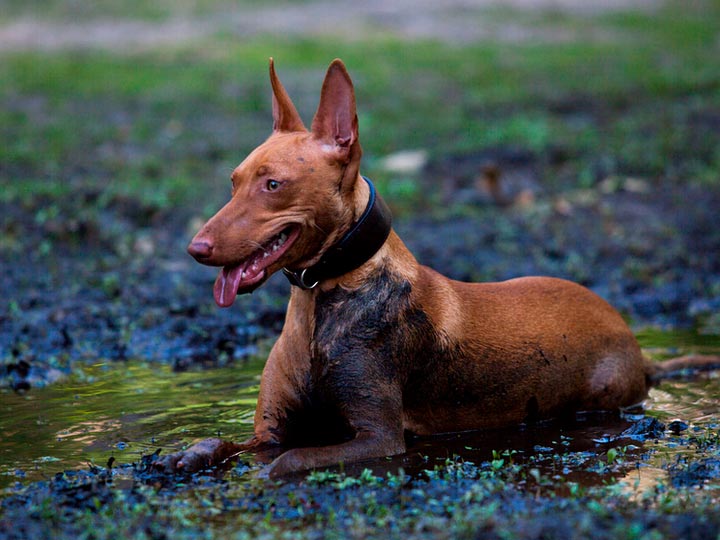
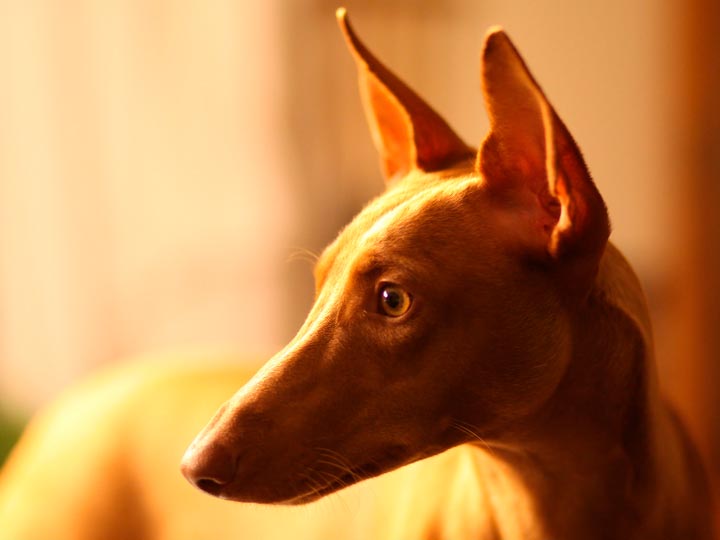
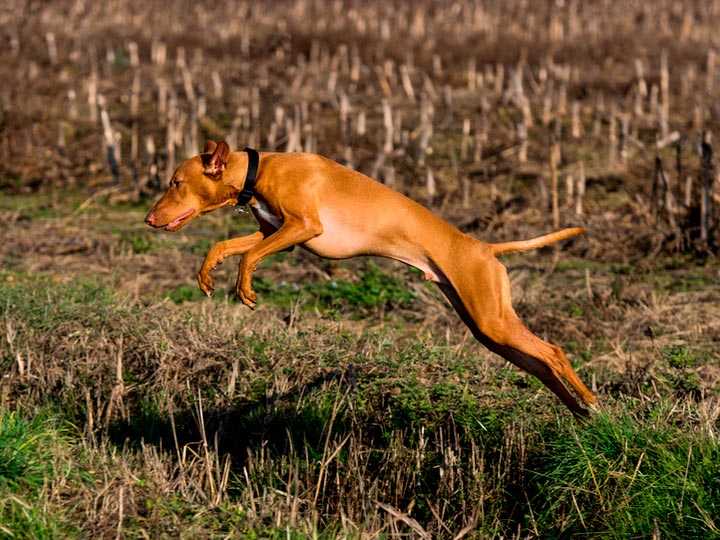
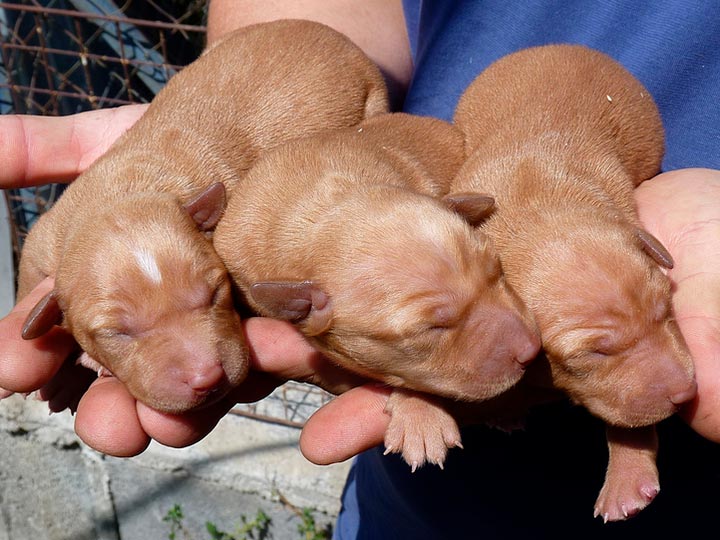
The gallery contains vibrant photos of sunbeams—dogs of the Cirneco dell'Etna breed (Sicilian greyhound).
Read also:
- Tazy (Kazakh Greyhound)
- Podenco Ibizanco (Ibizan Hound, Ibizan Hound)
- Spinone Italiano (Italian Wirehaired Pointer, Italian Griffon)




Add a comment