
Chinook
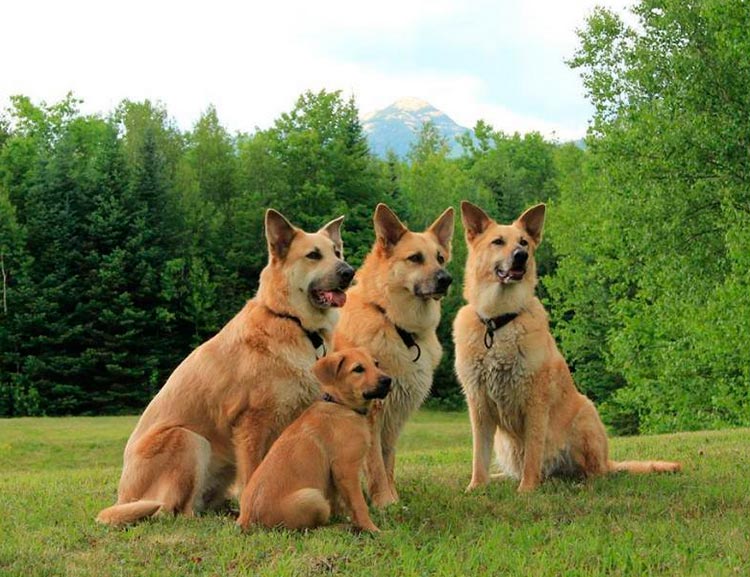
The Chinook is the rarest sled dog breed, developed in the early 20th century in the United States. It works well in teams, is strong and resilient, and is friendly, calm, and non-aggressive by nature.
Content
History of origin
The Chinook was developed in the first half of the 20th century by Arthur Treadwell Walden of New Hampshire, USA. The breeder's goal was to produce a large sled dog that would demonstrate physical strength, speed, and endurance. Eskimo Spitz, husky, Canadian Likes, European Shepherds, Mastiff-type dogs, and Great Danes. The first puppies that fully met the breeder's requirements were named Rikki, Tikki, and Tavi. They became the founding parents of the breed.
The breed was named Chinook after the leader of one of the first sled packs, Walden.
Chinooks are known to have been used in Admiral Byrd's "Arctic Expedition," who later praised their working qualities. The breed was never very popular. In 1966, it was even listed in the Guinness Book of World Records as the rarest, with only 125 dogs remaining. By the early 1980s, only about 20 remained. Breeders from California, Ohio, and Maine divided the population to save it from extinction. Currently, the number of registered Chinooks does not exceed 1,000. Around 100 puppies are born worldwide each year. The breed is recognized by two international clubs: the AKC and the UKC.
In 2009, the breed was recognized as the symbol of the state of New Hampshire, USA.
Appearance
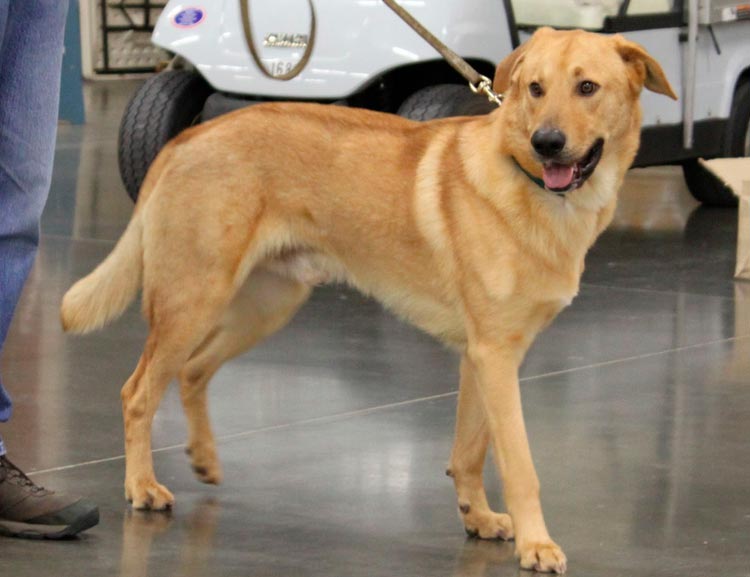
The Chinook is a large, well-built dog with a dense, medium-length coat. Sexual dimorphism is pronounced.
- Height at withers: 54-68 cm;
- Weight: 28-42 kg.
The head is broad and wedge-shaped. The stop is moderate. The muzzle is conical. The nose is large, convex, and black. The eyes are brown, medium in size, almond-shaped, and have a distinct black rim. The ears are V-shaped, set high, medium in size, and carried either semi-bent or erect. The lips are black. The bite is level or scissor-shaped. The neck blends smoothly into the withers, without dewlap.
The body is strongly built, moderately elongated. The back is straight and strong. The loin is slightly arched. The chest is moderately broad and deep, with the brisket reaching to the elbows. The tail is sabre-shaped, reaching to the hock, set just below the topline, and well feathered. The limbs are of moderate length, strong, with well-developed muscles and joints.
The coat is double, medium-length, and lies close to the body. The undercoat is short. The color ranges from yellowish-brown to reddish-gold. The fur is lighter on the cheeks, throat, chest, and underparts. The mask on the face is symmetrical with distinctive markings above the eyes. Black hairs often shade the ears.
Character and behavior
The Chinook is even-tempered, friendly, and highly intelligent. Docile, active, and relatively easy to train. Affectionate and playful with family members, it is devoted to its owner, and forms a strong bond with children. Enthusiastic and eager to please, it adapts well to various living conditions and new environments. It gets along well with other dogs and is a team player. It is loyal to other animals. Its territorial instinct is strong; in dangerous situations, the Chinook may even defend its owner, but it is never overly aggressive.
Chinook will be a good friend to a person who is involved in sledding or simply leads an active lifestyle.
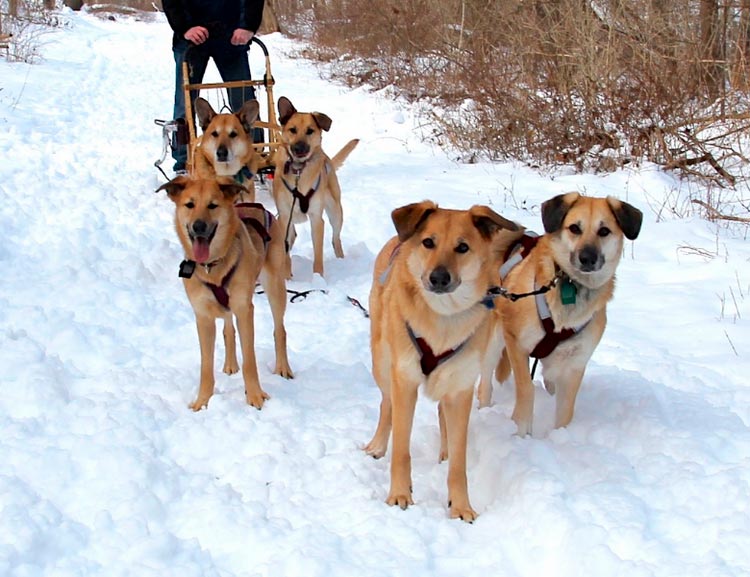
Many Chinooks are still kept by athletes and participate in sled dog racing. They are also suitable for sports such as skijoring, bikejoring, and similar activities, and to a lesser extent, agility and others.
Content Features
The Chinook is not well suited to apartment life; it requires long, active walks and exercise to maintain good physical fitness and mental health. A crate is possible, but it must not be left alone for 24 hours.
Seasonal shedding is quite heavy, but moderate the rest of the year. Weekly brushing will help maintain a neat appearance. Bathe as needed.
Health and life expectancy
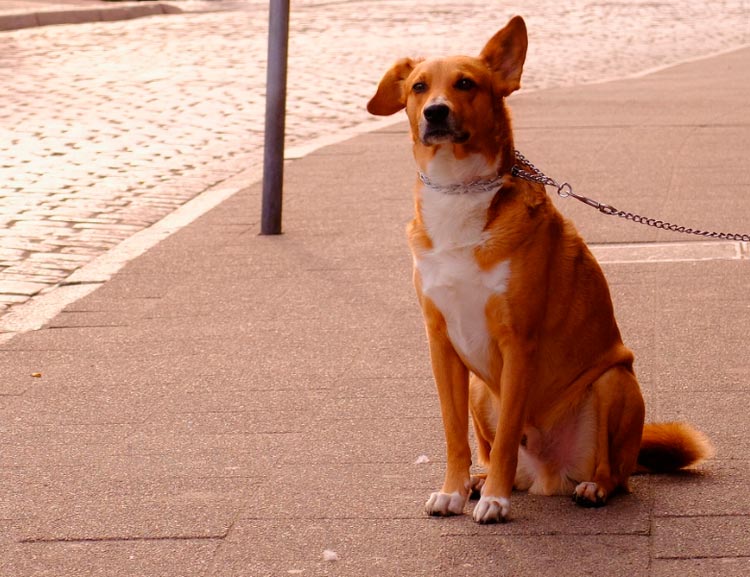
Health problems include typical hereditary diseases of purebred dogs:
- hip dysplasia;
- epilepsy;
- ophthalmological diseases;
- allergies;
- cryptorchidism.
Life expectancy is 11-13 years.
Where to buy a puppy
Chinooks are bred only in the United States and Canada. There are a few imported representatives of the breed in Russia.
If a Chinook's breeding status is not confirmed by UKC or AKC certificates of pedigree, it is considered a mongrel.
Price
In America and Canada, the average cost of a Chinook puppy is $800.
Photos and videos
You can see more photos of Chinook dogs in the gallery.
Video about the Chinook breed
Read also:
- Chesapeake Bay Retriever
- Nova Scotia Duck Tolling Retriever - Toller
- The smallest poodle is the toy poodle.


Add a comment