
Scabies mites in dogs: symptoms and treatment
Ticks are microscopic invertebrates, members of the arthropod subclass of the arachnid class. Some ticks are endoparasites and cause diseases in mammals, collectively known as scabiesSuch diseases are difficult and time-consuming to treat, and in advanced cases, scabies mites in dogs can lead to the death of the animal.
Content
Types of scabies mites in dogs
Several species of scabies mites can infest dogs. They cause highly contagious skin diseases:
- Sarcoptic mange (notoedrosis) is caused by Sarcoptes and Notoedres.
- Otodectosis (ear scabies) - causative agent Otodectes.
- Demodicosis — the causative agent of Demodex.
None of these ticks are capable of parasitizing humans due to physiological reasons.
The appearance of scabies mites may vary slightly depending on the species, but there are common features that characterize this group of parasites.
The scabies mite's body, ranging from 0.1 to 0.5 millimeters in size, is usually gray. It is oval in shape and covered with a thin chitinous shell that protects it from the external environment. Some species of scabies mites have small setae on their bodies. The proboscis is chewing, horseshoe-shaped, and has no eyes.
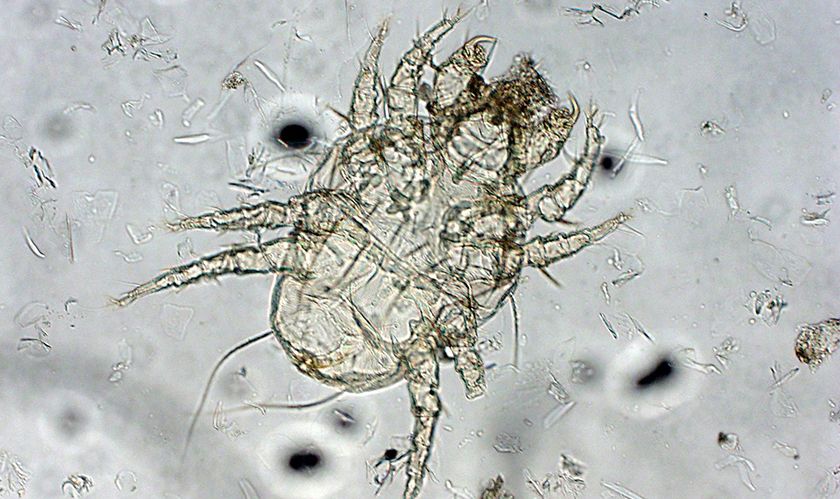
The most noticeable feature of scabies mites is their legs, which have suckers or claws that allow the parasite to firmly attach to the host's skin. The mite typically has four pairs of legs.
Mites live and reproduce in the skin's epidermis, feeding on squamous epithelial cells, blood, and lymph. The scabies mite life cycle includes several stages. Fertilized eggs, which are 0.15-0.25 mm in size and oval in shape and have a double-layered shell, hatch into larvae, which then develop into nymphs and, finally, into adult females or males. This process takes approximately 2-4 weeks.
Outside the host's body, scabies mites can survive for some time on clothing, soil, and grass. They survive for about two weeks at room temperature, die within an hour at 60°C, and die almost immediately at boiling or sub-zero temperatures.
Routes of infection
The source of the parasitic infestation are dogs infected with the itch mite, which is transmitted primarily through close physical contact and, less commonly, through contaminated objects. Statistically, puppies are more susceptible to the disease, and the severity is greater than in adults. Dogs with weakened immune systems are at risk, and breeds most susceptible include German Shepherds, Shar Peis, Rottweilers, Bulldogs, Terriers, and Pugs.
Signs of scabies in dogs
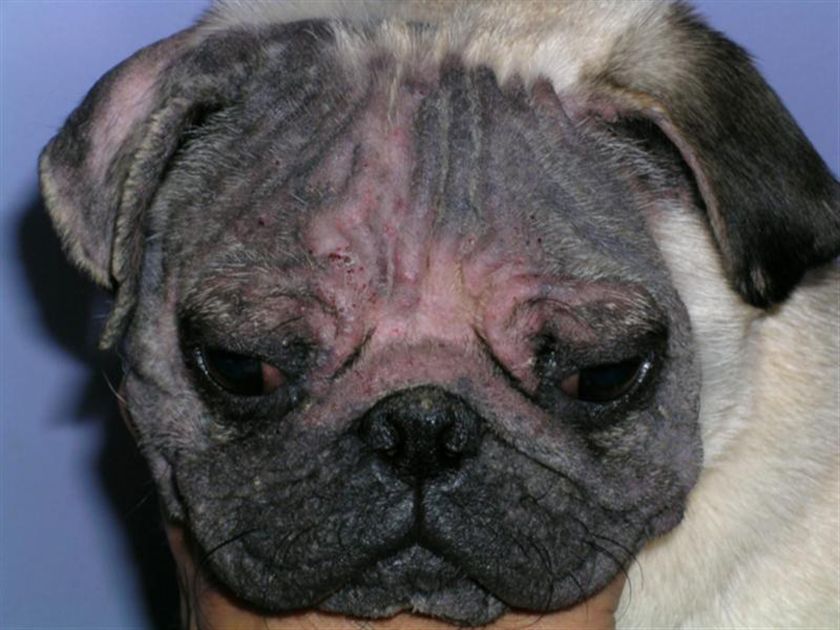
The first clinical symptoms of scabies mites in dogs typically appear 2-3 weeks after the parasite has penetrated the epidermis. The main signs are severe itching, skin rashes, and inflammation. Depending on the type of infection, symptoms may also include:
- An ear mite infestation is characterized by bloody or purulent discharge from the ears, with an unpleasant odor, and the formation of brown crusts in the auricle. The animal will constantly shake its head, trying to relieve the itching, and will paw at the affected ear.
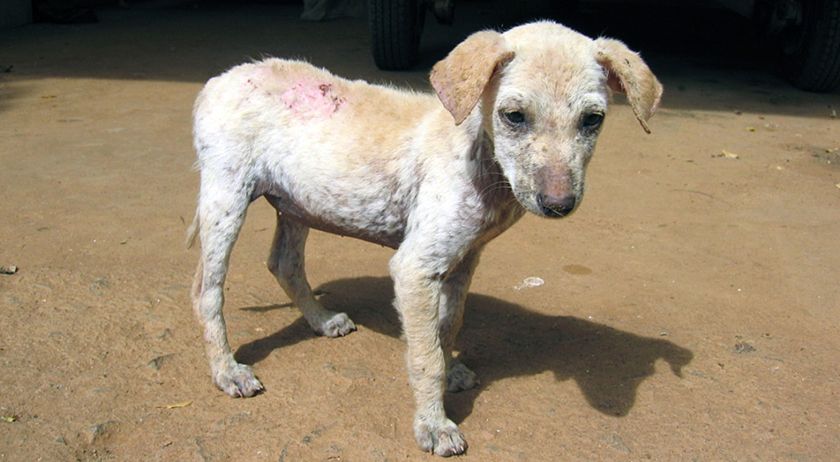
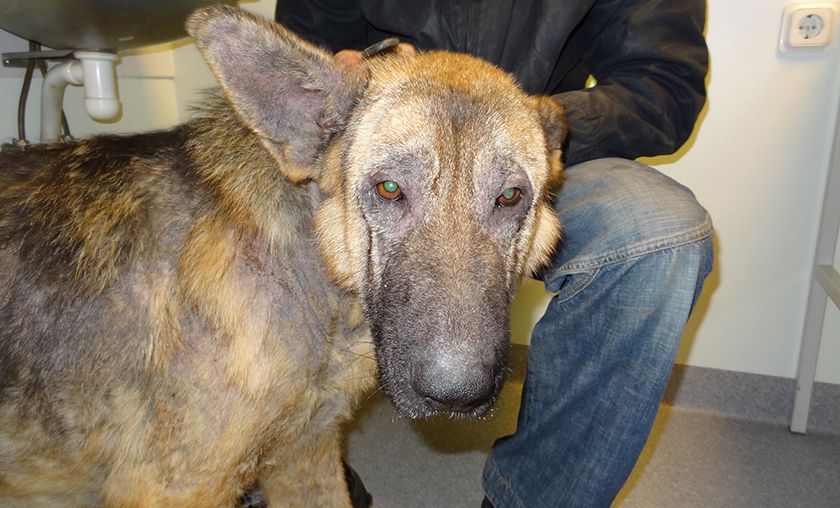
- Sarcoptic mange mites infest the skin of the face, neck, back, joints, base of the tail, and abdomen. Affected areas become bald, the skin becomes rough and cracked, and papules filled with pus and mites form. The dog develops anemia, general weakness, and weight loss.
- The subcutaneous mite that causes demodicosis is statistically present in 8% of dogs, but it becomes active when the immune system is weakened. Demodicosis can be localized or generalized.
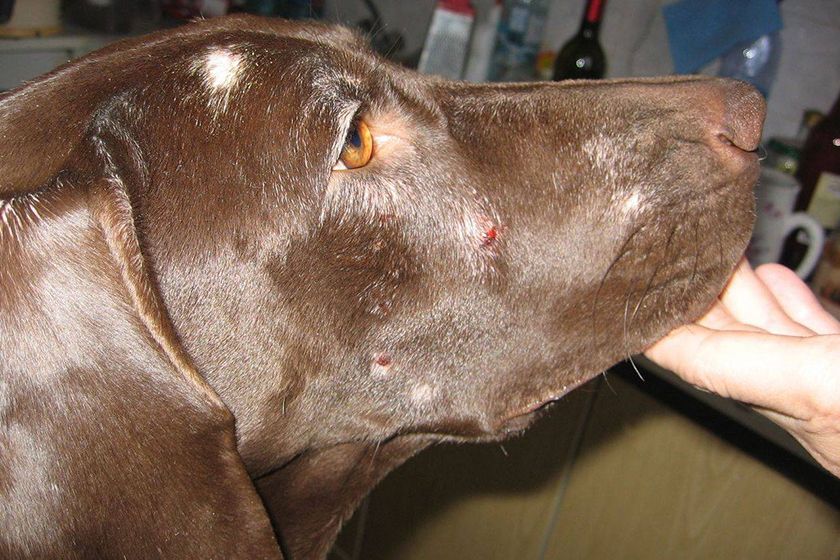
Localized or focal mange in dogs manifests as multiple bald patches on the body. With a strong immune system, the disease usually resolves within a few months without treatment. Juvenile demodicosis in puppies is also considered focal, when mite colonies are localized on the limbs, ears, and muzzle (in the photo, this looks like glasses around the eyes).

In the generalized form of demodicosis, the affected areas cover large areas of the skin, and are characterized by severe inflammation, alopecia, the formation of vesicular rashes, and hyperkeratosis (keratinization of the upper layer of the skin).
Diagnostics
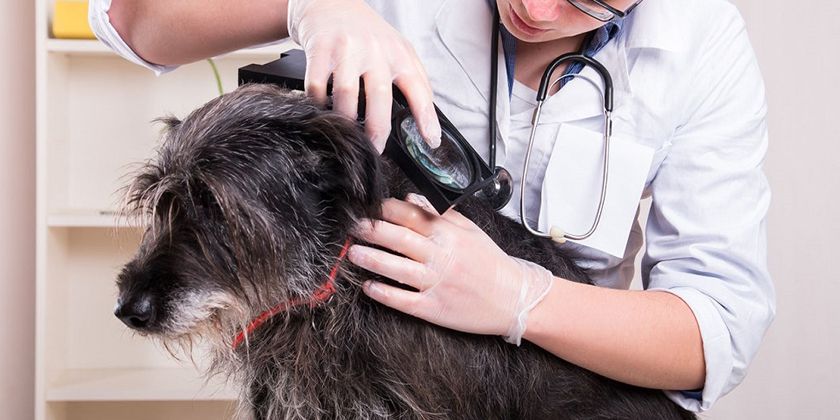
If you suspect your dog has scabies, it's important to consult a veterinarian immediately for diagnosis and appropriate treatment. The goal of diagnosis is to differentiate scabies from tick and blood-sucking insect bites, ringworm, furunculosis, pyoderma, eczema, and allergic reactions.
A diagnosis can be made based on a clinical examination of your pet and analysis of a deep skin scraping taken from the area of active infestation (acarogram) or microscopic examination of ear discharge. This method can detect even single mites. Effective diagnostic methods also include a skin strip test and bioassays, which examine the skin's response to antiparasitic medications.
Treatment
Treatment for scabies in dogs is comprehensive. It aims to destroy the pathogen, restore damaged skin and coat, and strengthen the immune system. Affordable, modern medications for treating scabies in dogs are now available at veterinary pharmacies.
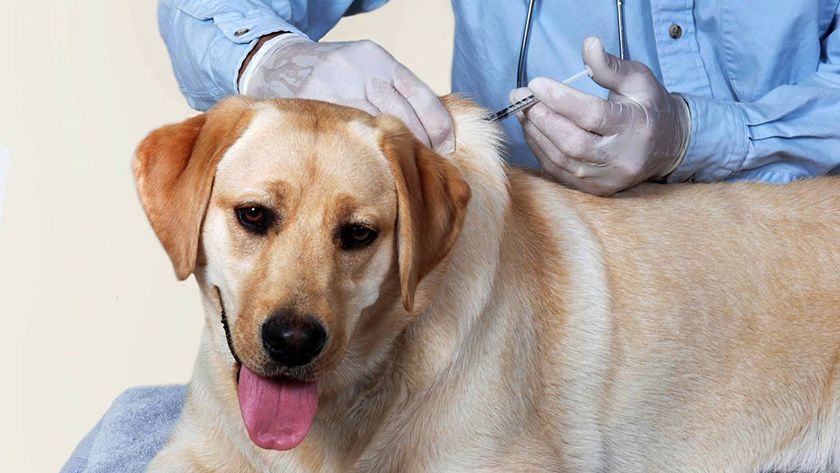
If a rash occurs, topical treatments are applied by rubbing them into the affected areas. For severe scabies infestations, tablets or injections (subcutaneous or intramuscular) may be used. Antibacterial medications, immunostimulants, and vitamins are also used if necessary.
External remedies include ichthyol, novertin or sulfur ointment, zinc oxide spray ointment, and aerosols:
- Arpalit;
- Dermatozol;
- Estrosol;
- Vetabiol;
- Demos;
- Stronghold;
- Sebacil;
- Ectosan.
Treating inflamed skin with infusions of calendula, wormwood, St. John's wort, chamomile, and celandine is helpful. For the treatment to be more effective, trim the hair around the bald spots before application. When applying topical anti-mange medications to dogs, wear a muzzle or protective collar to prevent the dog from licking them.
It's important to strictly follow your veterinarian's instructions and resist the temptation to stop treatment once your dog's condition has significantly improved. Regular veterinary visits and proper hygiene are also crucial for controlling and preventing recurrence of canine scabies. Treatment for scabies mites is considered effective if the results of two acarograms performed within a month are negative.
Prevention
To reduce the risk of a dog contracting scabies, the owner's primary responsibility is to keep their pet clean and avoid contact with animals suspected of or infected with sarcoptic mange, otodectosis, and demodicosis. A modern method of protecting against scabies mites is vaccination of dogs with the "Immunoparazitan" vaccine. This vaccine is available as a suspension and can be used on animals over one year old.
Dog areas (kennels, cages, kennels) and regular exercise areas should be periodically treated with acaricidal products or at least chlorine-containing disinfectants. It's recommended to treat the dog itself prophylactically monthly with Advocate or Stronghold topical drops on the withers. When bathing, it's recommended to use special insecticidal shampoos.
Read also:
- Ectoparasites in dogs and treatment against them
- How to vaccinate a dog at home
- Subcutaneous mites in dogs: symptoms and treatment


Add a comment