
Scabies in dogs: symptoms and treatment
Scabies in dogs is an inflammatory disease caused by microscopic mites. There are several types, each differing in the type of mite and its symptoms. Severe itching and accompanying symptoms cause significant discomfort for pets, and if left untreated, scabies can lead to secondary infections. Recognizing the signs of the disease and promptly contacting a veterinarian can significantly facilitate your pet's recovery.

Content
Symptoms and types
The main symptom of scabies is increasing itching, which is caused by irritation of the skin's nerve receptors damaged by the mites. Other manifestations of the disease will vary slightly depending on the type of pathogen.
Note! Mites found on dogs are unable to develop and reproduce on human skin, but they can cause pseudo-scabies—an allergic reaction to the parasites that can manifest as itching. Specific treatment is not required in such cases, other than medications for symptomatic relief of itching.
Cheyletiella
Another name for the disease is wandering scabies, or versicolor scabies, which is one of the contagious varieties. Cheyletiellayasguri mites most often infest the skin of the neck, ears, and sometimes the back, feeding on tissue fluid and dead cells. Characteristic symptoms include:
- severe inflammation of the affected areas;
- hair loss, often in clumps;
- the appearance of a rash or pustules, which over time transform into hard scales and crusts.
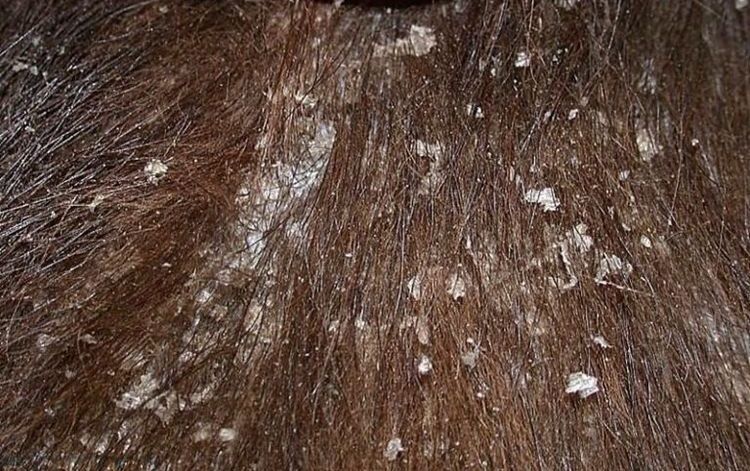
Note! When cheyletiosis the appearance is noted dandruff, but in reality, these are mites that move around the dog's body and look like dandruff particles. This explains the name "wandering scabies."
Sarcoptic mange
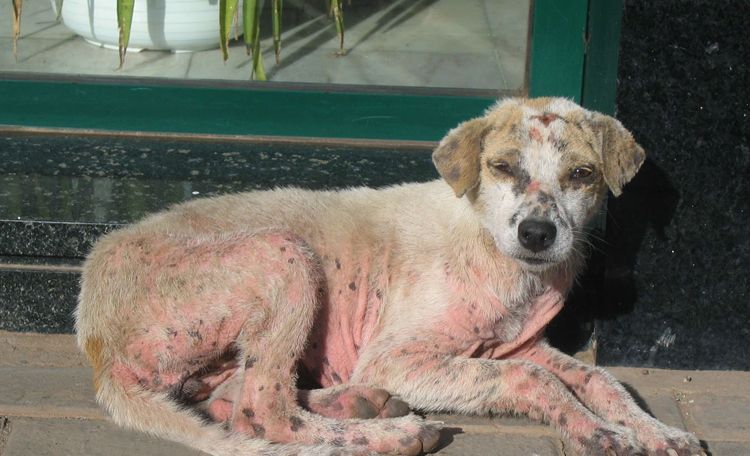
The common name for the disease is scabies. It most often affects areas with short hair: the nose, brow ridges, ears, and joints of the limbs. The mite is Sarcoptescanis.
penetrates into the deep subcutaneous layers, where it gnaws passages to lay eggs.
The first symptom of sarcoptic mange is small spots, which after 10-14 days develop into small, itchy sores. This type of mange resembles a flea infestation, with its characteristic bites. Additionally, the following symptoms are observed:
- restless behavior of a dog due to parasite bites;
- scratching the affected areas until they bleed, followed by the formation of crusts and scabs;
- "ear reflex", when, when touching the auricle, the dog immediately tries to scratch the affected ear behind the paw;
- hair loss in affected areas;
- the formation of a rash and pustules is possible.
Otodectosis
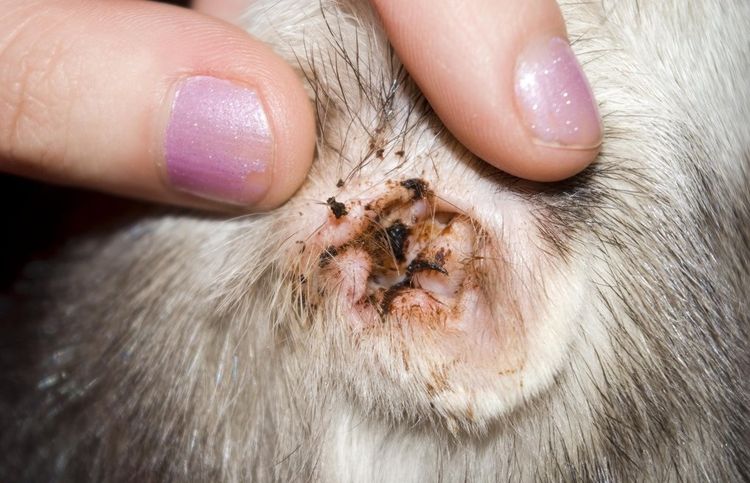
Otodectosis disease It is caused by the mite Otodectes cynotis, which infests the inner surface of the ears, hence the name ear mite. It is transmitted from one animal to another through prolonged contact and is most common in long-eared dog breeds. The mite feeds on the animal's blood and, as it matures, burrows into the upper layers of the skin, causing intense itching. Specific symptoms include:
- brown sticky plaque in the ear canal (tick waste);
- frequent shaking of the head and tilting towards the affected ear;
- constant attempts to rub the head against the owner and surrounding objects.
Caution! Without prompt treatment, ear mites can penetrate the middle and inner ear and then infect the meninges, which can lead to deafness, meningitis, and even death.
Notoedrosis
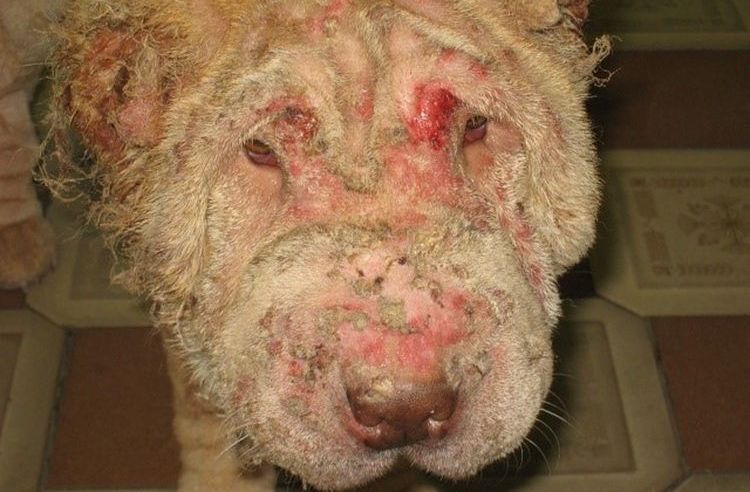
The mite that causes scabies burrows into the deep layers of a dog's epidermis. It's highly mobile, so it quickly infects nearby animals, especially young ones. The following symptoms indicate a notoedric mange infestation:
- persistent itching and irritation;
- small blisters and nodules on the face, ears, back, stomach;
- "folding" of the affected areas of the skin;
- hair loss.
The danger of the disease
Scabies mites are aggressive parasites that cannot be eradicated without medical intervention. Prolonged presence in the body causes greater damage. Negative consequences include:
- General intoxication. As the number of ticks increases, so does the volume of their waste products, which enter the bloodstream and cause toxic reactions.
- Growth of pathogenic microflora. Affected, inflamed areas eventually become covered with a crust, under which putrefactive microorganisms actively develop.
- Infectious diseases. Severe itching leads to deep scratching of the inflamed areas, and the disruption of the skin's integrity creates a favorable environment for the development of infections.
- Weakened immunity. Constant itching causes the animal to become restless, moody, and lose appetite. This leads to exhaustion, which weakens the immune system.
Diagnosis of the disease
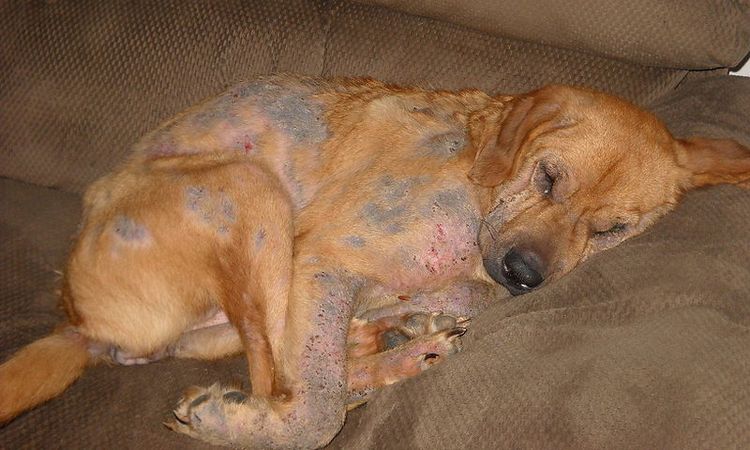
Although numerous photos of dog scabies can be found online, a veterinary examination is recommended for an accurate diagnosis. However, beforehand, owners should pay attention to:
- pet's behavior, frequency and area of scratching;
- condition of the skin and the presence of inflammatory reactions on the skin;
- appearance and extent of hair loss.

Due to the tick's microscopic size, it's best not to try to inspect it on the body. One option is to feel the skin with your fingertips for tiny bumps. Veterinary clinics use an ultraviolet lamp, which clearly reveals traces of the parasite's activity. However, the primary diagnostic method is to take a scraping from the affected area, place it in a glycerin solution, and examine it under a microscope.
Important! Scrapings can yield false-positive results if the sample is taken too close to the epidermal surface or from an area where the tick has already moved. For an accurate diagnosis, it is important to take multiple scrapings from different areas of the skin.
Treatment of scabies
Scabies treatment is carried out at home, with the dog isolated from other animals and people. However, it's important to consult a specialist first to accurately identify the causative agent and obtain the necessary treatment. Regardless of the type of scabies in a dog, treatment is based on two approaches:
- ridding an animal of parasites;
- elimination of associated symptoms.
For these purposes, topical and internal medications are used. The treatment regimen is determined based on the type of pathogen, the extent of the infection, and the dog's overall condition.
Note: When handling your dog, wear disposable gloves, and wash your hands with soap afterward.
So, how to treat scabies in dogs and what to do first:
- Remove hair from affected areas of the body.
- Bathing with antiseborrheic shampoo. Puppies should only be treated with the affected areas; adults should be bathed completely.
- The use of antiparasitic agents and medications (for injections and external use) is the main line of treatment. Ointments and medications based on selamectin, ivermectin, imidacloprid, and moxidectin are prescribed (Stronghold, Milbemax, Advocate, Ivomek, IvermectinAerosol sprays such as Tsidem, Demizon, Tsiodrin, and Acrodex are easy to use. When using topical acaricidal products, ensure that the dog does not lick them. A special collar or muzzle can be used. If there are other dogs or cats in the house, preventative treatment with topical products used for the infected pet is carried out.
- Treatment with oil solutions (if large amounts of scabs form). Use 4% colloidal sulfur or 1% TPA (tissue plasminogen activator), mixed with petroleum jelly or sunflower oil and warmed to 30-35°C before use.
- Removing crusts. They can be softened with warm soapy water or a 0.2% caustic soda solution.
- Treatment of household items (by boiling or using chlorophos) and housing in general (with steam or insecticidal agents).

Caution! Ivermectin is strictly contraindicated for collies, terriers, shelties, and bobtails, as it can cause increased intracerebral pressure and neurotoxicity, which can be fatal.
As auxiliary means, the most effective are considered to be combinations of tar with petroleum jelly (1 to 9) and creolin with green soap and alcohol (1/1/10).
In addition, the use of glucocorticoids is possible (Dexamethasone, Clobetasol) for severe itching, preparations with sulfur for restoration of the coat (Dekta, Demos), sedatives and antibiotics.
The duration of treatment is determined by a veterinarian and, in advanced cases, can last up to 8 weeks. One common mistake in treating scabies is overdoing the use of antiparasitic medications. If the dog continues to scratch after completing the standard course (usually 4 weeks), repeat treatment should not be considered. Persistent itching for 1 week is considered a normal response to the killed mites. Using new medications can worsen itching and lead to allergic dermatitis.
Read also:
- Why does a dog scratch itself?
- Dog scratching ears and shaking head: causes and treatment
- Irritation and itching in a dog after a haircut


Add a comment