
Scabies in cats: symptoms and treatment
Scabies is a common condition in pets. Itching and skin irritation caused by mites on various parts of the body are a significant concern. This article provides information about the condition and its treatment in cats.
Content
Causes of the disease
Scabies is caused by microscopic mites that live on the skin's surface and feed on blood and lymph. Female mites lay eggs in the upper layers of the epidermis, causing severe itching. Scratching the affected areas by cats leads to skin infection, the development of papules and pustular lesions. On humans, the condition is also common. scabies mite They are unable to reproduce, so they cannot be infected by an infected animal. However, some species of parasites can leave bites that appear as reddish spots.
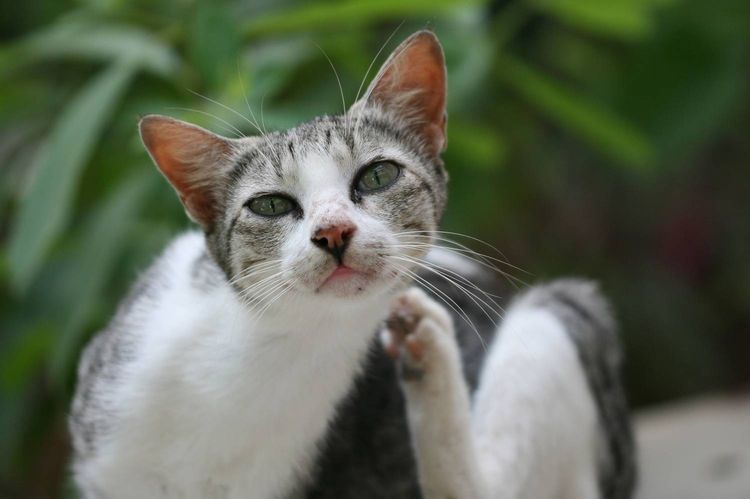
Cats become infected with the scabies mite through contact with infected animals, when catching birds or small rodents, or through pet grooming items. Exhausted pets, those with compromised immune systems, and those who have experienced stress are particularly susceptible to infection.
Types of ticks
Scabies in cats is caused by the following types of parasites:
- Ear mites. They cause a condition called otodectosis. The insects typically reside on the inner surface of the ear, gradually occupying the entire auditory canal. Severe itching causes the cat to constantly shake its head, scratch its ears, and meow pitifully. A dark brown coating forms on the outer ear, and a putrid odor is felt. If left untreated, the mite spreads to the inner ear, possibly infecting the meninges. This parasite poses no danger to humans.
- Tick S Provokes development of sarcoptic mange (itchy scabies). The parasite can be found on any part of the body—the ears, abdomen, knees, and elbows. The skin at the affected area becomes covered with papules, turns black, thickens, and becomes rough, gradually leading to the development of a neoplasm.
- Notoedric Mange is a mite that causes notoedric mange. This disease, which often affects young cats, is also dangerous to humans. Papular lesions initially appear near the eyebrows, nose, and nape of the neck. Gradually, when the affected areas are scratched, the parasites spread throughout the body. The disease is easily transmitted to other animals and humans.
- Demodex mites: Their presence in the sebaceous glands and hair follicles of cats does not always lead to disease. The condition arises when the parasite population significantly increases, and the immune system is unable to control them. By intensively gnawing through the epidermis, the mites cause demodicosis. Infection is also possible in addition to skin lesions on the face, neck, and around the eyes. The disease is contagious to humans who come into contact with an infected animal.
- Cheyletiella mites are a rare species of parasite that live on the surface of the skin. They cause a condition called cheyletiellosis (wandering dandruff). Numerous scales resembling scales form on the animal's skin. dandruffThe disease is accompanied by hair loss and thickening of the skin in the affected area. It can be transmitted to humans.
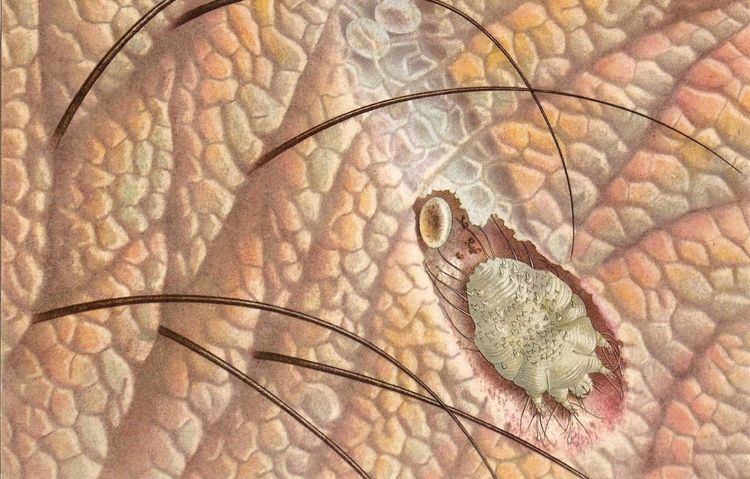
Treatment for scabies in cats depends on the type of infection and the extent of the infestation. To obtain an accurate diagnosis, your pet should be examined by a specialist.
Symptoms and signs
Despite the different pathogens involved, the main symptoms of scabies are largely similar. The first sign that raises suspicion of a scabies mite infestation is severe itching. The cat not only scratches the affected areas with its paws but also bites them vigorously. Small papules can be found on the skin's surface, most often located near the ears, chest, abdomen, and joints. Additionally, patchy hair loss and ulceration are observed. Scratching can lead to secondary bacterial infections.
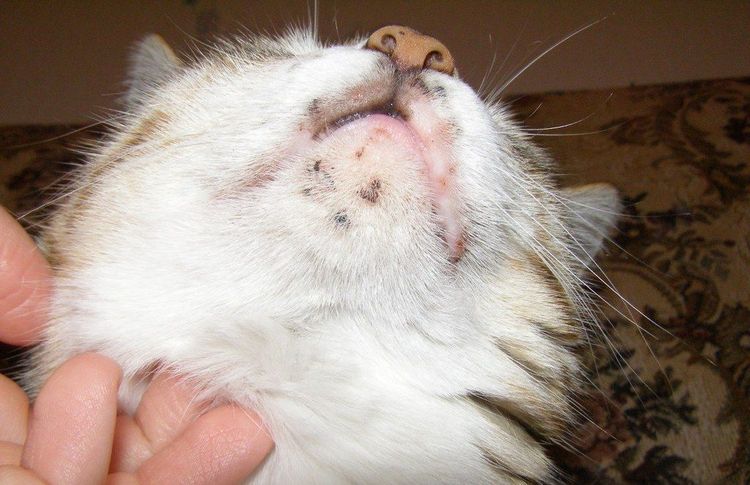
Delaying treatment can lead to serious consequences, such as blood poisoning, chronic stress, and food refusal. To alleviate your pet's condition, take them to the veterinarian immediately as soon as the first symptoms of illness are detected.
Basic principles of treatment
Treatment methods for scabies in cats depend on the type of pathogen, which is determined based on test results. All treatments should be administered by a veterinarian. Self-medication is unacceptable. They can worsen the animal's suffering by causing an allergic reaction. When treating at home, certain conditions must be met:
- Isolate your pet from other household members.
- Treat cat accessories.
- Treat the affected areas with special ointments.
- Give injections as prescribed by your veterinarian.
- Monitor the animal’s hygiene and do not take it for walks until the treatment is completed.
- Provide your pet with complete nutrition containing sufficient amounts of vitamins.
- Carry out wet cleaning of the premises daily.

If signs of infestation appear, there's no reason to panic. Modern medications can help treat scabies quickly.
Medicines
Treatment of any infectious disease requires a comprehensive approach. Treatment for sercaptos tick infestation includes:
- Lime sulfur (LymDip), a solution of which is applied once a week. A total of six treatments are performed. To improve the drug's contact with the skin, the hair in the treatment area is clipped. Before applying the sulfur, it is recommended to wash the cat with a keratolytic shampoo.
- Ivermectin (Ivomec) is a medication that effectively relieves itching within 5 days of treatment. This unpleasant symptom disappears completely within a month.
- Amitraz (Mitaban). Apply no more than 4 times every 2 weeks. Due to possible side effects, it is not recommended for use in dwarf breed cats, sick cats, or elderly animals. Read more Amitrazine for cats Here.
- Selamectin (REVOLUTION) is an avermectin drug that is rapidly absorbed. It is completely safe, making it suitable for treating scabies in particularly sensitive animals. A single application is sufficient to eradicate the infestation. Repeat treatment is only necessary in severe cases.
To treat scabies, veterinarians often prescribe a drug called Stop-Itch. It comes as a suspension that normalizes skin function without causing allergies. The drug is injected into the cat's mouth using a needle-less syringe.
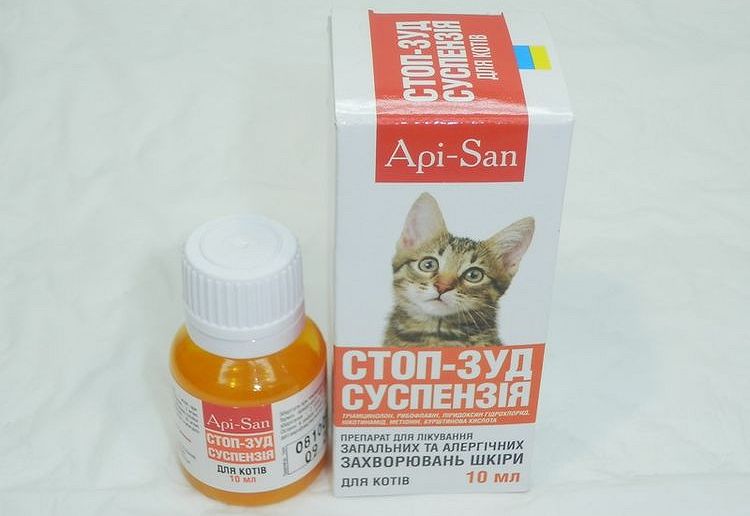
Another popular remedy is Chemi spray, which is applied directly to the animal's skin. This procedure is performed outdoors. Apit ointment is highly effective at relieving itching and restoring skin.
Prevention of scabies
To protect your cat from scabies, you need to follow a number of pet care rules:
- Do not let outside without supervision.
- Periodically treat the animal with anti-tick and anti-flea medications.
- Wash your cat's bowl regularly.
- Monitor your pet's hygiene.
In addition, it is recommended to visit the veterinarian at least once a year for a preventive examination.
If you notice symptoms of scabies, don't waste time trying to self-medicate. Consult a veterinarian immediately. Prompt treatment will help you overcome the disease more quickly and prevent complications.
You can also ask our website's staff veterinarian a question, who will answer them as quickly as possible in the comments box below.
Read also:
- Subcutaneous mites in cats: symptoms and treatment
- Notoedric mange in cats: symptoms and treatment
- Dermatitis in cats


Add a comment