
Chesapeake Bay Retriever
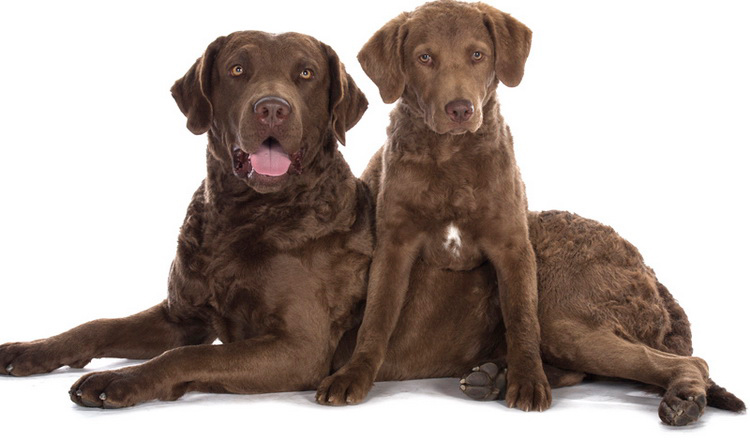
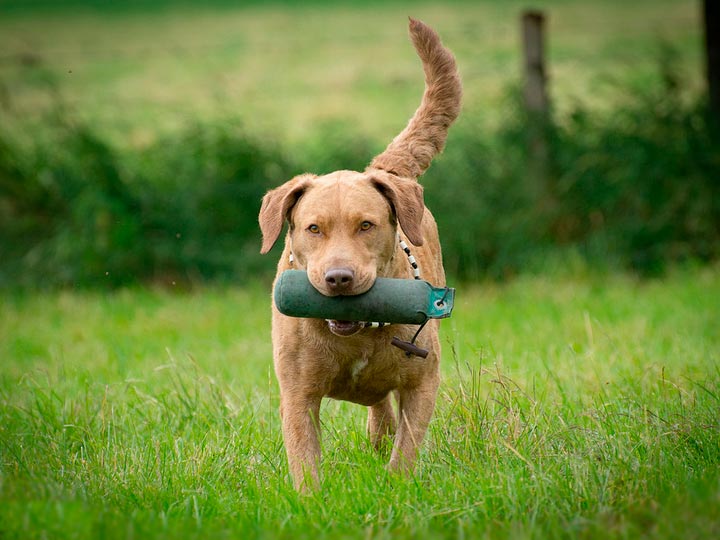
The Chesapeake Bay Retriever is an American gundog breed bred to retrieve birds from water and possesses all the necessary qualities for this job: an innate hunting instinct, friendly nature, endurance, and intelligence. They are also known for their waterproof coat and ability to work in the most adverse weather conditions.
Content
History of origin
In 1807, a ship sank off the coast of Maryland, from which, among other things, two puppies were rescued. They were described as Newfoundlands, but were much smaller in size, more closely resembling the St. John's water dogs. The puppies were of different sexes and eventually settled in different parts of Chesapeake Bay. As far as is known, they did not breed together, but working with their offspring separately, incorporating hound and spaniel bloodlines, resulted in the development of a herd of good hunting dogs. They possessed innate retriever talent, a waterproof coat, a high level of obedience, and a loyal nature. By 1877, three types of retrievers had been identified along the coast. In 1918, one of them was recognized by the American Kennel Club as the Chesapeake Bay Retriever.
In 1964, the Chesapeake Bay Retriever was declared the state breed of Maryland. The brown dog is also the mascot of the University of Maryland, Baltimore County.
Purpose
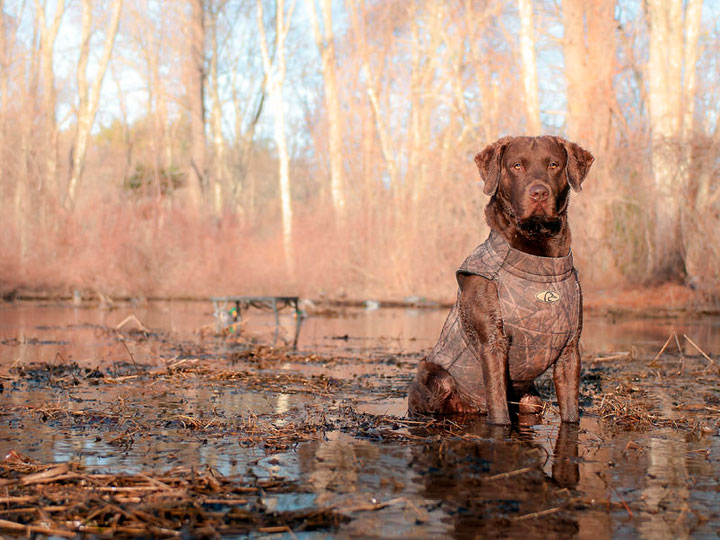
The Chesapeake Bay Retriever was developed on the east coast of Chesapeake Bay to hunt waterfowl in the most adverse weather conditions. Their coat, temperament, and physical characteristics allow them to work with ease and efficiency, boasting their inherent endurance.
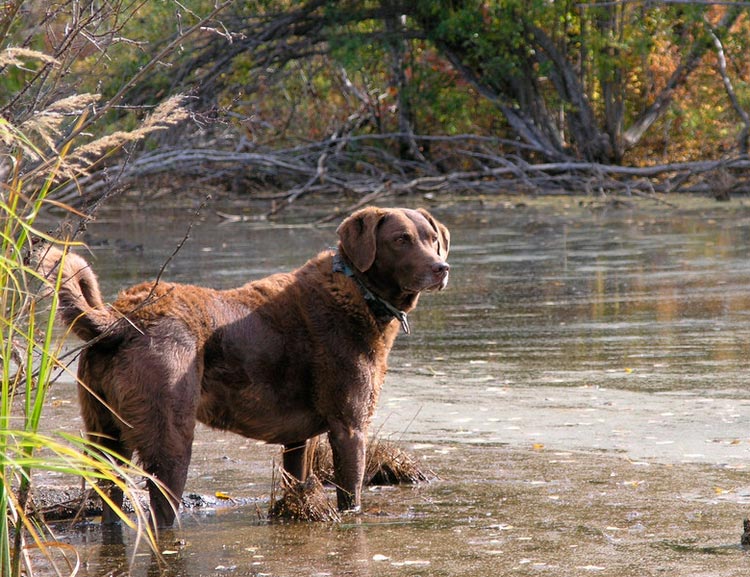
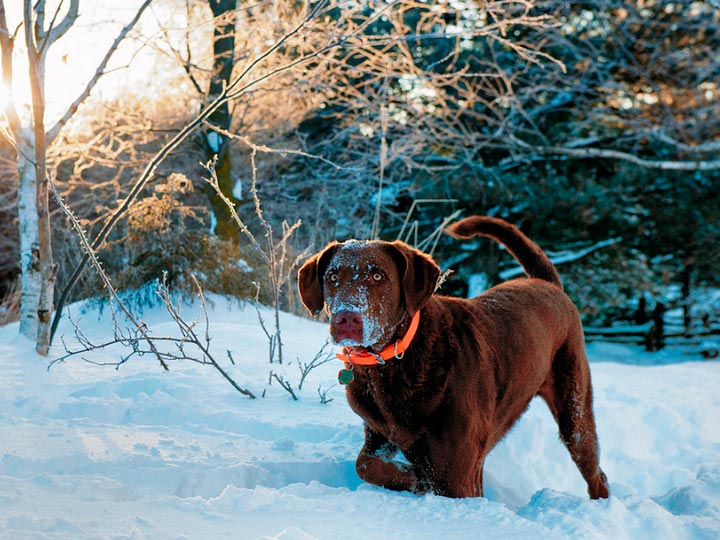
The Chesapeake Bay Retriever was bred to hunt waterfowl in adverse weather conditions. If necessary, the dog will break ice to retrieve its prey.
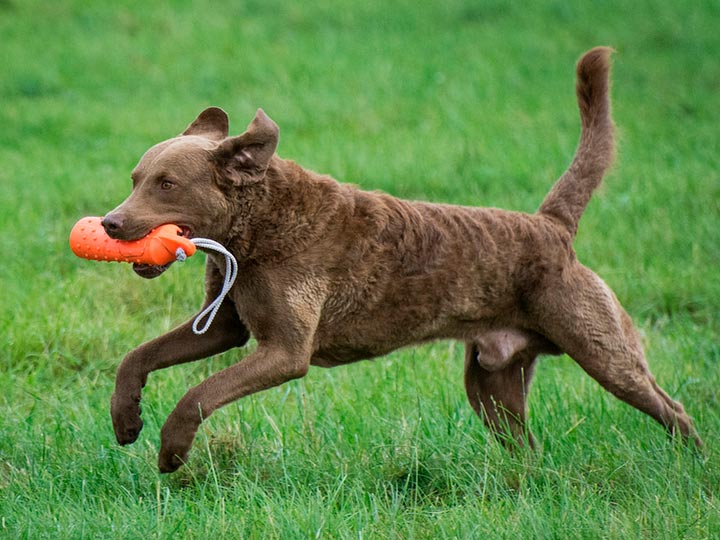
The Chesapeake Bay Retriever is, first and foremost, a hunter, a retriever by nature. But he's also a loyal companion and a capable athlete, seen competing in agility, obedience, and diving events. Frisbees aren't the best choice. Physically, the sturdy Chesapeake Bay Retriever isn't suited for constant jumping and isn't as light and agile as needed. He can sustain injuries that won't immediately show.
Video about the Chesapeake Bay Retriever dog breed:
Appearance
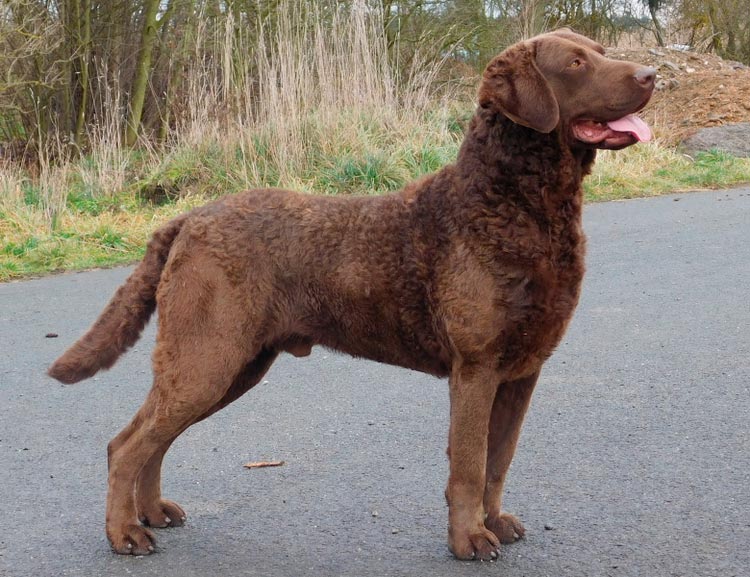
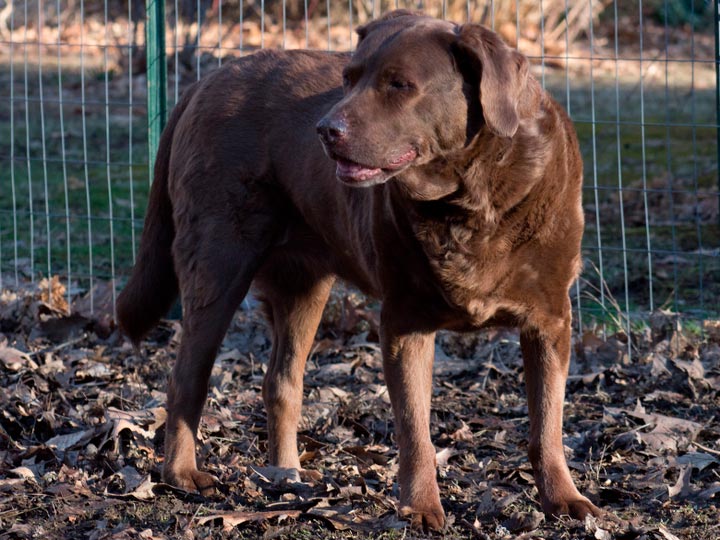
The Chesapeake Bay Retriever is a strong, well-balanced, medium-sized dog with a powerful and robust build. Sexual dimorphism is pronounced. Males stand 58-66 cm (22-26 in) at the withers and weigh 29-37 kg (65-80 lbs). Females stand 53-61 cm (21-24 in) and weigh 25-32 kg (55-70 lbs).
The skull is rounded and broad. The stop is moderate. The muzzle tapers slightly toward the nose, its length approximately equal to the length of the skull. The nose is medium in size. The lips are thin. The bite is scissor-shaped. The eyes are medium in size, very clear, amber or yellowish in color, set wide apart, with an intelligent expression. The ears are small, hanging freely at the sides of the head.
The neck is medium in length, tapering sharply toward the shoulders. The body is medium in length, slightly elongated. The chest is deep, broad, and strong. The ribs are well sprung. The tail is medium in length, wide at the base, straight or slightly curved. The legs are strong, straight, with well-developed muscles and strong bone. The paws are rounded, with toes that are close and webbed.
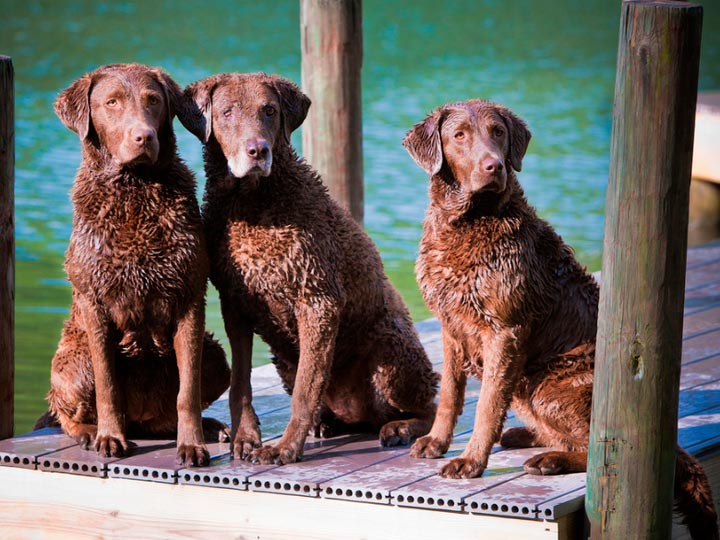
The coat is short. The guard hairs are thick, no more than 4 cm long. The undercoat is dense, consisting of fine down. The hair on the muzzle and legs is very short and straight. On the shoulders, neck, back, and loin, it is longer and may be wavy. Feathering on the back of the hind legs and on the tail is allowed. The coat is oily to the touch. The color is brown in various shades: dark brown, brown, yellowish-brown, straw. A white spot on the chest, belly, and toes is allowed.
Character and behavior
The Chesapeake Bay Retriever has a lively, cheerful disposition; it is calm, sensitive, and affectionate, devoted to its owner, but also forms strong bonds with other family members. It is highly intelligent. The Chesapeake Bay Retriever makes an excellent companion for older children, who will respect the dog and play with it. It is generally safe for children and tends to be cautious around them. It gets along well with other pets, adapts relatively easily to households with other adult dogs and cats, and welcomes newcomers into its pack.
The Chesapeake Bay Retriever is relatively calm at home, always trying to be nearby but not intrusive. On walks, they release pent-up energy and demonstrate their energetic nature. They have watchdog qualities and are even capable of defending others in some situations. However, they should never be considered a guard dog or a bodyguard. They are too friendly for that. Adult dogs may be wary of strangers, but they are not shy or aggressive.
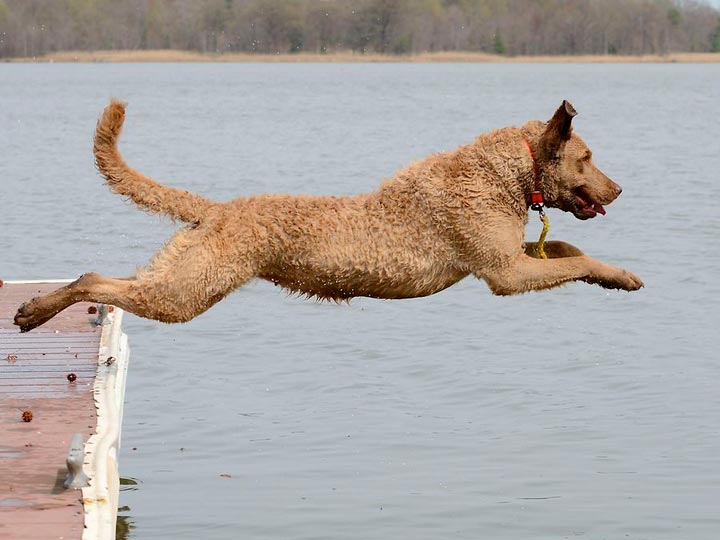
The Chesapeake's favorite activities are swimming and retrieving. He thrives in human company and is not averse to playing with his fellow dogs, but the companionship of his owner remains paramount. Chesapeakes wonderful companions For active people who enjoy spending a lot of time outdoors, are willing to devote a lot of attention to their dog, including its training and socialization, and are willing to provide it with work and mental stimulation in the future.
Education and training
Basic training is recommended for all Chesapeake Bay Retrievers, regardless of their intended use: family, hunting, or show. Training begins at an early age, focusing on socialization and basic commands. Lessons should be short and playful. Commands are practiced regularly, initially at home, where they are incorporated into daily life, then transferred outdoors to various environments. The Chesapeake Bay Retriever learns quickly, but dislikes commands that it doesn't enjoy and for which it doesn't see the point. When training, it's important to remember the Chesapeake Bay Retriever's natural talents and inclinations. Aside from everyday commands, which the dog must obey without question, the emphasis is on tasks it enjoys. The Chesapeake Bay Retriever isn't inclined to learn circus tricks, but can excel at retrieving.
The Chesapeake Bay Retriever is a sturdy dog with a strong character, but it does not tolerate cruelty and has a very good memory. Handling it requires patience, firmness, consistency, and persistence. Don't expect exceptional obedience from a retriever, especially at a young age. A mature dog, with regular training, will become an obedient and reliable companion.
Content Features
The Chesapeake Bay Retriever is suitable for both indoor and outdoor living. It adapts well to apartment life. With proper care, its coat has virtually no odor, but it does feel more oily to the touch than many other breeds. The more a dog swims in cold water, the more natural oils it produces. Young puppies often destroy things, so it's recommended to confine them to crates and remove all valuables when their owners are away.
A Chesapeake Bay Retriever can be a good companion even for someone who doesn't plan to hunt. Regular walks, training, games, swimming, and water retrieving will keep your Chesapeake happy and in good physical condition.
The Chesapeake Bay Retriever is intelligent, energetic, and resilient. It requires ample exercise and regular mental stimulation. Whether it's walking in the woods, running, hunting, or swimming, it's ready to share its owner's passion. It excels in a variety of sports, but field work is the preferred option, allowing the dog to utilize all of its natural talents.
Care
The Chesapeake Bay Retriever is a short-haired breed with a soft undercoat. Seasonal shedding is heavy, but otherwise moderate. Weekly brushing will help keep shedding to a minimum. Frequent bathing is not required. A full shampoo is sufficient. shown 2-3 times a yearTo remove most of the dirt while leaving the natural oils in the coat, simply spray the dog with clean, warm water and then brush with a thick, natural-bristled brush. During shedding season, metal combs are commonly used.
Thanks to its coat, the Chesapeake Bay Retriever can work in any weather conditions. Its coat is water-repellent. After a swim, the dog will only be slightly damp on the surface.
The ears also require regular care. They should be cleaned as needed. Nails should normally wear down on their own. If this doesn't happen, they should be trimmed as they grow to the optimal length. Teeth should be brushed at least once a week.
Nutrition
The only caveat owners should be aware of is the Chesapeake's tendency to gain excess weight. Generally, these dogs are not prone to digestive issues and digest a variety of foods well. Owners can choose the most convenient option: homemade food or prepared dry food. Mixed foods are not recommended. The diet should be prepared according to standard guidelines. Food is selected based on the dog's age, size, and physical activity.
Health and life expectancy
The breed's health has improved significantly in recent years, primarily due to genetic testing of breeding stock and a more careful approach to mating. However, hereditary problems are still occasionally reported in Chesapeakes:
- Hip dysplasia;
- Elbow dysplasia;
- Patellar dislocation;
- Ophthalmological diseases (cataract, progressive retinal atrophy);
- Degenerative myelopathy;
- Exercise intolerance syndrome, which provokes collapse;
- Epilepsy;
- Von Willebrand disease type III;
- Localized alopecia.
If the Chesapeake Bay Retriever does not suffer from hereditary diseases, it is a strong, healthy dog with good immunity, endurance and easy adaptation to various conditions. Life expectancy is on average 11 years.Like any other dog, he requires regular veterinary preventative care, including vaccinations and treatment for external and internal parasites. A full medical examination is recommended every one to two years.
Choosing a Chesapeake Bay Retriever Puppy
The majority of these dogs are concentrated in the United States, specifically Virginia and Maryland. Outside of the United States, only a few breeders are involved in breeding these dogs. These are primarily kennels that also breed other, more popular retrievers: Labradors, golden And straight-haired.
Every puppy must have a puppy card, which lists the parents' names, pedigree numbers, titles, the puppy's name and tattoo number, its sex, birth date, color, and breeder information. A puppy card is a birth certificate, which is then exchanged for a pedigree. Buying a puppy without papers, especially one of such a rare breed, can be dangerous. This is especially true if you're looking for more than just a dog with a similar coloring, but a Chesapeake Bay Retriever with the breed's characteristic temperament and working qualities.
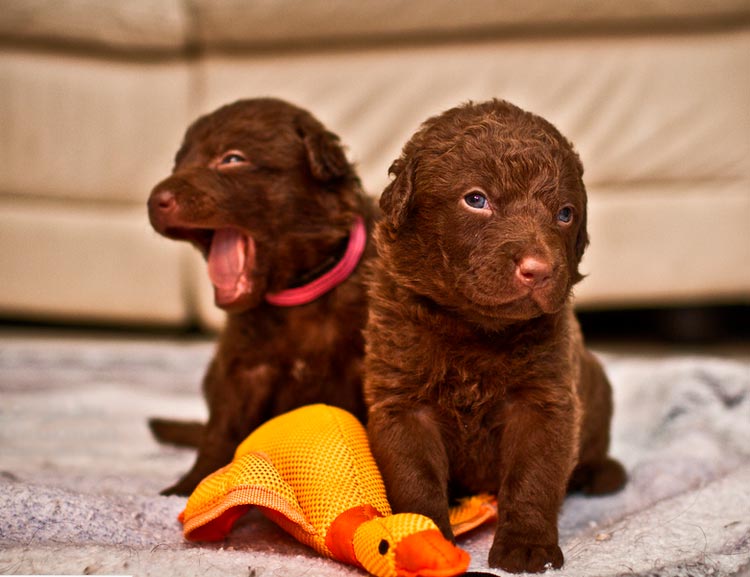
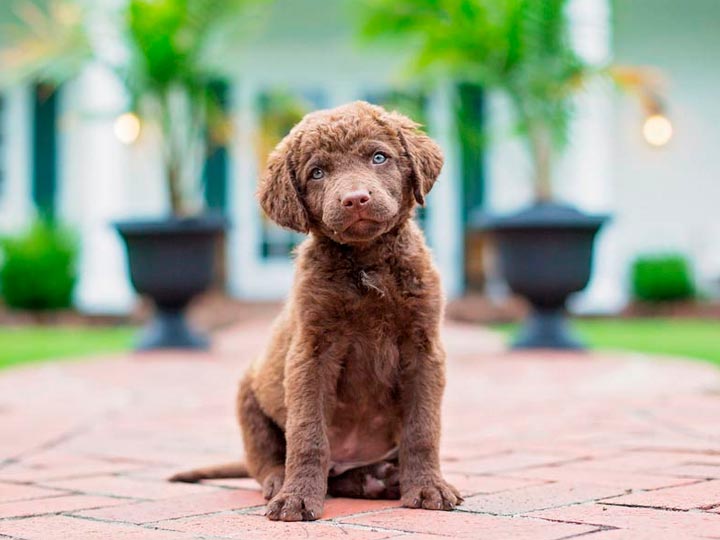
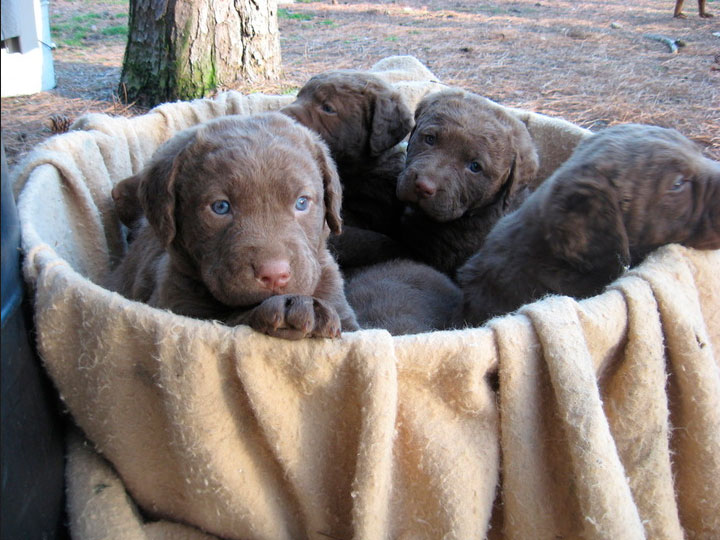
When visiting the breeder, they assess the dogs' living conditions, their ability to roam freely, the quality of their food, and the mother's appearance. The puppy should be strong, curious, and active. They also ensure that it meets the breeder's standard. Ears should be drooping, relatively large for puppies. Eyes should be wide-set, yet still retain the same intelligent expression, and be light in color. The tail is straight, without kinks or bends. The paws are strong and firm. The coat is short, slightly wavy, and close to the body. The color is brown. The bite is correct. The puppy should be completely healthy in appearance. Genetic testing of the parents for common breed-specific conditions, such as elbow and hip dysplasia, degenerative myelopathy, ophthalmologic diseases, and others, is encouraged.
Price
In American breeders, the average price for a Chesapeake Bay Retriever puppy is $1,500. In Russia, a Chesapeake Bay Retriever puppy from a good working parent typically costs around 50,000 rubles.
Photos
The gallery contains photos of Chesapeake Bay Retriever dogs and puppies.


Read also:


Add a comment