
Acanthosis Nigricans in Dogs: Symptoms and Treatment
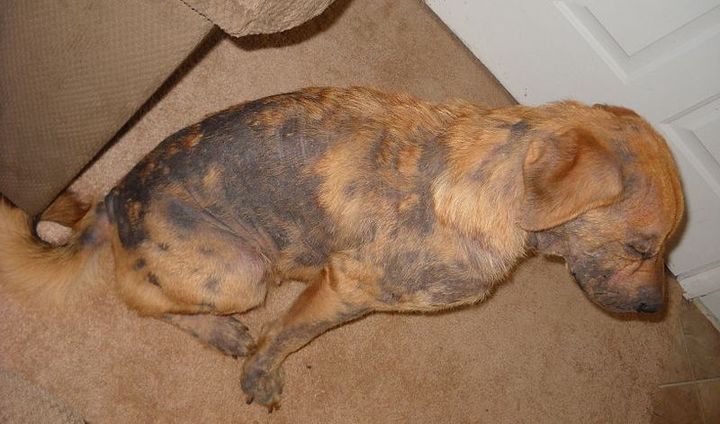
Acanthosis nigricans, commonly known as "elephant skin," is a skin condition that can be hereditary or acquired during life. Affected areas are typically found in the armpits, groin, neck, or abdomen—areas where the skin is more delicate and smooth. The symptoms and treatment options for this condition are described below.
Content
Causes of the disease
Acanthosis nigricans has not been thoroughly studied to date, but it is common to distinguish three main types of the disease:
- Primary.
- Secondary.
- Pseudoacanthosis.
The primary form is considered idiopathic, and veterinary practice shows that dachshunds are most susceptible. However, there is no scientific evidence that dachshunds are genetically predisposed to this disease. Typically, the first signs of black spots on the body appear in puppies at 10-12 months of age. This is why a hereditary factor has been suggested. This condition is not treatable, so if the dog is not experiencing any discomfort and leads a healthy lifestyle, no medications are used to restore the skin.
The secondary form develops in various dog breeds, but smooth-coated dogs with folds of skin—bulldogs, shar-peis, pugs, and others—are considered particularly at risk. The disease is caused by various dermatitis, fungal and bacterial infections, and allergic reactions. Possible triggers include the following health disorders:
- Disruptions in the functioning of the endocrine system.
- Incorrect metabolism.
- Diseases of the kidneys and genitourinary system.
- Hormonal disorders (usually in females).
- Problems with the digestive tract (chronic gastritis, colitis).
- Severe nervous stress associated with the loss of owners, moving to a new place of residence, rough treatment, etc.
Pseudoacanthosis is characterized by rashes and skin discoloration that fit the general symptoms of the disease, but the true diagnosis lies elsewhere. These can include various types of allergies (including food allergies), obesity, immune disorders, or fungal infections.
General symptoms
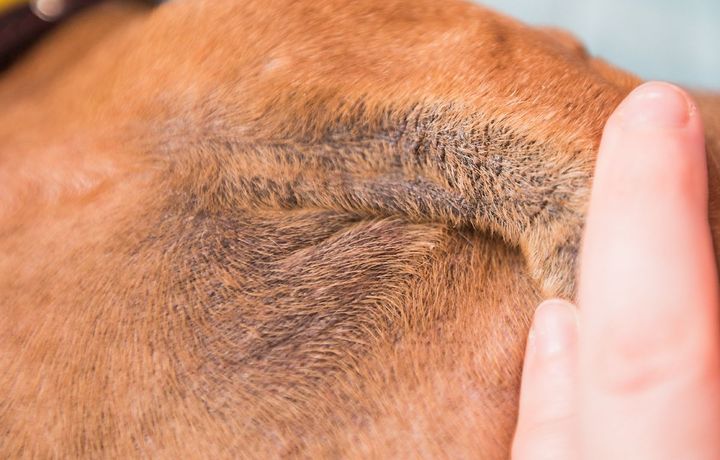
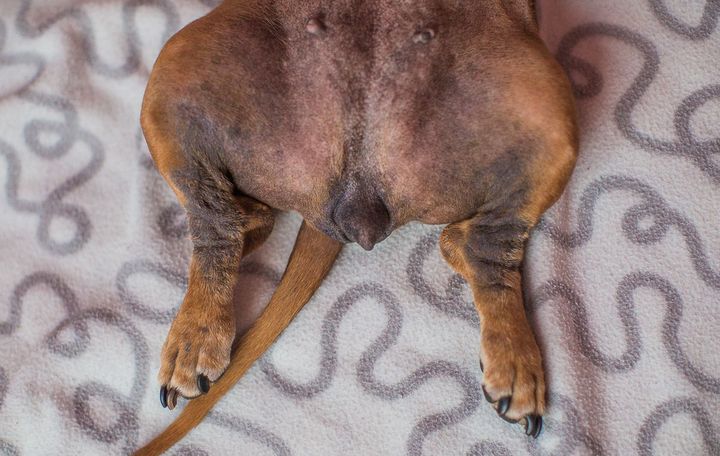
Regardless of the type of disease, the clinical presentation will be roughly the same. Initially, a subtle darkening of the skin is observed in the intergluteal region, abdomen, armpits, ears, and within folds (head, extremities), as seen in the photo below. Over time, the affected areas become more noticeable, appearing black or dark against the light skin.
The skin then changes density, becoming rough and hard to the touch. Irregular growths appear in the folds. Sometimes this deformity is accompanied by a characteristic putrid odor. Alopecia—a gradual or, conversely, rapid hair loss in the affected areas—can develop simultaneously. The dog becomes restless, scratches incessantly, avoids touching the darkened areas, and whines in pain and itching.
Possible complications
Depending on the form of the disease and its severity, the following complications may occur:
- Blood poisoning occurs as a result of infection entering open wounds. If medical attention is not provided promptly, death is possible.
- Weight loss in dogs, even to the point of complete exhaustion, due to a nervous system disorder and lack of normal appetite.
- Skin roughness and alopecia.
- Formation of deep ulcers that do not heal due to constant scratching and secondary infections.
- Other dermatological problems.
Diagnostics
Since the symptoms of "elephant skin" are quite unambiguous, diagnosis is usually made based on a visual examination. However, additional testing may be required to determine the type and cause of the condition. This primarily applies to cases involving pseudoacanthosis nigricans and secondary acanthosis nigricans.
To exclude/confirm the presence of secondary infections, cultures are performed, and scrapings are taken from infected surfaces to detect demodicosis and other dermatological pathologies.
In older dogs, the thyroid and adrenal glands are also checked. All animals undergo mandatory allergy testing. In questionable or ambiguous cases, a biopsy may be performed.
Treatment
The choice of medication depends on the severity of the disease, the dog's sensitivity, its age, and breed. In the early stages of acanthosis nigricans (or blackening acanthosis), when the affected area is small, there are no ulcers, and there is no alopecia, the following therapy may be prescribed:
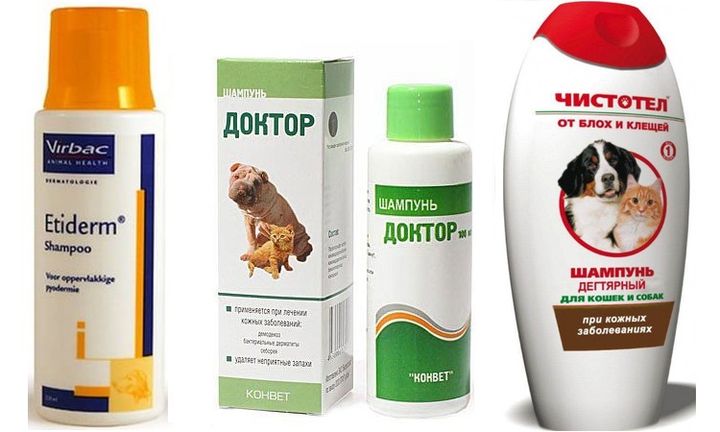
- Etiderm is a shampoo containing chitosanide. The active ingredient has an antimicrobial, anti-inflammatory effect, creating a protective barrier on the skin. Before use, wet the animal's coat with warm water and then massage the product in. The dosage is prescribed by a veterinarian, but on average, 30 ml is sufficient for a single use for a dog weighing 10-20 kg. The treatment is performed several times a week, at least every other day. The course of treatment is tailored to the individual.
- Doctor. Birch tar-based shampoo helps restore the skin and eliminate inflammation. Apply a small amount to damp fur, lather gently, and leave for approximately 5-10 minutes. Then, bathe your pet. The doctor will prescribe the application schedule. Typically, 7-10 treatments are sufficient to bring the condition into remission.
- Celandine shampoo. Effective in the early stages of acanthosis nigricans. It has antiparasitic properties and helps restore the skin's protective barrier. It accelerates the healing of wounds and insect bites and relieves itching. It is used similarly to other medicated shampoos. Apply a small amount to damp fur with massaging movements, leave for 10-15 minutes, and then rinse thoroughly with warm water.
- Diphenhydramine or Diphenhydramine. Used to relieve itching and reduce swelling. Available as an injection, it can be administered both intramuscularly and subcutaneously. A concentrate containing 1% of the active ingredient is used for treatment. Injections are given twice daily, morning and evening. The number of injections depends on the indication.
- Pipolfen and Allergan are available in tablet and injection form. The dosage and treatment regimen are determined by a veterinarian. Injections are usually preferred in advanced cases, as they dissolve quickly in the blood, helping to relieve itching, swelling, and inflammation.
- Valerian officinalis. Used in combination with other medications, it has a calming effect, gently restoring the nervous system. The dosage depends on the severity of the neurosis, the dog's breed, and its weight. A single dose can be 1-3 tablets several times a day.
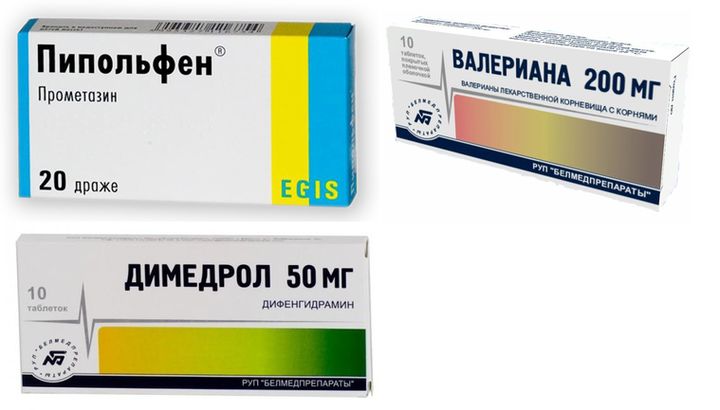
In severe cases of the disease, stronger medications may be used, either alone or in combination. These include:
- Multivitamins. Vitamin E is a must-have for the vitamin complex, which helps restore skin and reduce inflammation. For better absorption, injections are preferred. Puppies are typically given 0.3 ml of solution, and then the dosage is based on the dog's weight: 0.3-1 ml is given to dogs under 15 kg, and 1-3 ml to dogs over 15 kg. The medication is administered subcutaneously or intramuscularly. The average course of treatment is 3 months, with injections given every 7-14 days.
- BaytrilAn antibiotic prescribed for staph infections. This medication is contraindicated for puppies. Injections are administered subcutaneously once daily. The number of injections is individualized; the recommended range is 3-5.
- Sulfur shampoo. Effectively combats not only the effects of acanthosis nigricans but also other dermatological conditions. It is very aggressive when in contact with the mucous membranes of the eyes and mouth. Therefore, it is necessary to take precautions and ensure that the dog does not lick or scratch its fur during treatment. The application method is standard: apply the product to wet fur, spreading it evenly and massaging it into the body. After 10-20 minutes, rinse with plenty of water.
- Melatonin. Used for scalp hair loss. The dosage of the active ingredient is calculated based on the animal's weight. Kidney and liver function tests are required prior to use to detect potential side effects.
- Sinaflan. Hormonal ointment. Used in severe cases where other medications have proven ineffective. Apply a thin, even layer to the affected areas, avoiding clean skin, once daily. The course lasts 5-7 days. Longer use is not recommended to avoid withdrawal symptoms.
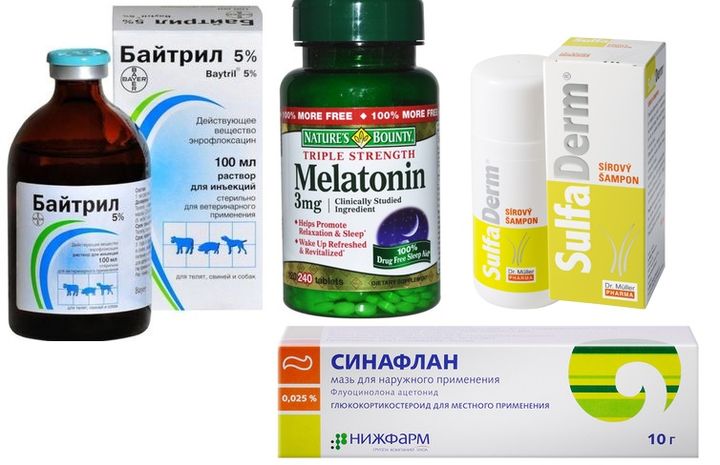
Folk remedies are not used as a primary treatment, but only in combination with medications. Tinctures and decoctions are prepared at home.
- Melissa. Helps relieve itching. Steep 1 tablespoon of dried leaves in 1 cup of boiling water, let it steep for 20 minutes, strain, and cool. Rub the affected areas with a bandage soaked in the infusion several times a day.
- Shilajit. Relieves itching and promotes skin regeneration. Dissolve 1 g of resin in 100 g of water and stir the solution well. Apply compresses to the affected areas for 20-40 minutes several times a day.
- Calendula tincture. Sold pre-mixed at pharmacies. It has an antiseptic effect and accelerates skin healing. Apply to problem areas, avoiding open wounds to avoid causing pain to your dog.
Features of animal care and prevention
To avoid aggravating the disease and to alleviate your dog's condition as much as possible, it is recommended to follow these rules and tips:
- Try to avoid exposing your pet to unnecessary stress and avoid long trips during the treatment period. If a nervous disorder does occur, administer a course of sedatives. Consult your doctor for the medication and dosage.
- Stick to a gentle diet if the animal's diet consists of natural food.
- Don't forget about physical activity, the level of which is selected in accordance with the dog's breed and age.
- Add vitamins and healthy food supplements to your diet.
- Maintain hygiene in your dog's sleeping area and regularly treat the bedding for parasites.
- Avoid prolonged exposure to direct sunlight, as ultraviolet radiation promotes increased production of melatonin.
- Before outdoor walks, treat your dog's coat with tick repellent. Insect bites can weaken the immune system, especially if they occur in areas affected by acanthosis nigricans.
- If there are open wounds, use sterile pads and antiseptics.
- Make sure that dirt does not accumulate between the folds (if any), and promptly treat problem areas with disinfectants.
Read also:
- Red spots on a dog's belly
- Scabies in dogs: symptoms and treatment
- Atopic dermatitis in dogs: symptoms and treatment


Add a comment