
Blackheads on Cats: Why and What to Do
People rarely notice that their cat has black spots on its chin. They view it as a common occurrence and pose no threat. But if you dig deeper, you'll discover that black spots on the chin and other parts of the body are a sign of something. In some cases, they can be a sign of illness or, at a minimum, the result of improper grooming. So, let's find out where black spots appear on our pets' beards and other body parts, what they might mean, and how to combat this problem.
Content
The nature of dots: what could they be?
"Black grains" in a cat can have different meanings depending on the location and structure.
Localizations and their meaning
-
On the lips - this is often food dirt mixed with sebum, or small blackheads (“cat acne”).
-
On the nose there are scales from dryness, pigment or flea bites.
-
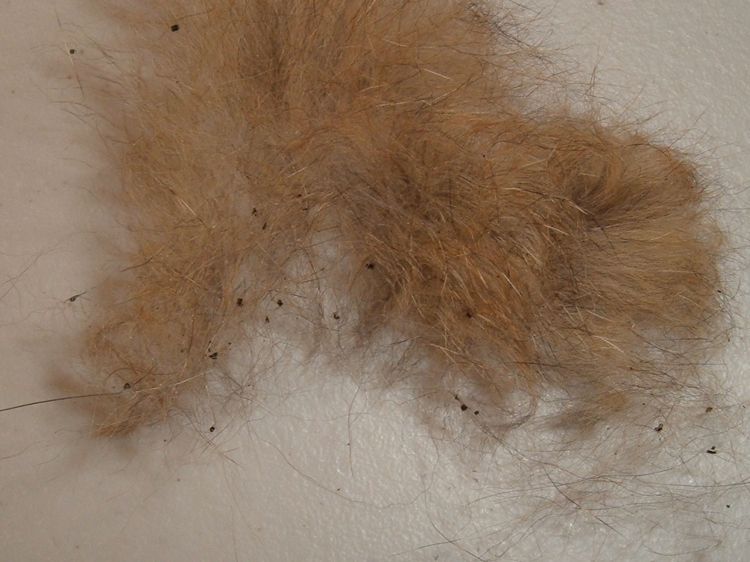
The fur contains mainly waste products from parasites—exactly what gives rise to the phrase “there are black specks in my cat’s fur, what are they?”
-
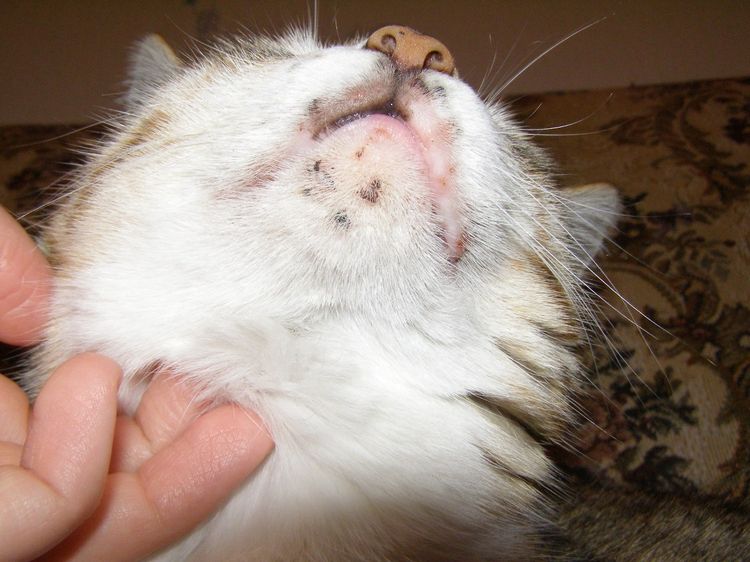
On the chin is the equivalent of acne in adolescents in humans - feline acne, more common in sterilized individuals.
How to distinguish granules from dirt or skin secretions
| Sign | Hygiene/Acne Granule | Parasitic droppings (nits) | Dry flakes/pigmentation |
|---|---|---|---|
| Size | 1–2 mm | up to 0.5 mm | 0.1–0.3 mm |
| Form | Flexible under the fingers | Hard, round | Flat, do not protrude |
| Color | Black, gray | Black and brown | Light brown, gray |
| Behavior | When lined up with wool, they remain | They fall out and move when you comb them. | Do not change when moving |
| Signs in a cat | Mild itching, shiny fur | Active itching, hair loss, redness | Cold areas of skin, without inflammation |
When it's not about parasites
If blackheads on your cat's nose resemble food or dry dirt, lightly dampen a cotton ball with warm water and try to remove them. If they disappear, the cause is superficial. If they persist, it could be feline acne, mast cell rash, or pigment.
Feline acne (pimples) is more common in young or neutered animals. Causes include hormonal changes, poor hygiene, or a reaction to plastic.
Approach: meticulous hygiene (aqueous solution of furacilin/chlorhexidine) 2-3 times a week. If inflammation occurs, antibacterial ointments are prescribed.
Parasitic scenario
The most alarming sign is if there are black specks in the fur, combined with hair loss or constant itching:
-
These are most often flea cysts - a microscopic examination reveals a dense black-brown granule, which, when wet, turns into a reddish drop of blood.
-
If the cat appears calm, but there are a lot of spots, it is worth examining it for mites (demodicosis) or skin parasites.
-
Important advice from the veterinarian: use preventative drops/collars and thoroughly clean the apartment, because fleas feed on stored urine for up to 3 generations.
What is acne?
Acne is the scientific name for blackheads, but they can also be called pimples (blackheads), as that's what they are. If you notice dark rashes on your pet, make sure they're acne. After all, parasite feces and dried blood droplets look identical. First, try removing the spots; if that doesn't work, it's acne. It's also worth paying attention to the location of the blackheads. Blackheads especially like to "settle" on the chin, and insect waste can be found anywhere on your pet's body. However, if the case is severe, blackheads in your cat's fur may be found elsewhere:
- inner thighs;
- elbow bends;
- jaw;
- nipples;
- eyelids.
The rash can even be localized in the anal area. If the rash is multiple, the vagina should be examined by a doctor.
Symptoms of acne
In addition to the notorious blackheads, the skin disease is accompanied by other symptoms:
- swelling;
- baldness;
- the skin turns red;
- small pimples appear (then there are more of them and they increase in size).
Your pet may also become restless and scratch themselves. The lesions are painful and itchy. Keep in mind that an accurate diagnosis is the job of a veterinarian. Only a qualified professional can determine the nature of the rash. In this case, diagnosis is crucial. After all, a thorough examination could indicate that black specks on your cat's face are traces of fungal activity, parasites, or even a skin biopsy. An examination also rules out other conditions with similar symptoms:
- scabies;
- demodicosis;
- allergy;
- dermatophytosis;
- eosinophilic granuloma.
If you see black spots in your cat's fur, you're looking at plugs in the skin filled with sebum. In this regard, animals are just like us.
Causes of blackheads
The reason acne occurs on the chin is due to the characteristics of the animal's coat. The chin is one of the most hairless areas on the animal's body, so it has numerous sebaceous glands, which can cause breakouts. Furthermore, this area of the body often becomes dirty while eating, which only plays into the glands' hands.
However, if your cat has black spots around its mouth, don't immediately blame dirt. Many well-groomed, clean pets suffer from this hereditary problem. If your pet is suffering from this individual characteristic, don't worry. While acne can't be cured, its manifestations can be kept under control with the use of hygiene products.
Black spots in a cat's mouth can also appear for the following reasons:
- hormonal imbalance;
- eating disorder;
- problems with the central nervous system, gastrointestinal tract, liver;
- disorders of vegetative and immune nature.
Black specks in a cat's ears indicate poor grooming. The body normally produces small amounts of wax. While wax doesn't typically interfere with the sebaceous glands' proper functioning, it does tend to accumulate, causing gland dysfunction and, as a result, acne. This is especially true for breeds with large, open ears. Interestingly, over-care can also lead to the formation of spots. If you over-clean your pet's ears, the glands may begin to produce double the amount of wax to restore the protective layer.
If your cat has black spots in her fur and she's wearing a collar, the collar itself could be the culprit. In this case, it could be an allergy to the collar material, irritation, or insufficient airflow to the skin.
Among other things, black spots in a cat's mouth can be caused by stress, poorly maintained dishes, or an allergy to litter. Rashes can also occur due to contact dermatitis or other skin conditions that cause increased oil production.
As you can see, there are many reasons, and to identify the root cause of the problem, you need to contact a veterinarian.
Which cats are more susceptible to blackheads?
Pet acne is often more of a concern for the owner than the animal. However, if the condition is in an acute stage, the pet may experience irritation and itching, which can be uncomfortable.
Blackheads on a cat's lips can appear at any time, regardless of age, breed, or gender. Neutered and spayed pets have a better chance of avoiding these spots, but they aren't completely immune.
Treatment Tips
If you decide to treat your pet's acne yourself, follow these simple rules to speed up recovery:
- Do not use brushes to comb the damaged surface.
- Do not apply the cream frequently or generously to the affected area, as this will cause the skin to dry out.
- Long-term use of iodine, brilliant green, or alcohol-based solutions to treat blackheads can trigger increased sebum production. This can lead to further blockage and a diffuse, spreading rash. If your cat has blackheads on its nose, you can use water-based methylene blue instead of brilliant green. It has the same healing properties but won't cause irritation.
- If you use ointment, apply it in a thin layer. Otherwise, the skin won't be able to breathe, which will lead to another flare-up of dermatitis.
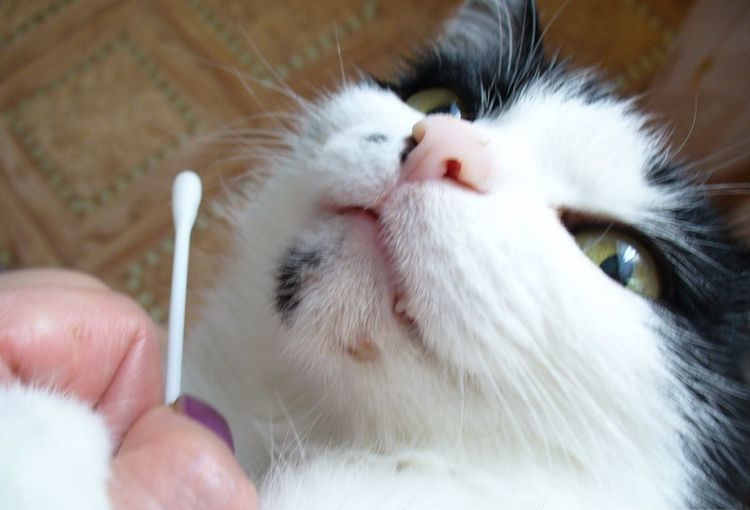
In conclusion, I'd like to offer some advice: if you notice black spots in your cat's fur, take them to the vet. Most skin conditions are associated with internal organ problems. What if your pet has liver or gastrointestinal problems? In this case, ointment or lotion alone won't be enough.
Folk remedies
- Black spots on a cat's lips can be wiped with a yarrow decoction.
- A celandine decoction is very helpful. It is used to wipe the affected areas and as a compress.
- Some people treat pet acne with pumpkin. To do this, take a freshly cut pumpkin and apply it to the affected areas. Repeat this procedure three times a day, using a fresh cut each time.
- A decoction of calendula and chamomile flowers mixed with two furacilin tablets has proven effective. It is recommended to take this remedy twice a day.
Blackheads on a cat's face can also be treated with chlorophyllipt or 1% clotrimazole. These products are not rubbed in, but applied topically. Sulfur ointment is applied over the medication.
Treatment with any drugs or medications should be discontinued in the following cases:
- Skin irritation is visible. To treat black spots around a cat's mouth, you need to wait until the skin heals. After all, you can only treat the intact skin.
- An expansion of the rash area indicates that treatment is ineffective.
- The acne disappeared due to recovery.
Proven removal methods
-
Soap solution- gentle cleansing of the lips or chin.
-
Cotton wool + chlorhexidine— a safe product for removing scales from the nose and around the lips.
-
Parasitic agents- drops or collar + cleaning the apartment.
-
Skin hydration- special shampoos, Omega-3 supplements.
Prevention
If your cat has black spots on its nose, the cause may be its bowl. This is especially true if it's made of plastic. Consider changing your pet's bowl. Ceramic, glass, or iron are all suitable materials. Don't forget to change your pet's water at least once a day.
-
Regular checkups – inspect the nose, lips and fur at least once a week.
-
Acne prevention: Wash plastic utensils every couple of days, use ceramic or metal.
-
Parasite prevention - drops/collar all year round, especially in spring and autumn.
-
Nutrition - a balanced diet, avoid excess fat.
If your pet is prone to obesity, consider their diet. Don't forget to boost their immune system with vitamins and minerals. And if your cat is a natural-born slob, don't hesitate to bathe them.
With a little care, you can forget about blackheads on your cat.
Any questions? Our veterinarian will answer them as quickly as possible using the comments box below.
Read also:


7 comments
Lyudmila
We have a problem with a black crust in one nostril. We're treating it with the antifungal ointment Terbinafine, and it cleared up right away. But we've never heard of blackheads. These are very serious conditions, and I hope this ointment will help in that case, too.
Daria is a veterinarian
Hello! Don't self-medicate. You need to know what's wrong with your pet before you start dosing them with medications. Antifungal medications aren't completely harmless. Your pet might also have a food allergy or a hormonal imbalance. In that case, fungicides are useless.
Elena
A relative of mine decided to treat her cat's ringworm on her own using a hormonal ointment intended for humans. As a result, the cat suffered severe nervous system damage and coordination problems. He was left disabled, the poor thing.
Svetlana
Good afternoon. My cat has severe irritation on his head and neck. On his head, it looks like a cluster of pimples with crusty spots. On his neck, there's something dark on his white fur, along with numerous black dots. These are acne, and they're probably two different conditions. The dermatologist prescribed 4% Chlorhexidine Ecoderm spray, but along with Skoday, the fur came off. He screamed so much he wet himself and was given 1/4 of his suprastin and Hills Diet CD. The cat has had a cystotomy, and we've been treating this itch for two months now, but it's only getting worse, and we're changing his food. Postoperatively, everything is normal, and his urine shows no abnormalities, only protein at 0.03. He's eating, peeing, and playing. He's 10 years old, and this is his first time experiencing this. He also has a female cat, and they're together, but the female cat's skin is fine, while the male cat has only one. The dermatologist doesn't offer any imaging tests or blood tests for allergies, saying they're not informative. Only a visual examination, new food, and new prescriptions. The cat is going crazy, starting to hide, even seeing the next tube of spray. What should we do? Where else should we go?
Daria is a veterinarian
Hello! Insist on a scraping. Rule out demodicosis (it especially favors the scalp), notoedric mange, and other scabies-related "pleasures." Have you tried Advocate/Inspector/Stronghold/Frontline drops on the withers? They kill both skin parasites and various types of scabies mites. Your dog's immune system needs to be boosted; it may have weakened after the surgery, which is why the treatment is less effective.
Margarita
I took in a stray cat. He recovered, but I noticed black marks on the white areas of his fur—specifically, on the fur, as if they were stuck on. I started squeezing them, and some burst. It's difficult to remove them from the fur with my nails. Please advise. It's difficult for me to take him to the vet because of my limited mobility. I have another cat.
Daria is a veterinarian
Hello! It looks like skin parasites (fleas, lice). You need to bathe both pets (you can find a special shampoo at a veterinary pharmacy), comb them thoroughly with a fine-tooth comb, and treat them for skin parasites (there are plenty of options: Inspector, Advocate, Strongold, Blokhnet drops, or at least Barsom). Apply the drops to both animals. Ideally, thoroughly clean and disinfect everything in the house to rule out the possibility of parasite eggs or adult parasites nesting somewhere.
Add a comment