
Tortoiseshell color of a cat and a male cat
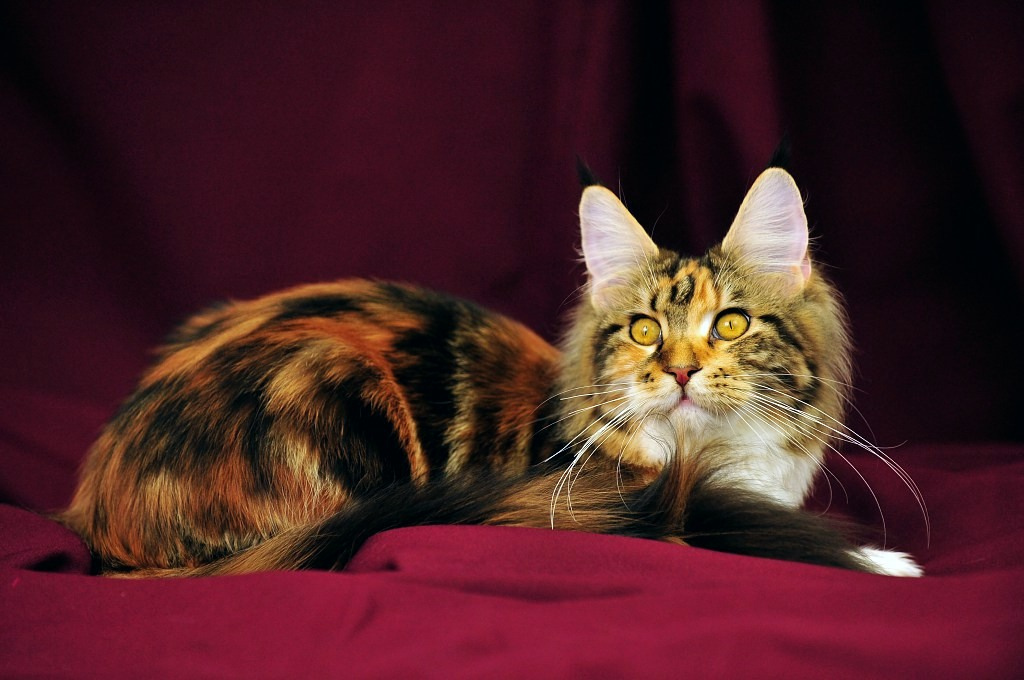
Among the incredible variety of colors in pets, the tortoiseshell cat color stands out. These are very beautiful, tricolor Animals whose fur is covered with intricate patterns and streaks. However, many people, upon hearing this name for a color pattern, don't even know what it looks like.
To understand this color, imagine a tortoiseshell comb or a tortoiseshell ash tray—the same irregular spots cover the entire body of a tortoiseshell cat. Let's get to know these beautiful representatives of the feline world better and learn all about the characteristics of this color.
Content
Why does a cat's coat develop a tortoiseshell color?
As is well known, only female cats are normally calico. Tortoiseshell cats are extremely rare, but these individuals are born as a result of a rare genetic mutation and are usually incapable of reproduction. Therefore, if you encounter a calico cat on the street, you can be sure it's a female.
To understand in detail where the tortoiseshell color of cats, whose photos are so popular on the Internet, comes from, it is worth recalling the school course in genetics
As is well known, an animal's sex is determined by the combination of X and Y chromosomes, where XX is female and XY is male. The so-called red and black coat colors are determined by genes located on the sex chromosomes. The Y chromosome is significantly smaller than the X chromosome and, furthermore, does not contain the genes responsible for black (o) or red (O) coat colors.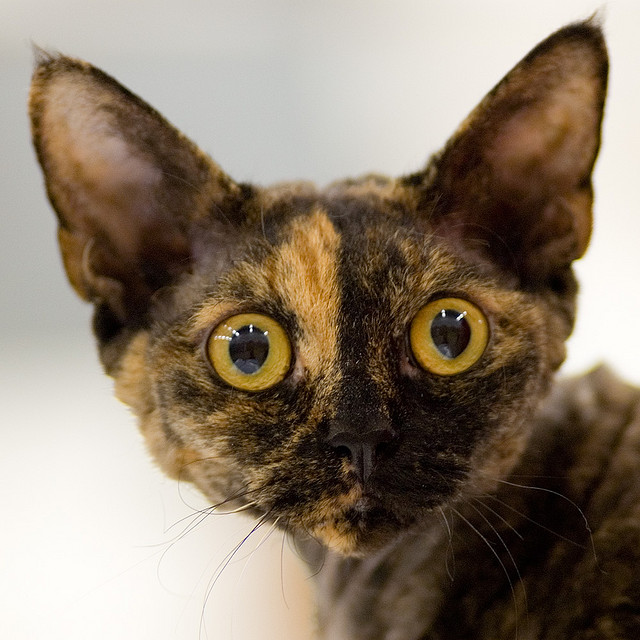
If we consider the genotype of an XY cat, it becomes clear that the Y gene contains no information about color, while the X gene contains either the black (o) or red (O) gene. Therefore, if the O gene is present in the cat's chromosome, its color will be red, but if it is o, the cat will definitely be black.
Let's move on to cats: with two X chromosomes carrying the genetic code for coat color, the possible variations in the final coat color become significantly greater. The options available in this situation are presented below:
- XO combined with XO will give a completely red color;
- Xo with a second Xo will give a completely black color;
- XO in combination with Xo gives the possibility of both black and red color at the same time, which gives such a rare and beautiful tortoiseshell color of a cat.
Since the chromosomes are arranged in a chaotic order and cannot be arranged in any way, it is practically impossible to deliberately produce a tortoiseshell color - this color is obtained randomly, and it is practically impossible to breed it through selection.
What breeds of tortoiseshell cats are there?
So we come to the question that concerns many: what breed are tortoiseshell cats? And here, breeders unanimously declare that there is no connection between the animal's breed and its tortoiseshell coloring. Simply put, tortoiseshell cats can be absolutely any breed, from Persians to British and Scottish Folds.
Another interesting fact is that if a cat of any breed is born with a tortoiseshell coloring, it cannot be considered purebred. Since this coloring occurs through mutations, such animals are not considered purebred, although they are allowed to compete and breed.
It is also impossible to intentionally produce a tortoiseshell coloration in a cat of any breed - such individuals are born completely by chance, and it is not possible to increase the chances of this happening.
Tortoiseshell color varieties in cats
There are several tortoiseshell cat varieties worldwide, each with a different appearance, sometimes quite different. To avoid confusion, breeders have divided all tortoiseshell cats into two subspecies: tortie and calico.
Cakes
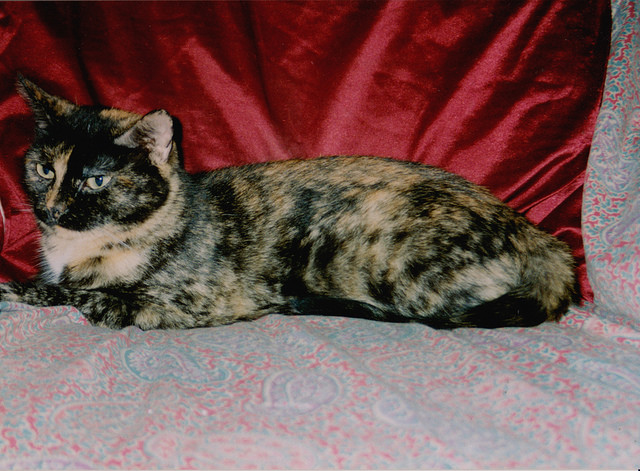
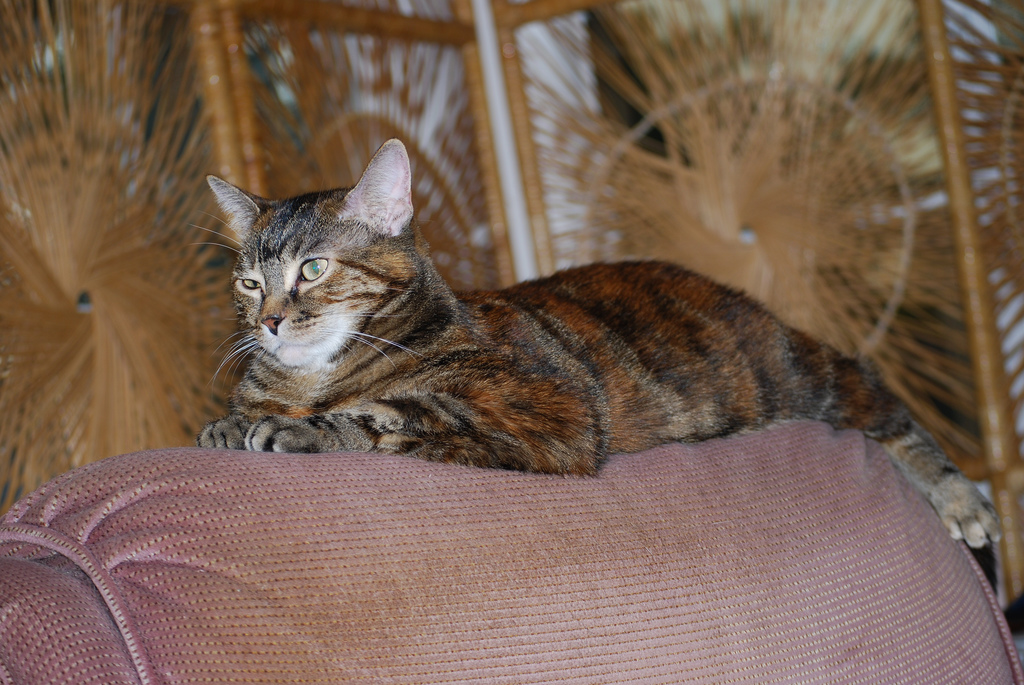
Tortie is a so-called scaled pattern. To imagine this color, imagine a cat with a chaotic alternation of small red and black spots, like fish scales. The blurry, indistinct boundaries of the spots and the completely random arrangement of the "scales" make it virtually impossible to find two identical tortie cats—they are all unique in their coloring.
Calico
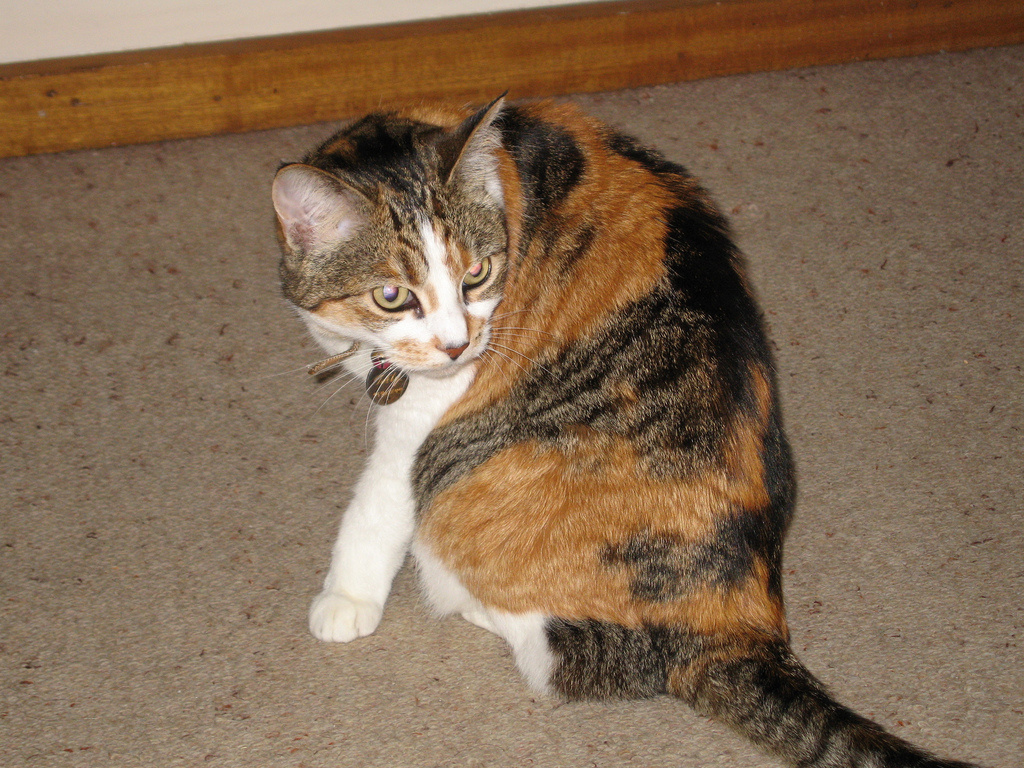
Calico is a patchwork pattern, meaning the areas of different colors are significantly larger than those of a tortie. This pattern is sometimes called calico tortie or plated. The spots in this case have more defined boundaries and are clearly visible across the cat's body. Scottish Folds and British Tricolor cats look especially beautiful in this type of coloring - the plush short fur will not leave any cat lover indifferent.
Tortoiseshell and white
A separate color pattern is tortoiseshell and white. As the name suggests, this color pattern includes white spots. Also, when combined with white, a wonderful pattern called tortoiseshell bicolor is possible: the cat's underparts are white, while the top is a classic tortoiseshell pattern.
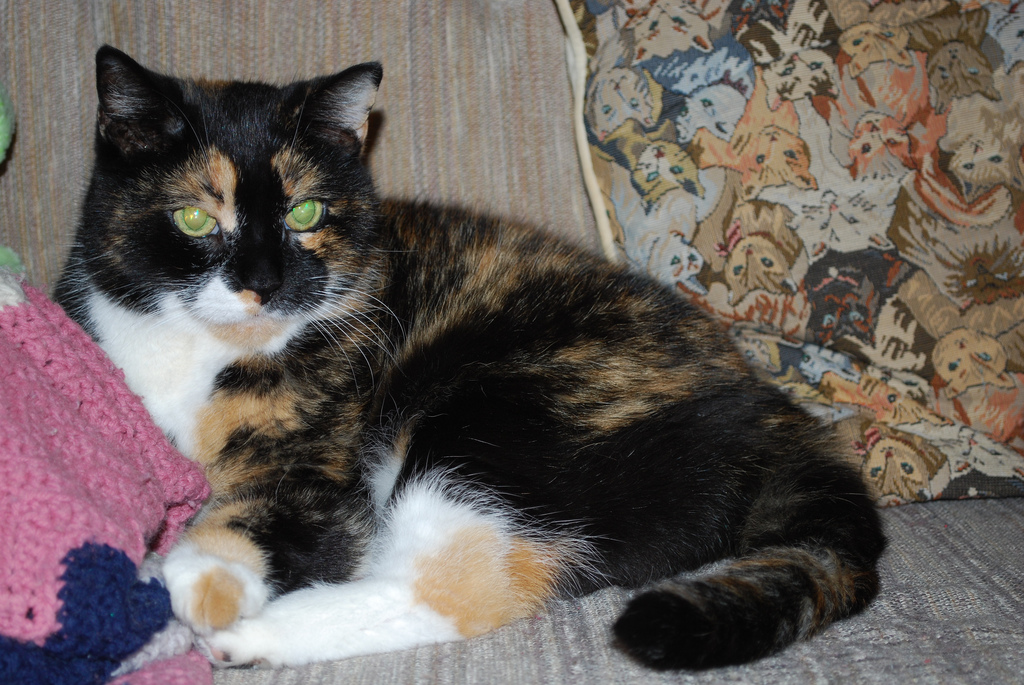
Like all other colors, tortoiseshell cats can be solid or patterned. This refers to the pattern of the spots—in patterned cats, the spots of all three colors have their own additional internal pattern, while solid cats lack these features. Various color variations are also possible: black can be chocolate or brown, white can be the color of baked milk, and tan can be reddish or yellowish. These possible shades explain the vast number of possible color variations in tortoiseshell cats, photos of which we've included as examples.
Tricolor cats and their mystical meaning
Cats are treated differently in different countries, but only calico cats are revered everywhere. Due to their rarity, people throughout history have ascribed mystical powers to them—from attracting money to exorcising evil spirits from the home. In Ancient Rus', such cats were even called "bogatkas," but this nickname derives not from the word "wealth," but from God—meaning a cat gifted by God with certain special abilities.
In the United States, it's believed that having a tortoiseshell cat in the home will bring wealth and good luck to its owner, and practically guarantees a good, well-paying job. Even seeing a tortoiseshell cat in a dream is considered a sign of great good luck.
In the UK, calico cats are kept primarily to protect the home from evil spirits. Brits sincerely believe that these cats bring comfort and peace to the home and become true friends with their owners, unlike cats of other colors, which love only their home and not their people.
In Japan, calico-tortoiseshell cats have been revered since ancient times, and Japanese culture even includes a special figurine of a calico cat. However, to acquire the right figurine, it's best to travel to the Land of the Rising Sun yourself—every spot, every detail, and even the cat's posture and head angle are significant. To achieve the exact tortoiseshell cat image you desire, it's best to consult with experts in Eastern culture.
There's a popular belief among sailors: if a calico cat lives on board a ship, severe storms will be avoided. And if a ship is already in trouble and a sailor dreams of a calico cat, the storm will soon subside. That's why tortoiseshell cats, photos of which nearly every ship captain carried in the old days, are so prized in the navy.
That's all there is to know about the characteristics of tortoiseshell cats. Otherwise, they are amazingly affectionate and gentle creatures, no different from their relatives of other colors.
Read also:


Add a comment