
What is the difference between a raccoon and a raccoon dog?
Everyone is familiar with the endearing, smile-inducing raccoons with their funny bandit masks. But sometimes, the very similar-looking raccoon dog (also known as the raccoon dog or the Ussuri fox) is mistaken for this animal. How can you tell them apart?
Content
Comparative zoological description
The raccoon and the raccoon dog are members of different mammal families. The former, called Procyon in Latin, belongs to the Procyonidae family (raccoons), while the latter, Nyctereutes procyonoides, belongs to the Canidae family (canines).
The animals are similar only in appearance, and then only in their stocky, short-legged, plump "figure," thick sideburns, and unusual coloring. These animals' fur is black and white, and on their faces, the contrasting colors are arranged in a very original way, like a clear and bright carnival mask. The fur around their black noses and cheekbones is snow-white, and their eyes are framed by large black "spectacles."
But this is where even the physical similarities end, while these animals have more differences:
- The raccoon is smaller in size and weight. Its body length ranges from 45 to 60 cm and its weight is no more than 6 kg, whereas a dog can grow up to 80 cm in length and weigh up to 10 kg.
- Raccoon dogs have thicker and longer fur.
- The raccoon dog's coat is sandy or brown, while raccoons' coats are grey.
- The raccoon's tail is long, with transverse stripes of a contrasting color; the raccoon dog's tail is shorter and has no stripes.
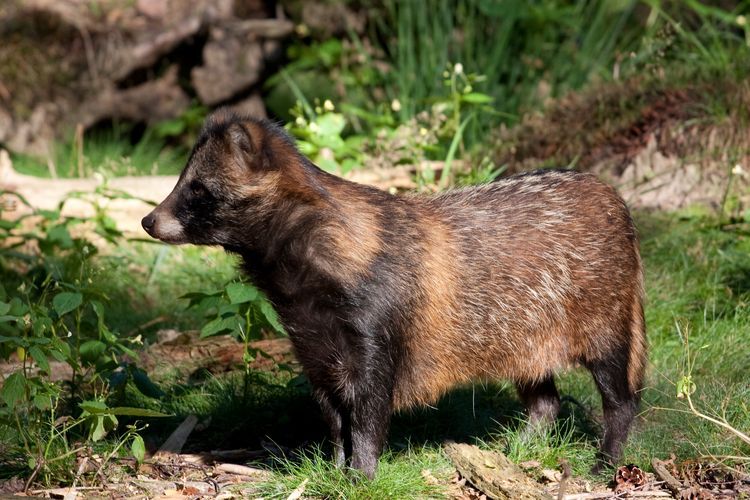 Raccoon dog
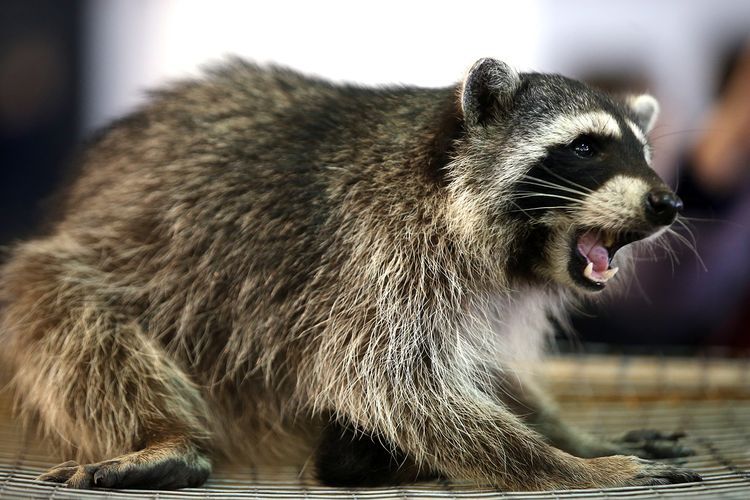
The biggest anatomical difference between these two animals (easy to spot visually) is the structure of their paws. Nyctereutes procyonoides has paws like all canids, while Procyon's forepaws resemble human hands: their digits are flexible and highly sensitive, allowing the animal to easily climb trees and grasp objects.
Habits and lifestyle
In natural conditions there are raccoons Procyon lives in the coniferous and mixed forests of North and Central America. There are several species of Procyon: the raccoon, the Guadalupe raccoon, and the Cozumel raccoon. Only one species, the common raccoon, is found in Eurasia. These animals typically choose habitats near bodies of water, nesting in burrows, rock crevices, and tree hollows, leading a solitary lifestyle.
The raccoon dog's habitat includes forests from the Urals to the Amur region, China, and Japan. In Russia, the wild Nyctereutes procyonoides is found primarily in the Amur region. It prefers to settle on the banks of rivers and lakes, building its nests near villages and roads. Raccoon dogs do not dig their own dens; they can survive from a badger den, or build a nest in dense bushes or among tree roots. This animal is the only member of the canine family that hibernates in winter.
Both raccoons and raccoon dogs are omnivorous. Their diet varies depending on the season: they happily consume small rodents and birds, fish, crayfish, frogs, bird eggs, insects, and also enjoy fruits, berries, nuts, and acorns. Raccoons living near populated areas are not averse to scavenging trash cans or eating carrion in their search for food.
These animals have very different personalities. Raccoon dogs are willful, self-sufficient, unsociable, and can be aggressive. They don't get along well with other animals and are difficult to train. Raccoons, on the other hand, are sociable, playful, and good-natured, very curious, and are more intelligent than many domesticated animals.
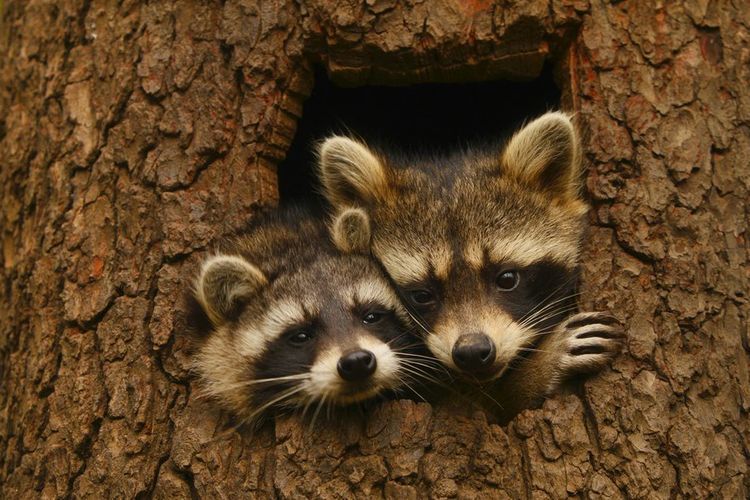
According to Native American legend, the raccoon was once a human. But a cunning, roguish, and deceitful one. He deceived everyone, stealing everything that was lying around, even things he didn't need, simply "for the love of art." This extremely dishonest behavior angered the Supreme Spirit, who, in the heat of the moment, transformed the deceiver and kleptomaniac into an animal. However, taking pity on the little creature, the Supreme Spirit left him with human hands. Native Americans do not eat raccoon meat: it is believed that the animal's bad "moral qualities" can be transferred to humans.
Raccoons and raccoon dogs as pets
With their friendly, playful nature and innate ability to learn, raccoons are perfectly feasible to keep in an apartment. However, it's important to keep in mind that these animals are very active and extremely curious, so they need to be walked for several hours a day, constantly supervised in the house, and, when their owners are away, it's advisable to confine them to a cage.
Left unattended, a raccoon can easily open a water or gas faucet, chew through wires, empty the contents of cabinets and closets onto the floor, and even dismantle parquet flooring. There are many amusing videos online of raccoons meticulously washing their owner's new dress shoes in a bowl or their owner's cell phone, carelessly left on the table.
A raccoon dog in an apartment it is not customary to holdIt's not very clean and usually smells foul. It also has a wild nature, so it won't get along with other pets and will inevitably become aggressive toward strangers. However, a raccoon can be a good companion and reliable guard dog in a private home; an enclosure is ideal for keeping it.
Raccoon jokes that will captivate you: video
Read also:
- How to cool down a dog in extreme heat
- Can you take a dog into bed?
- The oldest dog breed in the world


Add a comment