
What and how to feed a puppy correctly?
What and how should you feed a puppy? How many times a day and in what portions? We'll cover everything related to puppy feeding standards and routines in this article today. Before bringing a new pet into your home, it's important to read a lot of resources to understand the challenges ahead. Puppies require just as much care as small children. And it's not just about proper training and timely vaccinations, but also proper nutrition. Feeding your puppy influences how your pet will grow up.
If you put everything in the bowl without considering the nutritional value, quantity, and quality of the food, a sweet and cheerful puppy will soon grow into a sick, sullen dog. Not only will the gastrointestinal tract be affected, but the immune system will be weakened, the metabolism will be poor, the coat will be dull, and the skin will be inelastic. Allergies may develop. And then you'll be seen at the vet's office very rarely.
Content
Features of a puppy's diet depending on age
First of all, you need to know what puppies can and cannot be fed! Make a note of what your puppy needs to be fed. There are certain foods that are essential for normal development. Not feeding them can lead to a host of health problems in the future.
What to feed a 1 month old puppy?
Such a small puppy should still be with its mother! Don't take the baby away from her too early—that way, you'll immediately solve the problem of what to feed a one-month-old puppy. Furthermore, this can have negative effects on both its physical and psychological health. Such babies are difficult to socialize, and digestion can be a problem later on. The ideal time to wean a puppy is two months. However, sometimes you find yourself without a mother dog, and that's when it's important to understand how to feed it.
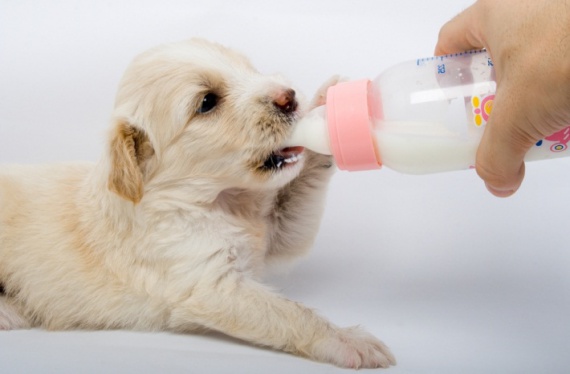
At first, you'll need to feed him a milk replacer (cow's or goat's milk won't replace his mother's). A growing puppy needs immunoglobulins to strengthen his immune system. Gradually, you'll need to introduce other foods. Soft foods first: porridges with ground meat (not minced meat!), which must be boiled.Neither raw meat nor fish should be given to animals!
What to feed a 2 month old puppy?
Decide right away what you'll feed your puppy from 2 months onward—natural or commercial food. If you choose dry food, choose high-quality, super-premium or holistic options. Read the ingredients carefully and feed only the food that's right for your puppy (age and breed). The packaging will tell you how much food to feed your puppy at a time. Don't exceed the recommended dosage, especially if your puppy belongs to a breed prone to obesity or overeating. Mixing or alternating commercial and natural foods is strictly prohibited! This inevitably leads to metabolic disorders, and poor metabolism can lead to a host of health problems (diabetes, kidney stones, obesity, and others).
Please note: if you are feeding your puppy a complete, prepared food, do not give additional vitamins without a veterinarian's prescription!
If you prefer natural nutrition, then a two-month-old puppy should be fed meat, dairy, grains, and raw vegetables. At such a young age, you shouldn't give it too much meat or fish. Half of the daily diet should consist of milk, cottage cheese, or kefir/fermented baked milk. Then, a third should be meat and fish products. The remaining portion should consist of cereals and raw vegetables. Don't give it all at once. It will turn into a vinaigrette, not a full meal.
- In the morning, give us something light - milk,
- During the day – meat (preferably lean and finely chopped – chicken or turkey, or at worst lean beef; all meat must be pre-cooked. In other words, boil it)
- And again, in the evening, feed her light foods. Low-fat cottage cheese, for example, is perfect.
Naturally, no pork or fatty meats or fish. No vegetable oils (you'll have to spare your baby's liver). Salt and spices are strictly prohibited. This little one should be fed 6 times a day (every 2-3 hours), small amounts. Rotate the food. Don't forget to periodically swap meat for fish (although not all dogs like it, try to find a way to feed it). Fish is rich in phosphorus, which is essential for bones and teeth. Just be sure to cook it (you can even steam it; this will preserve more nutrients, and none will end up in the broth).
What to feed a 3 month old puppy?
As your pet grows, gradually reduce the amount of dairy products, gradually replacing them with meat products. But don't eliminate them completely. Even an adult pet needs cottage cheese and kefir.
So, by the time a puppy is three months old, meat will make up 50-70% of the daily diet, dairy will make up a quarter of the daily menu (but can reach up to 50%), and grains and vegetables will make up 15-20%. This will depend on the milk-to-meat ratio.
What to feed a 4 month old puppy?
A four-month-old puppy can already choose what to eat. One might turn up his nose at fish but devour cottage cheese. So, let him indulge. Another, on the contrary, won't eat any dairy products but will only munch on fish. The conclusion is clear: more fish. But still, try mixing the cottage cheese with his favorite cereal, for example.
Important: Don't mix different types of protein in the same feeding! Give meat, fish, and chicken at separate feedings, and don't add any dairy products to them! Yes, there are some dog owners who mix fish, chicken, and cottage cheese in the same bowl, then pour sour cream over it for the puppy to eat. This is not recommended! Your puppy has enough feedings throughout the day, so you'll have time to give them all.
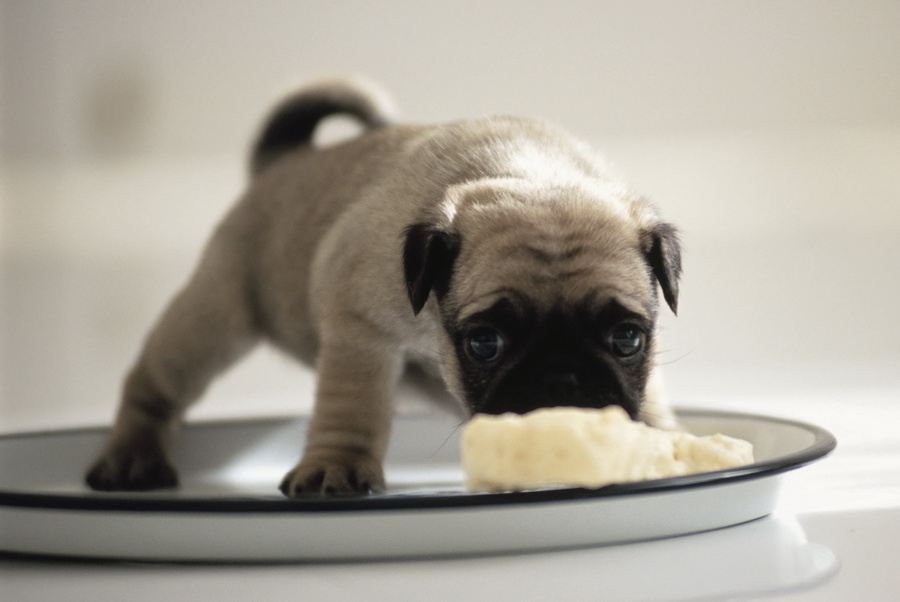
By the way, it's best to cook porridge for puppies under six months in milk (if the porridge contains meat, then, of course, cook it in meat or vegetable broth). Does your little one hate fruit? Grind it up with a grater (preferably not a metal one, to preserve more vitamins) and mix it into the porridge. The puppy won't spit it out, meaning he'll eat it all. An adult dog might still turn up his nose, but a growing, perpetually hungry puppy will gobble up everything like a vacuum cleaner, without much regard for the ingredients.
What to feed a 6 month old puppy?
At 6 months, you can feed your puppy more meat. Calculate the daily amount yourself. Feed 20-25 grams of meat per kilogram of body weight. Fatty meats are prohibited. No pork, lard, or lamb. Veal and beef are ideal. Rabbit, horsemeat, and poultry are acceptable. Be extremely careful with chicken, though. Some puppies develop allergies to it. Don't forget to feed your puppy organ meats (heart and liver, but be sure to cook them!).
No tubular ones bones! Fragments from them can damage the esophagus, stomach, and intestines. Moreover, they accumulate in the intestines, which is waste that only harms the animal. There is nothing tasty or healthy about them.
Want your puppy to chew on something? Buy special connective tissue "bones" at a pet store. Buckwheat, pearl barley, oatmeal, and sometimes rice cooked in meat broth are good options. You can cook it in advance or freeze it in small containers to prevent it from spoiling. Vegetables are essential. Potatoes should be kept to a minimum. They are too starchy and will lead to rapid weight gain. Avoid legumes. Beets, carrots, broccoli, pumpkin, cauliflower, zucchini, spinach, cucumbers, bell peppers, and cabbage are excellent sources of vitamins. You can also buy many of these frozen in winter or prepare them yourself to feed not only a six-month-old puppy but also an older one. They'll come in handy, no matter what.
What to feed a puppy under one year old?
A puppy's diet up to a year old becomes more and more like an adult's with each passing day. The number of feedings gradually decreases, and the portions gradually increase. Meat is still calculated: 20 (or even 30 g) per kilogram of body weight. Don't forget about dairy, though. Only 15 grams per kilogram of body weight is needed. This isn't just once, but throughout the day. And remember, meat and dairy should never be served in the same bowl.
Cook grains in broth. For a more flavorful and aromatic broth, cook it on the bones, not on the meat itself. It's best to add the bones about 10 minutes before the end of the cooking time, so that they're not raw, but also not fully cooked. The bones, of course, are removed and discarded. A little secret: to ensure a delicious broth, place the bones in cold water, not boiling water. No salt! All foods contain a small percentage of "natural" salt (sodium and chlorides), so the food won't be tasteless.
To prevent your puppy from getting bored with the same cereal before he's a year old, be clever! Mix several cereals in one pot. (More about feeding dogs porridge). Choose the proportions yourself, experiment. Different flavors will attract your teenager, so he'll eat healthy foods with appetite. Again, chop raw or lightly cooked (or steamed) vegetables and add them to your puppy's bowl.
Crumble a hard-boiled egg into the porridge a couple of times a week. The protein is 100% digestible, and the yolk is rich in nutrients (though it's best not to overdo it). What other feeding considerations should owners be aware of when feeding a puppy? Clean water must be available 24/7! Filtered water, not tap water, should be used. Change the water several times a day if necessary. Be sure to wash the bowls every time (the puppy will definitely drool in them). Thoroughly clean the food bowl after each feeding to ensure no food remains in it. Otherwise, the puppy will develop serious food poisoning.
Puppy feeding regimen
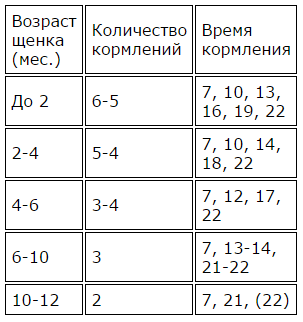
A puppy's feeding schedule is just as important as the food itself. Eating too frequently or too infrequently will inevitably impact its digestion and overall development. As it grows, the intervals between feedings should increase, which naturally means reducing the number of meals. The portion size will also increase with each passing month.
This doesn't mean dumping a whole bowl of food on your pet, letting it eat its fill, and then lying there whining because both its stomach and intestines are overstretched. And that, by the way, is also painful. Overfeeding leads to obesity, an enlarged stomach, and disrupts metabolism. And then diabetes is just a stone's throw away. So what kind of feeding schedule should you follow to ensure your puppy is always well-fed, but also maintains its health?
First, feed at the same time every day. This is essential for both the animal's well-being (it's easier to train a puppy when it has a routine, whether it's feeding or walking), and for proper digestion. Over time, a reflex develops. Gastric juices also begin to be produced in advance, so food is digested much faster, more nutrients are absorbed, and gastrointestinal problems are virtually nonexistent in these pets.
Feeding norms for a puppy
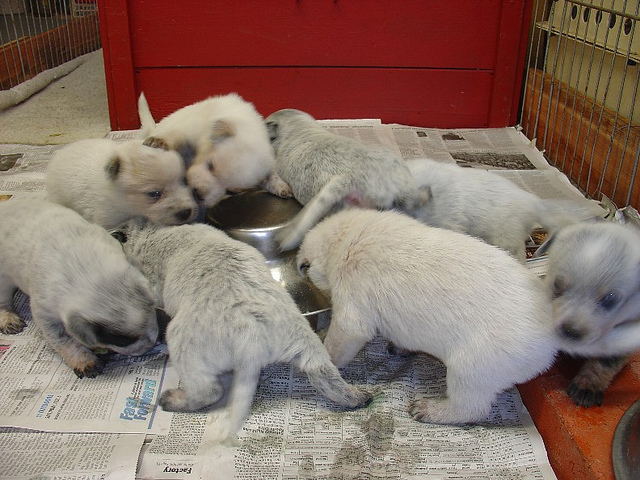
How many times a day should a puppy be fed? You'll agree that in the wild, canines eat meat. They very rarely eat grains (except perhaps from the stomach contents of their prey) or grass. But this doesn't mean a puppy's diet should consist exclusively of meat. Although it should make up the majority of the portion, it's essential for proper development (muscles and bones are still growing, requiring not only protein from meat but also other building blocks).
How often should you feed a puppy?
While grains are essential, not all are approved for feeding puppies. For example, semolina is not suitable for either puppies or adult dogs. Not only is it an empty porridge with minimal nutrients and a huge calorie content, but it's also difficult to digest. Pea porridge is also not recommended. In fact, legumes are generally not recommended for feeding pets.
- Regarding how much food to feed a puppy, remember the main thing: a meal should last no more than 20 minutes. Put food in the bowl, walk away, and time it for exactly 20 minutes. Everything eaten during this time will be digested. If the puppy takes a long time to gather his courage, sniffing, and twitching his nose, that's his problem. He'll quickly learn that if food is put out, he needs to eat it. Empty the bowl of any leftovers, and wash the dishes. Don't leave anything behind; wait for him to finish.
- If the puppy has gobbled up everything you put in front of him before the allotted time, and is even chasing the plate around with its tongue, constantly licking it, then you haven't given it enough food. The next time you feed him, you should increase the portion. It's better to have some left over than to go hungry. However, overfeeding is no better than underfeeding. That's why the 20-minute time limit is set. During this time, the animal eats as much as it needs.
- Missed feeding your puppy (were you busy or forgot)? Don't give him a double portion at the next feeding. Put in the same amount you usually give him at one time. But try to be more mindful of your puppy's feeding routine.
Don't be afraid. Everything will come with experience. Yes, at first you'll have to look up encyclopedias, articles, and consult with dog breeders, but you'll quickly figure it all out. The main thing is to stick to a schedule and formulate a diet appropriate for your pet's age. A puppy feeding chart will help.
Puppy feeding chart
The puppy feeding chart will certainly be a helpful resource for you not only during your puppy's first few days with you. It will also be useful when your puppy is one month old, six months old, and even a year old.
Absolutely not allowed
- From the table. Never feed your puppy table scraps. Firstly, this food is often harmful to animals, and secondly, dogs become incorrigible beggars or, even worse, thieves. You want a well-behaved dog, right?
- BonesA common question in many families: where to put bones? The answer is simple: in the trash. Not only are long bones unnecessary for your dog, they're also dangerous. Bones can easily be chewed into small pieces that are accidentally swallowed. This can lead to a blockage in the stomach and intestines, at best. At worst, a rupture. The same can be said for fish bones.
- Spicy and fatty foodsDon't even think about giving your puppy spicy, fatty, smoked, salty food, or chocolate. Forget about pasta, dumplings, and other human pleasures. Dogs shouldn't eat such things.
Now you know the specific feeding guidelines and norms for a puppy (depending on its age), and you've learned what kind of diet is necessary for normal digestion. You've also learned about the foods you shouldn't eat that can be harmful to your puppy.
Never hesitate to ask other dog owners for help. Visit your veterinarian so they can adjust your diet and recommend good vitamin and mineral supplements to prevent your puppy from developing rickets or other musculoskeletal problems. And remember, owning a dog isn't just a joy; it's also a hassle and a significant financial burden, which you should be prepared for. Don't skimp on your pet's health.

2 comments
Sveta
Our corgi had problems after giving birth. We had to have surgery and spend almost a week at the clinic to save her. So my husband and I had to nurse the two little bundles of joy. We used Beaphar Lactol formula, diluting it according to the instructions, although we consulted with the vet over the phone during the first week. We fed every 2.5-3 hours, even at night. Their tummies bloated a couple of times, so we gave them Espumisan. The formula lasted for about 12-13 days, so we bought another can until they were a month old, and then supplemented with wet pates.
loginnn
We must feed them meat
Add a comment