
What to feed Persian kittens, cats, and male cats
What and how to properly feed Persian cats? These beauties are the most beautiful of the domestic feline family. They are magnificent animals with a completely individual, memorable, and easily recognizable appearance. They represent man's most successful attempt at creating an "eternal kitten" with a sweet, short muzzle and an unusually docile nature. Persians lead a leisurely and measured lifestyle. These cats sleep 18-20 hours a day. And it seems that they, melancholic by nature, are uninterested in anything in the world! But this is far from the truth. In fact, they intently observe everything going on through the barely open eyelids of their bottomless, round Persian eyes.
Content
Proper Feeding Guidelines for Persian Cats and Kittens
What's the right way to feed Persians? Most Persians are not picky eaters. However, when deciding what to feed a Persian cat, owners should remember that these cats' digestive systems are delicate and have their own physiological peculiarities. There are two basic rules that Persian cat owners must strictly adhere to. They should not be fed:
- Mixing natural and industrial feeds.
- Mixing feeds from different manufacturers.
If you feed your Persian wet, canned, or dry food, the time interval between dry food and canned food should not be less than 10 hours, and the percentage of wet food should not exceed 25% of the daily volume eaten.
What to feed an adult and healthy Persian
Of course, the question of what to feed a Persian cat is individual and largely depends on the owner's financial and time constraints. But if you decide to feed your pet a natural diet, it's important to remember that Persians should not:
- nothing hot, spicy, salty or peppery;
- dairy;
- containing potato or corn starch;
- sausage (any), hot dogs, boiled pork and ham;
- eggplants (they are literally poisonous for cats of any breed and non-pedigree);
- any bones;
- any fish (since Persians are prone to cystitis, as well as other diseases of the genitourinary system; with urolithiasis, for example, fish literally provokes exacerbations);
- chicken heads, feet and even giblets;
- liver - both raw and boiled.
When searching for an answer to the question of what to feed a Persian cat, many choose natural food as the only possible option for their health. And in some cases, this is indeed true. However, it's important to remember that natural food should be fortified with vitamins and minerals, after consulting with a veterinarian about dosages. Natural food should always be freshly prepared. And no "food from the master's table"!
Many owners, when deciding what to feed their Persians, opt for commercial cat food to save time. And this is a good idea, as premium and super-premium cat food manufacturers create perfectly balanced foods containing all the essential nutrients and minerals for Persians' health.
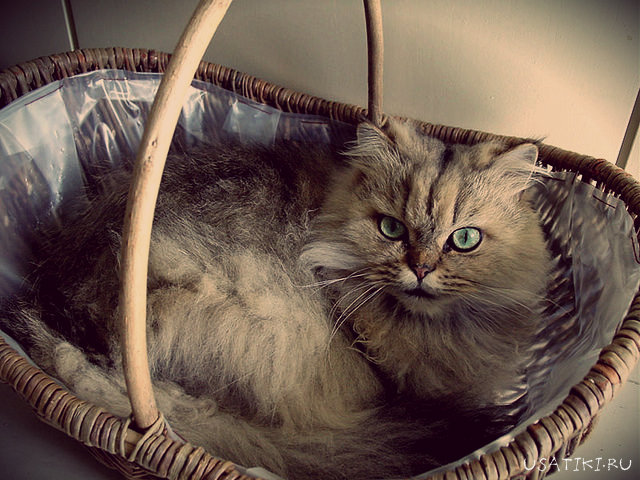
What to feed a Persian kitten
Persian cats need proper nutrition from puppyhood. And of course, owners of these purebred cats are interested in what to feed their Persian kittens so they grow up beautiful and healthy. Experts (veterinarians and Persian cat breeders) are confident that the health of pets directly depends on the quality and composition of their food. Cats are not humans; their stomachs are very delicate! Furthermore, Persians are also carnivores and cannot be left without animal proteins. Due to the structure of their muzzles, their teeth are very small, with the exception of the canines. Therefore, natural food must be chopped, and commercial food with specially shaped kibble must be purchased. So, what exactly should you feed a Persian kitten? It varies at different stages of life. Moreover, the food of a two-month-old kitten, for example, should differ from that of a three-month-old, and even more so from a six-month-old kitten. Both in quantity and in the right variety are important.
What to feed a spayed Persian cat
What to feed a spayed Persian cat is a separate issue. These animals are already overweight, and once neutered or spayed, they begin to gain even more weight. Considering the melancholic nature of Persians and, consequently, their completely sedentary lifestyle, it becomes clear why many of them suffer from obesity and associated diseases, such as diabetes, focal hepatic lipidosis, pancreatitis, and so on. Therefore, the question of what to feed a spayed Persian cat is not just idle curiosity for the owners of these truly luxurious animals. Frankly, providing a complete natural diet for spayed and neutered Persian cats at home is very difficult. The diet of such pets must include meat (exclusively beef), fermented milk products, and fresh vegetables (except potatoes and carrots, since Persians do not digest carotene and do not tolerate starchy substances).
A great option for feeding Persians naturally is meat patties with added vegetables and grains. To prepare the ground meat for this dish, take finely chopped beef and boil it in water—bring it to a boil and simmer for at least 15 minutes. Then add diced zucchini and beets, and after another 15 minutes, reduce the heat and add a grain mixture—rice, pearl barley, and wheat groats. Cook for another 5 minutes, then remove from heat and blend. Then form small patties from the ground meat and feed to your cat.
A spayed Persian cat's (or neutered male's) food should be at room temperature and always fresh. The cutlets described above can be stored in a sealed container in the refrigerator, but for no more than 3 days. Persian cats can be fed low-fat cottage cheese, natural sugar-free yogurt, and raw quail eggs (but no more than 3 per week). However, it's best to avoid hard-boiled chicken eggs.
What to feed a Persian at different stages of its life?
What to feed a Persian cat at different stages of its life is a concern for Persian cat owners. It's important to accustom your pet to proper nutrition from early puppyhood, as soon as it comes into the home. It's important to properly assess your own capabilities, consult with a veterinarian and the breeder from whom you purchased the cat. And feed it so that as it grows, the kitten develops a truly luxurious coat, strong claws and teeth, without experiencing digestive or overall health issues.
What to feed a 2-month-old Persian kitten
Until they're two months old, almost all Persian kittens feed on their mother's milk. But what should you feed a two-month-old Persian kitten? It's actually not as difficult as it might seem. At this stage, you should begin introducing solid foods. And, of course, you should use only the freshest foods for this feeding, keeping in mind the Persian kitten's delicate stomach.
At this age, a Persian kitten should eat at least six times a day. It should be fed porridge made with low-fat milk mixed with water. No salt or sugar! Plus, scalded frozen lean meat, scraped with a knife. Vegetable purees can be given—freshly cooked and chopped, or from baby food jars. Just a little bit at a time—just a finger's worth at a time. 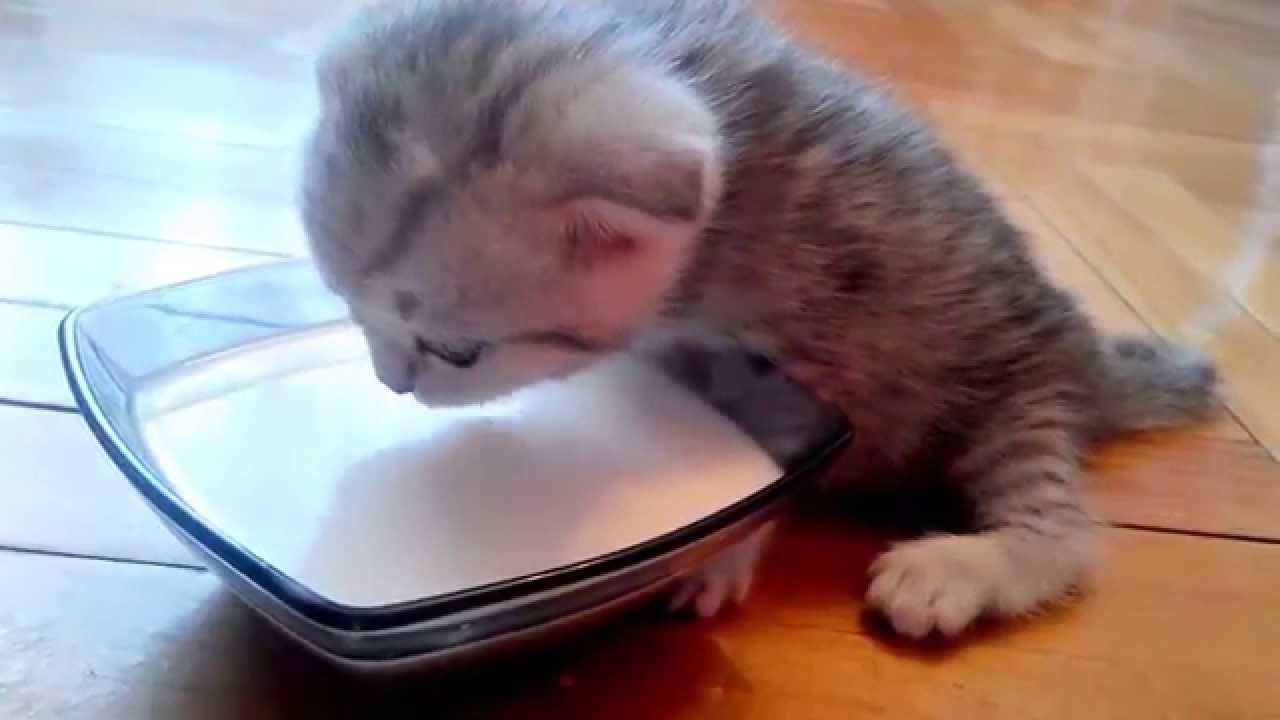
What to feed a six-month-old Persian kitten
What should you feed six-month-old Persian kittens? First of all, you need to increase their portions. Meat can now be not only scraped and scalded, but also boiled. The key is to make sure it's lean. You should also reduce the number of feedings to 3-4 per day. If you've decided your furry treasure will eat dry food, now's the time to introduce it. At first, simply soak the kibble in chicken or beef broth. Milk and dairy products (except low-fat cottage cheese) should be completely eliminated from the cat's diet. Cream and sour cream should never appear. Eggs, however, can be introduced—quail eggs. Fermented, unsweetened yogurts are fine. Water is a must. Plenty of it, and freely available. Always fresh.
What to feed a Persian cat up to one year old
From 6 months to 1 year, a Persian kitten's diet remains virtually unchanged. Meals are simply increased in size and the number of feedings is reduced to 2-3 per day. By 1 year, a Persian cat should be fully transitioned to an adult diet. If it's dry food, then only that, and only premium, professional-quality food from a reputable manufacturer. If it's canned food, then only canned food. If it's a combination of canned and dry food, then no more than 25% of the total diet should be canned food. And only from the same manufacturer.
What food should I feed a Persian cat?
The most pressing question for every happy Persian cat owner who's decided to save time and effort on preparing cat food is what kind of food to feed their Persian cat? Which brand should you choose? And what's the difference between these foods? Experts answer the question of what kind of food to feed a Persian cat with specific links to food from the most well-known Russian manufacturers.
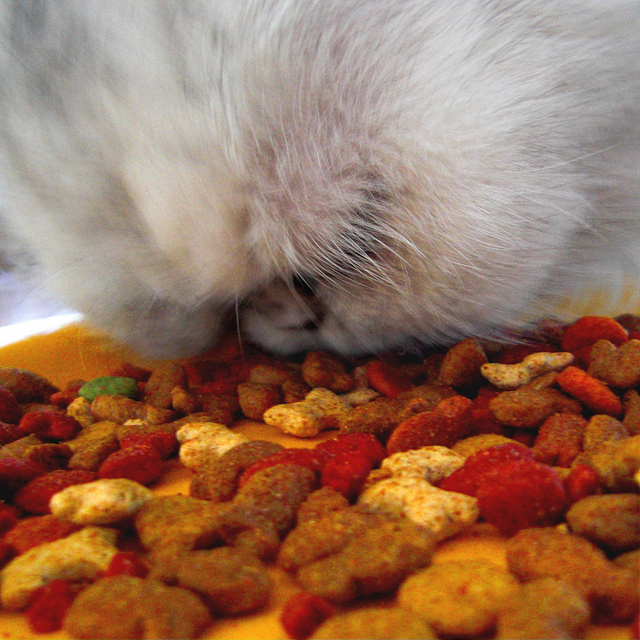
The most popular Persian food among veterinarians and breeders is undoubtedly Royal Canin No. 30 Persian Adult and its nearly identical counterpart, No. 32 Kitten Persian for Persian kittens. The price per kilogram starts at 450 rubles.
No other company has a "named Persian" food, but some well-known brands offer premium products that are suitable for Persians and will have a beneficial effect on the quality of their coat, teeth, and claws. Most importantly, they will promote the excellent health of these wonderful cats.
Video about Royal Canin Persian cat food
Interactive Persian Cat Food Rating 2015
- Packaging = link to the corresponding food on Yandex.Market
Here's a look at the Persian cat food rankings based on reviews from veterinarians and breeders on mypets-en.decorexpro.com:
- Royal Canin for Persian cats
- NOW (Natural holistic) food with turkey, duck and vegetables - from 230 rubles for 400 grams;
- GO! (NATURAL Holistic) with chicken, fruits and vegetables - from 200 rubles for 400 grams;
- Hill's Prescription Diet for the prevention of urolithiasis and stress - from 260 rubles for 400 grams;
- Bozita super premium for adult cats of large breeds - from 260 rubles for 400 grams;
- Eukanuba for adult cats with chicken and liver - from 328 rubles for 400 grams.
Read also:


2 comments
Daria
What a contradictory article! Dairy products are prohibited... And yogurt and cottage cheese, what kind of products are they? I apologize? Or are healthy people not allowed, but sterilized ones are? Again, why is that? Is sterilized unhealthy or something?
And anyway, no veterinarian in their right mind would recommend dry food, no matter how super-duper. Dry food is poison, just like wet food. And you don't have to look far for an example: I fed my cat a royal for the last year and a half, and now I don't have a cat. He's started developing kidney failure. Before that, he ate boiled meat, sour cream, liver, and eggs, and was the healthiest cat in the world (we had him tested and checked frequently at the clinic). My deepest respect for those who advise him.
Dasha
Pure milk is not allowed. Adult animals cannot digest it. Until about three months old, kittens still have enzymes that curdle and help break down milk. However, as kittens grow older, these enzymes disappear. Therefore, only fermented milk products can be given, including plain yogurt, kefir, cottage cheese, and sour cream.
My cat has been eating Hill's dry food for spayed cats for 10 years now. There were times when we tried feeding her Royal Canin, but I didn't like how her coat lost its shine. It just didn't suit her. So, we gave her either Purina Proplan or Hill's dry food for spayed cats. And nothing happened. She's been a healthy cat for 10 years. She hasn't eaten natural food since the first day we got her. Initially, her owners introduced her to dry food.
Some owners feed their cats so much natural food that even cheap kibble would be better… They give them food from their own table, or spoiled food, or they feed them only protein, which is incredibly hard on the kidneys! You can't feed cats and dogs exclusively protein foods: meat, eggs, and dairy. And you have to be careful with eggs, too: don't give them too many yolks; whites are much better digested. Carbohydrates are essential: cereals and vegetables.
Add a comment