
How to feed a newborn kitten without a mother cat?
How and what should you feed a newborn kitten if it's left without a mother cat? The best solution is to find a cat that has recently given birth and place the kittens with her (as a rule, cats don't discriminate between their own and strangers' kittens). This eliminates the main problem for you, and then all you have to do is follow the instructions in cat care books.
It's important to remember that a cat that has just given birth will secrete colostrum, in small quantities, instead of milk for the first two days. If your kittens are slightly older than the others, they will need supplemental feeding, as they may not initially have enough natural milk. However, it's worth noting that feeding colostrum during the first few days helps kittens develop their primary immunity. If you can't find a cat that has recently given birth, you can call your veterinarian. They may have a cat like that registered. In extreme cases, you won't have to explain anything. How to feed kittens and will recommend cat milk replacers.
Content
Feeding regimen for newborn kittens
The hardest part of this process is maintaining a schedule, as feeding a newborn kitten requires feeding every two to three hours around the clock for four weeks, after which they will begin to eat on their own. How often should newborn kittens be fed?
- From the 1st to the 13th day, every two to three hours;
- From the 14th to the 24th day, every two to three hours and one night feeding;
- From the 25th to the 35th day, every three to four hours and one night feeding.
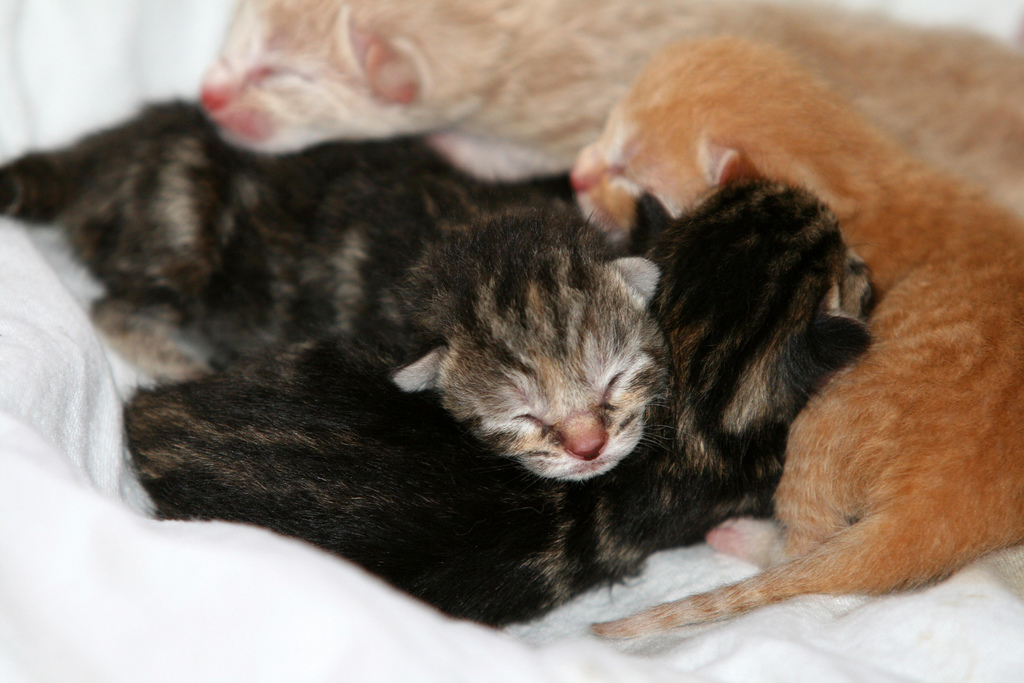
Feeding Guidelines for Newborn Kittens
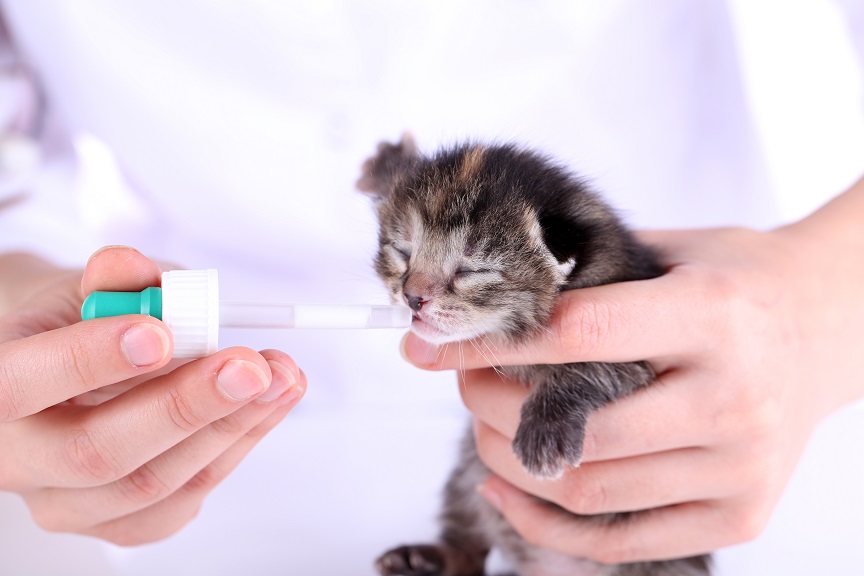
How to feed newborn kittens? For the first two to three days, use a pipette. However, for subsequent feedings, a disposable plastic syringe with a 20-milliliter capacity is best. However, it must be used carefully. It's important to feed the contents smoothly and evenly, as over-pressing the plunger can cause the kitten to choke.
Feeding method
Place a container with slightly raised sides on the table. Place a folded cloth inside to make the sides even higher. Position the kitten so that its hind legs rest on the bottom and its front paws rest on the sides of the container.
Place your elbows on the table. Place your left hand on the kitten's back, supporting its neck, and press your fingers into the bottom of the container. This will give you a more or less stable position. In this position, kittens will begin to "massage" the side of the container while sucking, and after a couple of days, they'll stop complaining about this feeding method.
What is included in the diet of newborn kittens?
What should I feed a newborn kitten without a mother? For self-feeding newborn kittens, it's important to find a milk substitute. These formulas can be purchased at pet stores. To prepare your own, add 1/4 of an egg white to boiling milk and stir until smooth.
- Kittens can begin to receive supplemental feedings at 15 days of age. Various formulas and milk-based cereals are suitable for this purpose. Avoid overheating the formula; it should be kept lukewarm. To warm up cooled formula, a double boiler is usually used. Do not store prepared formula for more than 24 hours; it should always be kept fresh.
- From 21 to 28 days, you can add protein foods to your kittens' diet. Low-fat cottage cheese, baby meat food, fish, egg yolk, and lean beef are all good options.
- From the 35th day, gradually teach the kitten to eat from a bowl.
What needs to be prepared first?
So, you're faced with a difficult question: what to feed a kitten less than a month old. Before you begin, you need to thoroughly prepare and purchase the necessary supplies and food.
Essential Kit for a Kitten
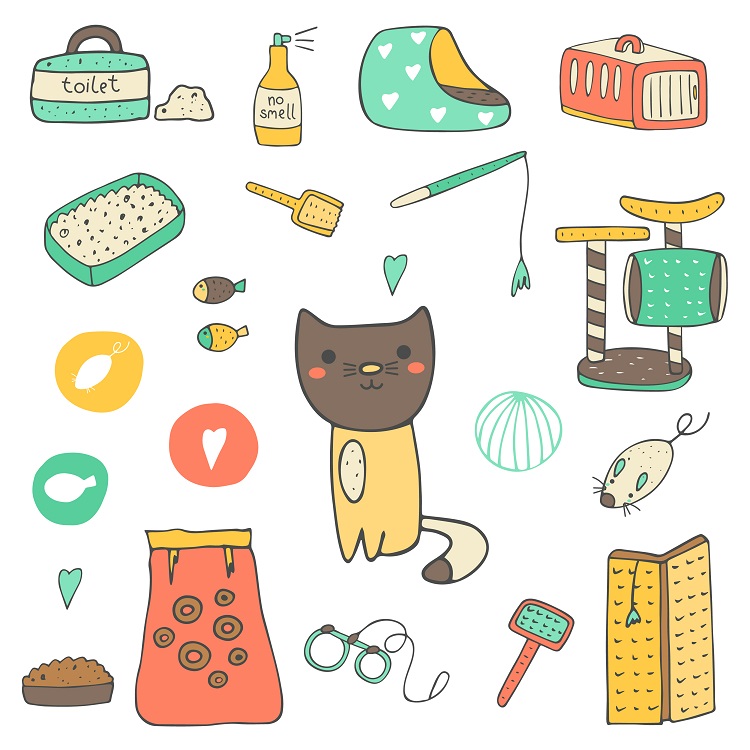
First, you need to purchase the necessary equipment. You will need:
- plastic pipette;
- disposable syringe with a volume of 20 ml;
- catheter;
- pacifier;
- a small bottle with a narrow spout (for children or for feeding kittens);
- measuring spoon;
- convenient bowl.
It's best to have several different pipettes and nipples at hand, as some may be of poor quality or won't withstand frequent washing. Syringes should also always be on hand.
2 food options
When it comes to feeding small kittens without a mother, there are two acceptable options:
- Artificial ready-made mixtures from a pet store or baby formulas.
- The milk formula you prepared.
The first feeding method is the most convenient, but also the most expensive. Ready-to-use food can be purchased at a veterinary pharmacy or pet store, saving time on preparation. Using ready-to-use infant formulas designed for newborn kittens is also a successful practice. This type of food can be stocked for a long time.
The second option will save you significantly, but it will require more time for preparation and feeding. As kittens grow, their feeding schedule will change and include more and more acceptable ingredients.
Feeding natural products
Natural food for newborn and growing kittens up to 4 weeks old will consist of solutions of various ingredients. The younger the kitten, the more careful attention to proportions and preparation conditions the nutritional formula will require.
Recipes
The simplest and most "lazy" recipe for formula for a newborn kitten is available to everyone:
- Bring 4 parts cow's milk to a boil and gradually pour in 1 part egg white, stirring continuously until the mixture is smooth.
- Another popular recipe requires obtaining a homogeneous mass from:
- 0.5 l of milk, 1 egg yolk and 4 tsp of sugar.
In a similar manner, more vitamin-rich formulas, similar in nutritional value to cat milk, can be prepared using a variety of ingredients. The recommended formulas are also suitable for week-old kittens and kittens under one month old. All of them are prepared using boiled fresh or concentrated milk. To achieve a nutritional value similar to that of cat milk, it must be mixed with other products (cat milk, compared to cow's milk, is almost 10 times richer in protein). The following recipes are the most popular among cat lovers:
- Mix 1 teaspoon of bone meal and milk and add 5 teaspoons of 20% condensed milk to the resulting mixture;
- Mix 50 mg of whole milk and boiled milk, add half a raw yolk and 1 teaspoon of corn oil and beat the mixture thoroughly;
- Mix 1 glass of selected milk with a raw egg and a teaspoon of honey;
- in 200 ml of milk (you can use goat's milk instead of cow's milk), dissolve a teaspoon of vegetable oil, 1 yolk and add to everything 0.4 ml of cat vitamins from a veterinary pharmacy;
- Add a chicken yolk, half a teaspoon of vegetable oil, 20 ml of 5% glucose, 2 teaspoons of artificial nutrition for newborns, 0.3 ml of vitamins to 100 ml of milk and mix everything thoroughly.
The last two recipes are ideal for strengthening an exhausted and weakened body, for example, a kitten found on the street or recovering from an illness.
In the first few days, allow a kitten two hours between feedings, gradually increasing this to three hours. The kitten should consume approximately 5 mg of formula at a time. The dose can be measured with a pipette or syringe. By two weeks of age, it is recommended to double the amount. During the second and third weeks of life, feedings should be scheduled every four hours. Three-week-old kittens should be trained to lap formula and milk from a bowl independently five times a day.
What should you pay attention to when preparing?
The preparation of the mixture and the feeding procedure require a certain amount of diligence and attention from the owner:
- The ingredients included in the nutritional composition must always be fresh;
- They must be mixed especially carefully until a homogeneous mass is obtained, without disturbing the proportions;
- During the first 3 days, it is better to feed a newborn baby using a plastic pipette, carefully holding it at an angle of 45 degrees;
- After 3 days, it will be more convenient to use a disposable syringe without a needle or a bottle;
- All items used during feeding must be washed each time and sterilized if necessary;
- By monitoring how much mixture the baby swallows at a time, you can increase or decrease the feeding dosage;
- Store the mixture in the refrigerator for no more than 24 hours;
- Before feeding, warm the food to the optimal temperature (30-36 degrees).
Once your pet reaches four weeks of age, you should begin introducing solid foods. To ensure complete nutrition, gradually introduce milk-based cereals into the diet, then prepare cereals with ground or finely chopped meat (in a 1:1 ratio) and vegetables in water. Weaning is introduced according to the standard schedule: 200 grams per kilogram of body weight per day. You can also pamper your pet with healthy cheese and fermented milk products.
Feeding with ready-made mixtures
The main advantage of specialized formulas for newborn kittens is that their ingredients are as close as possible to those of mother's milk. Furthermore, they are categorized by age and designed for kittens:
- newborns;
- weekly;
- monthly.
There's no need to develop a diet for different ages. Each pack comes with a special, convenient feeding nipple as a bonus. Furthermore, the prepared formula is hypoallergenic for kittens, and if they develop an allergy to cow's milk, it's a must-have. If you decide to switch to ready-made formula, the only question is which one is best to buy.
Of the adapted formulas for feeding baby cats, veterinarians often recommend the mixture of the well-known Dutch company Beaphar - Beaphar Kitty-Milk and Royal Canin - Babycat Milk.
- Kitty-Milk is a yellow powdered milk mixture with an attractive honey-fruity aroma, containing essential vitamins and protein.
- Babycat Milk is an excellent substitute for cat milk, enriched with vitamins and microelements, rich in proteins and oils.
These formulas are sold in packages, each containing three 100-gram packets of instant milk powder, a measuring spoon, a graduated bottle, and nipples with different openings. Preparation is simple and easy: dissolve two measuring spoons of powder in 50 grams of warm water. The formula will keep in the refrigerator for up to eight hours; it warms up to about 40 degrees Celsius during feeding.
What should you not feed newborn kittens?
There are several rules that owners of small animals must strictly adhere to. So, what exactly should you not feed a newborn kitten?
Firstly, it is necessary to constantly adhere to the schedule, dosage and feeding rules.
Secondly, it is not recommended:
- Feed newborn kittens with cow's milk in its pure form, as it is very poorly digested, and the animal may die from indigestion;
- Giving your baby milk or cream diluted with water is harmful to the baby’s health;
- Give your pet fatty dairy products;
- Feed him sausages and pork in any form;
- Using raw freshwater fish fillets in your diet can lead to helminth infestation.
What does a kitten need to grow?
Relying on liver glycogen for nutrition, newborn kittens can go without food for the first few hours, although their sucking reflex is underdeveloped and their digestive functions are not fully activated. On average, newborn kittens weigh between eighty and one hundred twenty grams.
Normal growth is characterized by the following dynamics: their weight doubles after the first week, then the weight gain is approximately 100 grams. The average weight of a two-month-old kitten can reach 1-1.3 kilograms.
The umbilical cord usually dries up by the second day and falls off after three to four days. After seven to fourteen days, the kittens' eyes begin to water, and the appearance of a dark rim around their closed eyelids indicates that they will soon open their eyes. This typically occurs within two to three days. First one eye opens, then the other. If necessary, they can be washed with a diluted chamomile infusion. Remember that the more time you spend with your kittens in the first weeks of their lives, the better they will feel later on. Because for a grown kitten, you will remain the only and beloved “mother” until the end of your days.
Warmth and comfort
The kittens' home should be kept at a temperature of approximately 28-30 degrees Celsius. A cardboard box measuring 40 by 50 centimeters is suitable. Until their eyes open, at about two weeks, the box should be closed and the kittens should be kept in the dark. Once their eyes open, avoid exposing them to bright light. When feeding, draw the curtains slightly and turn on the light.
Place a heating pad on each side of the box. Glass bottles with a capacity of 0.5-0.6 liters are suitable for this purpose. Every five to six hours, add boiling water to the pads, while wrapping them in five to six layers of terrycloth towels. Avoid linen towels, as they transfer heat too much, and avoid woolen fabrics, as the kittens can become entangled in the threads pulled out by their claws. With this heating system, if it's too hot near the sides, the kittens will sleep in the center of the box.
Conversely, if they've gathered in a corner, refill the heating pads with boiling water. This should be done at the same time as the next feeding, as you don't want to wake the kittens unnecessarily. To allow them to move around easily, place a smooth cloth on the bottom of the box.
Hygiene
During each feeding, carefully inspect the kittens. Use a rough cloth slightly dampened with warm water (linen is ideal) and gently wipe the kitten's ears, head, back, sides, and paws. This mimics the process of grooming a cat.
Next, massage the kitten's tummy and encourage it to urinate by massaging the inner thighs around the urethra. This is usually straightforward. With proper care and feeding, kittens will urinate once every two or three days.
Read also:


Add a comment