
What to feed a German Shepherd at home
Are you planning to get a German Shepherd soon? We'll tell you how and what to feed this breed at home, how to choose the best food for adults and puppies, and we'll also help you plan your pet's diet month by month, from the moment they arrive in your home until old age.
Content
Breed characteristics
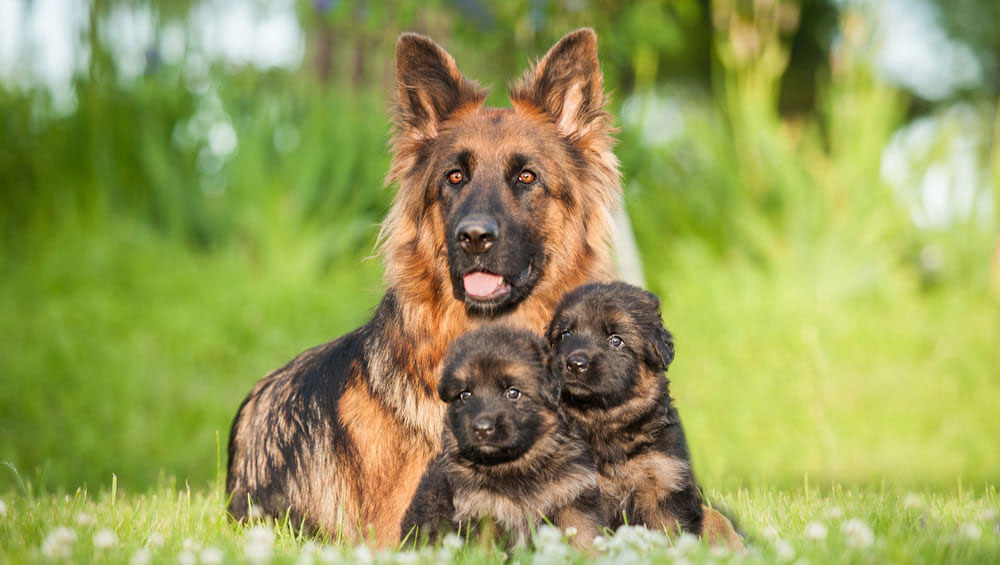
German Shepherds have a docile nature and high intelligence. Dogs of this breed excel at guarding and working tasks, but they also become loyal friends and companions for all family members.
|
Breed |
German Shepherd |
|
Weight |
C (22-32 kg) K (30-40 kg) |
|
Height at withers |
C (55-60 kg) K (60-65 kg) |
|
Life expectancy |
10-13 years old |
To answer the question of what a German Shepherd puppy should be fed by month and what an adult dog should be fed by month, it's important to know the following characteristics specific to the breed:
- Like puppies of other large breeds, German Shepherds are prone to bone, joint, and tendon problems during their active growth period. Therefore, chondroprotectors and glucosamine supplements are essential in your puppy's diet.
- Food for an adult German Shepherd must be selected based on its health and activity level. Dogs kept in kennels or city apartments often suffer from a lack of exercise, which in turn leads to obesity.
- A dog's excellent appetite is the key to successful training, but if you don't take into account the calories your dog eats during training when calculating its diet, it will be difficult to avoid excess weight gain.

German Shepherds are prone to serious health conditions such as:
- diabetes;
- food allergy;
- dermatitis;
- intussusception;
- pancreatic insufficiency;
- pancreatitis;
- joint diseases;
- intervertebral disc diseases.
Therefore, from the first days of life, it is important to follow veterinarian recommendations for preventing these and other diseases, and if characteristic symptoms appear, promptly consult a doctor who will not only select the correct treatment but also advise on how to adjust the dog's diet.
Dog Diet Options
Before making a final decision on what to feed your German Shepherd, we recommend that you familiarize yourself in more detail with the possible dog diet options:
- Natural feedingFeeding your pet natural food is definitely better if you can afford high-quality ingredients, have the time to prepare the dog food, and have the space to store it.
- Industrial feedThe range includes a wide variety of dry and wet foods, allowing you to tailor a diet to your dog's age, condition, and health needs.
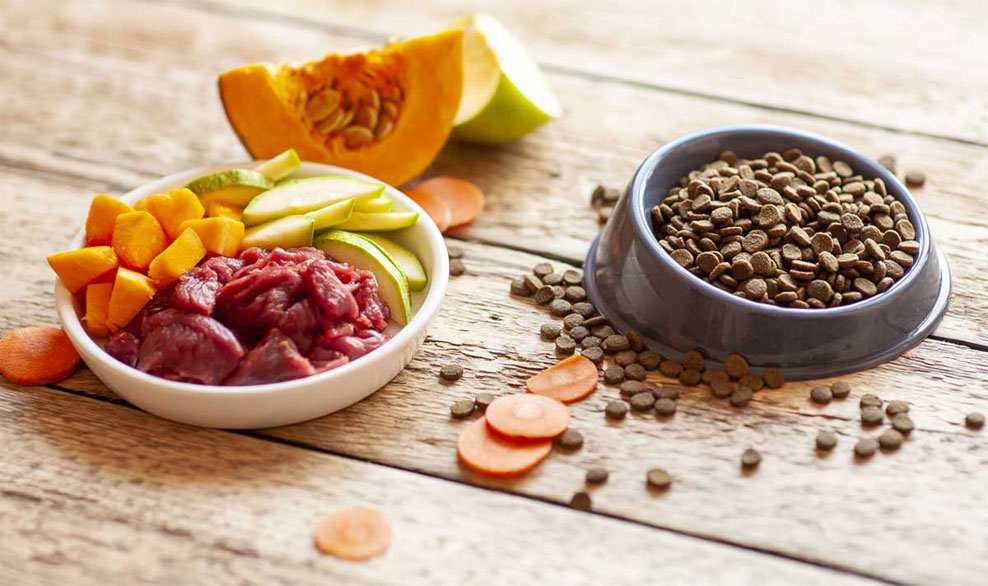
Veterinarians do not recommend limiting a dog's diet to raw meat alone, as plant foods contain many vitamins and microelements that cannot be obtained from animal foods.
Important! Natural feeding requires preparing food specifically for your dog. Feeding your pet "table scraps" is strictly prohibited. Human-grade food contains a lot of salt and spices, which can have a severely negative impact on a dog's digestive system.
If you want your dog to be familiar with both natural and commercial food (in case you travel or need to leave your pet with a relative), plan to feed your German Shepherd dry food and natural food at separate feeding times. Mixing different diets in the same bowl is not recommended, as they are digested differently in the dog's digestive tract.
Permitted natural products
The optimal formula for a dog's diet is 70-80% meat, fish and meat products, as well as fiber (porridge and vegetables).
When planning what you will feed your shepherd at home, it is worth including the following foods in your pet's menu:
- meat – beef, chicken (if there is no allergy), turkey, rabbit (no pork or other fatty meats);
- fish - any non-fatty sea fish (no river or bony fish);
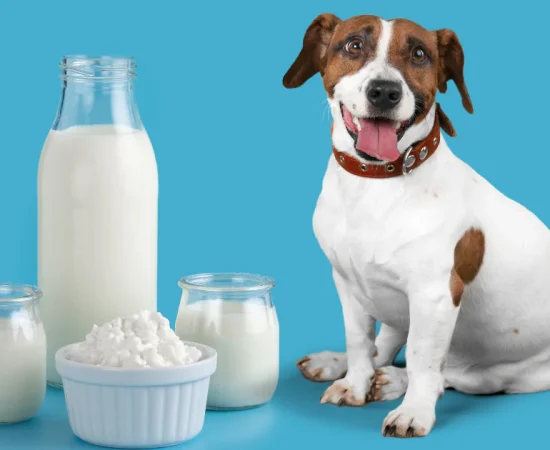
- fermented milk products - cottage cheese, kefir, sour cream (fresh milk is not recommended, as are hard aged cheeses, they cause severe upset stomach);
- eggs (not often) - chicken or quail;
- cereals - buckwheat or rice is best (What kind of porridge is best to give to a dog? we told you about it earlier);
- vegetables – carrots, zucchini, pumpkin, bell peppers, cauliflower, celery, cucumber (cabbage, beets, tomatoes and eggplants can be given in limited quantities);
- fruits – apples, pears, bananas, watermelons (dogs should not have quince, peaches, any citrus fruits, avocados, pomegranates);
- berries - strawberries, raspberries, rowan berries, blueberries, gooseberries (no grapes or raisins).
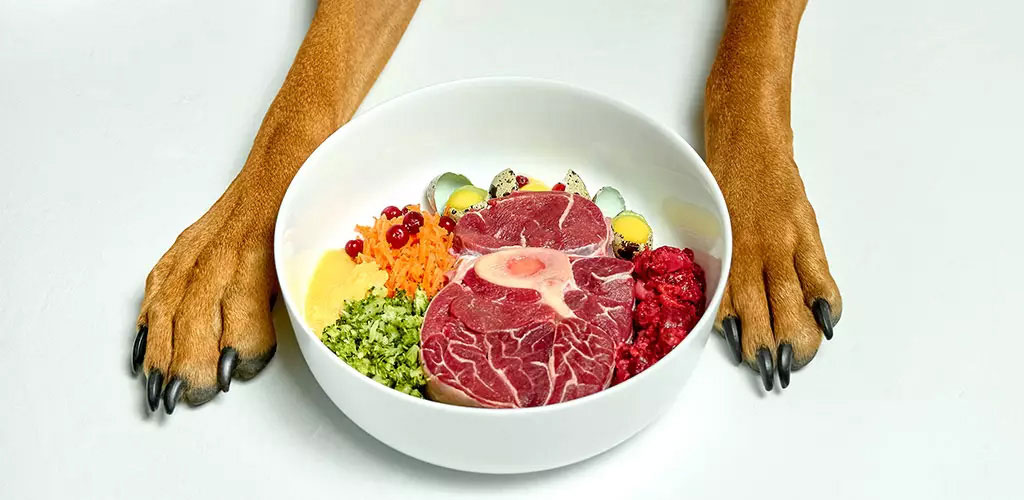
Meat can be fed raw (frozen) or boiled at home. Fried meat is not recommended, as it can negatively impact a dog's pancreas.
Prohibited foods
Regardless of your dog's primary diet, never feed your dog prohibited foods. The following foods can cause severe indigestion or even food poisoning:
- chocolate and any candies;
- cakes, pastries, waffles;
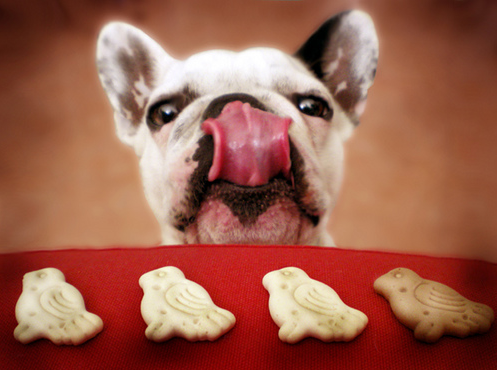
- baked goods and sweet cookies;
- milk;
- raw eggs;
- raisins and grapes;
- pork;
- river fish;
- sausage (any);
- smoked meats (any);
- canned food (any kind prepared for people);
- walnuts, hazelnuts, pistachios (we talked about permitted nuts in more detail earlier);
- mushrooms (any).
Ready-made industrial feeds
If you're considering commercially produced foods when deciding what to feed your German Shepherd puppy, choose from these lines:
Important! Give to your dog as a daily meal. economy segment feed It is impossible, since they do not contain enough natural ingredients necessary for the growth and development of the dog.
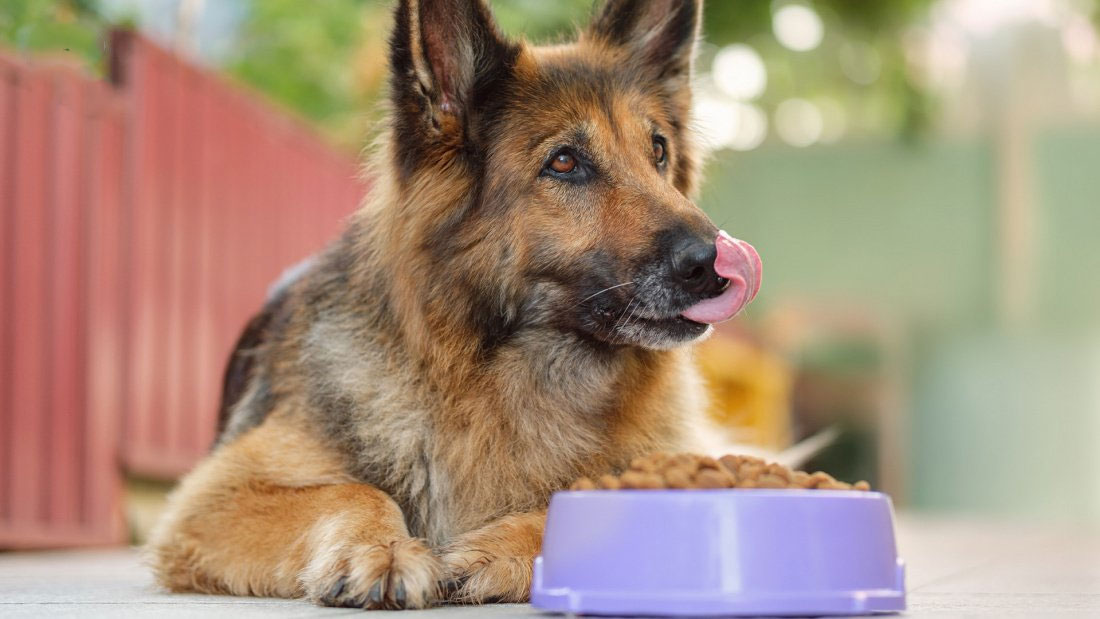
Age classification of dry food:
|
Starter |
puppies up to 2 months |
|
Puppy |
puppies 2-10 months old (sometimes up to a year) and also females after whelping during the period of feeding puppies |
|
Adult |
adult dogs |
|
Adults 8+ |
older dogs |
You can decide which dog food is best for you by reviewing the detailed product line descriptions on our website, as well as consulting with experienced breeders and a veterinarian who knows your dog well.
You can understand the quality of the feed by evaluating the following parameters:
- content of meat and meat products;
- cereal content (must not contain wheat);
- no colorings, flavor enhancers or preservatives;
- assortment of flavors in the line;
- the ability to choose between dry and wet food;
- the manufacturer has a range of lines for different ages;
- the manufacturer's availability of veterinary diets (this will be useful if there is a need to transfer the dog to a therapeutic diet).
However, it's important to remember that every dog is an individual, meaning it's important to choose not just good food, but food that your pet enjoys.
You need to transfer your dog from one brand of food to another gradually, over the course of a week.
It's recommended not to change a puppy's food for at least two weeks after it's arrived at its new home. If you don't like the breeder's recommended diet, gradually transition the puppy to your own diet, but only after the adjustment period has passed.
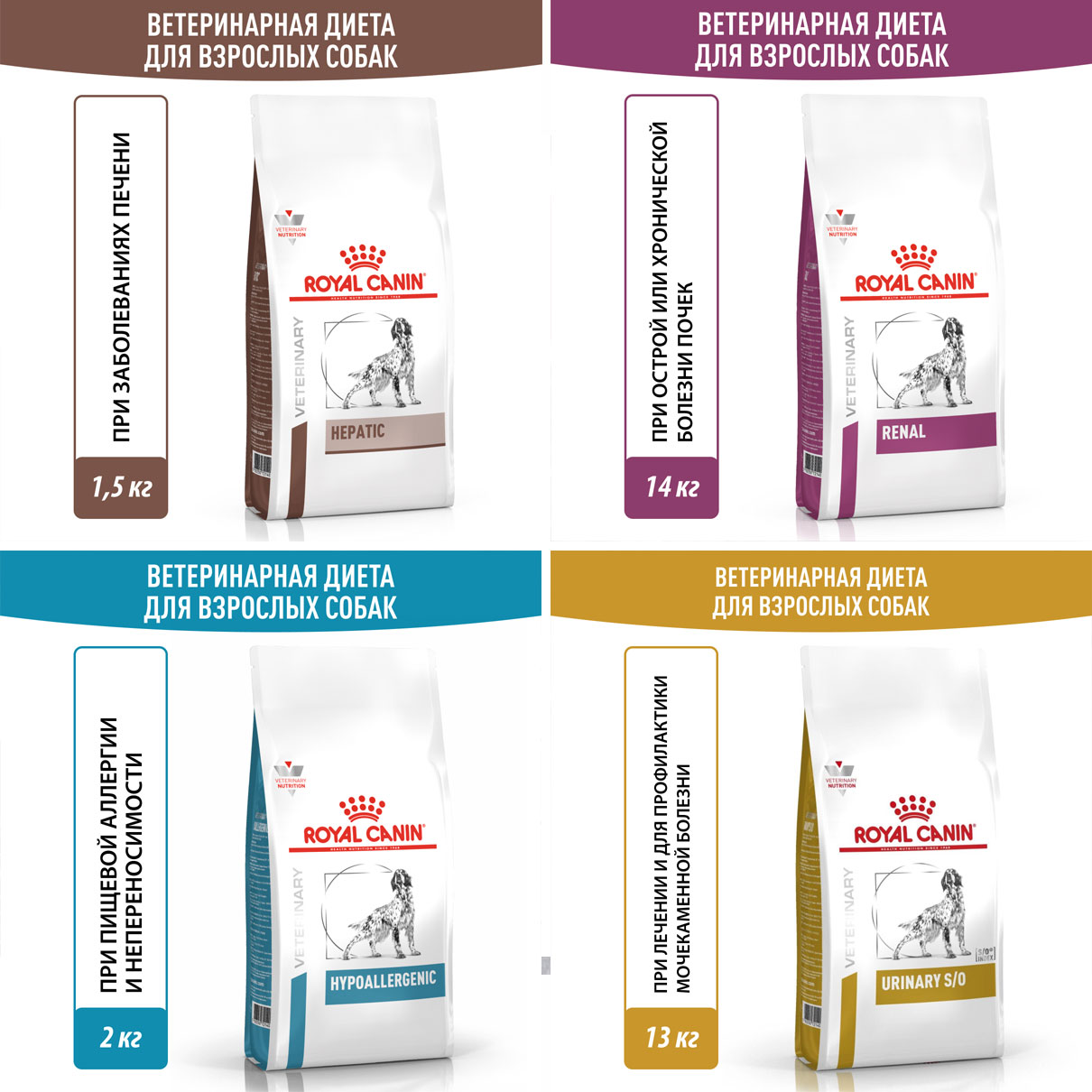
Veterinary diets
If your pet has a chronic illness, your veterinarian may recommend switching your dog to a special food that is properly balanced and designed to meet the needs of animals with specific conditions.
Currently, the Royal Canin brand offers the following special diets:
|
No. |
Name |
Purpose |
Contraindications |
|
1 |
CARDIAC |
heart failure |
pregnancy, lactation |
|
2 |
URINARY |
cystitis, urolithiasis |
Chronic renal failure, heart disease, use of drugs that acidify urine, pregnancy and lactation |
|
3 |
ANALLERGENIC |
allergies |
pancreatitis, pregnancy, lactation |
|
4 |
SKIN CARE |
dermatitis |
pregnancy, lactation |
|
5 |
HEPATIC |
hepatitis, liver dysfunction, portosystemic shunt |
pancreatitis, pregnancy, lactation |
|
6 |
GASTRO INTESTINAL |
ECT diseases (gastritis, diarrhea, dysbacteriosis) |
pancreatitis, lymphangiectasia, hyperlipidemia |
|
7 |
GASTRO INTESTINAL Low Fat |
pancreatitis, lymphangiectasia, hyperlipidemia |
pregnancy, lactation |
|
8 |
NEUTERED |
for sterilized |
pregnancy, lactation |
|
9 |
SATIETY WEIGHT MANAGEMENT |
for weight loss |
constipation, pregnancy, lactation |
|
10 |
DIABETIC |
diabetes mellitus |
pregnancy, lactation |
|
11 |
Mobility Support |
diseases of the musculoskeletal system |
pregnancy, lactation |
|
12 |
SENSITIVITY CONTROL |
ingredient and nutrient intolerance |
acute pancreatitis, pregnancy, lactation |
How many times a day should you feed a dog?
It is enough to feed an adult healthy shepherd twice a day (morning and evening after an active walk), but puppies, as well as sick and weakened animals, are fed more often.
The frequency of feeding a puppy depends on its age and weight:
|
Age of the puppy |
Recommended number of feedings per day |
|
0-1 months |
6-7 times* (fed with special mixtures) |
|
1-2 months |
5-6 times* (feed with soaked food) |
|
2-4 months |
4-5 times (without night feeding) |
|
4-6 months |
4 times |
|
6-8 months |
3 times |
|
after 8 months |
2 times (as for an adult dog) |
*night feedings are also a must
If a puppy has had a serious illness or is underweight as a puppy, you can continue feeding it 3 times a day until it reaches one year of age, switching to a 2-meal diet as recommended by a veterinarian.
How much food should you feed your dog?
The basic rule is that a dog should eat the food placed in its bowl (if there's food left over every time, reduce the portion). Between feedings, the bowl should be empty and clean. Water should be available 24/7!
When feeding raw and thermally processed natural foods, a dog should receive 30-50 grams of food per kilogram of body weight per day.
This means that a German Shepherd weighing 30 kg should receive per day:
- 900 grams of food (450 grams per feeding) in case of excess weight or lack of physical activity;
- 1200 grams of food (600 grams per feeding) for average activity and normal condition;
- 1500 grams of food (750 grams per feeding) if the dog is thin or has a normal weight, but also has high physical activity.
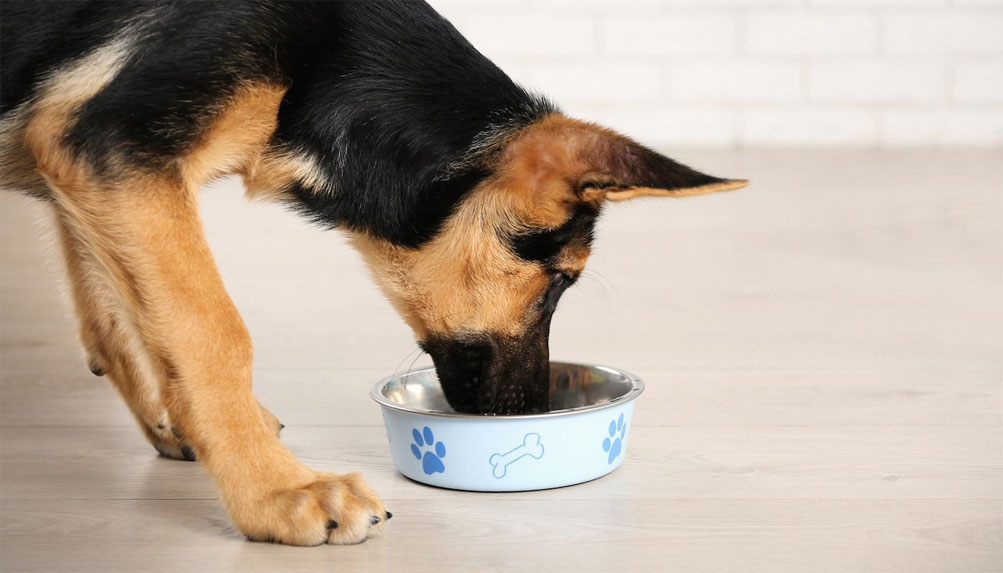
The daily norm of dry food is always indicated on the packaging (this parameter may vary significantly between different manufacturers).
German Shepherd Dry Food Ratings
Important! When choosing a ready-made food for large breeds for your shepherd, consider reviews from breeders and veterinarians, as well as the price/quality ratio.
Our list of the best foods includes manufacturers offering the widest selection of premium, super-premium, and holistic foods:
- Brit (produced in the Czech Republic);
- Monge (made in Italy);
- Purina ProPlan (produced at facilities in Russia, Italy and France);
- Farmina (produced in factories in Italy, Serbia and Brazil);
- GRANDORF (made in Belgium);
- Royal Canin (produced in Russia);
- Acari Ciar (produced in Russia);
- Winner (produced in Russia);
- Profine (produced in Russia);
- Sirius (produced in Russia).
We invite you to share your experiences feeding German Shepherds, as well as your opinions on the foods listed in our rating.
Veterinarian's advice
Read also:
- What to feed a Labrador at home
- What to feed a Doberman at home
- What to feed a Yorkshire Terrier at home



Add a comment