
What to feed a Labrador at home
With a new pet expected to join your household soon, the logical question arises: what's the best way to feed a Labrador at home and how to create a proper, balanced diet? We'll explain what natural foods you can feed your dog, as well as which commercial foods are worth considering as daily nutrition for a Labrador and some other breeds of similar size and activity level (Retrievers, Setters).
Content
Breed characteristics
The Labrador is a fairly large companion dog, recognized as an ideal choice for families with children, due to its high level of intelligence, gentle and patient nature, and excellent trainability.
|
Breed |
|
|
Weight |
C (25-32 kg) K (27-34 kg) |
|
Height at withers |
C (54-56 kg) K (56-57 kg) |
|
Life expectancy |
12-14 years old |

When choosing what to feed an adult Labrador or a puppy of this breed, it is worth considering the following characteristics inherent to these dogs:
- medium-large size (the portion should be calculated taking into account the weight of the pet);
- the need of Labrador Retriever puppies for chondroprotectors and glucosamines, which are designed to strengthen the cartilage, joints and tendons of the animal during the period of active growth and muscle mass gain;
- the excellent appetite inherent in most Labradors causes a tendency to overeat;
- Low activity levels when kept in an apartment can also lead to obesity;
- Representatives of the breed are prone to food allergies (food for a dog with allergies must be selected taking into account the individual characteristics of the body).
Proper nutrition is especially important for a Labrador during puppyhood, as the health and appearance of the adult dog depend entirely on how balanced and complete the puppy's nutrition is.
Diet selection
When deciding what to feed your Labrador at home, it's important to consider the following:
- availability of high-quality natural products;
- the ability to regularly prepare fresh natural food for your dog;
- the ability to correctly formulate a diet and adjust the nutrition of a puppy or adult animal as needed;
- the likelihood of traveling with a dog;
- the need to leave the pet in the care of other people.

Natural feeding
Important! Natural food is not food from the owner's table, but food specially prepared for your pet without salt, spices, potentially harmful fats, or preservatives.
Many breeders believe that natural food is better and healthier. But when deciding to feed your dog natural food at home, it's important to remember the following:
- feeding should be complete and varied (meat and offal should make up about 70-80% of the portion);
- It is necessary to add vitamins, chondroprotectors and glucosamines to the diet;
- Prepared food must be stored in the refrigerator, as food left in the bowl quickly spoils and becomes dangerous for the dog, which will be a problem when traveling and moving;
- When leaving your pet with a friend or relative, you will have to explain to them how to feed the dog properly (and there is no guarantee that they will follow your recommendations).
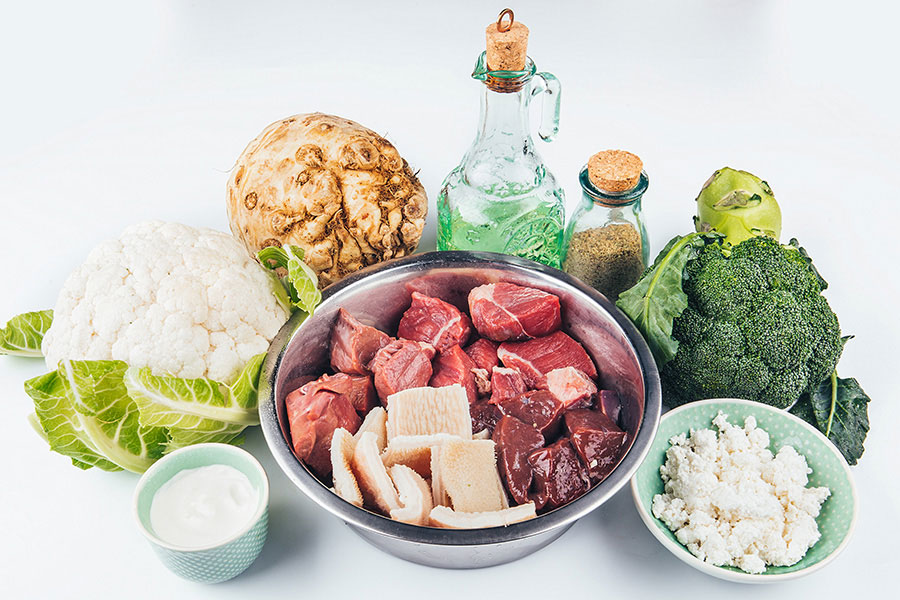
The list of products required for a dog on natural feeding is quite extensive:
- meat (ideally beef, but turkey, rabbit and other types of lean or dietary meat are also acceptable);
- fish (sea, lean);
- porridge (it is best to cook buckwheat or rice groats for a dog);
- vegetables (carrots, zucchini, pumpkin, bell pepper, cucumber, cabbage);
- fruits (apple, pear);
- fermented milk products (cottage cheese, kefir, low-fat sour cream);
- boiled eggs.
For more information on how to create a natural diet for your dog, watch this video:
Raw meat
This diet involves feeding a puppy or adult Labrador mainly raw frozen beef (this meat is the safest and cannot cause helminth infection).
At the same time, veterinarians warn owners that a meat-only diet cannot meet a dog's need for micronutrients, which are found only in plant foods. Therefore, it is better to make one feeding purely meat-based, and the second time offer the dog a portion that also contains cereals and vegetables.
Industrial feed
If you don't have the opportunity to regularly prepare natural food, plan to travel frequently with your pet, or leave it with relatives during business trips, it's best to initially opt for ready-made commercial pet food.
Important! Only premium or super-premium dry food or canned food from the "large dog" range is suitable for daily feeding of a Labrador.

Advantages of feeding industrial feed:
- balanced diet (there is no need to give the puppy additional vitamins and chondroprotectors);
- clear dosage (each package indicates the daily feeding rate based on the dog's weight and activity level, which helps even first-time owners feed their dog correctly);
- the possibility of using automatic feeders;
- Convenience on the road (dry food does not require special storage conditions).
List of prohibited foods
Regardless of what type of home dog feeding you choose, it's important to know the list of foods that should never be offered to your pet, even as a treat.
Dogs of any breed and size are not allowed to:
- chocolate and sweets (causes poisoning);
- grapes and raisins (causes poisoning);
- sweet cookies and pastries (causes obesity);
- aged varieties of hard cheese (causes severe gastrointestinal upset);
- fatty meats (pork);
- smoked products (sausages, cheeses, fish);
- sausages, sausages;
- canned food prepared for people (they contain too much salt and preservatives);
- milk (causes severe gastrointestinal upset);
- raw fish (often a source of helminths);
- some types of nuts (walnuts, hazelnuts, pistachios);
- raw eggs;
- mushrooms.

In general, when choosing what to feed a Labrador puppy, it's important to remember one basic rule: dogs shouldn't be fed just any table food. Spices, salt, colorings, and preservatives, found in large quantities in our food, can cause serious gastrointestinal and pancreatic problems in dogs, which in turn often leads to pancreatitis and a number of other chronic diseases.
Frequency of feedings
An adult Labrador is fed twice a day.
Typically, healthy, properly developing dogs are switched to this feeding regimen after 8-10 months, but if the puppy is sick, is not gaining weight well, or is in the recovery period after an illness, then three feedings a day can be continued on the recommendation of a veterinarian until the puppy is a year old.
The universal feeding chart for a puppy will be as follows:
|
Age |
Frequency of feedings per day |
|
up to 2 months |
5-6 times |
|
2-4 months |
4-5 times |
|
4-6 months |
4 times |
|
6-8 months |
3 times |
|
after 8 months |
2 times |
Important feeding nuances
The composition of a natural diet or the selection of prepared food should be carried out taking into account the age, health and activity level of the animal.
Puppy nutrition
Industrial food for puppies is the Puppy series!
The age of up to 10-12 months is the most important, because during this period the dog’s immunity is formed, the musculoskeletal system is established, and teeth are replaced.

Important! Breeders typically provide clear guidelines on feeding a 2-month-old Labrador puppy when sending it to a new family.
Even if you strongly disagree with these recommendations, follow them for at least two weeks after your puppy's arrival, as a dietary change coupled with stress can lead to severe gastrointestinal upset, which will cause considerable discomfort for both you and your puppy. Once your puppy has adapted to its new home, you can gradually transition it to your chosen diet.
Food for an adult Labrador
Food for adult dogs is labeled as Adult.
If your dog is completely healthy, you can buy any good premium or super-premium food, based on breeder reviews and your dog's preferences. However, if your dog has specific health conditions, it's worth choosing specialized foods from the "veterinary diets" category, which are available from top manufacturers:
|
Marking |
Purpose |
|
Hypoallergenic |
food allergies |
|
Gastrointestinal |
gastrointestinal disorders |
|
Gastrointestinal Low Fat |
pancreatitis |
|
Urinary |
urolithiasis |
|
Diabetic |
diabetes |
|
Digestive |
sensitive digestion |
|
Dermatosis |
skin diseases, hair loss |
|
Joint Mobility |
joint support |
|
Hepatic |
liver disease |
|
Overweight |
for weight loss |
Reasons to revise your diet
It is worth changing the feeding regime if the dog:
- is sick or is in a recovery period (increase caloric intake and the number of feedings);
- is in the period of pregnancy and feeding puppies (transferred to puppy food);
- castrated or sterilized (transferred to special low-calorie food);
- suffers from obesity (transferred to a low-calorie diet);
- over 8 years old (transfer to special food for the elderly with low calorie content and easily digestible components).

TOP manufacturers of prepared feeds
The list of the best brands of industrial dry food includes manufacturers offering premium and super-premium pet foods, whose lines offer a variety of flavors, age-appropriate grading, and special veterinary diets.
According to breeders and veterinarians, the best price/quality ratio is achieved with the following brands of food:
- Monge (Monge) – produced in Italy;
- Brit (Brit) – produced in the Czech Republic;
- Farmina (Farmina) – can be produced in Italy, Serbia or Brazil;
- Purina Pro Plan (ProPlan) – can be produced in Russia, Italy or France.
- Royal Canin (Royal Canin) – produced in Russia.
Breeders' Advice
Read also:
- What to feed a Doberman at home
- What to feed a Yorkshire Terrier at home
- What to feed a Chihuahua at home


Add a comment