
What to feed a French bulldog
French Bulldogs have a friendly nature; they are courageous, intelligent, patient, get along well with children, and are excellent companions and guard dogs. However, French Bulldogs have physiological characteristics that must be considered when creating their environment and choosing their diet. A pet's activity, health, and longevity are directly dependent on their diet, so it's important to know what to feed them and what to avoid.
Content
The relationship between the anatomical and physiological characteristics of the breed and nutrition
French Bulldogs They are considered a medium-sized breed, weighing no more than 15 kg and reaching a maximum height of 40 cm at the withers. One of their distinctive features is their shortened, concave muzzle. This and a number of other characteristics affect the functioning of certain organs and systems and influence the choice of food.

Digestive system
Dogs with this skull structure (called brachycephalic) are characterized by a slight curvature of the esophagus and weak tone of the stomach adjacent to it. Because of this, food moves slowly through the gastrointestinal tract and takes longer to digest, causing salivation, sometimes shortness of breath, coughing, and wheezing during or after meals.
Such problems will not occur if you feed your baby properly and exclude foods that cause bloating (such as corn and table treats) from your diet.
Structure of the jaws
It's difficult to confuse a bulldog with another breed – their jaws are short, and the lower, upturned jaw protrudes beyond the upper. The lower incisors form an arch and extend beyond the upper ones. Frenchies have a harder time grasping and crushing large food particles than dogs with elongated muzzles and longer skulls.
They usually grab dry food with the underside of their tongue and swallow it whole without chewing. Unchewed food is poorly digested, which affects the pet's well-being.
Note! A special French Bulldog Adult food is available for these breeds, featuring boomerang-shaped kibbles that are easy to grip.

Respiratory system
Brachycephalic dogs have a powerful, robust chest, but this, coupled with narrow nostrils and a short nasopharynx, can sometimes create problems. For example, they wheeze during physical activity, when hot or cold, and snore.
Furthermore, their shortened skulls impair air circulation, which affects their sense of smell. Therefore, bulldogs are not sensitive to distant odors and may eat poor-quality food.
Note! It's best to use a flat feeding bowl, as a short muzzle can make it difficult to reach food from a deep bowl. Don't keep food in the bowl for more than two hours—there should be enough food for one feeding.
Metabolism
Excessive physical activity and fatigue can cause respiratory and metabolic problems. Therefore, exercise should be moderated, and feeding should be adjusted according to age-appropriate norms. Overfeeding can lead to obesity, decreased physical activity, and cardiovascular problems.
Allergy, food intolerance
French Bulldogs are among the top five most allergenic breeds. Most often, they are allergic to plant or animal proteins, sometimes both. These allergies can be triggered by table food, new or unbalanced food, or other allergies. Symptoms include flatulence, shortness of breath, redness between the toes, vomiting, diarrhea, dandruff, and a rash.
Note: Nasal folds need to be cleaned regularly, as food debris accumulates there and causes inflammation.
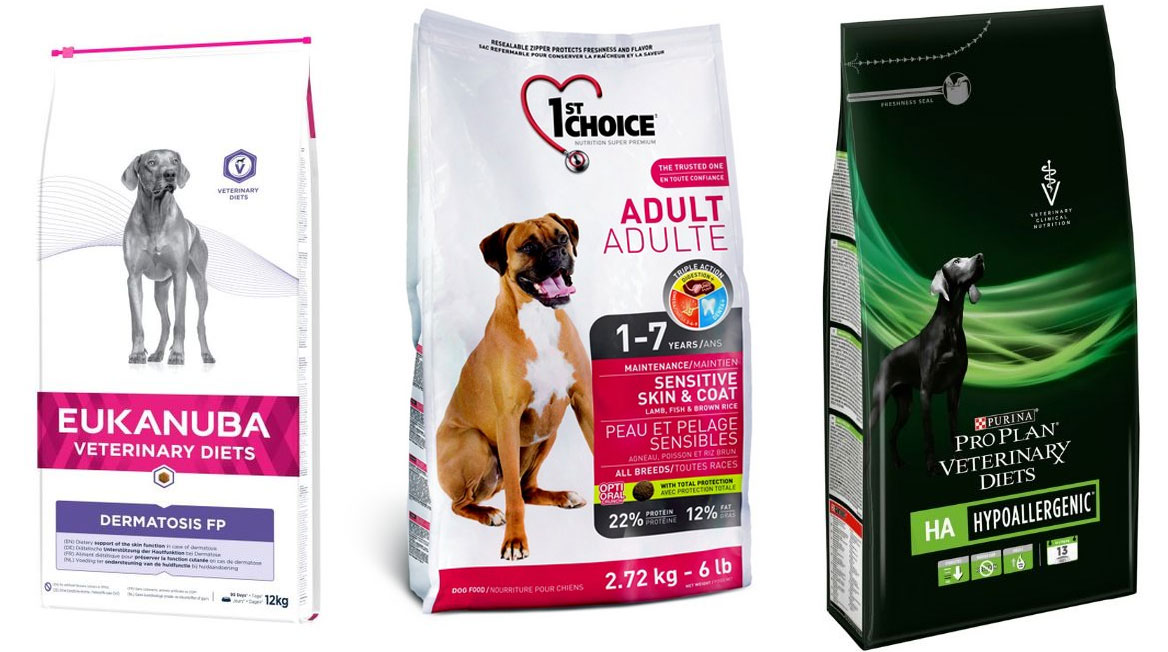
Allergy-Prone Dog Food: Eukanuba Response Formula, 1st Choice Sensitive Sking&Coat Adult, Purina HA Diet, DVM Exlude.
Feeding Options for French Bulldogs
A puppy feeds on its mother's milk for about two months. After weaning, it is transitioned to either commercially prepared food or natural food. If you have the ability to create a varied, nutritious, and balanced menu yourself and prepare food at home, you can choose the latter option.
When time and conditions are limited, preference is given to commercial specialized feeds. Whether it's better to feed natural food or specialty feed depends on your resources and conditions. The key is to maintain the correct balance of proteins, fats, and carbohydrates, as well as a number of rules dictated by the breed's characteristics.
Note! The daily protein requirement for an adult bulldog is 4.5 g/kg of body weight (for a puppy: 9 g/kg of body weight), fat: 1.3 g/kg of body weight, and carbohydrates: 10 g/kg of body weight. The daily feeding requirement for an adult dog weighing 10-15 kg is 0.4-0.8 kg.
Feeding rules:
- ensure constant access to drinking water;
- feed an adult dog 2 times a day, or 3 times a day if the dog is under increased stress;
- do not give food from the table (the bulldog loves to beg for treats);
- the bowl should be shallow;
- Place the bowl at the dog's chest level - this will make it easier for him to take the food.
Natural food
Sometimes a dog refuses to eat commercially produced food and must be switched to natural food. The diet is formulated to provide all the nutrients necessary for healthy functioning.
Approximately 70-80% of the diet should consist of lean, boiled or parboiled meat (beef, lamb, turkey, rabbit, chicken) and organ meats. In addition to meat, the menu should also include vegetables and fruits rich in vitamins and fiber. Pumpkin, carrots, beets, cabbage, spinach, zucchini, broccoli, and apples are also beneficial.
The meat component is periodically replaced with boiled fish, which is kept in the freezer for 2-3 days for deworming.
Bulldogs love porridges made from rice, buckwheat, and oatmeal. Cook them in water without sugar or salt. For added nutrition, you can add a little flaxseed or olive oil and cheese.
Note! Age-appropriate vitamin and mineral supplements are a mandatory component of a natural feeding diet.
Industrially produced feed
The advantage of such foods is that they save the owner significant time. Their composition is balanced, contains vitamins and minerals, and can be selected based on the age and health of the pet. They come in dry, semi-moist, and moist (pâté) varieties.
Division of feed into classes (taking into account quality and composition):
- Economy (Darling, Cesar, Chappi, Pedigree, Nasha Marka, Oskar, Stout, Psarny Dvor, Trapeza). Contains soy, legumes, food coloring, vegetable oils, and few beneficial and natural ingredients.
- Premium (Advance, Brit Premium, Royal Canin, Purina, Pro Plan, Probalanse, Hills, ONE). Contains by-products, meat, vegetables, and incomplete vitamin complexes.
- Super premium (Advance French Bulldog, Arden Grange, Breat Care, Dukes Farm, Monge, Eukanuba, Josera, 1ST Choice, Trainer, Schesir, Pronature Original, Fitmin). Contains only high-quality ingredients and vitamin complexes.
- Holistics (Applaws, Acana, Canidae, Grandorf, Go Natural, Savarra, Gina, Now Fresh). Their composition is close to natural foods (they contain over 50% meat, a full range of vitamins and minerals), and they do not contain salt or food additives.
Prohibited foods
Bulldogs should not be fed:
- fatty, pickled foods;
- smoked meats;
- sausages and semi-finished products;
- tubular bones (can be injured by sharp edges);
- bread, rolls, confectionery, pasta;
- milk;
- chocolate, sugar products;
- legumes, potatoes, citrus fruits, grapes, raisins, onions, garlic.
Diet and feeding regimen for a French Bulldog puppy
A puppy fed on mother's milk is gradually introduced to other foods. Starting at one month of age, one feeding of milk is replaced with an "alternative" food, and at two months, the puppy can be completely transitioned to a "baby" diet.
A pet acquired from a breeder is fed its usual diet for two weeks, then transitioned to natural food or dry food. When transitioning to natural food, new foods are introduced in small portions to avoid any allergic reactions.

If you choose commercial food, first soften the granules slightly in warm water, gradually reducing the amount, and after 2-3 weeks, when your pet gets used to it, give them dry.
Feeding regimen, permitted products (table):
|
Age (months) |
What foods to supplement your basic diet with |
How many times a day to feed |
|
Up to a month |
Scraped meat, yolk, cottage cheese, kefir, porridge with water |
Up to 2 weeks – every 2-3 hours; then 6 times |
|
1 month |
Omelette, boiled minced meat, cottage cheese, fermented baked milk, grated raw vegetables, herbs |
5-6 times |
|
2 months |
Boiled boneless fish (pieces), eggs, raw carrots and apples (grated), boiled cabbage and zucchini |
4-5 times |
|
3 months |
Lean meat and fish, eggs, vegetables, fruits |
4 times |
|
4-6 months |
Offal, brown rice |
3 times |
|
6-12 months |
Gradually transition to solid food and an adult dog's diet |
2-3 times |
Before choosing a particular type of food, you need to determine your budget, preferences, and your pet's health. Mixing raw food and dry food is not recommended, as French bulldogs will react with digestive upset.
Veterinarian's advice
Read also:


Add a comment