
How is a human different from an animal?
The question of what distinguishes humanity from the animal world has troubled people almost since they became aware of themselves as a separate biological entity.
Although humans are considered a distinct species in the natural classification system, it's clear that their development has diverged significantly from the standard path of existence for living organisms. These fundamental differences are addressed not only by biologists, anthropologists, and physicians; these issues are also addressed by sociologists, psychologists, philosophers, and representatives of other sciences.
Content
Anatomical and physiological differences
Social and moral aspects of human life are very important, but for skeptics, they are not suitable as evidence of differences from the animal world. Therefore, we are primarily interested in obvious and indisputable facts regarding the structure of the human body's organs and systems, as well as physiological characteristics.
Chromosome set
Humans are a product of evolution, whose closest relatives are the large primates pongids and hylobatids. Although we are very similar to our relatives, there is one important detail that defines us as a distinct species: our chromosome set.
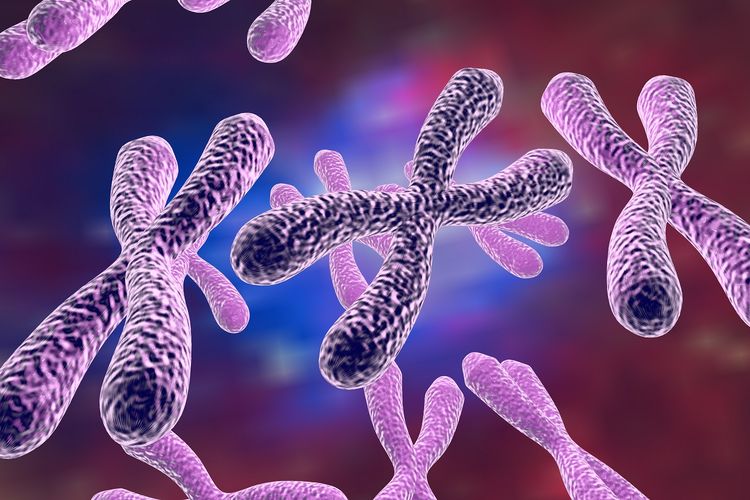
The human genome is the same size as that of some primates, but our cells contain 46 chromosomes, arranged in pairs within two helical strands of DNA. There are 23 such pairs in total, and they determine the appearance of our species and the program by which each individual develops throughout its life. This individual program is unique to Homo sapiens and cannot be replicated by any other animal.
Upright posture
A unique event occurred during the formation of the species: humans chose bipedalism as a convenient method of locomotion. This had a profound impact on the subsequent development and evolution of humanity.
As a result of this method of movement, the spine and other parts of the skeleton changed:
- The pelvis has become lower and wider, as it bears a greater load than the pelvic spine of other animals. The human pelvic bones have changed their structure, becoming thicker and stronger.
- The anatomical structure of the feet, which are the primary mechanism for walking, has changed. The number of bones and joints in this region is very large, ensuring sufficient freedom of movement during the gait.
- As a result of bipedalism, the length of the lower limb bones changed. They lengthened, allowing for faster walking due to a longer stride.
- The spinal column acquired curves (lordosis and kyphosis), new to the animal world, which allowed the load to be correctly distributed along the spine.
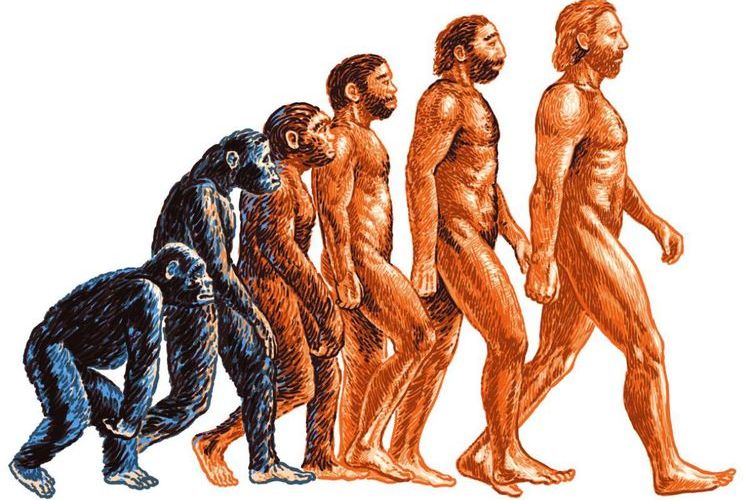
Humanity pays for the ability to walk upright with periodic back and lower back pain, which experience much greater pressure than the same parts of the spine in animals that move on all fours.
Fine motor skills
After humans began walking on two legs, the palm ceased to be a support for locomotion. The function of the hands changed, which was reflected in their anatomy.
The structure of the human thumb is unique in the animal kingdom. No other member of the animal kingdom can manipulate small objects as dexterously as humans.
Language
Higher-order living organisms typically employ a primary signaling system based on reflex transmission. Humans have developed and successfully utilized a secondary signaling system—speech. Scientists acknowledge that this method of communication is not unique to us: dolphins, for example, can talk and even name their young. However, the unique anatomical structure of the human larynx makes it possible to utilize a wide range of sounds.
Another unique feature is that all members of the animal kingdom understand each other equally, regardless of their habitat. Only humans have distinct languages that are incomprehensible to those living in a different linguistic environment. This phenomenon is unique and inherent only to humanity.

CNS
The human brain isn't the largest, either in actuality or proportionally. However, anatomically, it has a number of differences from other animals. Thanks to the large and developed frontal lobes, we can remember, plan, dream, notice the commonalities and distinguish the dissimilar. The limits of human thought are vastly expanded, conditioned by the functional capabilities of the human brain.
Environmental differences
In their way of life, distribution, and methods of developing new habitats, people also have unique features that distinguish them from animals.
Distribution of the species
Many species of wildlife occupy all continents, preceded by a long chain of evolution that provided them with mechanisms for survival in these conditions. Humans have been able to settle in areas unsuitable for human habitation because their existence in certain places is not constrained by environmental conditions.
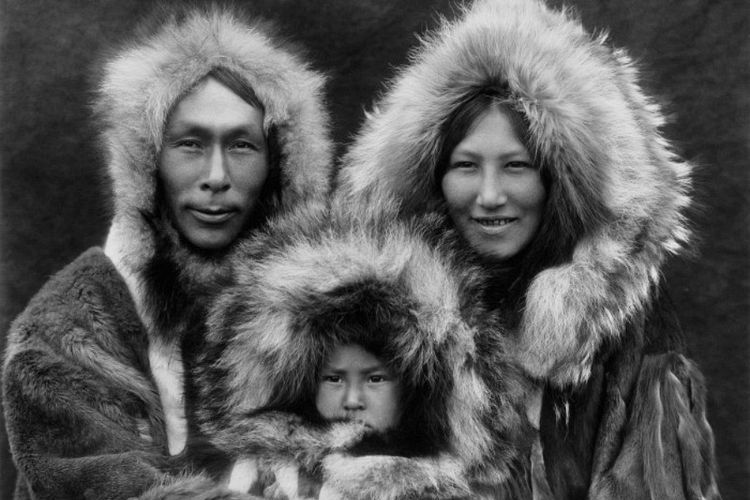
For the same purpose, humanity invented clothing—a unique phenomenon not observed in nature in any other species. Thanks to this high level of adaptability, humans have been able to live in cold climates that are unsuitable for human physiology. This means that human distribution across the globe is not dictated by natural conditions.
Exchange of resources
A lack of resources hasn't prevented human expansion, as we've learned to exchange food supplies, minerals, and other essential materials. This has facilitated the further colonization of territories that other species otherwise couldn't inhabit due to a lack of food.
Use of tools
Some animals can use certain objects to meet their needs. A unique feature of humanity is that we have learned to create such devices ourselves, inventing, designing, and manufacturing them, significantly expanding the range of possibilities.
Thanks to the fact that progress continues, people do not stop creating other devices that often predetermine the further development of civilization.
Use of fire
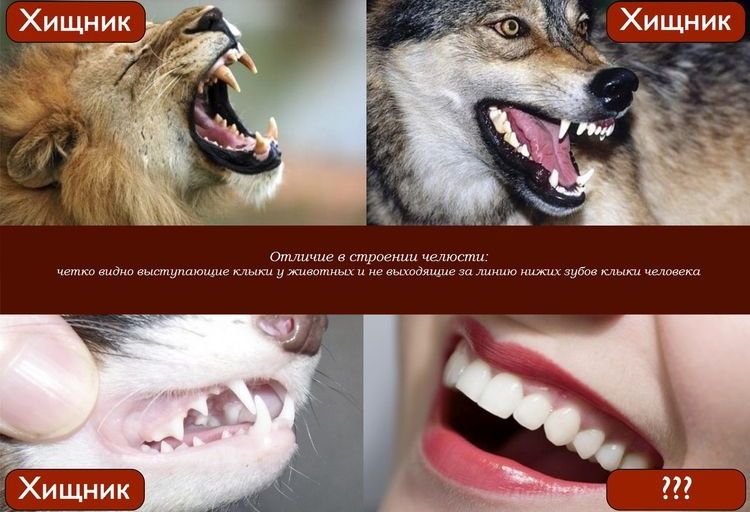
Biologists, historians, anthropologists, and other scientists unanimously believe that humans made a huge leap in their development thanks to the use of fire. This ability not only enabled migration to colder regions but also ushered in the era of thermal processing of food. This innovation gradually altered the anatomy of the stomach and intestines, influencing the dentition and jawbone. This is why human canines do not protrude beyond the line of other teeth, as is the case in other animals.
Impact on the planet
No other living species has such a profound impact on Earth as humans. We alter landscapes, waterways, and climate in certain areas and across the planet. Furthermore, human activity significantly impacts biodiversity.
Social and spiritual differences
Most people believe that animals don't have a soul, while humans do. But such a broad concept, which has been debated for centuries, is difficult to grasp.
There are several moral and social factors that sharply distinguish us from the animal world.
Thinking
Human consciousness and thinking differ from that of our smaller brothers and sisters. In this area, humans are far ahead of them.
Our thinking consists of the following elements:
- information collection;
- analysis;
- comparison;
- abstraction;
- generalization;
- specification.
Based on these mental processes, we can reason, judge, and draw conclusions. Animals cannot achieve such a high level of mental activity.
Stages of life
Of course, in terms of lifespan, an individual human cannot compete with many other animals. But the proportions of the various stages of human biological development are unique. An animal's body deteriorates very quickly after the completion of its reproductive cycle, so animals don't live long after they stop producing.
A completely different picture is observed in humans: our period of old age and decline differs from that of other representatives of wildlife and is the longest.
Morality and Ethics
The animal world exists according to laws dictated by natural selection. Humans are increasingly moving away from this state of affairs, and with the advancement of thought, a new set of rules or specific laws of life and social interaction has emerged—morality and ethics.
Creation
The need for creativity is a uniquely human trait. The need to transform the space around us, to create, to express our emotions through certain forms of creativity has become habitual, even obligatory, for us.
For those who are not successful in creating creative projects, there is a need to consume this product in the form of music, films, paintings, literary works, etc. In the animal world, this phenomenon is completely absent.
Duration of maturation
Childhood lasts a certain amount of time for each species. During this period, the animal has time to acquire all the knowledge and skills it will need once it begins its independent life away from its parents.
In humans, this period is the longest, as the rate of development and maturation is quite moderate, and sexual maturity occurs later than in other species. Due to the complex structure of the central nervous system, the time required for its full maturation and development is longer than in animals.
Display of emotions
Animals don't display joy, anger, pleasure, sadness, and other emotions as well as humans. Smiling, laughing, blushing—all of these are uniquely human abilities. We aren't always able to control these facial expressions.
Scientists believe this trait arose in humans due to close social ties. Emotions have historically facilitated nonverbal communication and have become ingrained over time.
Growing needs
Every species of our smaller brothers has a limit to their comfort and living conditions, which limits further progress. Humanity has taken a different path in this regard – a path of ever-increasing needs. It's human nature to not rest on our laurels, so new desires arise through progress and the inventions humanity itself produces.
This feature became the basis for the development of people and the reason why this process does not stop.

From all of the above, we can conclude that despite the fact that humans are part of nature, they have many unique traits that are inherent only to them, which allow them to be singled out as a separate group, sharply different from others.
Read also:
- Why do cats have 9 lives?
- Where is the withers located in cats?
- Cats with different-colored eyes: breed


Add a comment