
Cat fears: what are they?
It would seem that cats wandering freely are afraid of absolutely nothing. They furiously attack birds and tease dogs with a haughty look. But despite this, cats, like other living creatures, have feelings, and therefore, fears. What fears do cats have?
A pet can easily lunge at a guest, hiss at them, scratch them, and leave unpleasant marks in a variety of places. The problem is that cats are jealous, and when new faces appear in their owner's circle, they fear that their owner will forget about them.
Content
- 1 Evolutionary fear and survival instinct
- 2 Loud noises and sudden changes
- 3 Fear of strangers and other animals
- 4 Fear of water and wet fur
- 5 Fear of odors: chemical irritants
- 6 Individual and hidden fears
- 7 Fear of abuse and stress reactions
- 8 Pathological fear and the consequences of stress
- 9 Loud noises are scary for cats.
- 10 Are all cats afraid of water?
- 11 Cat and smells
- 12 Meeting with the veterinarian
- 13 How to Relieve a Cat's Fears - A Support Algorithm
Evolutionary fear and survival instinct
Cats are predators, but not apex predators. In the wild, they can become prey themselves. Any unfamiliar sound, object, or smell can trigger a fight-or-flight response. This evolutionary mechanism helped cats' ancestors survive and now ensures their safety in domestic environments.
Loud noises and sudden changes
Cats are extremely sensitive to noise: the sound of a hair dryer, vacuum cleaner, a child's cry, or construction tools can be threatening. Even rearranging furniture can cause stress in many animals. Noise shock is triggered reflexively—a cat may jump, hide, or deliberately retreat to a secluded corner.
AdviceIf a loud activity is planned, turn the volume up gently beforehand, then gradually increase the volume, while accompanying the activity with a treat. This helps reduce fear.
Fear of strangers and other animals
Cats, not naturally sociable, are often afraid of strangers, dogs, or new felines. This is because strangers bring new smells, movements, and sounds—potential threats to their territory.
How to helpLet the guest into the room with a treat and let the cat approach on its own, avoiding intrusive attention. When introducing the two animals, proceed gradually, maintain distance, and use pheromone diffusers.
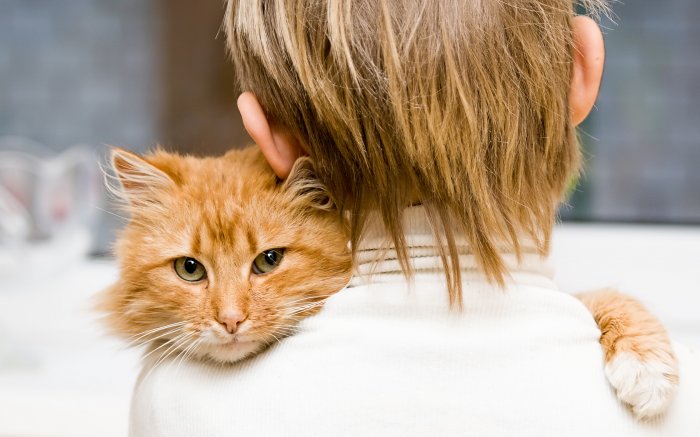
Fear of water and wet fur
The puma, the ancestor of cats, lived in arid regions unsuited to water. Bathing deprives cats of comfort and stability, damages their fur's insulation, and creates a feeling of vulnerability. The sound of water increases discomfort. Therefore, many cats react with avoidance and stress at the sight of water.
AdviceIf bathing is necessary, do it in a calm environment, use warm water, and minimize noise. A gradual introduction helps.
Fear of odors: chemical irritants
Cats' sense of smell is 14 times more sensitive than humans', so strong odors (varnish, paint, essential oils, citrus, perfume) are perceived as dangerous and cause stress. For example, citrus scent is a powerful irritant and a natural repellent for cats.
Advice: Avoid using strong scents in your home, especially near your cat's resting area and litter box.
Individual and hidden fears
Cats, especially those adopted from the street, may be afraid of the dark, certain rooms, the sounds of machinery, or even their own shadows. Such phobias are a manifestation of psychological trauma, underlying fears that cause long-term avoidance and stress.
Advice: identify the trigger - do not force the cat to go where it is afraid, offer treats, gradually introduce the traumatic object into a neutral environment.
Fear of abuse and stress reactions
Physical trauma, punishment, or unpleasant procedures (hitting, tail clamping, veterinary visits) leave psychological scars. The cat may avoid people, places, and situations that remind them of the experience.
Advice: respect the animal's boundaries, do not punish physically, create positive associations with negative procedures (vaccination, transport, grooming).
Pathological fear and the consequences of stress
If fear becomes chronic, it's no longer a defense mechanism but a psychological disorder. Pathological fear manifests itself in food refusal, aggression, urination outside the litter box, and excessive licking. It impairs health and quality of life.
AdviceIf symptoms of chronic stress are present, consult a veterinarian or veterinarian. Pheromone treatments and behavioral counseling are often helpful.
Loud noises are scary for cats.
Loud and harsh sounds are another phobia of many cats.
And it's all about the incredible sensitivity of their hearing, as well as their fear of objects that make unfamiliar and unpleasant sounds. I just have to get it vacuum cleaner, as a cat immediately hides under the sofa or climbs onto a cabinet. Another cat, on the other hand, doesn't seem particularly uncomfortable at the sight of a vacuum cleaner, and even a power drill won't make it leave its warm spot.
It turns out that the same sound and object are perceived completely differently by cats. If your pet is afraid fireworks, thunder, hair dryers, and other noisy objects, don't drag her out of her hiding place. If your pet prefers to hide under the couch during a thunderstorm, let her do so; she'll be much more comfortable that way, and perhaps the fear will go away on its own.
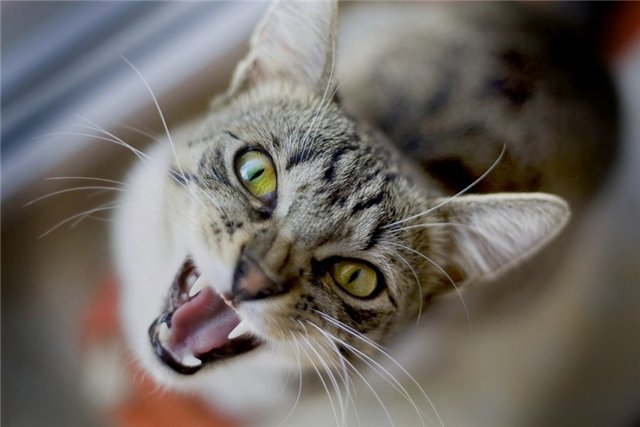
Are all cats afraid of water?
As soon as the water starts running in the bathtub and I tell my pets it's bath time, get the towels and bath brooms ready, the cats' behavior signals that they're not thrilled with my idea. As a result, bathing often ends in stress for the cats, and bandaged hands for me.
Some people believe that cats are afraid of water because their fur gets wet, losing its warming properties. But the truth is, I have hairless breeds in my house, and they're terrified of water. It turns out that the actual act of washing and the water itself is what causes the cat's fear, not the risk of freezing. In any case, I suggest reading the article "Why are cats afraid of water" if you're interested in this question and want to clarify it for yourself.
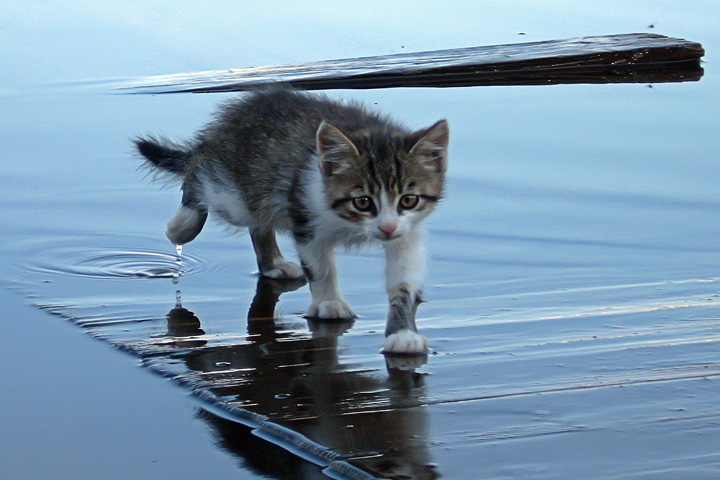
Cat and smells
Many cats simply recoil from the smell of lemon, nail polish, scented hygiene products, vinegar, and so on. The pungent odor irritates cats' nasal passages, and they avoid strong scents for fear of losing their sense of smell. This can hardly be called a phobia—it's more of a natural reaction to something unpleasant.
For example, citrus fruits are a strong allergen for cats and have an extremely unpleasant smell. Is it surprising that cats would avoid them?
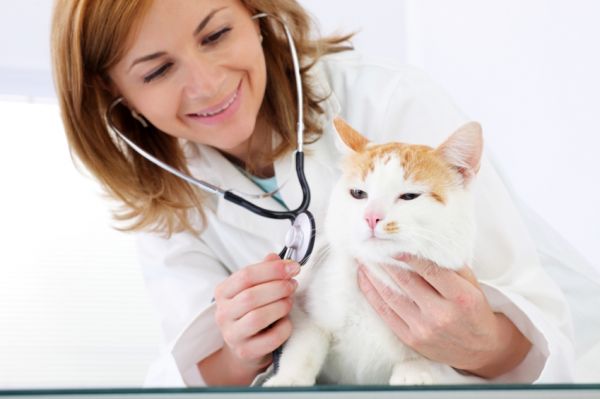
Meeting with the veterinarian
Just as children fear doctors, cats fear veterinarians. Fear of vets is an individual phobia. I've taken my pets to the vet, and each one reacted differently. Some growled and flattened their ears, some remained indifferent, and some even purred.
I once had to administer vitamin injections to cats myself, a rather unpleasant procedure. I had to inject into the muscle of their hind legs. At the sight of the syringe, my pets scattered like cockroaches, but after the treatment, they were completely comfortable being petted and touched anywhere on their bodies. However, one cat, known for his calm and affectionate nature, still becomes frantic, aggressive, lunging, and hissing if even a light touch to his hind leg occurs.
How to Relieve a Cat's Fears - A Support Algorithm
-
-
Identify the source of fear - Observe and record what causes the reaction.
-
Avoid sudden changes and noise, making smooth adjustments.
-
Create shelters - warm shelters, houses, shelves where the cat can go.
-
Establish a routine - feed, play, and cuddle at the same time.
-
Use calming pheromones — Feliway and similar products.
-
Positive desensitization - gradually introduce the stimulus + treat without intrusive contact.
-
Seek professional help, if fear causes the condition to worsen.
-
Read also:


Add a comment