
Chausie: cats and kittens
Who said cats with spotted coats can't be exotic breeds? Meet the spotted Chausie. This is a very rare breed, but if you meet one of these cats even once, you'll fall in love with them forever.
Content
History of the breed's origin
Jungle cats have long preferred habitats near humans, as mice—their favorite and easily accessible delicacy—are sure to infest wherever humans live. Gradually, wild cats began to inhabit abandoned dwellings. As they became increasingly close to humans, they began interbreeding with domestic cats. The resulting hybrids spread throughout the Middle East and reached Southeast Asia, but attracted little interest from humans.
In the early 1970s, these cats caught the attention of Americans. After all, observing wild animals, few people haven't subconsciously conceived the idea of taming them, running their hands through their thick fur, playing with their mane, all without fear of being snarled. And although wild nature is reluctant to give up its defensive positions, breeding has allowed us to realize our desires, and, albeit in a smaller form, still afford to keep replicas of these wild animals.
This is how our cat's story unfolded, eventually joining the ranks of domestic animals as a member of the swamp lynx Felis chaus. This miracle is called the Chausie.
Chausie is a very rare breed for our country.
Professionals are especially careful to ensure that representatives of this breed end up in the hands of people who are seriously involved in breeding cats, because they can only be crossed with ordinary shorthaired and Abyssinian Cats. This breed is under the strict protection of the large organization TICA, which registered it in 1995, and in 2003, the new breed received a special status, designated by the letter F.
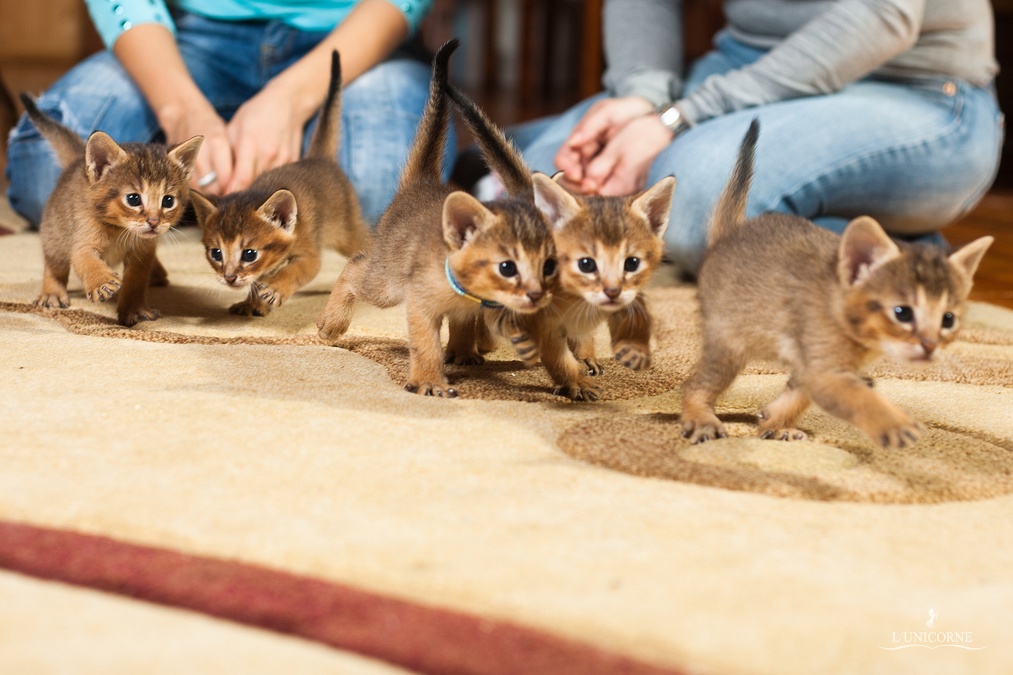
General characteristics of the breed
Appearance
The Chausie is a large and elegant cat. An adult can weigh up to 15 kg. These cats are distinguished by a muscular and slender body, a deep chest, narrow pelvis and shoulders, and a beautiful, elegant, long, and strong neck. The tail of a purebred cat should be three-quarters of its body length. Chausie cats are more active than males, while males are larger than females. They have beautiful, strong limbs and large paws.
In appearance, the Chausie resembles a large wild animal with a hunting stance and a regal bearing. The head of this breed is small, with an angular muzzle and a strong chin. The Chausie's ears are set high, large, slightly rounded, and tufted. Their eyes are bright, and their color can be green, amber, or yellow. The Chausie's close-lying coat comes in the following colors:
- black;
- ticked tabby;
- unique color - black with silver tips.
Character
Chausies are kind, inquisitive, and quite active by nature. They have a balanced temperament and a highly developed sense of self-worth, which is evident in everything from their appearance to their emotions.
This is an intelligent breed and requires constant attention from its owners. Therefore, the Chausie is only suitable for cat lovers willing to devote a lot of time to their care. Otherwise, the cats become bored.
Moreover, representatives of the wild breed love freedom. Therefore, it is not recommended to keep a Chausie in a city apartment. Chausies can impress literally anyone with their sociability. They never show aloofness and strive to attract attention.
They really love heights, so if such a cat lives in your house, try to keep all fragile objects away from it.
Rules of care and nutrition
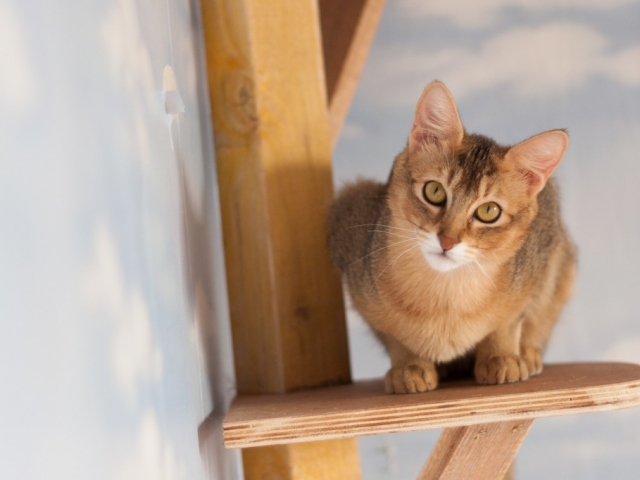
Grooming
There are no special grooming rules for Chausie cats. The only thing they require is regular grooming. Invest in a special brush and try to gently brush their fur at least twice a week. Chausie fur is smooth and short, but if you don't groom it regularly, it will leave traces of hair all over your home.
Bathing
Besides brushing, it's important to know that Chausie cats love water. They even find bathing interesting. So, make this process interesting for your pet. Fill a bowl with warm water, add balls and toys, and you'll be able to observe your pet's interesting behavior and the special abilities they've acquired from their wild ancestors.
It's also a good idea to leash train your cat from an early age. This way, your walks in the park or around town will not only be fun and engaging, but also safe. Your cat can join you on a car trip. Chausies are very observant animals, and car rides bring them a lot of joy.
Nutrition
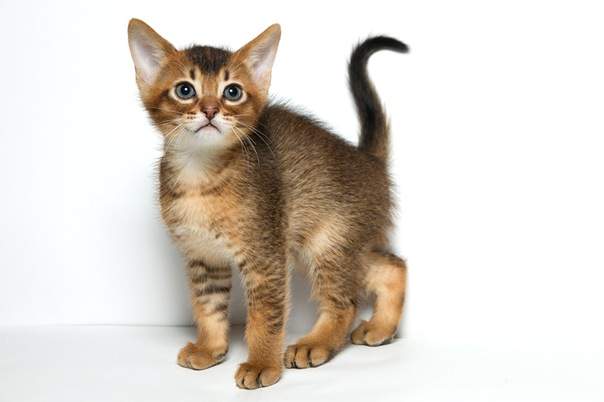
A Chausie's diet differs slightly from that of a domestic cat, which should be taken into account from an early age. Proper nutrition ensures proper development and growth.
The diet of adult cats should definitely include lean meats—fresh beef and rabbit—as well as seafood. They can also include mice, day-old chicks, quail, and raw quail eggs.
It is strictly forbidden to feed cats pork, which can cause Aujeszky's disease (a viral disease).
A single dose should be 5% of the cat's total weight. Feed until the age of one year. Chausie Feeding should be done twice a day, and then once a day. Starting at 1 year of age, it is recommended to fast your cat completely once a week. This diet promotes proper digestive function and the removal of harmful substances from the body.
Water for cats should always be in a visible place, and only filtered or boiled.
Giving raw water is strictly prohibited.
Health
Chausies are healthy and active cats. They are not particularly susceptible to illness when properly cared for.
This doesn't mean that the health of cats of this breed can be ignored. For example, many of them show signs of digestive sensitivities. Therefore, it's best to avoid commercial dry foods containing grains. Grains are difficult for this breed to digest, and their digestive system will experience stress every time they are fed commercially prepared foods. This can lead to various problems, ranging from constipation and diarrhea to severe gastrointestinal illnesses.
Another health risk for Chausie cats lies in their feeding system. It's important to monitor the frequency and amount of food they eat, as these animals are prone to overeating. This is likely due to the fact that their wild ancestors tore and devoured food in large chunks.
Breed characteristics
The Chausie breed is one of the rarest and most exotic. Therefore, breeders are extremely excited about the birth of their offspring.
Hybridization, in this case, of a jungle cat with a common shorthaired or Abyssinian cat (only this combination is allowed for breeding) is a complex and responsible undertaking, and is even prohibited in some countries.
Moreover, the process can often end in complete failure. For example, crossing two Chausies, whose blood is approximately 50% "reed" (so-called F1), often results in non-viable or defective kittens.
Chausie cats are born sterile until the third generation. Furthermore, the breeding process is complicated by the fact that almost half of the kittens are "defective," meaning they look nothing like their wild ancestors.
Cost of kittens
The breed's appearance, for which they are primarily prized, as well as the price of a Chausie kitten, will depend on the proportion of jungle cat blood. A large Chausie kitten (the very same F1) with no apparent flaws or defects will cost an American or European buyer (and you in their currency) many thousands. However, an F5, with only 3.12% jungle cat blood and bearing little resemblance to its wild relatives, will cost several times less.
But, be that as it may, it is impossible to buy a Chausie kitten "from hand." True purebred animals they are breeding Only in breeding centers, mostly located in the United States and France. The breed's reproduction process is strictly controlled. Buying a Chausie, even the most "common" one with no trace of wild ancestry, is not possible cheaply—prices start at a thousand euros.
Chausie catteries
There are only a few nurseries worldwide, which is due to the difficulties in selection.
Around 25 professional Chausie breeders have registered with TICA. Almost all of them are from France and the United States. Breeding of purebred animals is known to occur in several states: Nevada, California, Florida, and Arizona.
In Russia, interest in Chausie breeding only recently arose in 2008. It was discovered that genuine Chausies could be purchased from an official breeder operating in Moscow. Ukraine and Belarus also boast their own breeding facilities. However, breeding Chausies at home is practically impossible. This also explains their high cost.
Purchasing purebred animals is recommended from reputable, registered catteries, where buyers are provided with a specially developed guide on cat care, developed by caring breeders. Purchasing a genuine Chausie cat comes with a special contract covering such matters as reproduction, participation in shows, and other matters.
Experts advise against purchasing a pet under three months of age. Furthermore, it's important to carefully inspect any live purchase to ensure it meets breed standards and ensure all documentation contains the required information.
Chausie: Owner Reviews
Since the Chausie breed is one of the most expensive and rare, there are not many cat owners in Russia.
Therefore, we translated reviews about the Chausie from a foreign portal dedicated to the breed.
Here's what the lucky few who own cats say about them:
- Our beloved shorthair is very friendly with all family members and friends, despite her carnivorous origins. She runs and plays actively for long periods of time, after which she loves a good nap. She barely needed litter training—she started going to the toilet on her own right away. As for care, the only issues that arise are the fact that a hybrid breed requires more frequent vaccinations and preventative veterinary checkups.
- My Chausie kitten has a dog-like personality. He loves leash walks and training sessions, during which I teach him simple commands, which, by the way, he obeys. The main problem with owning a pedigree cat is that a lot of money is spent on food, as he constantly needs meat.
As you can see, reviews from real Chausie owners describe both the specific challenges associated with caring for and maintaining purebred cats and the benefits of these rare animals. In any case, whether you decide to become a Chausie owner or switch your attention to a different breed is entirely up to you.


Add a comment