
Buryat-Mongolian wolfhound (Khotosho nokhoy)
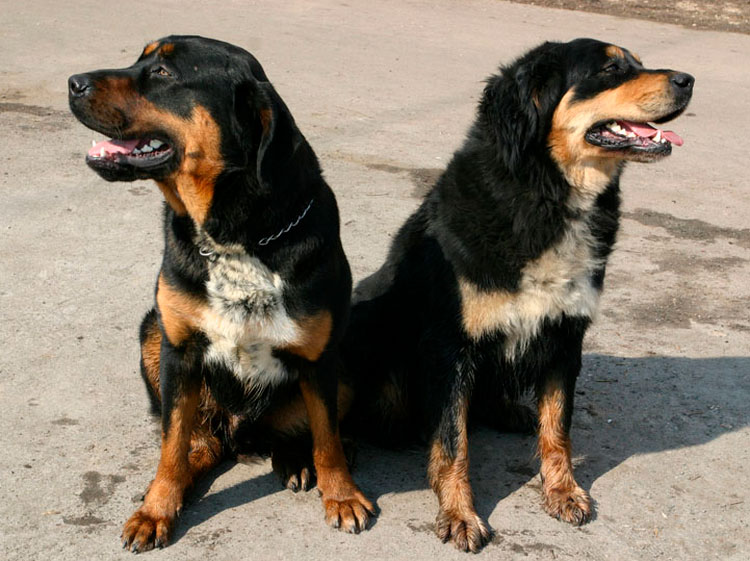
The Buryat-Mongolian Wolfhound, also known as the Khotosho Nokhoi, is a guard dog breed common in Buryatia and adjacent regions. It is characterized by robust health, ease of maintenance, versatility, a stable psyche, and quick adaptation to new environments. Khotoshos are also devoted to their owners and caring towards children.
Content
The origin of the Buryat-Mongolian wolfhound breed
The Buryat-Mongolian Wolfhound is an aboriginal breed that evolved over centuries in natural conditions, acquiring specific skills and traits. People selected dogs for their working qualities and behavior, which also influenced the breed's development. The Buryat-Mongolian Wolfhound's ancient origins are confirmed by the discovery of dog remains over 3,000 years old during excavations at a Hunnic settlement on the outskirts of Ulan-Ude. DNA analysis revealed these remains to be the ancestors of modern Khotoshis. Interestingly, these remains are much older than those belonging to the ancestors of Tibetan Mastiffs.
Until the 1980s, Buryat-Mongolian wolfhounds were not bred commercially. Nikolai Batov and Marika Trigulova initiated the breed's revival. They organized several expeditions across Buryatia and Mongolia to gather information about the Khotosho and the wolfhounds themselves, which became the breeding core. They also developed the standard. The original breed type was based on Buryat herding dogs, which were used to protect flocks from predators.
In Buryatia, these dogs are called "khotosho", which literally translates as "yard wolf".
The Buryat-Mongolian Wolfhound was added to the Russian Stud Book in 2000. Since then, purebred dogs have been identified by tattoos and pedigree documents issued by the Russian Kennel Federation (RKF). The breed standard was registered in 2006. The Khotosho Nokhoi is not yet recognized by international associations.
Video about the Buryat-Mongolian Wolfhound (Khotosho Nokhoi) dog breed:
Purpose
The Buryat Mongolian Wolfhound's primary use is guarding property, homes, and livestock, but not herding. It can be used as a guard dog, companion, bodyguard, and for search and rescue work. Similar dogs were once used for hunting.
The Buryat-Mongolian wolfhound occupies a special place in Buddhism, practiced in Buryatia and Mongolia. It is the only Eastern religion in which dogs are considered sacred. Dogs lived in Buddhist monasteries and alongside ordinary people, guarding property, watching over children's cradles, and ensuring that older children did not stray beyond their sight.
Appearance
The Buryat-Mongolian Wolfhound is a typical guard dog of traditional breeding. It is taller than medium or large, with a coarse build, strong bone structure, and well-defined muscles. The skin is thick and elastic, forming a dewlap around the neck. The forehead has folds that appear when the dog is alert. Sexual dimorphism is pronounced. Males are noticeably stronger and more massive. Males stand 60-65 cm at the withers; females over 62 cm. Weight is 45-70 kg. In appearance, the Buryat-Mongolian Wolfhound is very similar to its closest relative, the Mongolian Shepherd Dog Bankhar.
The head is large, with a slightly domed, broad skull. The stop is flattened. The muzzle is relatively short, with a straight nasal bridge and a large black nose lobe. The eyes are dark and small. The triangular ears are set high, medium in size, and hang down on cartilage. It is worth noting that the breed has two types: broad-muzzled and long-headed dogs.
The body is slightly elongated and massive. The chest is deep. The ribs are sprung. The withers are well defined. The neck is powerful. The back is strong, broad, and straight. The loin is not long. The croup is slightly sloping. The legs are well developed, strong, muscular, and have good bone structure. The paws are large and compact. The tail is long and heavy, hanging down and reaching the hock. When moving, or when excited, the dog may hold it in a sickle shape, in a ring over the back, or slightly curled over the back.
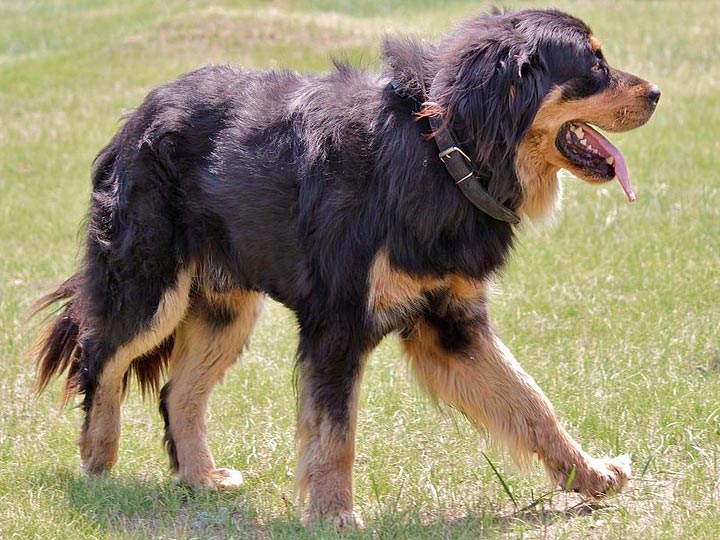
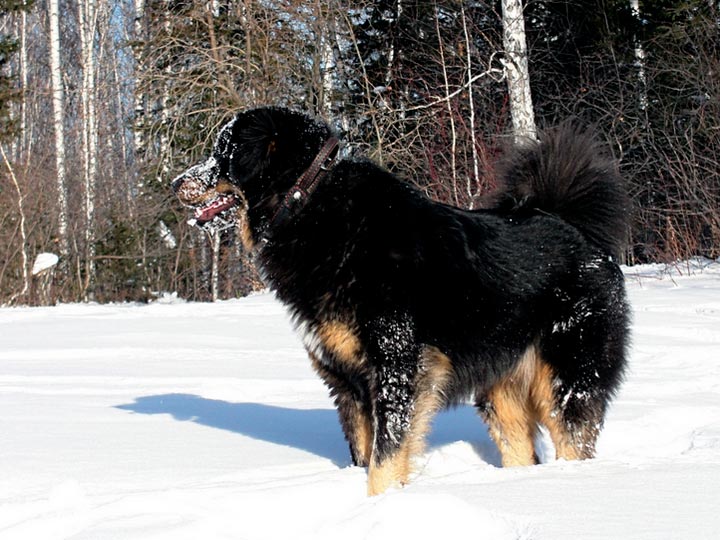
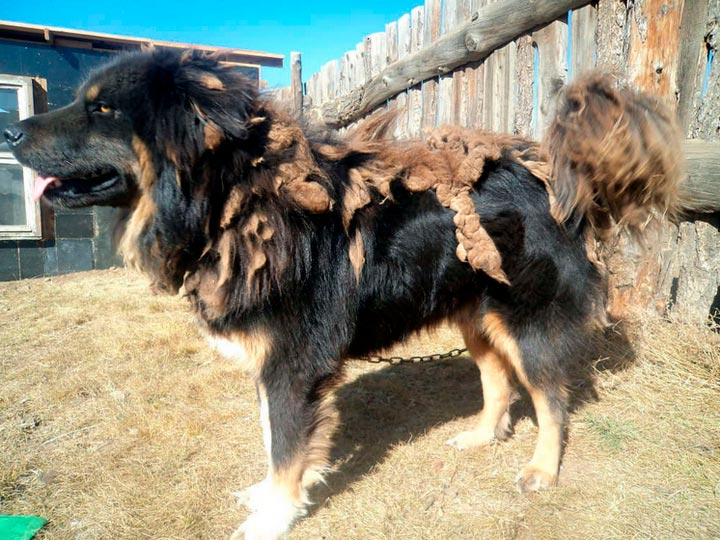
The Buryat-Mongolian's coat has a distinctive structure. The coarse outer coat prevents the soft, elastic undercoat from matting. It also has water-repellent properties. Based on hair length, dogs are classified into three types:
- Longhaired cats have coats that are 15-20 cm (up to 30 cm) long. The hair on the head and ears is much shorter, while the hair on the back of the legs is longer, forming feathering, and the tail has a fringe.
- Semi-longhaired (intermediate type) – hair length is about 10 cm. Well-developed fur, tail with a characteristic plume.
- Shorthaired - the body is covered with thick, short hair, the undercoat is well developed, in winter its length exceeds the length of the guard hairs. There is no collar or trousers, but there is a slight tuft on the tail.
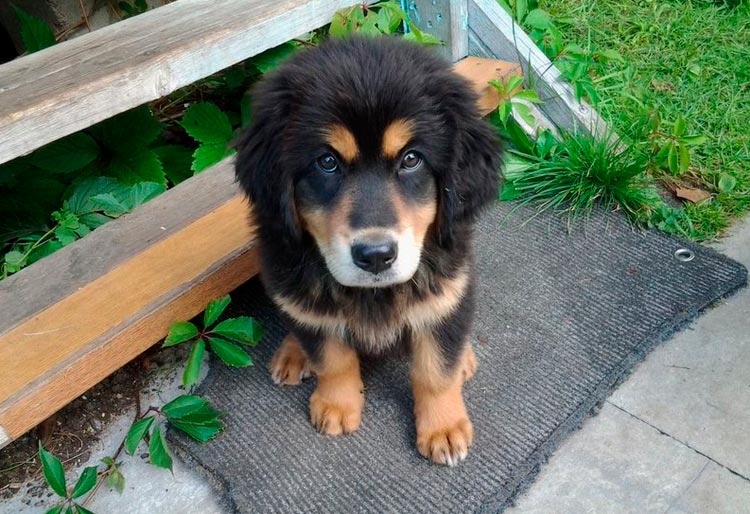
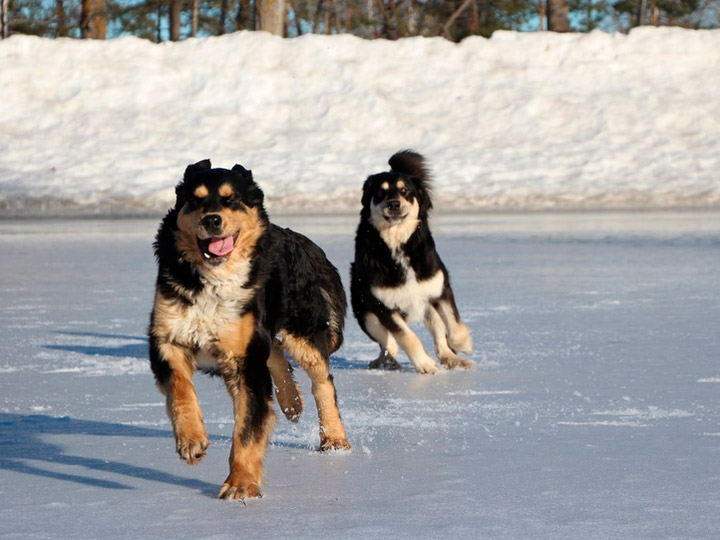
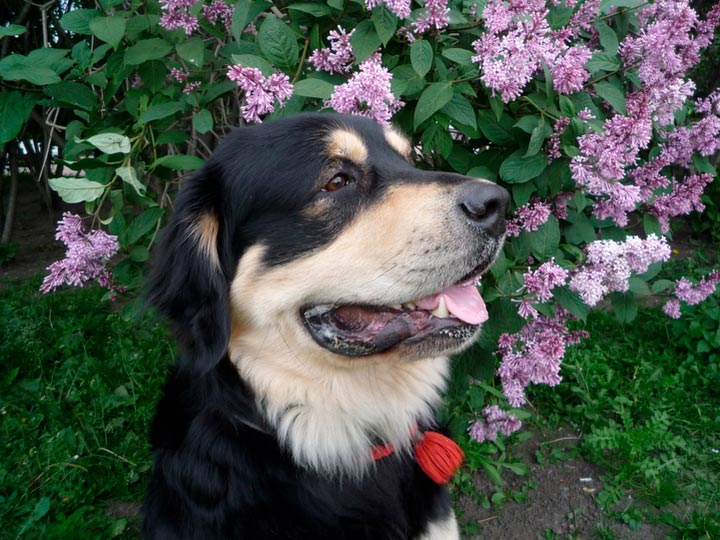
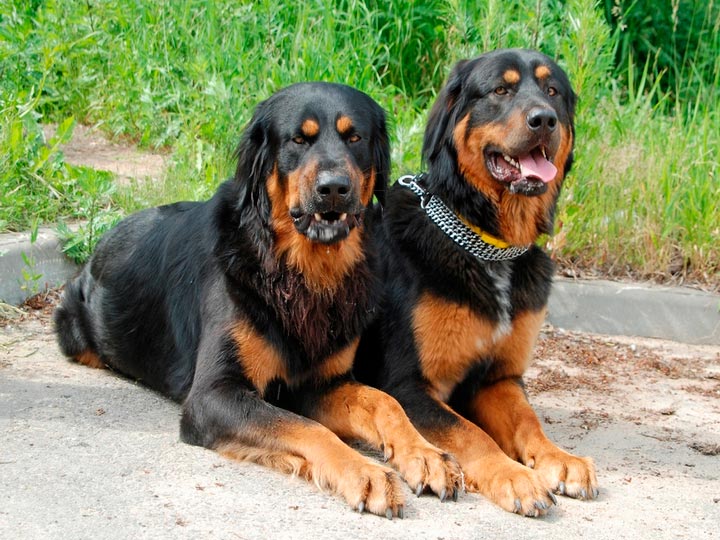
Several colors are permitted. Black and tan is preferred, but black, brown, wolf, and red are also common.
Character and psychological portrait
The Buryat-Mongolian Wolfhound has a balanced personality. Despite its large size, it is a pronounced sanguine person. It is easy-going, full of energy, incredibly curious, and cheerful, making it an excellent guard dog and companion. Buryats are not prone to conflict or to using teeth to settle disputes. Puppies and young dogs perceive other growling dogs as objects of investigation. They prefer to avoid aggressive adult Buryat dogs and avoid conflict at all costs. If this is not possible, the Buryat is capable of standing up for itself, displaying its full strength and power. It gets along well with other pets, including farm animals. It generally considers all but other large dogs to be the property of its owner and is protective.
The Buryat-Mongolian Wolfhound is not clingy, but is very responsive to affection and attention. At times, it displays an almost childlike spontaneity. Among all family members, it clearly favors one owner, yet nevertheless obeys all others. However, when it comes to children, the dog usually takes the lead. For example, if a child decides to venture beyond the designated area, they will not be able to. The Buryat will push them back, and no commands, shouting, or childish anger will help.
The Khotosh is very attached to his home and family and dislikes change of location. However, the dog never abandons its primary duties. Taiga dwellers who took these dogs on long expeditions never worried about their property, which was always guarded, no matter where they camped. The Buryat is calm and wary of strangers. Self-assured and confident in its abilities, it maintains control over the actions of those under observation, but does not act preemptively. Unless provoked by a stranger, the dog will not attack. If necessary, it will quickly switch to an active defensive response.
A wolfhound requires a strong-willed owner with a firm hand. With rare exceptions, they are not suitable as a first dog for beginners and require a personalized approach. A wolfhound puppy is very docile. They are a malleable creature that, in good hands, will develop into a well-balanced, non-aggressive, and obedient dog.
Education and training
The Buryat-Mongolian Wolfhound's training system is based not on drill and training, but on interaction. The owner rewards good behavior and, for bad behavior, expresses disapproval or distracts the dog from it. Strict training is unacceptable. The Khotosh is a thoughtful, independent dog that is not prone to unquestioning obedience. The Buryat quickly learns commands, but only performs them if they are interested. In critical situations, it usually does what it deems necessary. The Buryat-Mongolian Wolfhound is an independent and self-sufficient dog, inclined to cooperate rather than to obey unconditionally.
City dogs require basic obedience training. Compared to service dogs, such as German Shepherds, Buryat aborigines may seem slow and unruly. This is due to their unique nervous system and their desire to make decisions independently. To achieve unquestioning obedience, you need to instill respect and trust in a Buryat. During training, you need to constantly talk to the dog, tell stories, and explain things. Guard dog skills don't require training; Buryats are born with them.
Hotosh owners note that their pets know commands perfectly well, but respond better to requests and calm human speech. They often prefer praise to treats as a reward.
BMW stubbornly resists physical abuse, displaying unprecedented stubbornness and passive rebellion. Breaking through the defensive defenses erected by an offended dog is virtually impossible. At the same time, the Hotosho never actively counterattacks its owner.
Content
The first thing a Buryat owner should do after bringing a small Buryat home is introduce it to every corner of the household and any other animals it owns. The puppy will immediately take charge and guard everything that belongs to the owner, memorizing every bird and cat and checking for their presence daily. Even in a cramped apartment, a Buryat-Mongolian Wolfhound will find its own corner and won't try to displace the weaker members of the family. However, the ideal environment for keeping the dog is in the yard of a private home, but not on a chain.
Wolfhounds shed heavily, especially during the spring shedding season, when their fur practically falls off. In the summer, Buryats have almost smooth coats, and in the winter, they wear very long, thick fur, making them able to withstand severe frosts.
Buryats need close contact with a person, which should not be limited to just feeding.
The Buryat-Mongolian Wolfhound is a late-developing breed. Dogs stop growing taller by the age of two, and by four or five years, their physical development is complete. This doesn't mean their guarding qualities will be evident by this age. Even a two-month-old puppy strives to fulfill its duties faithfully and conscientiously. For proper development, they absolutely need adequate exercise. With limited mobility, muscles don't gain the necessary muscle mass, and even a well-fed dog will appear thin. However, the Hotosho is not suitable for sports.
Care
The Buryat-Mongolian Wolfhound doesn't require much grooming. Regular brushing and occasional bathing are sufficient. Apartment-dwelling dogs are bathed once a month. Kennel-dwelling dogs are bathed two to three times a year, usually during warmer months. For brushing thick fur, it's easier to use a brush. FurminatorEars are examined once or twice a week and wax accumulation is removed if necessary. Eyes and teeth generally do not require special care. Dewclaws should be removed if for some reason they remain, carefully monitor the growth of claws on them, which are not ground down on the surface, curl and cut into the tuft.
Nutrition
Like many other native breeds, the BMW is not fussy about its diet. Most breeders prefer natural foods. The diet follows standard dog guidelines. Beef or chicken, along with offal, makes up two-thirds of the serving, with the remainder consisting of grains and vegetables. It's better to cook porridge Cartilage broth, which contains gelatin and other substances beneficial for joints. Fermented milk products, seafood, and eggs are also included. A little vegetable oil and bran can be added to the porridge.
Treats include bone marrow, dried lung, beef sinew, and frozen tripe. The dogs are periodically given vitamin and mineral supplements, which are essential during periods of active growth. Not only the quality of the food is important, but also the frequency and portion size. Feed the dog at regular times and it should eat its full portion all at once. Don't feed a Buryat for an hour and a half to two hours before a walk, or the same amount of time after. Clean drinking water should always be freely available.
Health and life expectancy
The breed is not burdened by poor genetics. Wolfhounds receive vaccinations and are treated for internal and external parasites according to standard protocols. Veterinary preventative care is mandatory throughout their lives. With proper care and good nutrition, these dogs rarely get sick. In adulthood, typical diseases of old age develop, from which no dog is immune. Their lifespan is typically 12-14 years.
Choosing a puppy
Acquiring a well-bred Buryat-Mongolian wolfhound is not easy. The breed is still quite small. The majority of the population is concentrated in the city of Ulan-Ude, at the RKF "Dostoyanie Respubliki Buryatia" kennel, and at the Ivolginsky Datsan, which houses a kennel for native dogs. Only a small number of dogs can be found in other regions of Russia.
There are a number of reasons why it's better to get a puppy from a kennel. Firstly, the Buryat-Mongolian Wolfhound breed is characterized by character, behavior, and predictable reactions, not just appearance. Its pedigree lies within. Secondly, Caucasians or mixed-breeds may be sold as pure Buryats. Owners who want to breed their dogs "for health" or profit don't always consider genetics and often breed closely related dogs, which can lead to health or mental health problems even in a breed as successful as the Khotosho Nokhoi.
It's a good idea to decide on the sex in advance. Females are more attached to their owners. Males remain more independent, especially as adults. It's best if the potential buyer has the opportunity to see the litter, assess the dogs' living conditions, and the parents' or at least the mother's personality. They can observe the puppies and choose a healthy, desirable puppy.
Price
In Buryatia, Buryat-Mongolian Wolfhounds cost an average of 35,000-40,000 rubles. In other regions, puppies sell for 40,000 rubles and up.
Photos
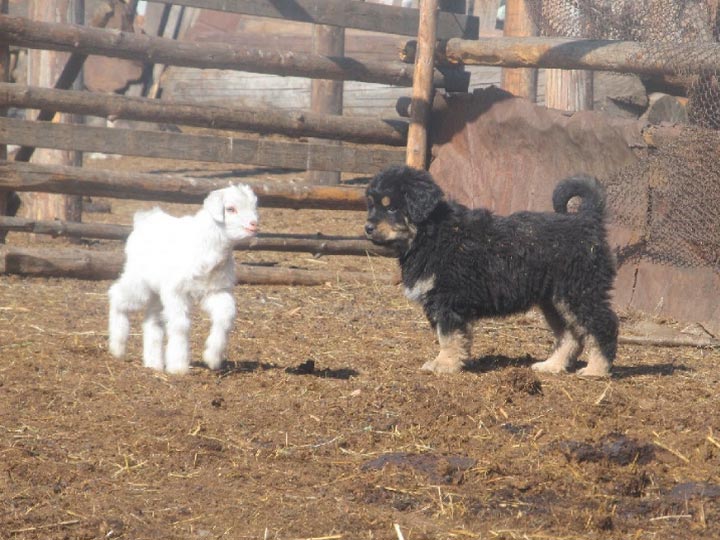
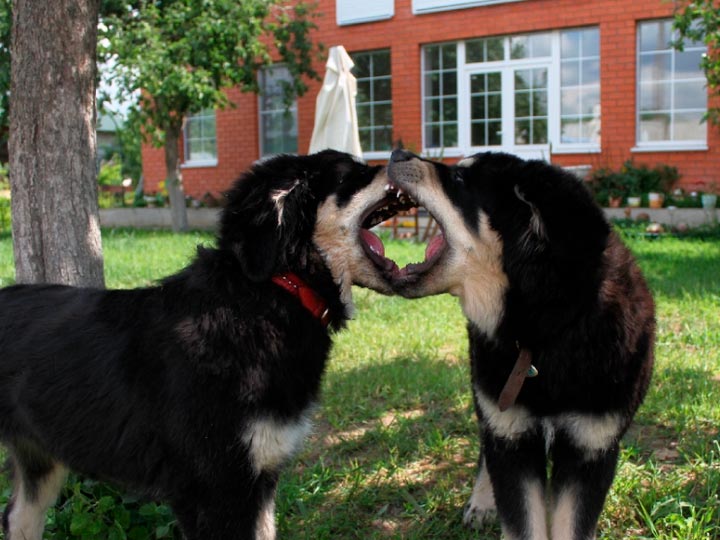
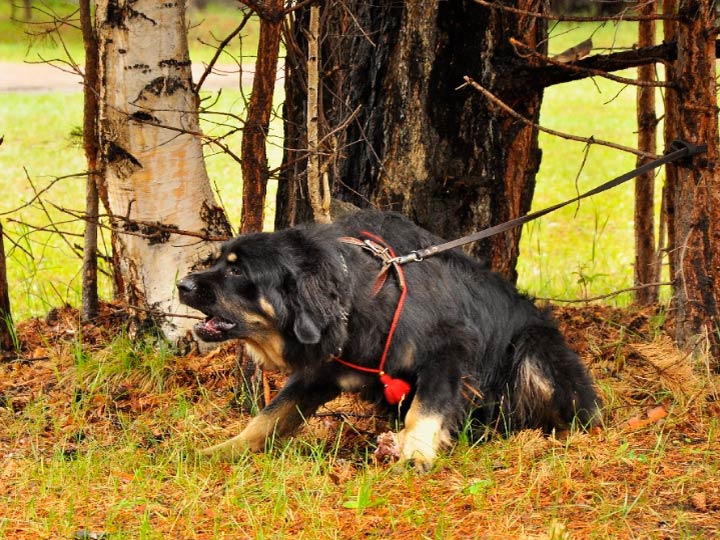
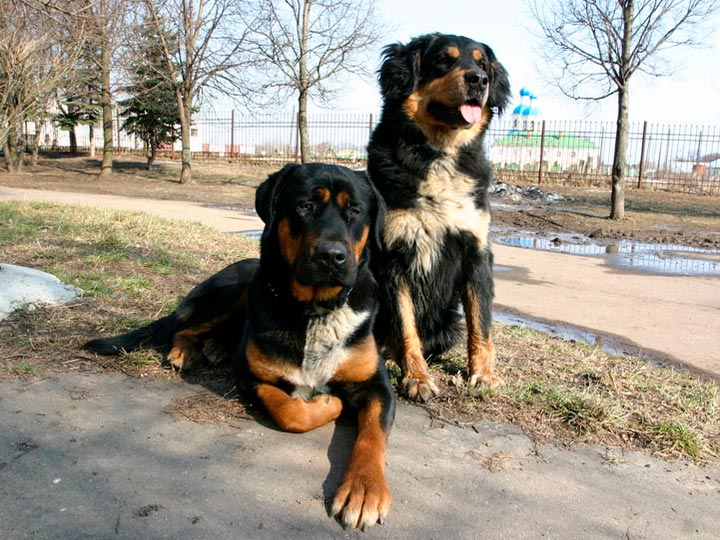
The gallery contains a collection of photos of Buryat-Mongolian Wolfhound puppies and adult dogs of various types and colors.
Read also:


1 comment
marina
Buryat-Mongolian Wolfhound. 3-month-old puppy. Born February 18, 2018. Male. All breed characteristics are clearly evident, with a large frame and a gorgeous coat. Russian Kennel Federation (RKF) documents are ready, and he is vaccinated. He is kept in a pen with his mother. He is active and inquisitive. At this age, he is already easily trained. He will make an excellent guard for your home and an affectionate, big, furry friend. He lacks dominance towards people, meaning he will not test his owner for strength. He will follow you everywhere without interfering. He is very patient with children and does not show aggression. He easily adapts to living with other animals. The last photos show his father and mother. Negotiable. Exchange. Delivery. If you are interested, call, write, or come see him! 89126032557
Add a comment