
Bull Terrier (English Bull Terrier)
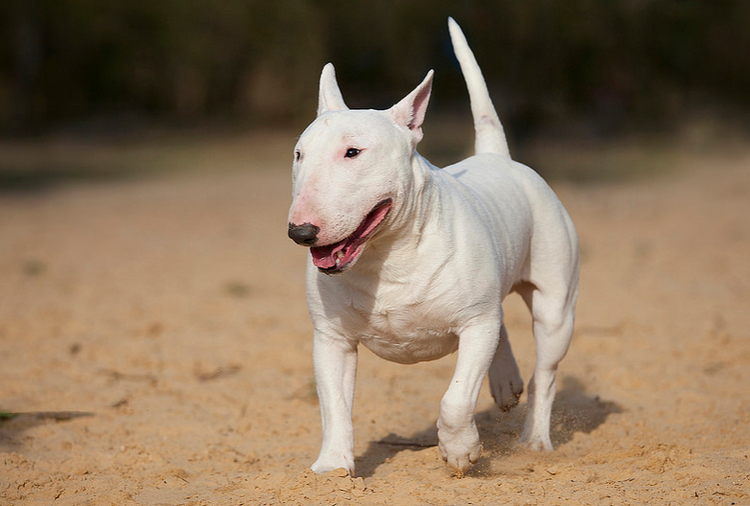
The Bull Terrier has a very distinctive appearance and a rather unflattering reputation. However, this doesn't stop the breed from remaining among the most popular dogs. Bull Terriers were originally bred for dog fighting and were also used for ratting. These dogs have complex, multifaceted personalities that require a confident, experienced, and loving owner.
Content
History of the breed's origin
In 1835, the English Parliament passed a law prohibiting animal baiting. This led to the development of dog fighting, which doesn't require a special arena. Dogs could be pitted against each other in any pub, as long as there was a bet available. Bulldogs They weren't the best fit for this, as they weren't as playful and energetic as would be desirable. To give them more agility, they began crossing them with various dog breeds. The most successful was the addition of terrier blood. The crossbreeds became known as
One of the first famous bull terriers was a white dog owned by Birmingham dealer James Hinks. In 1861, he caused a sensation at a show. Hinks used white terriers in his breeding work. It is believed that modern bull terriers also have white terriers in their lineage. Dalmatians, Spanish pointer, foxhound, smooth collie and greyhound.
Official recognition of the breed came in 1888, when the first English Bull Terrier Club was founded. The American Bull Terrier Club was registered in 1895.
History of the breed in Russia
The first isolated Bull Terriers appeared in Russia in the 1970s. They were mostly imported from Poland and were quite comparable to the population levels in the socialist countries. In the early 1980s, a small number of dogs were imported from East Germany and the Czech Republic. The subsequent development of the breed, unfortunately, was fraught with tragedy.
The Bull Terrier, considered a symbol of sincerity and the pride of England, was one of the first commercial breeds to appear on the wild Russian market, generating a surge in demand. People uninitiated in dog breeding began to increase the Bull Terrier population. The lack of selective breeding and selection led to a transformation of the breed. Bull Terriers became numerous, but they no longer met the requirements for character and appearance. Furthermore, too many random people found themselves near the breed. Bull Terriers already require experienced hands, especially when it comes to dogs with unstable temperaments. Unsurprisingly, street provocateurs appeared, and incidents of baiting and fights involving Bull Terriers increased. The dogs' reputation seemed forever tarnished.
Today, Bull Terriers are often referred to as fighting dogs, but breed enthusiasts don't take this as a compliment, as Bull Terriers possess other, equally remarkable qualities. They have retained their physical and intellectual abilities, while also becoming reliable friends and companions.
Miniature Bull Terrier
Miniature Bull Terriers have been known since the 19th century. Small dogs Weighing 3-6 kg, they were renowned in their time as excellent ratters. At the beginning of the 20th century, the breed had three varieties, or rather weight categories: heavy, medium, and miniature. In 1938, the first Miniature Bull Terrier Club was founded, and its chairman secured official recognition of the breed by the English Kennel Club. Since 1939, the breed has been officially divided into standard and miniature Bull Terriers.
The Standard and Miniature Bull Terriers are very similar in appearance. It's virtually impossible to determine which breed a dog is from a photograph.Video review of the Bull Terrier dog breed:
Appearance and standards
The Bull Terrier is a medium-sized dog with a harmonious build, strong and powerful, with well-developed muscles. Sexual dimorphism is clearly evident. There are no strict height or weight restrictions; the Bull Terrier should be proportionate, with a maximum weight that is well-balanced for its gender. However, there are some averages. Standard: height 40-55 cm, weight 25 kg. Mini: height 25-35 cm, weight 8-16 kg.
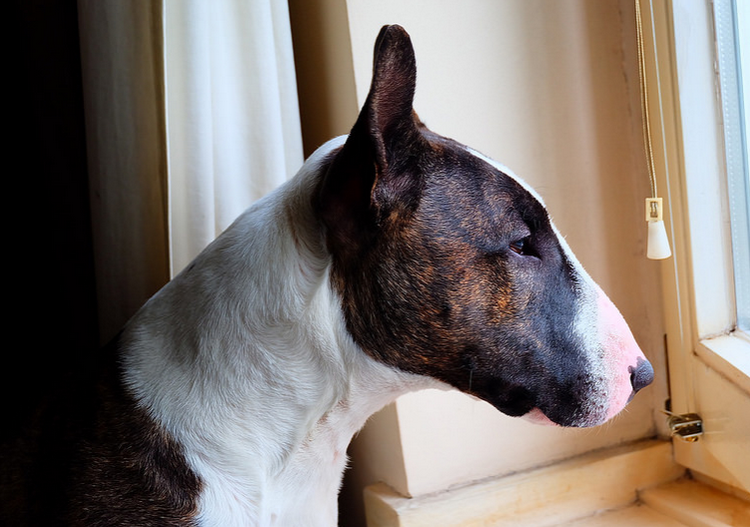
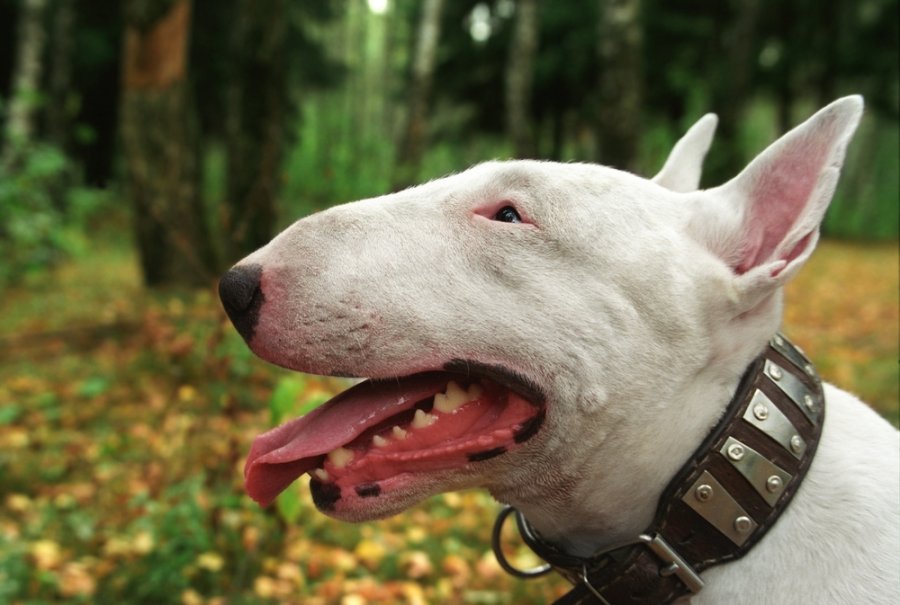
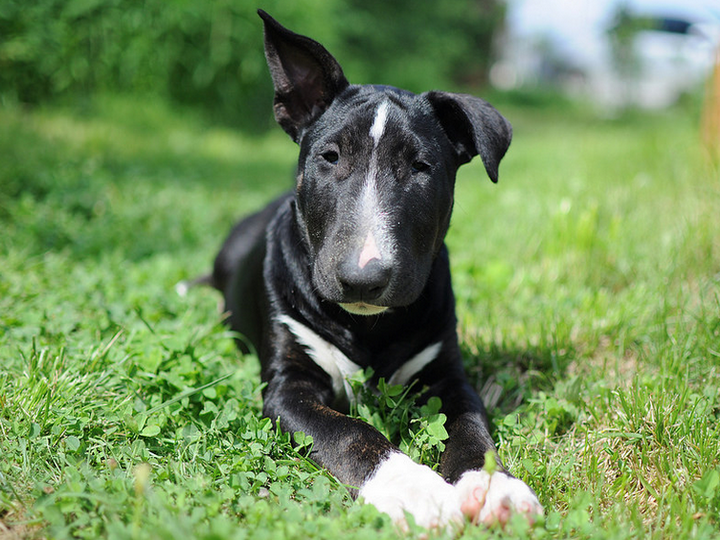
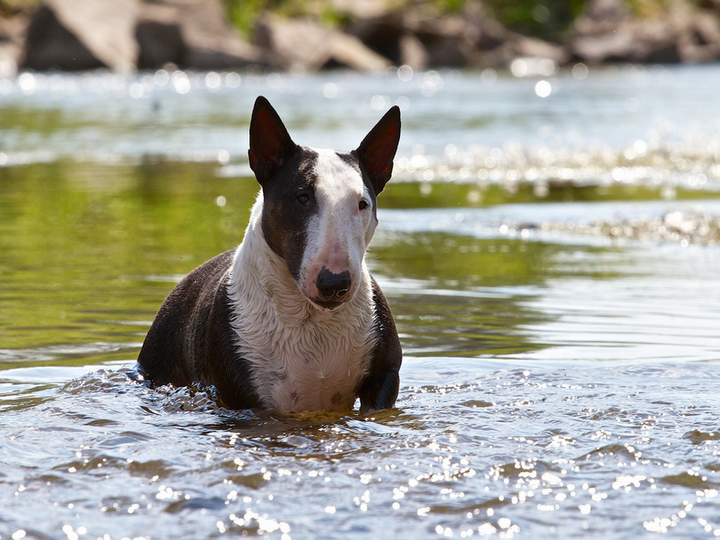
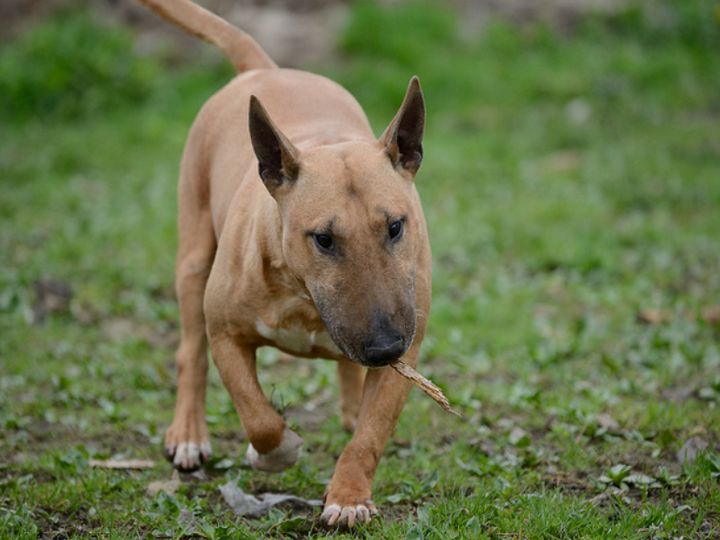
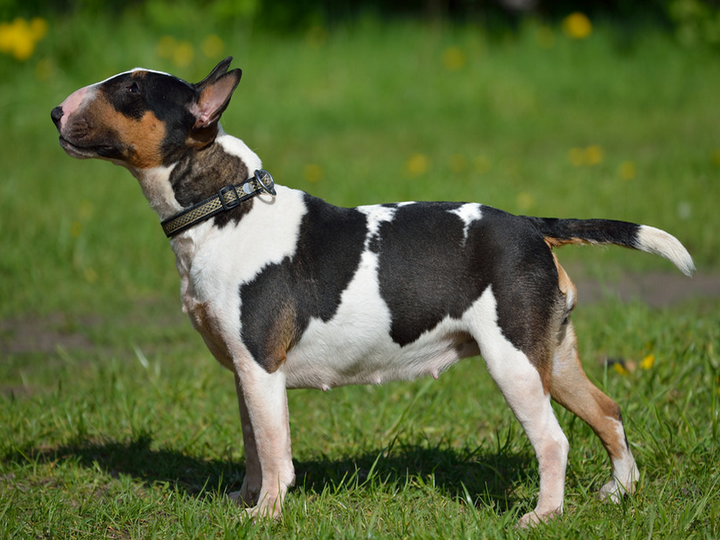
The Bull Terrier's head is very distinctive, unlike any other breed. It is elongated and oval-shaped, with a barely noticeable stop. The small eyes are set low and close together. The ears are positioned at the sides of the head, with their tips set wide apart. All of this gives the muzzle a disharmonious expression. The jaws are massive and strong. The teeth are normal in number, with a scissor bite. The body is slightly elongated, with well-sprung ribs and a deep chest. The back is short and straight. The loin is slightly arched. The underline is tucked up. The legs are strong, set on round, compact paws. The tail is set low, short, and carried horizontally.
The coat is thick and short, with a harsh feel. A short undercoat develops during the colder months. Several colors are acceptable:
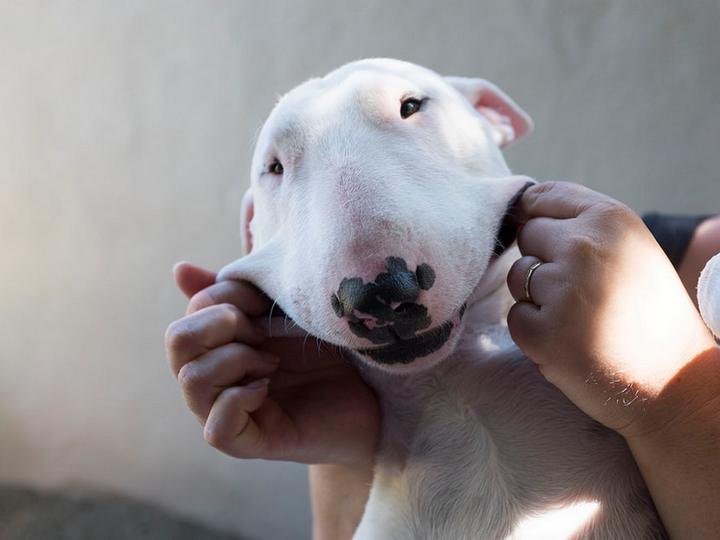
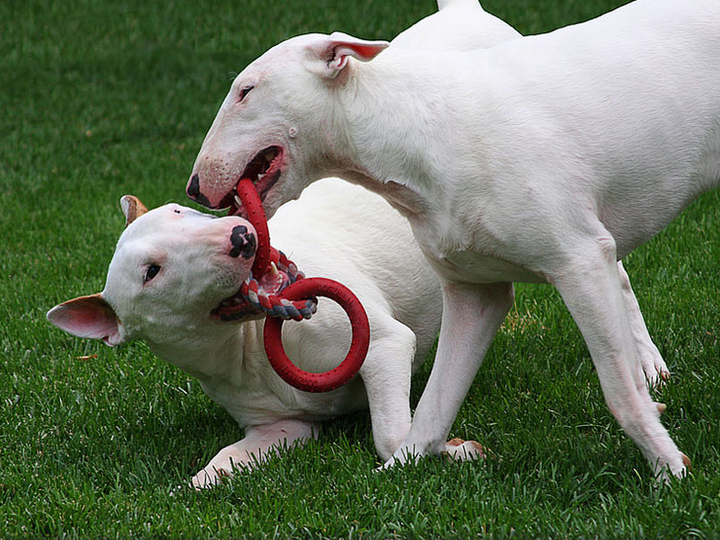
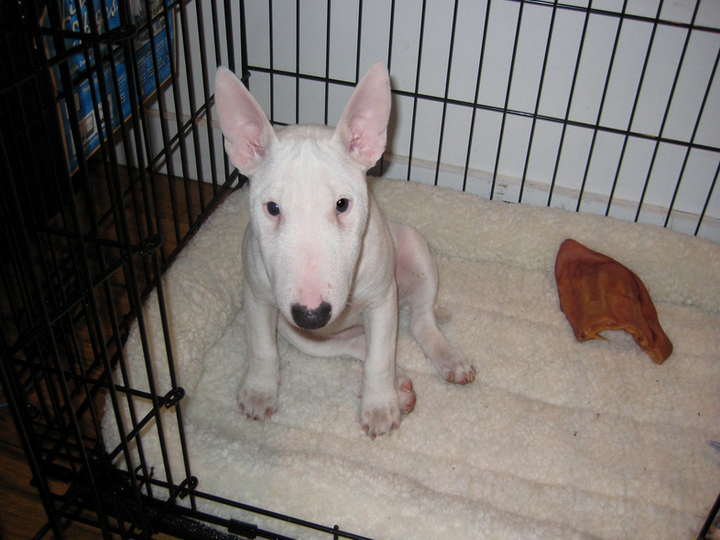
- White (small black spots on the head are allowed);
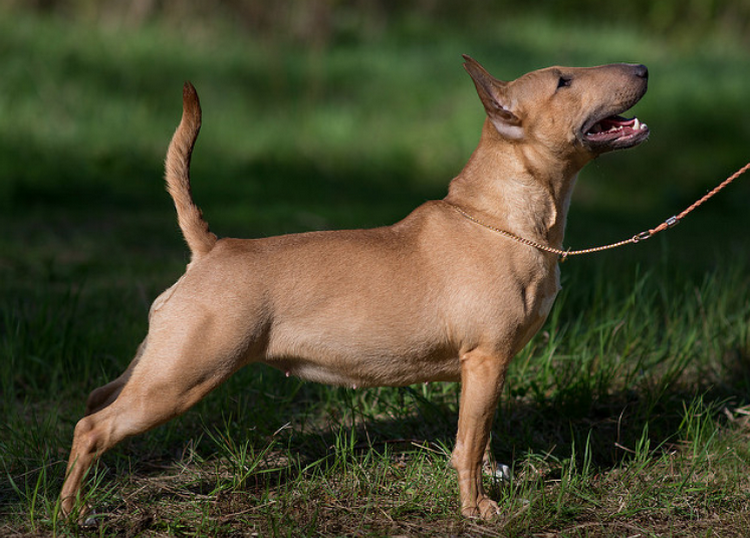
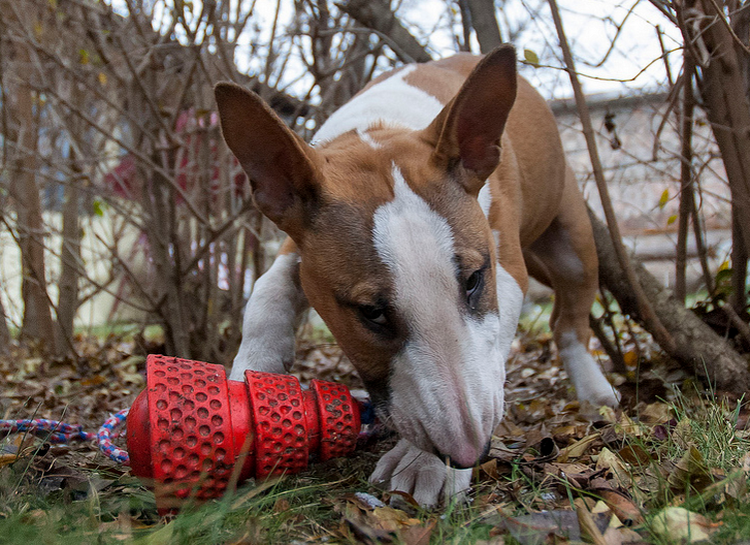
- Solid color (brown and fawn with mask, black, fawn);
- Two-color with white (white no more than 20%);
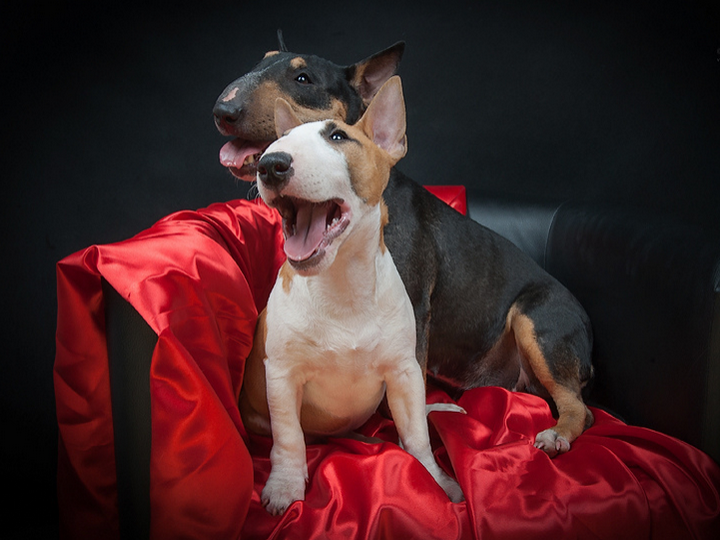
- Three-color (approximate color ratio 1:1:1);
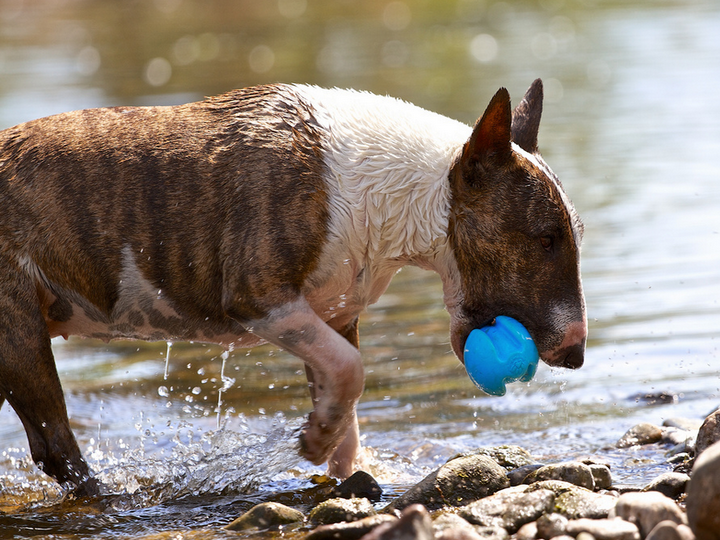
- Black or brindle and tan.
Initially, bull terriers were only allowed to be white. Colored dogs were discriminated against. Cynologists call this period "the great controversy between colored and white." It wasn't until 1950 that colored bull terriers became fully recognized representatives of the breed.
Character
These dogs have a very strong character. They are quite intelligent and will always find a way to prove their superiority. They have one significant drawback: they are extremely jealous. They are prone to aggression and are not always obedient. They often exhibit stubbornness. Bullies are quite sociable and do not like to be alone. They require constant human interaction; only then will they remain calm. Very sensitive, they recognize every intonation and nuance of their owner's mood. Bullies make good watchdogs, barking loudly to announce the approach of a stranger. However, they are not well suited for guard roles. Relationships with children vary. Many dogs are tolerant and caring towards children if raised together.
They may be aggressive toward other animals in the house, especially unneutered males. Avoid leaving the dog unattended with cats.
Despite their reputation, Bull Terriers are even-tempered and kind, playful and energetic. They are very attached to their owners. But, as mentioned, this only happens with good upbringing and excellent training.
Education and training
Training must be approached with the utmost responsibility, keeping in mind that bull terriers have a difficult time remembering commands and are slow to follow them. Under no circumstances should you be cruel to this breed.
Only by demonstrating love for your dog can you achieve complete obedience and successful command execution. Your pet should feel like a full member of the family, but it shouldn't be allowed to dominate you.
Viciousness and aggression are innate traits of the breed and should be eradicated immediately with affection and care. The dog must know who its master, its mentor, is and obey them unquestioningly.
Bull Terrier training is essential, as this breed can be dangerous to others. Only through regular and strict training can you achieve unquestioning obedience and ensure that your dog doesn't cause harm. It's recommended to devote maximum attention to training and education, engaging in regular exercise, introducing new exercises, and repeating those already mastered.
Training Tips
- From an early age, you should teach your puppy to "share" his favorite toy or food bowl, periodically taking them away, thereby teaching him to react calmly to similar situations in the future.
- Even rare displays of aggression should not be ignored, expressing your displeasure with your pet's behavior. Disciplined conversations should be conducted in a stern but sincere tone: your dog will immediately pick up on any false notes in your voice and will not learn the lesson.
- At the same time, avoid putting excessive pressure on the animal or using discipline on a very tired pet—it won't have the desired effect. Correct execution of the exercise should be rewarded, and failure to do so should not be punished.
- You shouldn't tease a bull even in a game, because they might interpret it the wrong way.
By following all these recommendations, you can train a dangerous bull terrier to become a loyal and reliable friend, whereas a complete lack of training will lead to the development of uncontrollable aggression and anger in the dog.
Content
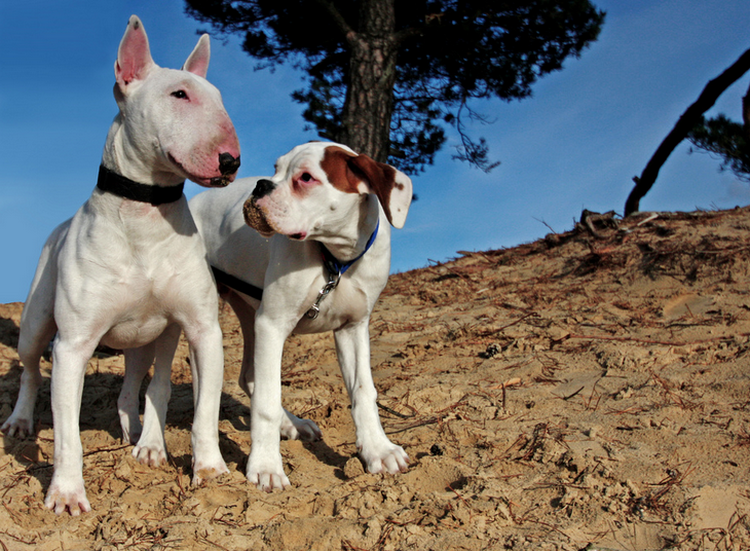
It's best to keep a Bull Terrier in an apartment, and you can get one only if you can provide it with the necessary exercise. A Bull Terrier will thrive in a country yard. A Bull Terrier should never be kept on a leash or in a crate. This diminishes the dog's vitality and intelligence, and irreversibly damages its character. Furthermore, Bull Terriers have virtually no undercoat, making them poor in cold weather, including very hot ones. White Bull Terriers should not be exposed to excessive sunlight, as they are prone to sunburn.
A Bull Terrier is not recommended for people with limited time or budget for a dog, those who are unsure about their choice of breed, or those who are getting a dog for the first time, or those who are unprepared for the lengthy process of training and raising a dog.
Physical activity
Bull Terriers are very hardy athletic dogs that benefit from regular, varied exercise in abundance. It's important to keep these animals active, as they're prone to obesity. The unspoken rule is: the less exercise, the fewer calories they burn. However, they need constant prodding and guidance, as this breed is somewhat lazy. Daily walks are a great way to keep a Bull Terrier in shape. They can also be a great companion for jogging.
If these animals are left inactive for long periods of time, they can quickly develop bad habits.
Care
The Bull Terrier's short coat is easy to maintain. Brush the dog once a week, slightly more frequently during shedding season. A special rubber glove is helpful for this. Periodically, check the eyes and ears for the first signs of inflammation. Bathing is infrequent; Bull Terriers are fairly clean, don't shed much, and rinsing their paws after a walk is usually sufficient. Their nails may shed naturally if they spend a lot of time outdoors; otherwise, they need to be trimmed.
Diet
A healthy and nutritious diet is the key to good health. You can prepare your dog's food yourself or feed it ready-made, in the portions indicated on the packaging. Supplemental feeding is not necessary.
Bull Terrier puppies reach their full height by nine months of age. Subsequent growth simply involves gaining muscle mass. During the first four months, dogs gain approximately 25 kg! Therefore, it's important to develop a proper diet and nutritional regimen, but keep in mind that this breed is prone to excess weight.
Health, disease and life expectancy
Bull Terriers are quite strong and resilient, and with proper care and good nutrition, they rarely get sick. Prevention is equally important: routine checkups, vaccinations, deworming, and other necessary health measures. However, heredity is important. Dogs of this breed are predisposed to a number of diseases.
- Deafness has plagued bull terriers since their inception. White dogs are more susceptible, but colored dogs are sometimes born deaf.
- Lethal acrodermatitis is a rare congenital disease. Puppy's paws are inverted and their small size is immediately noticeable. The skin becomes calloused with age. There is no cure.
- Kidney failure is common among Standard Bull Terriers. For many dogs, it results in a painful death.
- Cardiovascular diseases are more common in Miniature Bull Terriers. Congenital heart defects can range from harmless to fatal.
- Primary lens dislocation leads to glaucoma and blindness. It appears between the ages of 3 and 7.
- A dislocated kneecap can lead to arthritis in the future.
- Bull Terriers are also prone to various allergies and skin diseases, in particular demodicosis.
Life expectancy is usually 12-15 years.
Choosing a puppy and price
When choosing a puppy, the parents should be the first consideration. Research breeders, get to know their sires, their personalities, titles, and accomplishments, and select the most suitable ones. If there are puppies available for sale, reserve a puppy from the planned litter.
When it's time to examine the puppies, their living conditions are also assessed. The puppies should have a healthy appearance, small, clear triangular eyes, and a large, egg-shaped head. They should be playful and curious, without a hint of shyness or aggression.
Before purchasing a puppy, it is advisable to test it for deafness, especially if it is white.
The average price of a Bull Terrier puppy is 40,000 rubles. Those looking for a good purebred dog but at a lower price can try looking for puppies with some kind of defect. This could be a minor flaw that doesn't affect health but prevents them from being bred (such as cryptorchidism, deafness, unusual coloring, or an abnormal bite). Mixed breeds and dogs without proof of pedigree usually sell for much less, for 10,000-15,000 rubles.
Photos
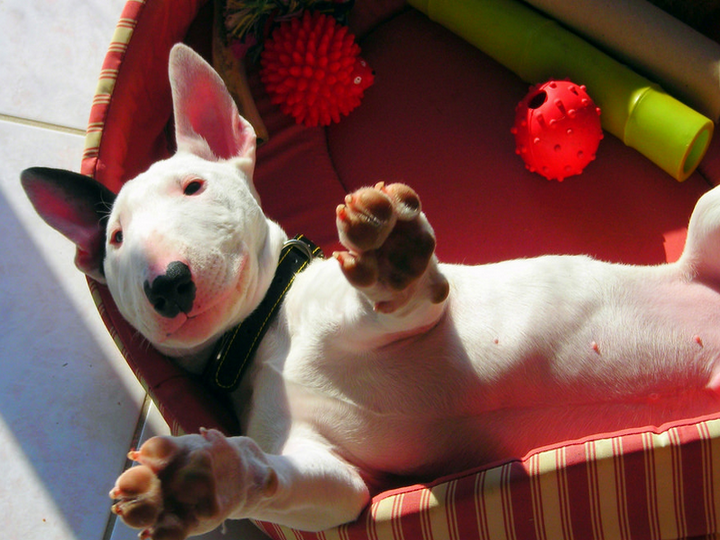
Photos of bull terriers in the gallery (puppies and adult dogs, standard and mini bull):


Add a comment