
Bully Kutta (Pakistani Mastiff, Indian Mastiff)
The Bully Kutta (Pakistani Mastiff) is a breed native to India and Pakistan. It is a very large, strong Molossian-type dog with pronounced territoriality and aggression toward other dogs. It requires very rigorous training and competent obedience. It is widespread in its native land, but is very rare abroad.
Content
History of origin
Due to the lack of any documentation, the history of the Bully Kutta breed consists largely of theories and speculation. Pakistani Mastiffs originated in ancient times. They were used by the Persian army for guard and military purposes. They were first seen in Europe in Greece, where they arrived with the army of Xerxes I in 500 BC. Mastiffs were "perfected" during the British Empire's rule in India. The dogs were crossed with English Bull Terriers, English Mastiffs, and hunting dogs. At that time, large local dogs were used. For security and hunting for large animals (tiger, bear, cheetah, buffalo, lion).
The breed name Bully Kutta, translated from Hindi, means “very wrinkled dog”.
Today, the Bully Kutta is found primarily in the Sindh and Punjab region (a geopolitical and cultural area encompassing parts of East Pakistan and Northern India). In Pakistan, most Bully Kuttas are used as fighting dogs, while in India, they are used for guarding. Kuttas are renowned for their endurance, strength, and courage.
In June 2018, at a meeting of the WKU Standards Committee, Faisel Dogar presented information on the indigenous breed, the Pakistani Mastiff (Buli Kuta). The committee accepted the submitted documents for further study and the development of a work plan for the breed group.
Appearance
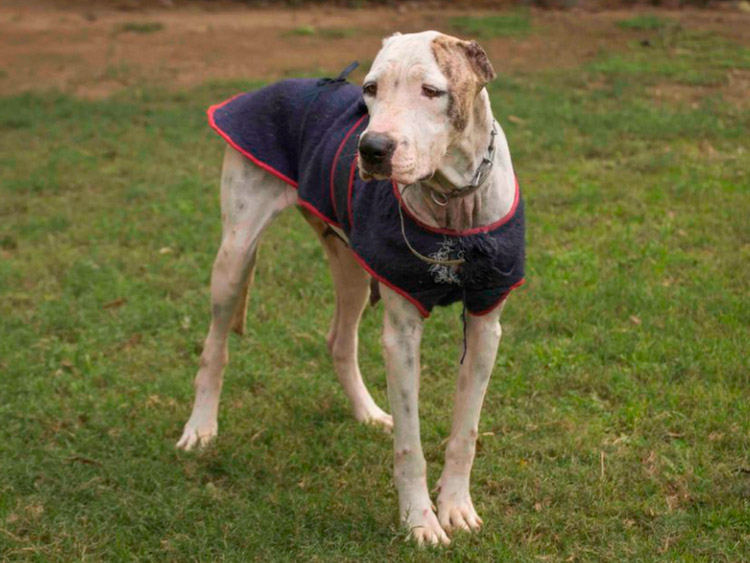
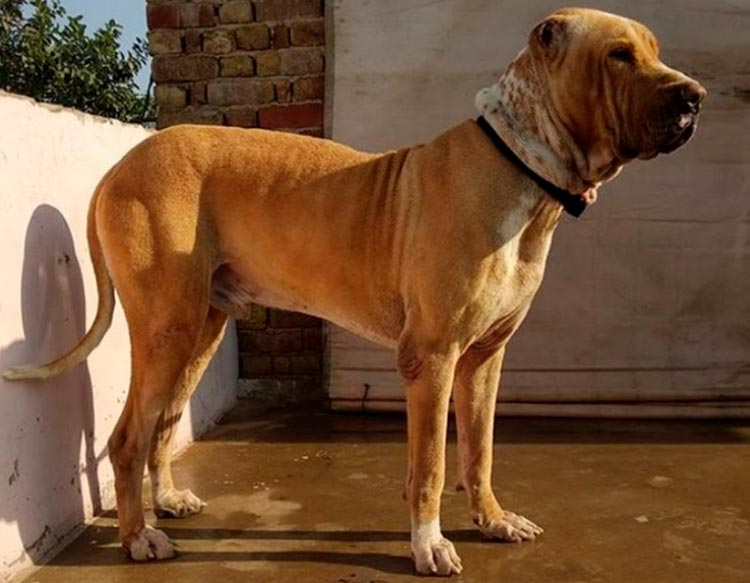
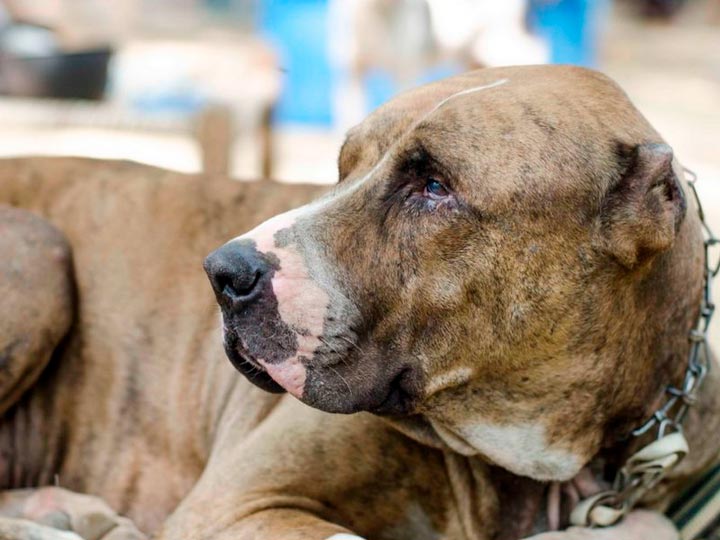
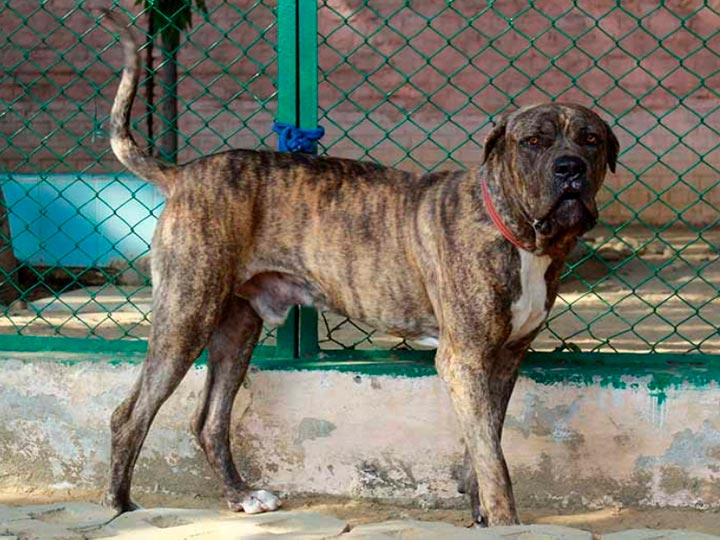
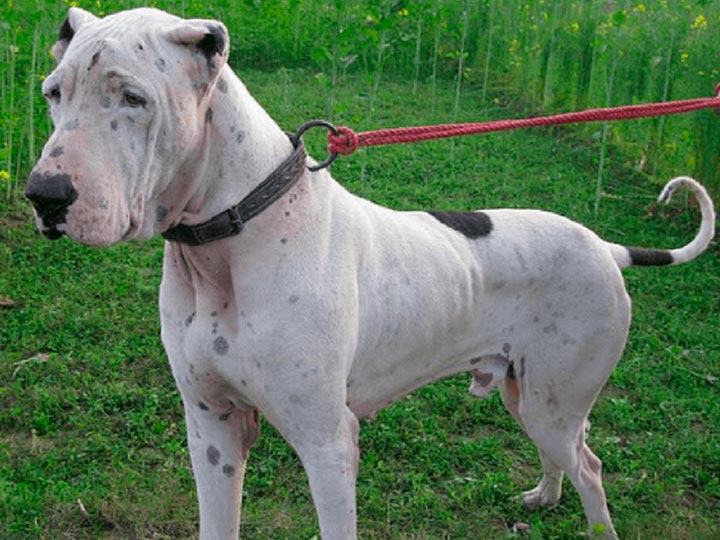
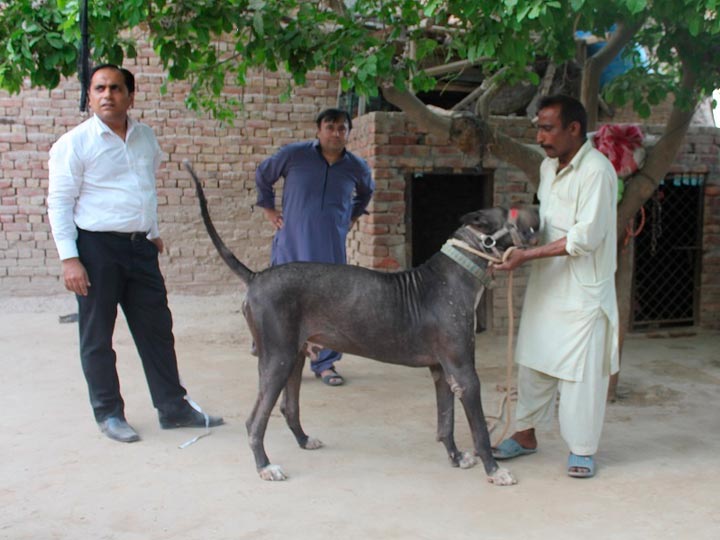
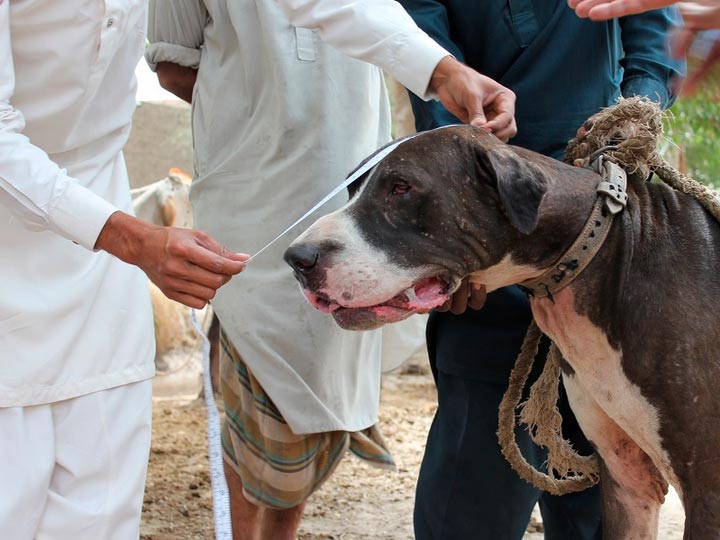
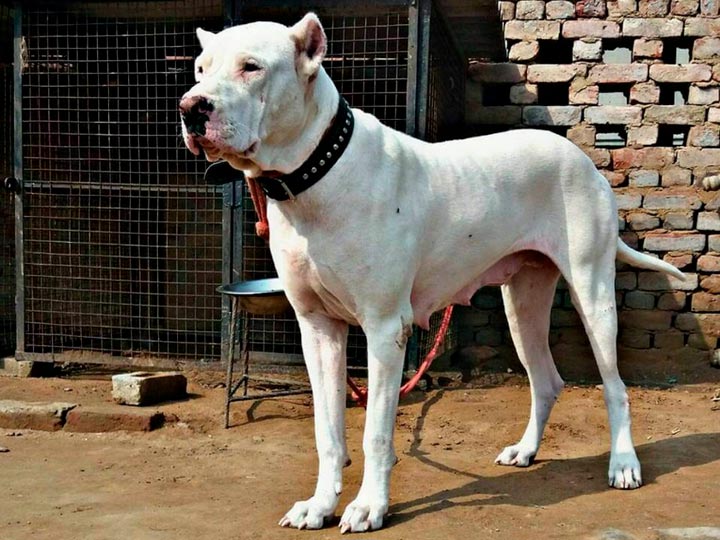
The Bully Kutta is a powerful, large mastiff with strong bones and a broad chest, often compared to Central Asian Shepherd Dogs. There is no official breed standard yet, but the photo shows that the Pakistani Mastiff is a distinct type of dog with distinctive features.
- Height at the withers of males is 69-89 cm; weight is 64-95 kg;
- Height at the withers of bitches is 56-71 cm; weight is 54-77 kg.
The head is large, with loose, folded skin around the mouth and neck. The ears are set high, medium in size, and hang down alongside the head. The ears are usually cropped very short. The eyes are relatively small. The lips are noticeably pendulous. The jaws are very strong and powerful, with a scissor bite. The nose is large, with well-opened nostrils, and is usually black.
The neck has a loose dewlap. The body is very powerful, yet elegant. The chest is deep and broad. The back is long and strong. The legs are very strong and muscular, with strong joints and a well-set tail. The tail is long, tapering to a point. The underline is moderately tucked up.
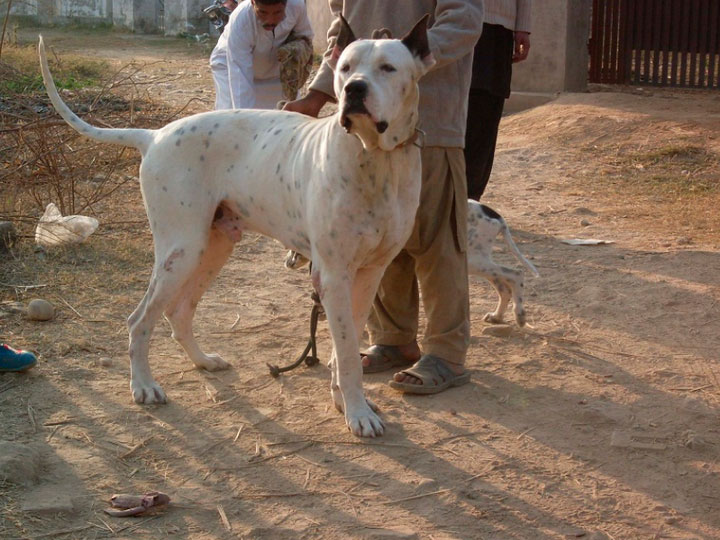
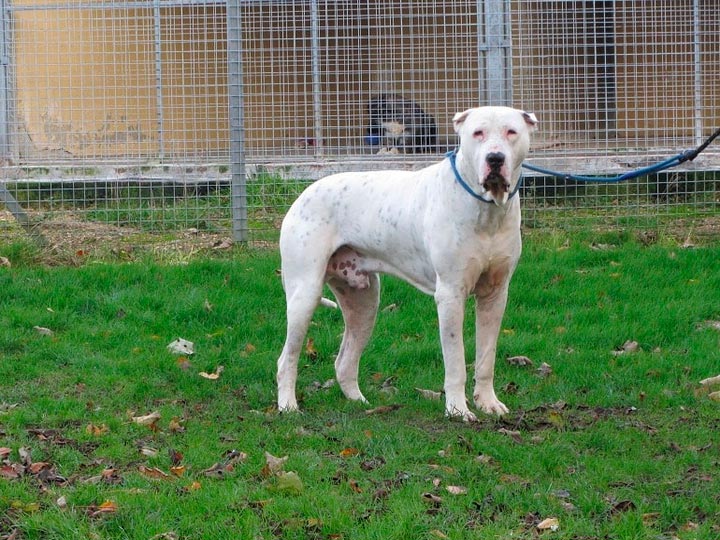
The skin is loose and elastic. The coat is short, straight, and smooth. It is predominantly white. Bully Kuttas can also be yellow-brown, red, or black.
Character and behavior
The Bully Kutta is reserved, calm, intelligent, and dominant. It is known for its outstanding watchdog qualities and aggressiveness. With proper training from an early age, these dogs grow into loyal guards and companions for their owners. Without proper training, they can be dangerous and unpredictable. For this reason, the breed is not recommended for novice dog owners or those unsure of their ability to properly raise a giant, strong dog.
Due to its extremely aggressive nature, the Bully Kutta was nicknamed the "Beast from the East."
The Bully Kutta is a territorial, fearless dog that is always on alert. Caution is advised when handling them. While some breeds offer warnings before resorting to defensive behavior, the Bully Kutta bites first and asks questions later. Owning a Bully Kutta is prohibited in some countries due to its high aggressiveness.
Young animals and puppies are very energetic. As they mature, they become calm and even somewhat phlegmatic, but only as long as the surrounding environment is calm. Some BCs are quite affectionate. In Pakistan, such dogs are often found abandoned. If a dog doesn't have the aggression required for fighting or guarding, it's not needed.
Content Features
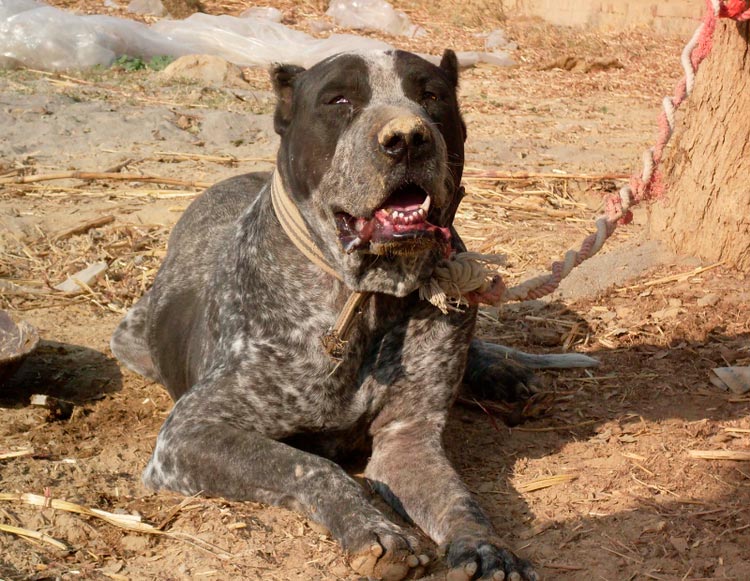
The Bully Kutta is a very large dog that requires ample space and is not suited to apartment life. A spacious yard or farm is ideal. During the day, they are usually kept in a kennel or on a leash. At night, they are let out to guard the territory.
Bully Kutas aren't particularly energetic; some dogs lie quietly all day, but even they shouldn't be confined to the yard all day. The Bully Kuta doesn't require any special grooming. Occasional brushing and bathing as needed are sufficient. Check their ears occasionally and clean them as needed.
Health and life expectancy
The health problems of the BK are generally the same as those of other giant breeds:
- Tendency to skin diseases (allergies, vitiligo, benign growths, sebaceous cysts, pyoderma);
- Ophthalmological diseases (progressive retinal atrophy, cataracts);
- Heart problems (heart murmurs, valve insufficiency, enlarged heart muscle);
- Diseases of the musculoskeletal system (hip dysplasia, arthritis, arthrosis);
- Gastric torsion;
Life expectancy is 8-10 years.
Where to buy a Bully Kutta puppy
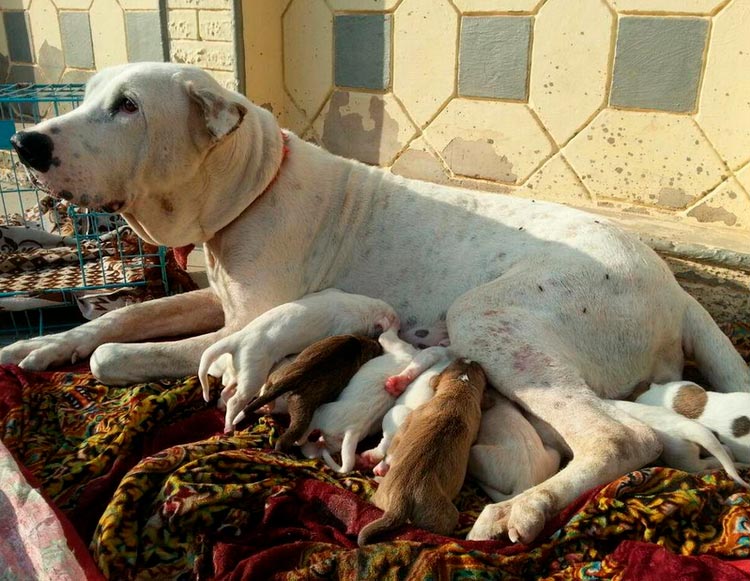
Finding a puppy in India and Pakistan is not a problem. Outside these countries, the breed is rare. Only recently have a few dogs been imported to China, Russia, the United States (Texas), and a few other countries.
Choosing a puppy without the help of a professional dog trainer or breeder can be very difficult. In Pakistan, Bully Kuttas are often bred with other breeds (Great Danes, American Bullies, and other large dogs). There are even reports of crosses with Dalmatians. Some breeders are open about their outcrosses, while others remain silent. Furthermore, there are several different types of Bully Kuttas, each with a distinct appearance. Regarding desired traits and personality, purchasing a puppy from working parents does not guarantee owning a working dog. Such a puppy has the potential, but a true working dog can only be raised.
Price
The price depends on the dog's value, the working ability of the parents, geography, and many other factors. A puppy in India and Pakistan typically costs less than $500, while in the United States it averages $1,500.
Photos and videos
The gallery contains photos of dogs of the Bully Kutta breed (Pakistani Mastiff).
Read also:
- Potentially dangerous dog breeds in Russia: a list
- Bulgarian Shepherd Dog Kuche
- The largest dog in the world


Add a comment