
Bronchitis in cats
In higher vertebrates, the bronchi are branches of the windpipe. They consist of a mucous membrane and a base formed by several types of muscle tissue. Bronchitis is an inflammation of the epithelial and muscular layers of the bronchial tubes. This disease is quite common in cats, especially during the cold season—early spring and late fall. Since untreated acute bronchitis can become chronic or lead to pneumonia, it's helpful for every cat owner to understand the signs and treatments for this respiratory disease.
Etiology
Bronchitis is classified according to several determining factors. Based on its location, bronchitis is classified as macrobronchitis, when catarrhal symptoms develop in the large and medium bronchi; microbronchitis, when only the small bronchi are affected; and diffuse bronchitis, when inflammation spreads to all parts of the bronchial tree. Depending on the type of exudate produced during inflammation, bronchitis is divided into catarrhal, purulent, and hemorrhagic.
Causes of acute bronchitis in cats may include:
- inhalation of irritating substances (dust, tobacco smoke, aerosols);
- hypothermia (prolonged exposure to cold ground, snow, rain, or drafts);
- currently or recently suffered infectious diseases (rhinotracheitis, adenovirus, bordetellosis);
- parasitic diseases, in particular helminthiasis.
Chronic bronchitis develops as a result of less intense but longer-term exposure to harmful factors, or transforms from an acute form of the disease in the absence of proper treatment.
Symptoms
Bronchitis most often affects older and weakened animals, as well as kittens whose immune systems are not yet fully developed. Siamese cats are the breed most susceptible to this condition.
The main symptom of bronchitis is a cough. It can be dry, whistling, or wet, producing mucus, persistent or worsening after exertion. Due to inflammation and swelling of the bronchial mucosa, copious exudate is observed. Bronchial inflammation may cause symptoms such as:
- dyspnea;
- difficulty breathing;
- apathy, weakness, drowsiness;
- increase in body temperature by 1-2°C;
- refusal to eat;
- vomiting;
- bluish color of the mucous membranes.
Diagnostics
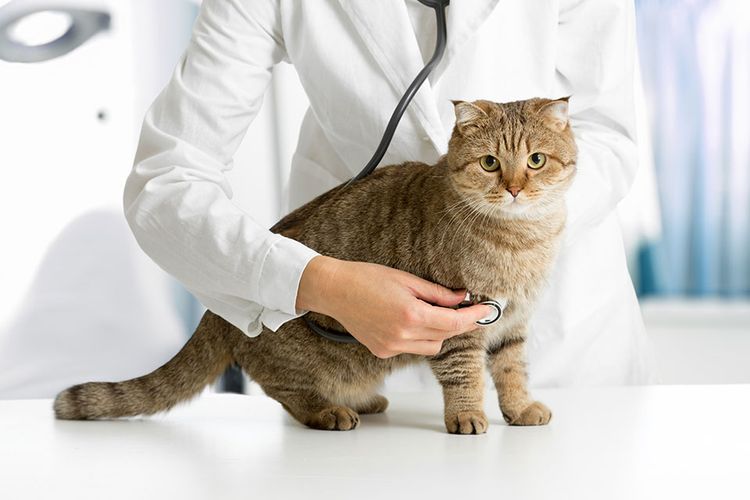
When diagnosing a cat, the veterinarian takes into account the anamnesis provided by its owner (duration of the disease and its symptoms, presence of contact with sick animals, timeliness of vaccinations, living conditions).
In many cases, bronchitis in cats develops as a result of another illness. For example, if a cough is accompanied by a fever, conjunctivitis, or purulent nasal discharge, there's a high probability that the bronchitis is a consequence of an infectious disease. In this case, symptomatic treatment alone will ultimately be ineffective.
To determine the underlying cause of bronchitis in a cat, a specialist may prescribe x-rays and laboratory tests for differential diagnosis:
- blood test - general and biochemical,
- urine analysis,
- stool test for helminth eggs,
- tests for pathogens of HIV (human immundeficiency virus), leukemia, bordetellosis, adenovirus (infectious laryngotracheitis).
Treatment
The treatment plan depends on the underlying cause. For allergic bronchitis, the first step is to eliminate contact with the irritant. Medications used to treat allergic bronchitis include Prednisolone, Lordestin, Dexafort, and Chloropyramine. The active ingredients in these medications block beta-adrenergic receptors, which are responsible for the production of antibodies to the allergen.

For bronchitis of infectious origin, antibiotics (such as Norsulfazole, Streptomycin, and Erythromycin) are prescribed. The course of treatment with these medications usually lasts at least a week. Immunostimulants (such as Gamavit, Glycopin, and Roncoleukin) and vitamins (such as GimCat Multi-Vitamin Tabs) are also mandatory.
Symptomatic therapy involves the use of cough suppressants such as Ambroxol, Bromhexine, Divopride, and Zoo Health. Folk remedies include coltsfoot or licorice root infusions. During the acute phase of the disease, the cat's activity should be limited and kept in a warm, dry room until fully recovered. Feed the cat warm, liquid food such as soups, porridges, and broths.
Prevention
To minimize the risk of your cat developing bronchitis, you should protect it from factors that trigger this disease:
- keep the cat in a warm room without drafts, with sufficient humidity;
- in the cold season, reduce the number and duration of walks;
- use hypoallergenic toilet filler;
- provide the animal with complete nutrition - the cat's diet should include foods containing vitamins, micro- and macroelements;
- use immune-boosting agents (Aminosol, Micro-Plus-Fosprenil, RBS-immunostimulant and others);
- avoid contact with stray and sick cats;
- For cats prone to bronchitis, it is not advisable to use collars.
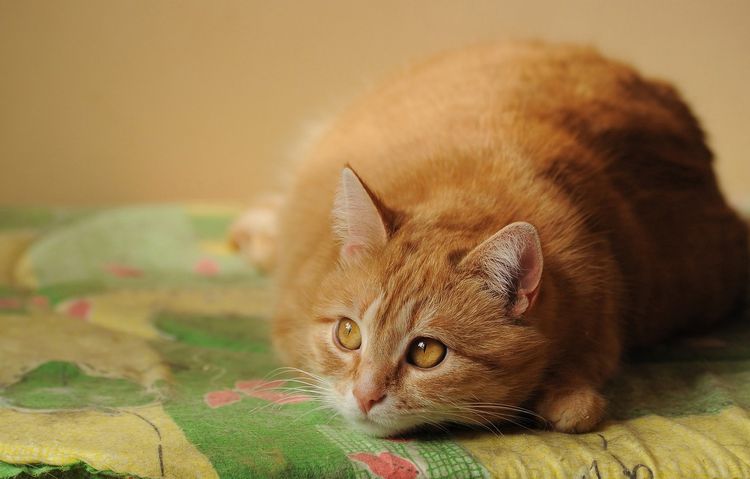
Regular checkups are essential for preventing bronchitis in cats. Veterinary checkups are recommended at least twice a year.
Read also:
Read also:
- Causes and treatment of runny nose in cats
- Deworming of cats
- Abscesses in cats: symptoms and treatment


10 comments
Olga
Hello, my little cat and I have been through 10 circles of hell, visiting several veterinary clinics and doctors. We've had a ton of tests, X-rays, and examinations... They all report his problems and recommend completely different things. Based on the tests, some say he has chronic bronchitis, others chronic tracheitis, and still others chronic bronchotracheitis. The only consistent answer is: he has chronic renal failure, which we're treating with the only available method to support his condition, but the problem is with his bronchi and trachea, which is narrowed. We've been fighting this for a year now, having tried every possible treatment recommended by various veterinarians. It's become impossible to look at him, and most importantly, to administer the endless antibiotics, expectorants, and other medications that are constantly prescribed. Please tell me, is there a known use for Bronchomunal in treating animals?
Daria is a veterinarian
Hello! What's the point of antibiotics if, based on your description, the animal has a narrowed trachea? This is a physiological defect! Most likely congenital. So what's the point of antibiotics? It's essentially like if a person with, say, narrowed nostrils were to take antimicrobials for life. They wouldn't help them breathe normally. Only surgery can solve this problem. The same principle applies to the trachea. You need to consult with an experienced surgeon. Maybe they can artificially "widen" it. Don't overdo it. Expectorants will help the mucus clear. Another question: is the animal allergic? Have you had a general blood test? Have you ruled out asthma?
Marina
Hello. What tests and examinations are needed for bronchitis? Our son is currently being diagnosed with destructive bronchitis.
Daria is a veterinarian
Hello! X-rays (to rule out complications such as pneumonia), bronchial lavage, and basic auscultation (listening to breathing and wheezing). They may also recommend a trip to the veterinary clinic. It all depends on the clinic's equipment, the qualifications of the veterinarians, and your budget. Please understand that these tests will not be cheap.
Elena
Can lobelon be given orally?
Daria is a veterinarian
Hello! You'll forgive me, but why do you need all this empty space? Have you read the ingredients? Have you looked at the concentration of the active ingredients? One LITRE of the drug contains 0.15 µl (microliter!, that's 0.00000015 liters). And 1 ml of the drug contains 0.00000015 ml of the active ingredient! There's no point in giving it intramuscularly – it's just an extra hole in the body, and it's useless. And giving it orally is even worse (you shouldn't give it in ways not described in the instructions). Sorry, but these types of drugs are often prescribed to extort money.
Catherine
Hello! My cat is 12 years old and has a hoarse voice, like the cat in the video. We took her to the vet, and they said it's either bronchitis or asthma (the only way to know for sure is by performing a lavage, that's what they said, but that's only done when nothing else helps according to protocol). They prescribed Sinulox 50, two tablets twice a day for 14 days, Seretide 25 and 125 twice a day for 14 days, a dewormer, and an immunomodulator. She's started feeling lethargic, isn't eating very well, and is having trouble using the toilet. The vet says to continue the treatment, but I'm worried it's too much, considering she hasn't been diagnosed with asthma. The x-ray showed changes in her lungs and an irritated trachea. I'm not sure about asthma because she's only coughed a couple of times this whole time, but she seems hoarse, which is why I took her to the vet. And now he's not coughing, his voice has improved, it's not so hoarse anymore, so the medication seems to be helping, but I'm concerned about such a high dose and how it's affecting the cat. They haven't prescribed anything restorative. Tell me, should I be worried or can I trust the doctor?
Dasha is a veterinarian
Hello! Could you tell me if there was any improvement after using Seretide? If the glucocorticoid helped, then it's most likely allergic bronchitis (or asthma). Did you do a biochemistry test? Did you do a simple auscultation? Did you even listen to her breathing? Is there wheezing when she breathes (when she was wheezing)? What kind of immunomodulator was prescribed? It's strange that if it's the lungs and trachea, then why is it really asthma? And how did they make the initial diagnosis of bronchitis if the X-ray shows no bronchial pathology? The protocol is correct: they prescribe blood tests, deworming, X-rays, an examination (and anamnesis), and environmental modifications. If the cough persists after all of the above, a laryngotracheoscopy and bronchoalveolar lavage are recommended. Heart problems should also be ruled out (an ultrasound of the heart should be performed).
Alena.
Which immunomodulators are best to use?
Dasha is a veterinarian
Ribotan is used quite often. Immunofan (an immune-regulating and detoxifying medication, a hepatoprotector, and an antioxidant) can also be used. The dosage depends on the type of pet (cat or dog), and the duration of treatment depends on the severity of the disease. Don't prescribe anything yourself; trust your veterinarian to make a diagnosis and prescribe a treatment plan (immunomodulators alone won't cure your pet).
Add a comment