
Diamond Eyes - drops for dogs
Diamond Eyes drops are prescribed for the treatment of inflammatory eye diseases in dogs, including infectious ones, excessive lacrimation, and conjunctival hyperemia. This ophthalmic medication is also used for eye hygiene.
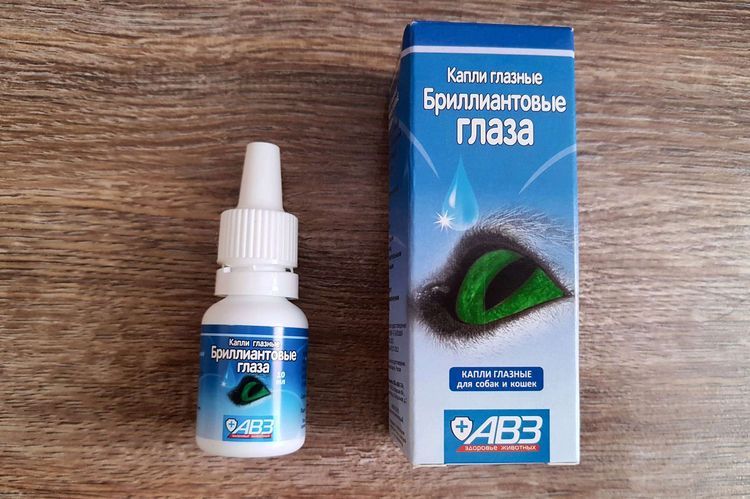
Composition and release form
The ophthalmic preparation "Diamond Eyes" is an aqueous solution of chlorhexidine (as bigluconate), taurine sulfonic acid, and budathionic acid. This combination medication provides a comprehensive effect.
Chlorhexidine bigluconate has powerful antiseptic and antimicrobial properties: by penetrating microbial cell membranes and disrupting intracellular osmotic balance, it kills the infectious agent. Taurine optimizes metabolic processes in the retina and prevents the development of degenerative processes. Succinic acid (butadiene acid) has antioxidant and reparative (regenerative) effects, and also protects ocular tissue from harmful influences.
The drug is manufactured by the Russian pharmaceutical company Agrovetzashchita. It is available in plastic or glass bottles of 10, 15, 20, and 30 ml. A 10 ml bottle of "Diamond Eyes" dog drops costs 200-230 rubles. It is available without a prescription at veterinary pharmacies and has a shelf life of 24 months.
Side effects
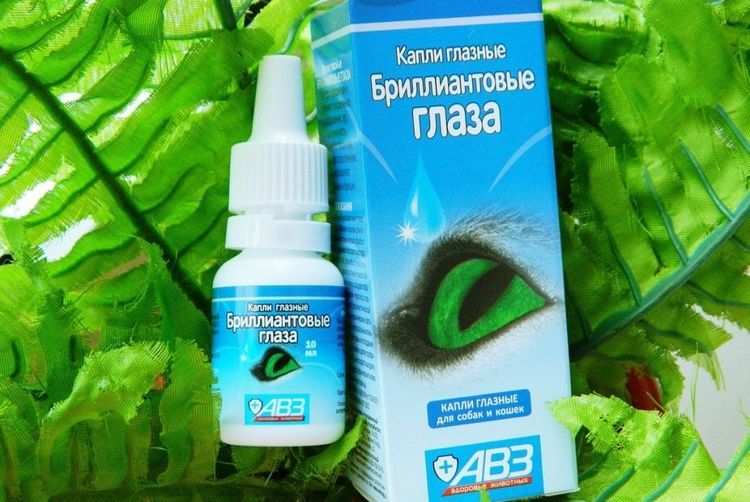
When used as directed, this medication generally does not cause side effects. However, some dogs may develop sensitization (hypersensitivity) to one of the three components of the medication—chlorhexidine or taurine. This may result in symptoms such as itching, conjunctival redness, and photosensitivity (painful reaction to light). In such cases, discontinue use of the drops.
Diamond Eyes drops can be used in combination with other ophthalmic medications. However, an interval of at least 5 minutes should be observed between applications.
Rules of application
Diamond Eyes eye drops are used in a course, the duration of which depends on the number of eye treatments per day:
- 1 time per day - no longer than 45 days,
- 2 times - no longer than 20 days,
- 3 times - no longer than 14 days.
For minor conjunctival inflammation, lacrimation, and eye hygiene, first gently remove dried discharge from the corners of the dog's eyes with a swab soaked in the solution. Then, apply 1-2 drops of the ophthalmic solution under the lower eyelid.
For conjunctival hyperemia (so-called "red eye" syndrome) and eye injuries, Diamond Eyes is used for 1-2 weeks, 3 times daily, 1-2 drops in each eye. The same dosage is used for cataract prevention.
If there is a need for long-term use of drops, a break of 5, 7 or 10 days should be taken between individual courses; the duration of the break is determined by the doctor.
Analogues
In some cases, a drug is unavailable or cannot be used due to contraindications (for example, due to intolerance to one of the components). In such cases, the medication is replaced with a synonym or analogue. Synonymous drugs contain the same active ingredients as the one being replaced. Analogues contain different active ingredients that produce a similar therapeutic effect but have different contraindications and side effects.
A synonym for "Diamond Eyes" is "Oftalmosan," an eye drop manufactured by the Api-San Scientific and Production Association (Russia). The active ingredients are chlorhexidine and butadiene acid.
Analogues of the ophthalmological product “Diamond Eyes” include eye drops “Iris” based on the antibiotic Gentamicin and “Decta-2", the active components of which are Gentamicin, which has an inhibitory effect on pathological microflora and Dexamethasone, which has anti-inflammatory and anti-allergic properties. Both of these products are produced by the company "Agrovetzashchita."
Reviews
Tatyana Ivanovna Lisyanskaya, veterinarian:
"I often recommend Diamond Eyes drops to dog owners as a treatment, preventative for eye infections, and for mild conjunctivitis. They are well-tolerated by dogs, don't cause burning or itching, and quickly soften dried crusts, which can then be easily removed with a cotton swab. For the treatment of acute conjunctivitis, blepharitis, or keratitis, this medication is weak and can be used in combination with stronger medications."
Oleg and Olga Nikiforov:
"We have a basset hound named Boomer. His eyes are a constant problem; discharge often collects in the corners. He also often gets conjunctivitis. As prescribed by the vet, we treated the inflammation with Divopride eye drops, which contain the antibiotic gentamicin and the glucocorticosteroid dexamethasone. Before administering the drops, the vet recommended cleaning his eyes with a swab dipped in Diamond Eyes ophthalmic solution. I read in the instructions that it's also good for preventing conjunctivitis. So, we decided to use the Diamond drops regularly. The price is quite affordable for us."
Sofia Petrovna:
"My three-year-old lap dog, Amelie, had red, watery, and runny eyes. We took her to the vet right away, of course. The doctor said it could have been caused by ordinary dust. We walk Amelie every day, and recently there was a strong wind that kicked up sand and dust, and she's a small lap dog. We were given "Diamond Eyes" medication. You wipe her eyes clean of any exudate and use one drop 2-3 times a day. This treatment quickly relieved all the unpleasant symptoms: the tears stopped flowing, and the redness went away. These drops will now always be in our medicine cabinet."
How to put eye drops in a dog: video
Read also:


Add a comment