
Briard (French longhaired shepherd)
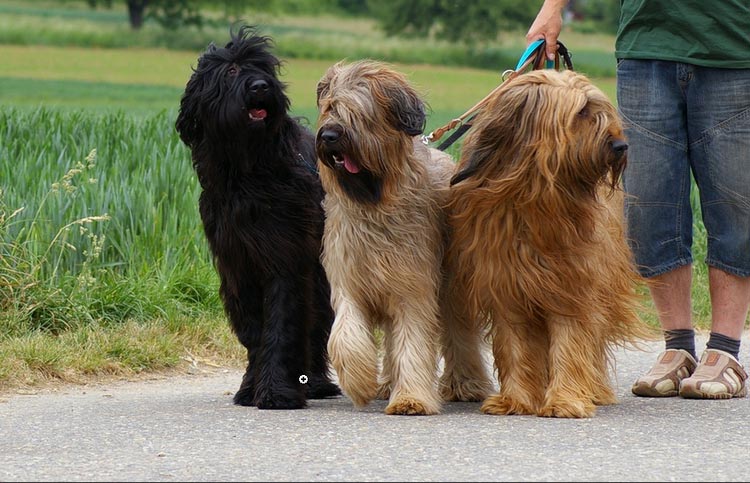
Their thick forelock, long, shaggy coat, and zest for life make them resemble funny cartoon characters, but this first impression can often be deceiving. Briards, also known as Briards or French Longhaired Shepherds, are large working dogs that combine versatile working qualities. While Briards have many positive qualities, they are not a suitable companion for everyone. Furthermore, the breed is quite challenging to train and care for.
Content
History of the Briard breed's origin
The ancestors of the Briard, like those of most other herding breeds, came to Europe with eastern nomadic tribes. In France, a traditionally herding country, they became an integral part of farming. The name "Briard Shepherd," emphasizing its territorial origins, first appeared in the 19th century. This is how Abat de Rosier described the large, long-haired dogs, skilled in herding and possessing other talents, in his work "Course of Agriculture."
The breed's official history begins in 1963, when Briards were first shown. Briards were first entered into the French studbook in 1885. In 1897, the French Shepherd Club developed and approved a standard.
During the World Wars, the dogs were used by the French army as sentry liaisons, medics, and search and rescue dogs. In the post-war years, the breed was on the verge of extinction, but thanks to the efforts of enthusiasts, it was fully restored and even improved. To improve the appearance, breeders infused the Briards with Barbet and bosserons.
Briards can be seen in films, mostly family comedies, such as Dennis the Menace and The Karate Dog.
Video review of the Briard dog breed:
Appearance and standards
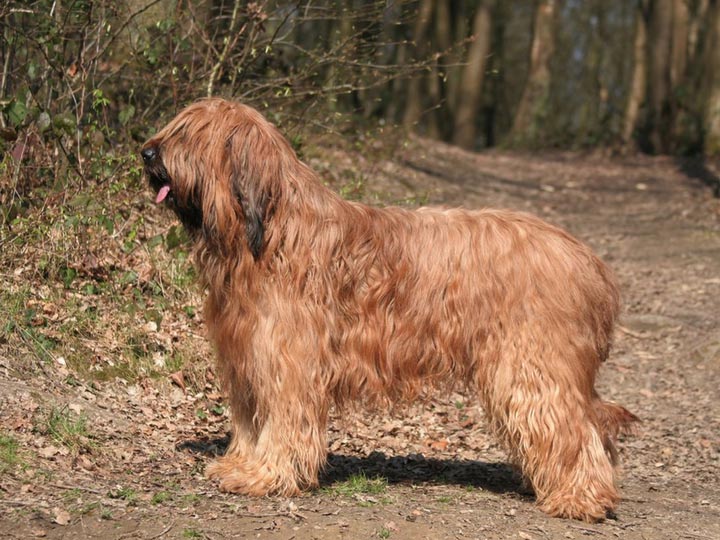
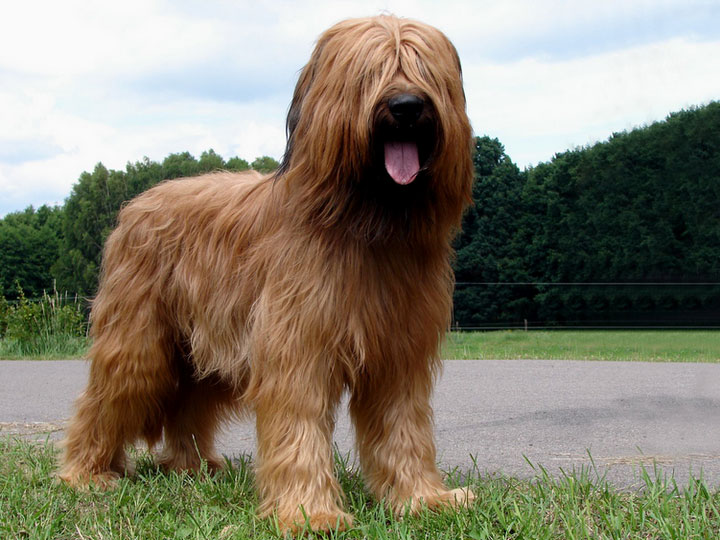
Briards are beautiful, agile dogs with a harmonious build, designed to convey the impression of strength, speed, and exceptional intelligence. They are large and robust, with a dry build, strong bone structure, and well-developed muscles. Their frame is slightly elongated (108 cm/110 cm). Height is 56-68 cm, weight 32-50 kg.
Head and muzzle
The head is rectangular, neither coarse nor heavy, but rather long and moderately wide. The forehead is slightly convex. The stop is well defined. The nose is large, square, and black with open nostrils. The ears are set high and moderately wide apart. The outer surface of the auricle is covered with long hair. When at rest, the tips of the ears hang down on cartilage; when excited, they rise. The eyes are large and expressive, rounded, and set straight. The color is dark brown. The eyelids fit tightly, are dry, and well pigmented. The jaws are strong, and the lips are dry and tight. The bite is correct.
Frame
The neck is set high, shaped like a truncated cone, and of medium length. The topline slopes slightly. The back is straight and moderately broad. The loin is arched and short. The croup is slightly sloping. The tail is set low, long, and thick at the base. When relaxed, it hangs down, but the tip is held upright. The chest is deep and ovoid in cross-section. The abdomen is moderately tucked up. The legs are straight and parallel. The hind legs should have dewclaws with two phalanges. The paws are strong and arched. The nails and paw pads are black.
Coat and colors
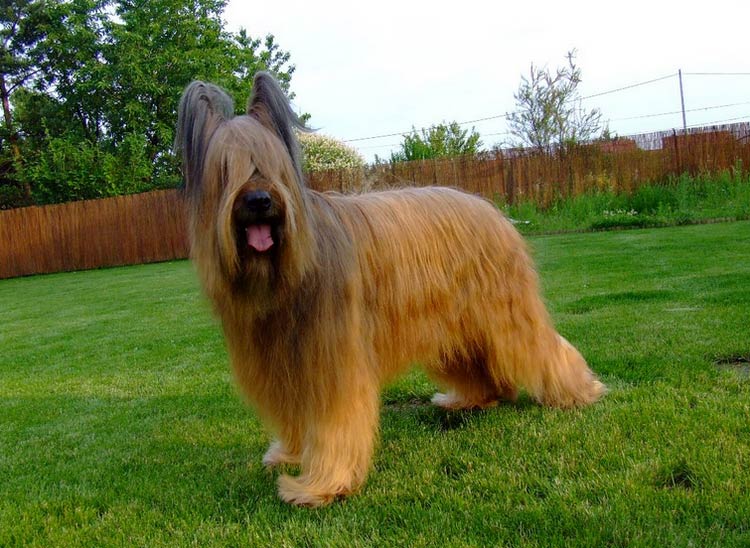
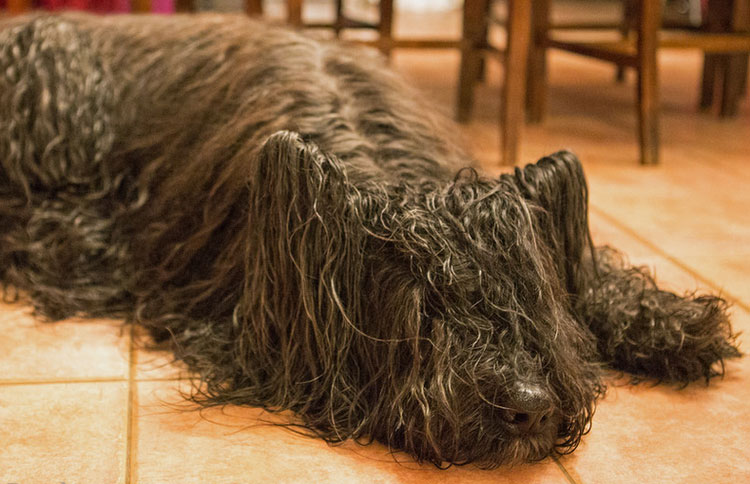
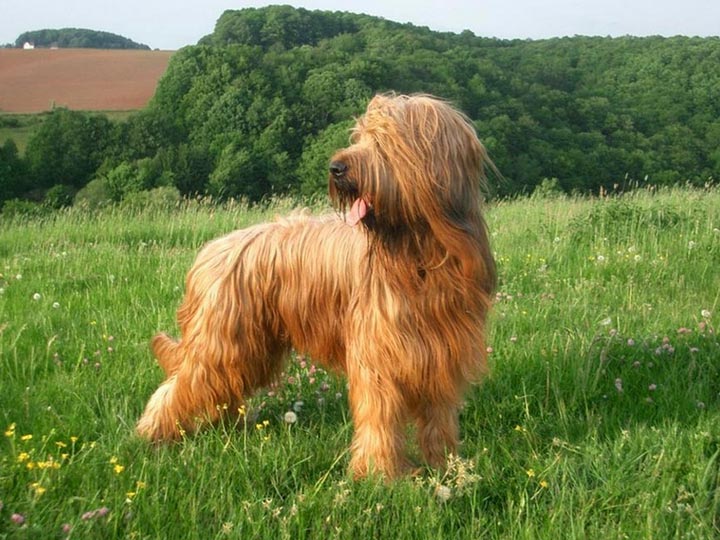
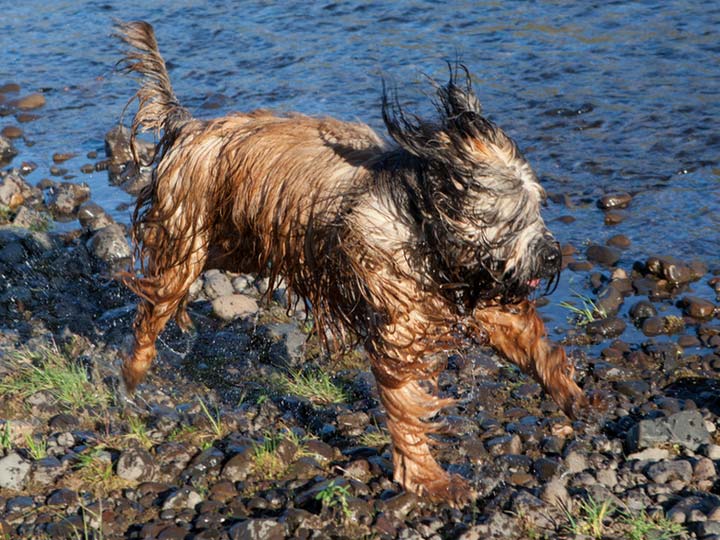
The coat is long and slightly wavy, known as goat-like. The hair is coarse, dry, and somewhat dull. On the body, the hair can reach 15 cm in length, forming a parting on the head, eyebrows, and beard. The undercoat is short, soft, and dense, usually lighter than the main coat. The coat is fully formed by 8 months of age.
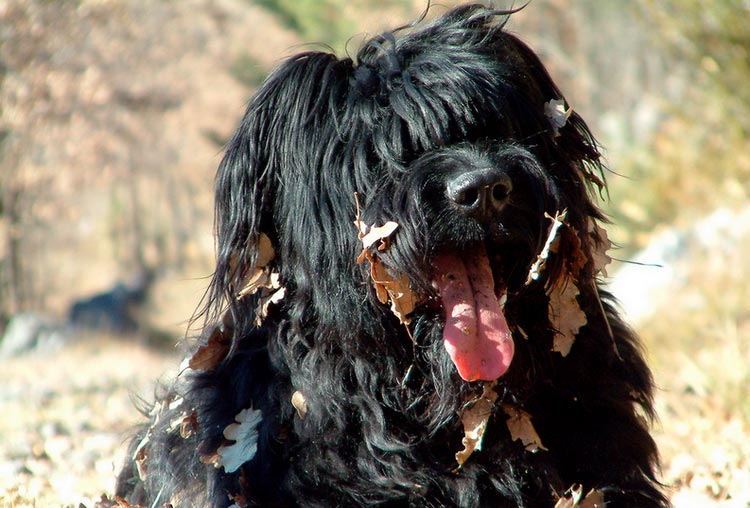
All solid colors are acceptable, except white. Rich tones are preferred. The most popular colors are fawn, black, gray, and brown.
Character and psychological portrait
Briards are known for their even temperament and stable psyche. They are not prone to unwarranted aggression, and are active and cheerful. They are very devoted to their families and enjoy being at the center of things, yet remain unobtrusive. They are also renowned for their ability to make independent decisions. French Shepherds have a high level of intelligence and an excellent memory. They are very inquisitive, energetic, and proactive, and they enjoy learning new things.
Briards are not only good shepherds, they are also fearless guards, always attentive, not distracted by trifles and able to react immediately in case of danger.
They are quite self-confident, can be stubborn and jealous, and sometimes try to assert dominance within the pack. They are reserved or wary of strangers, don't rush into affection with everyone, and generally don't appreciate attention from strangers. Some specimens can be timid or even aggressive, but this is more likely due to poor training. Briards get along well with children if they are exposed to small, assertive creatures as puppies.
Training and exercise
Briards are very intelligent and trainable, but they require a special approach: firmness, consistency, and calmness on the part of the owner, with no conflicting instructions or harshness. It's essential to go through at least OKD.
By nature, Bris are independent and self-sufficient. Lack of training can make these dogs difficult to manage and difficult to maintain, while poor socialization can lead to aggressive behavior toward other animals.
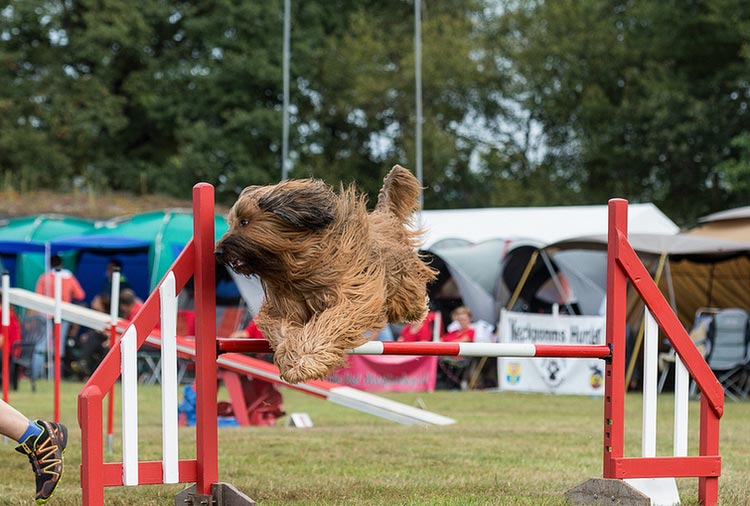
Physical exercise is essential. Without mental and muscular exercise, a docile Briard can turn into a bitter, unhappy animal. Walks alone are not enough. Walks must be supplemented with training and play. It's a good idea for the dog to participate in some kind of sport.
Maintenance and care
Briards are not suitable for aviary life; they can and should spend a lot of time outdoors if they live in a private home, but they require constant contact and interaction with their owner. These shaggy giants are not the best choice for an apartment, although they can adapt to living in a confined space if the owner provides sufficient exercise.
Briards require complex, regular grooming if they're to look well-groomed and tidy, rather than looking like a chewed-up washcloth. It's important to teach your puppy proper hygiene from an early age.
Grooming involves three stages:
- Combing;
- Washing;
- Haircut.
It's best to brush your Brie daily or every other day. The main problem is that their soft undercoat tends to form tangles, which are very difficult to comb out and must be trimmed. For brushing, it's best to use a fine-tooth comb or, sometimes, a fumigator.
Briards should be bathed monthly. Care products should be selected individually. After bathing, it is recommended to use a conditioner or tangle-preventing balm. After bathing, the dog should be thoroughly dried with a towel and allowed to air dry.
About once a month, the hair between the toes is trimmed, and the nails are trimmed. French Shepherds are shown in their natural state; if the dog is not participating in shows during the summer, a short haircut can be given. Other equally important grooming components include eye, ear, and oral hygiene. The beard and mustache are washed regularly, especially if the dog is fed a natural diet.
Diet
The diet should be appropriate for their age, size, and physiological condition. It's important that it's well-balanced in terms of all essential nutrients. This will be evidenced by a healthy appearance and well-being. Briards thrive on both natural and prepared foods, including dry food; however, avoid mixing the two.
Because of the tendency to gastric torsion Dogs should not be fed immediately before a walk or after exercise. Regular portions should also be maintained and foods that cause fermentation should be completely avoided.
Health, diseases, life expectancy
In general, Britons are strong and hardy dogs that live more than 10 years, but it should be taken into account that some individuals may be carriers of diseases typical for the breed:
- Gastric torsion is especially common in dogs with large chests;
- Hip dysplasia is reported in 20% of dogs;
- Progressive retinal atrophy (PRA) has no cure and eventually leads to blindness. Statistically, 5 out of 6 dogs carry the gene that causes the disease;
- Autoimmune thyroiditis is a disease of the thyroid gland;
- Von Willebrand disease is characterized by a disorder of blood clotting processes;
- Stationary night blindness, unlike retinal atrophy, does not progress and manifests itself in puppyhood as a decrease in vision in low light;
- Allergies and predisposition to dermatological diseases.
- In adulthood, various types of cancer may develop; most often, Briards are diagnosed with lymphosarcoma.

Choosing a puppy and price
At 2-3 months of age, puppies already begin to develop individual traits, but it's difficult to predict what the adult dog's personality will be, so it's best to rely on the parents. The conditions at the chosen kennel should be excellent.
The breeder must provide certificates of absence of genetic diseases in their breeding dogs, documents for the puppies, and also complete the necessary preventive measures (deworming, vaccination), which must be noted in the veterinary passport.
Puppies should be active and healthy in appearance, with a good appetite and a restful sleep, without a hint of shyness or nervousness. When choosing a Briard puppy, pay attention to the standard:
- The presence of full-fledged dewclaws;
- Rectangular muzzle with a prominent nose;
- Teeth in full set;
- The bite is correct;
- The color is uniform;
- Long tail reaching to the hocks.
Briards aren't the most common breed, so buying a puppy can be challenging. It's not just the price; truly good dogs aren't produced on a conveyor belt, but are the result of infrequent, planned matings. The average price for a Briard puppy from a kennel is 40,000-50,000 rubles. Mixed breeds and puppies from random matings without papers can cost significantly less.
Photos
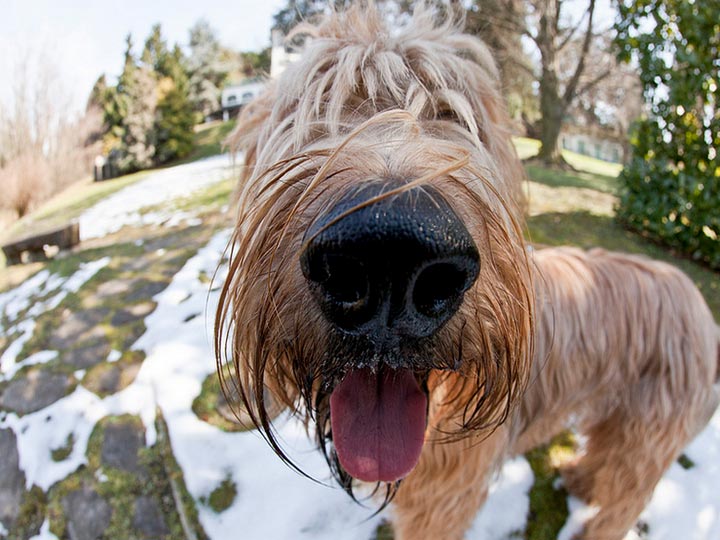
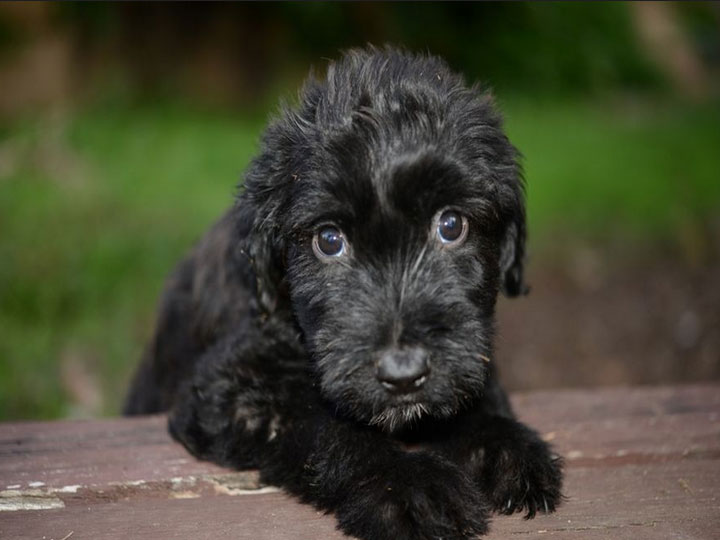
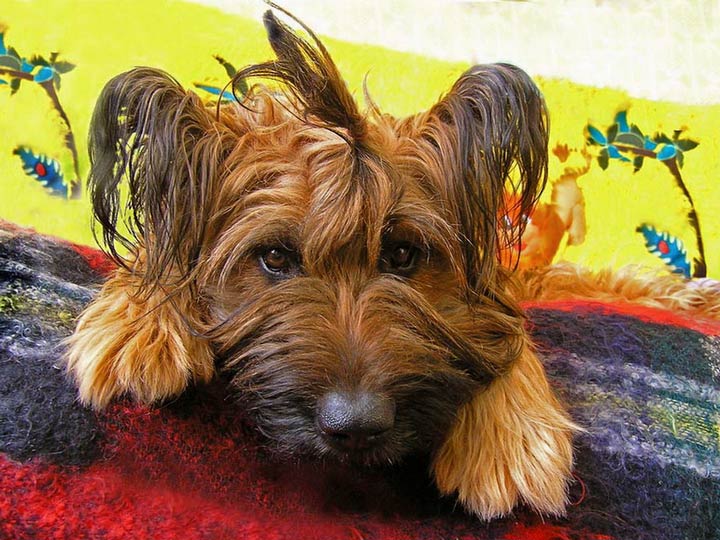
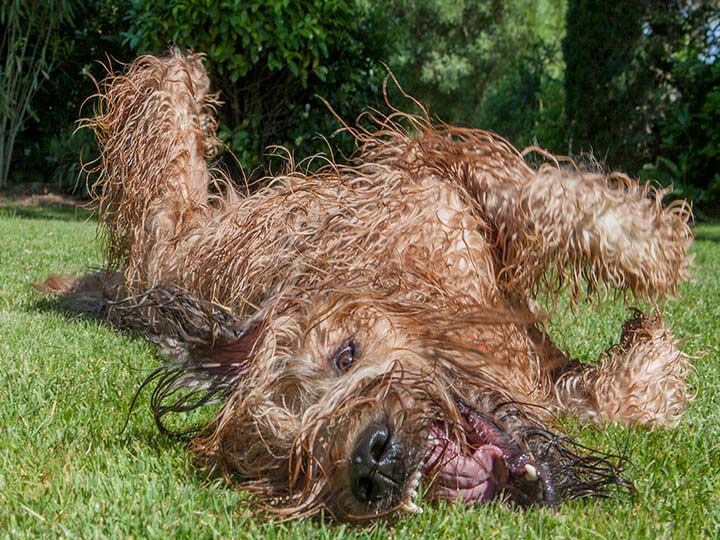
Photos of Briard puppies and dogs:


Read also:


Add a comment